Photo Source: © UN Photo/Violaine Martin
Recommendations for the upcoming 63rd session of the UN Human Rights Council
27 August 2026
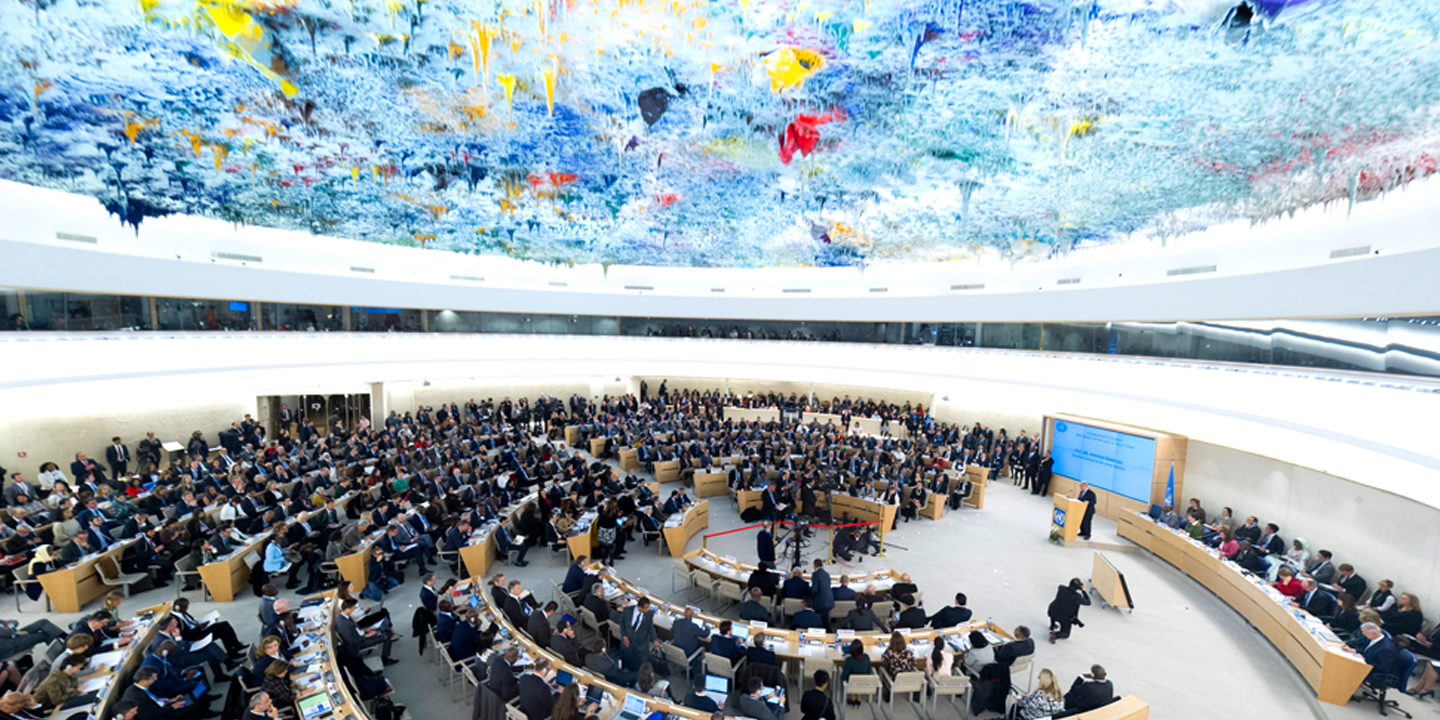
On 7 September the UN Human Rights Council (HRC) will commence its 63rd session in Geneva. Since its establishment in 2006, the HRC has become the principal multilateral forum through which communities affected by atrocity crimes can seek recognition, visibility and accountability. It also serves as a critical platform for states to uphold their Responsibility to Protect (R2P).
The HRC has consistently responded to human rights crises and atrocity situations. Its regular and special sessions serve as vital mechanisms to identify and address atrocity risks, spotlight perpetrators, acknowledge victims and mobilize international attention and follow-up action, particularly where domestic protection or justice mechanisms are absent or ineffective.
The Council has developed a broad and evolving toolbox, including investigative mechanisms, Special Procedures mandates and the work of the Office of the UN High Commissioner for Human Rights (OHCHR), as well as technical assistance and capacity-building. These tools are critical for early warning and response, promoting accountability and mobilizing action. Since its establishment, member states have adopted more than 90 country-specific and thematic resolutions that explicitly reference R2P, further underscoring the HRC’s integral role in translating political commitments into concrete action to prevent and respond to atrocity crimes.
Ahead of the upcoming session, the Global Centre for the Responsibility to Protect encourages all delegations to actively utilize the HRC’s full potential by engaging constructively and proactively on the priority issues outlined in the annex below. This engagement should aim to strengthen our collective efforts to prevent and effectively respond to atrocity risks and crimes.
Resolutions
Afghanistan
August 2026 marks five years since the Taliban’s takeover of Afghanistan. Since then, the de facto authorities have institutionalized a system of systematic and widespread human rights violations. According to the UN Special Rapporteur on the situation of human rights in Afghanistan and the Working Group on Discrimination Against Women and Girls, the Taliban may be perpetrating gender persecution and gender apartheid by imposing a regime of systematic discrimination intended to subject women and girls to total domination. Recent measures underscore the urgency of these findings, including the May 2026 marriage separation law, which further restricts women’s ability to seek divorce, and the January criminal code, which effectively legalizes violence against women. Other serious violations and atrocity risks continue. Extrajudicial killings continue to target media workers, human rights defenders and individuals formerly affiliated with the previous government, while armed groups continue to pose a grave threat. Cross-border hostilities between Pakistan and the Taliban in early 2026, followed by renewed Pakistani airstrikes since June, have killed or injured hundreds of civilians. Meanwhile, steps toward normalization – including a June 2026 meeting between the European Commission and the Taliban – raise serious concerns amid accelerating forced deportations of Afghans, many of whom face grave risks upon return.
The Special Rapporteur plays a critical role in documenting violations, alerting the international community to atrocity risks and keeping the situation in Afghanistan under sustained international scrutiny. This work is complemented by the Independent Investigative Mechanism for Afghanistan (IIM-A), established in October 2025 and mandated to collect, preserve and analyze evidence of the most serious crimes under international law, including gender persecution. The IIM-A is the only international body examining abuses by the Taliban, former government officials, international forces and other armed groups. In the absence of any credible domestic avenue for justice, sustained international monitoring, reporting and evidence preservation – with adequate resources – remain indispensable.
The Global Centre urges your delegation to support the renewal of the Special Rapporteur’s mandate. We encourage your delegation to:
-
-
- Renew the Special Rapporteur’s mandate in full and ensure that it is provided with the resources necessary to effectively carry out its functions; and
- Support the inclusion of R2P language in the resolution, recalling that “the de facto authorities in Afghanistan bear the primary responsibility to protect all populations from genocide, war crimes, ethnic cleansing and crimes against humanity.”
-
We also encourage your delegation to participate in the Interactive Dialogue (ID) with the Special Rapporteur, scheduled for 7 September. During the dialogue, we encourage your delegation to:
-
-
- Condemn the systematic and widespread violations committed by the Taliban, with particular attention to the institutionalized persecution of women and girls, which may amount to gender persecution and gender apartheid;
- Express strong support for the IIM-A, call on all states to ensure that it is adequately funded and highlight the importance of meaningfully incorporating the expertise, knowledge and perspectives of Afghan civil society organizations, affected communities and victims and survivors into its work;
- Call on the Taliban to fully cooperate with the Special Rapporteur, the IIM-A, OHCHR and all other relevant mandates; and
- Urge all states to uphold the principle of non-refoulement and immediately halt forced returns and deportations of Afghans who would be at risk of serious human rights violations upon return.
-
Burundi
The government of Burundi continues to perpetrate serious human rights violations and abuses in a climate of widespread impunity. In recent months, state and para-state actors, including the police, the National Intelligence Service and the ruling party’s youth league – known as the Imbonerakure – have committed enforced disappearances, abductions and extrajudicial killings targeting real or perceived opponents, human rights defenders, journalists and public officials. The February 2026 disappearance of an employee of the National Independent Human Rights Commission and the death of Communications Minister Gabby Bugaga in April – classified as an “accident” despite suspicious circumstances – demonstrate the persistence of these patterns, which are reminiscent of the extrajudicial executions documented from 2015–2016. These abuses are unfolding following parliamentary elections in 2025 that further consolidated de facto one-party rule and the ruling party’s near-total control of state institutions. The country is now entering a new electoral cycle, which will culminate in the May 2027 presidential election.
Since the termination of the Commission of Inquiry (CoI) on Burundi in October 2021, the Special Rapporteur on the situation of human rights in Burundi has been the only dedicated, independent international monitoring mechanism focused on the country’s protracted crisis. The government has refused to meaningfully cooperate with the HRC’s mechanisms in violation of its obligations as a Council member, and has voted against resolutions addressing some of the gravest human rights crises worldwide, including on Sudan, Ukraine, South Sudan, Belarus and Eritrea. In the absence of measurable and sustainable progress, and with several risk factors identified in the UN Framework of Analysis for Atrocity Crimes present and increasing ahead of the 2027 election, continued monitoring and reporting remain vital.
The Global Centre urges your delegation to support the renewal of the Special Rapporteur’s mandate, in line with a joint NGO call from 24 August. We encourage your delegation to:
-
-
- Support the adoption of a resolution that maintains reporting by the Special Rapporteur at least twice a year to the Council, including an oral update at the 65th session and a comprehensive report at the 66th session, and to the General Assembly at its 82nd
-
We also encourage your delegation to participate in the ID with the Special Rapporteur, scheduled for 18 September. During the dialogue, we encourage your delegation to:
-
-
- Urge the government to fully cooperate with the Special Rapporteur, including by granting access to the country and providing the information necessary to fulfil his mandate;
- Encourage the Burundian authorities to cooperate with OHCHR, particularly its regional office for Central Africa, and to present a timeline for the reopening of the country office in Burundi; and
- Call on the government to end enforced disappearances, extrajudicial killings and reprisals against human rights defenders, journalists and lawyers, release all arbitrarily detained individuals – including political prisoners held despite acquittal or completion of their sentences – and ensure credible investigations and accountability for all violations and abuses committed since 2015.
-
Central African Republic
Civilians in the Central African Republic (CAR) continue be at risk of atrocity crimes due to ongoing armed group activity, inter-communal violence and security operations. The Azande Ani Kpi Gbe, a predominantly ethnic Azande militia accused of serious human rights violations, continues to carry out attacks in the southeast. Since April combatants belonging to the Lord’s Resistance Army (LRA) have also renewed activities, perpetrating the largest LRA attacks against civilians in CAR since 2020 through a string of abductions and killings. In the northeast, escalating cross-border incursions and clashes between local self-defense groups and Sudanese armed elements linked to the Rapid Support Forces (RSF) have resulted in civilian targeting and displacement, heightening risks to already vulnerable populations. Although the government has pursued renewed agreements with armed groups to revitalize a 2019 peace deal, abuses by factions of these groups continue to be documented. The UN has also reported disproportionate targeting and abuses against Muslim and Fulani communities during security operations.
The Independent Expert on the situation of human rights in CAR, who works closely with the UN peacekeeping mission (MINUSCA) and the Special Criminal Court (SCC), is essential for documenting human rights trends and atrocity risks, supporting accountability and transitional justice mechanisms and providing critical capacity-building to strengthen institutions on human rights promotion and protection.
The Global Centre urges your delegation to actively support the renewal of the Independent Expert’s mandate for an additional year. In the resolution, we encourage your delegation to:
-
-
- Request the Independent Expert to continue monitoring and reporting on human rights trends, using the Framework of Analysis for Atrocity Crimes to alert the international community to imminent atrocity risks and to inform prevention and protection strategies; and
- Support the inclusion of R2P language in the resolution by “recalling that the authorities of the Central African Republic have the primary responsibility to protect all populations from genocide, war crimes, ethnic cleansing and crimes against humanity.”
-
We also encourage your delegation to participate in the ID with the Independent Expert, scheduled for 1 October. During the dialogue, we encourage your delegation to:
-
-
- Highlight efforts to combat impunity for past atrocity crimes by welcoming recent investigations, ongoing trials and decisions handed down by the SCC and national courts, which mark significant steps forward in the fight against impunity and for strengthening the rule of law;
- Call for all perpetrators of atrocities to be held accountable, regardless of their political status, rank or affiliation and for all individuals subject to SCC arrest warrants to be taken into custody;
- Express strong support for MINUSCA, including its human rights components, ahead of the UN Security Council’s (UNSC) November mandate renewal; and
- Call on the international community to strengthen its technical and financial support to the CAR authorities to bolster national capacities and initiatives that promote peace, justice and guarantees of non-recurrence, including continued support for the SCC to ensure its sustainable operation.
-
Sudan
Since violent clashes erupted on 15 April 2023 between the Sudanese Armed Forces and the RSF, both parties have continued to fight for territorial control across Sudan, with allied armed groups further intensifying and fragmenting the conflict. The fighting has included indiscriminate and deliberate attacks against civilians and civilian objects, rocket fire, shelling, bombardments and heavy artillery in densely populated areas. Drone warfare has become a defining feature of the conflict, significantly expanding the reach and intensity of violence against civilians. Reports of sexual and gender-based violence remain widespread, including rape, sexual assault, exploitation and sexual slavery.
The RSF has continued to pursue a pattern of attacks that disproportionately affect non-Arab communities in Darfur and other regions. In February 2026 the Independent International Fact-Finding Mission (FFM) on Sudan concluded that the RSF committed crimes against humanity, war crimes and genocide against non-Arab communities in and around El Fasher, North Darfur, during the siege and takeover of the city in October 2025. Intensifying clashes in and around El Obeid, the capital of North Kordofan, are raising serious concerns over the heightened risk of atrocity crimes against civilians.
Three years after its establishment, the FFM remains a critical mechanism for independently investigating and reporting on violations of International Human Rights Law (IHRL) and International Humanitarian Law (IHL). Its documentation of patterns of crimes, perpetrators and root causes is essential for informing international responses and advancing accountability efforts, including through the International Criminal Court (ICC) and domestic courts exercising universal jurisdiction.
The Global Centre urges your delegation to renew the mandate of the FFM in full, in line with a joint NGO call from 20 August. We encourage your delegation to:
-
-
- Extend the FFM’s mandate for two years to enable strategic, long-term planning and implementation, particularly in light of repeated urgent investigative requests and an increasingly complex political environment;
- Strengthen and adequately resource the FFM to investigate ongoing grave violations, collect and preserve evidence and identify perpetrators with a view to ensuring accountability; and
- Request the Secretary-General to provide the resources and assistance necessary to ensure the High Commissioner has the administrative, technical and logistical support necessary to implement the FFM’s mandate, including to collect, preserve and analyze evidence and cooperate with judicial and other entities in support of accountability.
-
We also urge your delegation to participate in the ID on the FFM’s report, scheduled for 7 September. During the dialogue, we encourage your delegation to:
-
-
- Condemn all violations and abuses of IHRL and violations of IHL, including ongoing attacks against civilians and civilian infrastructure, killings, sexual violence, forced displacement and the use of drones to target civilian areas;
- Urgently raise awareness of the escalating risks to civilians in El Obeid and surrounding areas, and call for immediate measures to protect civilians and prevent further violations and abuses;
- Call on the international community, including the UNSC, to translate the findings from the FFM and OHCHR into concrete action, including strengthened civilian protection measures, accountability efforts and sustained political engagement to prevent further atrocities; and
- Address the role of external actors providing support to the warring parties and ensure that the FFM is adequately resourced to investigate and identify all actors responsible, with a view to promoting accountability in accordance with its mandate.
-
Venezuela
Following the removal of Nicolás Maduro during an unlawful United States (US) military operation on 3 January 2026 and the swearing-in of former Vice President Delcy Rodríguez as acting President, Venezuela has entered a fragile and uncertain political transition. While Maduro’s removal generated cautious hope, many of the individuals, institutions, security structures and legal frameworks that enabled crimes against humanity and political persecution remain largely intact. The release of political prisoners and adoption of an Amnesty Law have been limited in scope and accompanied by continued concerns regarding systematic repression. The authorities’ inadequate and militarized response to the devastating 24 June earthquakes further exposed how large-scale corruption and the erosion of the rule of law undermine the state’s capacity to protect its population. At the same time, the acting authorities’ growing need for international legitimacy has created a narrow but important opportunity for the international community to encourage meaningful reform.
The FFM remains the only international mechanism mandated to investigate patterns of violations, analyze the institutions and chains of command that facilitate possible crimes against humanity and assess evolving atrocity risks. Its independent scrutiny is particularly important during a period of political transition to assess whether reforms are meaningful, maintain multilateral attention for accountability and prevention and incentivize authorities to commit to meaningful change amid sustained efforts for international legitimacy. The FFM’s analysis of institutional responsibility, chains of command and structural drivers of repression contribute to a wider accountability framework that extends beyond criminal prosecutions and will remain essential for future victim-centered transitional justice and institutional reform efforts in Venezuela. The FFM’s work is complementary to, but distinct from, OHCHR’s monitoring, reporting and technical cooperation and the ongoing investigation by the ICC.
The Global Centre urges your delegation to renew the FFM’s mandate in full. We encourage you to:
-
-
- Support and co-sponsor an Item 4 resolution renewing, in full and through a technical roll-over, the mandates of both the FFM and OHCHR for a further two years, while maintaining existing reporting and update timelines; and
- Preserve the complementarity of the two mechanisms by keeping the FFM’s mandate renewal separate from negotiations concerning OHCHR’s in-country presence and ensuring that the FFM is not used as a bargaining chip in discussions on technical cooperation with the authorities.
-
We also encourage you to actively participate in the ID with the FFM, scheduled for 18 September. During the dialogue, we encourage your delegation to:
-
-
- Call on Venezuelan authorities to immediately and unconditionally release all arbitrarily detained individuals, including political prisoners, and clarify the fate and whereabouts of those individuals who remain missing;
- Urge the authorities to grant the FFM and OHCHR full and unimpeded access to the country, including detention facilities, and to cooperate fully with both mechanisms;
- Highlight the critical role of the FFM in sustaining independent international scrutiny during Venezuela’s political transition – assessing whether recent developments constitute meaningful structural change – and supporting atrocity prevention, accountability and transitional justice; and
- Emphasize that any political or economic normalization must be accompanied by meaningful human rights and rule of law reforms, accountability efforts and guarantees of non-recurrence.
-
Interactive Dialogues and Other Opportunities for Engagement
Democratic Republic of the Congo
Armed group violence and inter-communal conflicts have persisted in eastern Democratic Republic of the Congo (DRC) for more than three decades, exposing civilians to recurrent violations that may amount to war crimes and crimes against humanity. Since the March 23 Movement’s (M23) re-emergence in 2021, and particularly following intensified offensives in 2025, populations in North and South Kivu have faced serious violations, while the security situation has further destabilized due to the growing use of drones by government forces and M23, resulting in growing civilian casualties and damage to civilian infrastructure. Recent deadly attacks in Ituri further underscore the acute protection risks across the eastern provinces.
The Global Centre urges your delegation to participate in the Enhanced Interactive Dialogue (EID) on the High Commissioner’s report on the DRC, scheduled for 2 October. During the dialogue, we encourage your delegation to:
-
-
- Condemn in the strongest terms all violations and abuses of IHRL and violations of IHL, including attacks against civilians and civilian infrastructure, unlawful killings, conflict-related sexual violence, forced displacement and attacks on displacement sites and other civilian infrastructure;
- Highlight the significant role that the illicit exploitation and trafficking of natural resources – particularly gold, coltan and other strategic minerals – play in financing armed groups, fueling cycles of violence and undermining efforts for sustainable peace and stability;
- Express continued support for the UN Joint Human Rights Office in the DRC, emphasizing the importance of continued monitoring, reporting, technical assistance and support for national efforts to strengthen accountability, protect civilians and address the root causes of violence; and
- Call on the Congolese authorities to promptly, independently and impartially investigate all alleged violations and abuses, ensure that those responsible are held accountable and fully cooperate with OHCHR and other relevant UN human rights mechanisms.
-
Ethiopia
Since 2019 conflicts across Ethiopia have resulted in widespread human rights violations and a severe humanitarian crisis. Fighting involving the Ethiopian National Defense Forces (ENDF), regional forces and armed groups in Oromia, Amhara and Tigray has resulted in grave violations and abuses that may amount to war crimes and crimes against humanity. Despite the November 2022 Cessation of Hostilities Agreement (CoHA), the Tigray region remains highly fragile. Eritrean Defense Forces and Amhara forces reportedly occupy parts of Tigray, while divisions within the Tigray People’s Liberation Front, disputes over the CoHA’s implementation and escalating tensions between Ethiopia and Eritrea have destabilized the region. On 11 August Tigrayan authorities accused the ENDF of carrying out a drone strike in the region, amid reports of renewed troop mobilization along Tigray’s borders. These developments raise serious concerns about the durability of the CoHA and the potential for renewed conflict to expose civilians to further atrocity crimes. Meanwhile, serious violations and abuses continue in Amhara and Oromia, including extrajudicial killings, arbitrary detention, sexual violence and attacks against civilian infrastructure.
The HRC previously played a key role in accountability efforts through the International Commission of Human Rights Experts on Ethiopia, which documented war crimes and possible crimes against humanity and warned of ongoing risks. Its mandate was terminated in 2023, significantly weakening independent international scrutiny despite ongoing violations, persistent impunity and risks of renewed conflict.
Given these developments, restored HRC engagement is vital to prevent further atrocity crimes and strengthen civilian protection. We urge your delegation to:
-
-
- Identify practical steps for dedicated, independent monitoring and reporting on the human rights situation in Ethiopia to ensure scrutiny of violations and emerging atrocity risks;
- Support efforts to strengthen accountability for violations and abuses committed by all parties; and
- Call on OHCHR to publicly release its ongoing monitoring of the situation in Ethiopia and provide recommendations on preventing the recurrence of atrocity crimes, supporting implementation of the CoHA and strengthening civilian protection.
-
Haiti
Civilians in Haiti are increasingly caught in escalating violence perpetrated by multiple armed actors. The Viv Ansanm coalition continues to commit widespread, deliberate and indiscriminate abuses, including massacres and sexual violence. Meanwhile, Haitian security forces and private contractors working with them have conducted extensive and unlawful lethal drone strikes in densely populated urban areas, causing civilian harm and introducing a dangerous new pattern of violations. The UN High Commissioner for Human Rights’ Designated Expert on Haiti stated that the recent surge in attacks in previously unaffected areas may reflect gangs positioning themselves to maintain control over territory and resources ahead of more robust operations by the recently deployed UN-mandated Gang Suppression Force (GSF). The systematic nature of the gangs’ abuses, coupled with expanding territorial control and widespread impunity, heighten the risk of atrocities in Haiti.
While stronger security operations are urgently needed, robust safeguards, effective oversight, sustained UN support and meaningful accountability mechanisms are essential to ensuring that the GSF does not contribute to further violations. The Designated Expert, OHCHR and BINUH remain critical to providing technical assistance, monitoring the human rights situation and supporting accountability efforts.
The Global Centre encourages your delegation to participate in the ID with the High Commissioner and Designated Expert, scheduled for 1 October. We urge your delegation to:
-
-
- Call for a comprehensive response that addresses the root causes of violence and the risk of crimes against humanity, while ensuring effective protection, accountability and pathways for disengagement from gangs;
- Emphasize that the scale and systematic nature of the gangs’ predatory tactics pose clear atrocity risks, noting that gang violence is not merely a security or law enforcement issue but an atrocity situation that requires sustained engagement; and
- Urge the GSF and Haitian security forces to ensure that all operational planning and decisions governing the use of force are grounded in IHRL, and that the GSF strengthens its human rights safeguards through dedicated monitoring capacity, regular public reporting, independent investigations and an accessible complaint mechanism.
-
Iran
Eight months after a crackdown on nationwide protests that began in December 2025, reports continue to emerge of mounting repression by Iranian authorities against their own population. Thousands of protesters remain detained amid concerns about due process rights and torture, while the UN and rights organizations have documented a sharp increase in the use of capital punishment, including arbitrary executions. Ethnic and religious minorities remain particularly vulnerable, with reports of arbitrary arrests, enforced disappearances, torture and other ill-treatment. In March 2026 the Independent International Fact-Finding Mission on the Islamic Republic of Iran (FFMI) warned that established patterns of state-led repression had “evolved, and deepened” in ways that may amount to crimes against humanity.
Repression has intensified amid recurrent hostilities between the US and Iran following a US-Israeli military attack in late February, further exposing civilians to atrocity risks. The subsequent crackdown, including mass arrests and executions on national security charges and restrictions on access to information, has further heightened concerns about violations and impeded efforts to assess their full scale. The FFMI is the only dedicated fact-finding body investigating possible atrocity crimes in Iran and plays a critical role in documenting patterns of institutionalized repression and assessing emerging threats.
The Global Centre urges your delegation to participate in the ID with the FFMI, scheduled for 21 September. During the dialogue, we encourage your delegation to:
-
-
- Emphasize that the situation in Iran is a human rights crisis that presents grave atrocity risks, including through widespread and systematic violations committed by state authorities;
- Highlight structural factors exacerbating atrocity risks, including impunity, the established pattern of lethal force against civilians, restrictions on media and information and discriminatory targeting of minority communities;
- Condemn acts by all parties that expose the Iranian population to atrocity risks, including violations committed amid hostilities involving Iran, the US and Israel; and
- Call on the Iranian authorities to fully and transparently cooperate with the FFMI and the Special Rapporteur, including by granting both mandate holders full and unfettered access to the country.
-
Myanmar (Burma)
More than five years since the February 2021 military coup, populations across Myanmar continue to face war crimes and crimes against humanity perpetrated by the military junta, while various ethnic resistance groups have also committed serious human rights abuses. On 11 August the Independent Investigative Mechanism for Myanmar (IIMM) reported an escalation in the frequency and intensity of war crimes and crimes against humanity over the past year, including an increase in aerial attacks in the months preceding the military-organized elections held between December 2025 and January 2026. The IIMM documented deliberate aerial attacks against civilian infrastructure and objects, as well as extensive evidence of arbitrary detention, torture, sexual violence and deaths in military custody.
Meanwhile, the Rohingya in Rakhine State remain at heightened risk of genocide and other crimes amid ongoing hostilities and abuses by both the military and the Arakan Army. Rohingya populations continue to face severe restrictions, forced recruitment, denial of humanitarian assistance and other violations.
The continued risk facing populations across Myanmar demonstrates the need for sustained international monitoring, documentation and accountability. The IIMM plays an indispensable role in independently collecting, preserving and analyzing evidence of serious international crimes and facilitating criminal proceedings. Its work remains critical as accountability efforts advance before the ICC, International Court of Justice (ICJ) and courts exercising universal jurisdiction.
The Global Centre urges your delegation to participate in the EID on the reports of the High Commissioner and IIMM, scheduled for 7 September. We encourage your delegation to:
-
-
- Express support for the IIMM and ensure it has adequate resources to fulfill its mandate;
- Condemn the escalating use of airstrikes and other aerial attacks against civilians and civilian infrastructure, and call for those responsible to be held accountable;
- Highlight the heightened risk facing the Rohingya and call for sustained documentation and investigation of violations that may constitute genocide, crimes against humanity and war crimes, while emphasizing that the current conditions in Myanmar do not permit safe, dignified or sustainable repatriation; and
- Reaffirm support for complementary accountability efforts, including proceedings before the ICC and ICJ and universal jurisdiction cases, and call for continued cooperation with these efforts.
-
Nicaragua
Since its establishment in 2022, the Group of Human Rights Experts on Nicaragua (GHREN) has repeatedly documented crimes against humanity committed by the Nicaraguan government, supported by pro-government groups, as part of a systematic campaign to eliminate any opposition. Government structures have committed murder, imprisonment, torture, sexual violence, deportation and politically motivated persecution targeting human rights defenders, journalists, civil society and religious leaders, political opponents and others. Nicaragua’s authoritarian consolidation reached a new threshold in July 2026, when co-President Daniel Ortega announced that the country would no longer hold further elections, effectively cancelling the vote scheduled for November 2027. This followed 2025 constitutional reforms that placed the legislative, judicial and electoral branches under the control of Ortega and co-President Rosario Murillo.
Repression continues to deepen, including through gender-based violence against women, girls and LGBTQI+ persons, the closure of hundreds of civil society organizations, mass denationalizations and transnational repression. With Nicaragua having withdrawn from the HRC in 2025, rejected cooperation with regional and international human rights mechanisms and continued to deny independent human rights bodies access to the country, documentation by the GHREN and OHCHR reporting remain critical to maintaining international scrutiny of ongoing atrocity crimes.
The Global Centre urges your delegation to participate in the ID with the High Commissioner, scheduled for 18 September. During the dialogue, we encourage your delegation to:
-
-
- Condemn the government’s continued systematic persecution of actual or alleged opponents, and call for the immediate release of all arbitrarily detained individuals and an end to restrictions on independent media and civil society;
- Urge the Nicaraguan authorities to fully and meaningfully cooperate with regional and international human rights monitoring mechanisms;
- Express support for the investigations and public reporting of the GHREN, emphasizing its vital role in maintaining scrutiny and informing action to respond to ongoing atrocity crimes; and
- Denounce the abolition of elections and the instrumentalization of gender-based violence as a tool of political repression and call on the government to end persecution based on gender, sexual orientation or gender identity.
-
Ukraine
Since Russia’s full-scale invasion of Ukraine in February 2022, civilians have continued to bear the brunt of widespread violations of IHL and IHRL. The UN Human Rights Monitoring Mission documented a sharp increase in civilian casualties in 2025, with at least 2,514 civilians killed and over 12,000 injured. Civilian casualties have continued to rise in 2026 amid intensified Russian attacks on populated areas and critical civilian infrastructure, particularly with long-range missiles and short-range drones. The protracted conflict poses serious risks to civilians and underscores the need for sustained international monitoring, civilian protection and accountability.
The Global Centre urges your delegation to participate in the ID with the CoI on Ukraine and the ID on the High Commissioner’s oral update on Ukraine, scheduled for 21 September and 2 October, respectively. During the dialogues, we encourage your delegation to:
-
-
- Condemn intensified attacks affecting civilians and civilian infrastructure, and call on all parties to strictly adhere to IHL and IHRL and take all feasible precautions to protect civilians;
- Reiterate support for Ukraine’s efforts to protect civilians from ongoing attacks;
- Stress that any negotiations or peace process must prioritize the protection, security and human rights of civilians and ensure that accountability for atrocity crimes is not sacrificed in pursuit of a political settlement; and
- Call on the CoI and High Commissioner to continue documenting violations, assessing emerging atrocity risks and providing recommendations to strengthen civilian protection and accountability.
-
Source
Global Centre for the Responsibility to Protect
Related Content
7 October 2026
Atrocity Alert
Atrocity Alert No. 497: Ethiopia, Israel and the Occupied Palestinian Territory and the UN Human Rights Council
30 September 2026
Atrocity Alert