21 September 2026
Open Letter

To Permanent Representatives of Member and Observer States of the United Nations (UN) Human Rights Council (Geneva, Switzerland)
20 August 2026
Sudan: Extend the Fact-Finding Mission’s mandate and ensure adequate resources for investigations and reporting
Excellencies,
Ahead of the UN Human Rights Council’s 63rd session (7 September-7 October 2026), we, the undersigned civil society organisations, write to urge your delegation to support a mandate extension for the Independent International Fact-Finding Mission (FFM) for the Sudan, in full, for two years.
The next Council resolution on Sudan should ensure that the FFM has adequate resources to fulfil its mandate to investigate ongoing grave violations and abuses of international human rights law and violations of international humanitarian law and related crimes, collect and preserve evidence, and identify perpetrators with a view to ensuring that they are held accountable. It should request a written report on the findings of the FFM’s urgent inquiry into El Obeid, requested by Council resolution 62/1, as part of an effort to comprehensively report to UN bodies.
Additionally, the Council should strengthen the FFM’s capacity by providing it with adequate financial resources and expertise. It should consider ways to further enhance the FFM’s capacity, and that of the UN system, to support accountability efforts, including through the collection, consolidation and preservation of evidence on suspected perpetrators of crimes under international law. This should be part of a holistic approach to atrocity prevention and accountability.
Three years after its creation, the FFM remains a critical international mechanism with the mandate to independently investigate and report on violations committed throughout Sudan with a view to supporting accountability efforts, including by the International Criminal Court (ICC) and through cases before domestic courts, under the principle of universal jurisdiction. The Mission’s work is key to addressing the impunity that fuels grave violations and abuses in Sudan.
As the warring parties continue to show utter disregard for international humanitarian law, international human rights law, and their commitments under the Jeddah Declaration of Commitment to Protect the Civilians of Sudan, and as they remain “unwilling or unable to conduct genuine, thorough, prompt, and impartial investigations and prosecutions,” the FFM’s mandate remains indispensable. Its regular investigative reports and special inquiries also provide the international community with analysis and guidance to help prevent further atrocities, protect civilians, and advance accountability.
Over the past year, the Council has twice reaffirmed by consensus the value of the FFM’s investigations into international crimes committed in Sudan and has repeatedly stressed that accountability for grave abuses is central to any solution to the current crisis. It has also made a deliberate effort to build synergies with the African regional system and to fulfil its prevention mandate, including by taking swift action on the situation in and around El Obeid.
The FFM should continue to strengthen cooperation with African regional human rights mechanisms, building on recent collaboration with the African Commission on Human and Peoples’ Rights (ACHPR) -led Joint Fact-Finding Mission. Enhanced coordination and information-sharing between these complementary mechanisms would reinforce African and international efforts to protect civilians, advance accountability, and support sustainable peace, while ensuring that UN action is informed by and contributes to broader regional initiatives led by African institutions.
In light of the additional urgent inquiries the FFM has been tasked with and of the imperative to ensure a solid body of evidence to support future prosecutions for the crimes it is documenting, its resources and capacity should be further strengthened to allow it to fully deliver on its mandate. Relatedly, moving to a two-year renewal framework would allow for a more strategic and efficient approach and help ease some of the staffing issues that have affected its operations.
Strengthening of the FFM is not incompatible, but rather complementary, with reporting by the Office of the UN High Commissioner for Human Rights (OHCHR), which is ongoing with the assistance of the High Commissioner’s designated Expert.
~ ~ ~
The international community, including the Human Rights Council, can and should do more to break the cycle of impunity and violence in Sudan and make clear that without accountability, there will be no sustainable peace. States should take a comprehensive look at Sudan’s conflict, those responsible for violations, including external actors fuelling them, and adopt a holistic approach to atrocity prevention and accountability.
While supporting the Mission’s ongoing investigative work and ensuring continued public reporting and debates on Sudan, including at the Human Rights Council, the UN system should consider longer-term ways of enhancing its capacity to support criminal prosecutions against perpetrators so they are brought to justice before existing or future courts or tribunals.
Against this backdrop, at its upcoming 63rd session, the Council should:
Finally, we urge States to mobilise to address the UN’s financial crisis and work together to ensure that human rights work is adequately resourced. In addition to paying their contributions to the UN in full and on time, it is particularly important to ensure the timely availability of resources to independent mechanisms established by the Council to address emergency situations, including the FFM for Sudan.
We thank you for your attention to these pressing issues and stand ready to provide your delegation with further information as required.
Sincerely,
Annex: Developments in Sudan and context surrounding the Council’s 63rd session
Developments in relation to the conflict and associated violations
The current conflict is now in its fourth year. Since fighting erupted between the Sudanese Armed Forces (SAF) and the Rapid Support Forces (RSF) and their allied forces, on 15 April 2023, tens of thousands of civilians have been killed and millions have been displaced. As the High Commissioner for Human Rights highlighted, “[…] three years of brutal conflict have almost turned Sudan into a land of despair.”[1]
The conflict “has been marked by gross violations and abuses of international human rights law as well as serious violations of international humanitarian law, committed with generalized impunity,” and the cumulative impact on civilians has been catastrophic, with widespread loss of life, mass displacement, and the collapse of essential services.[2] Due to the large-scale commission of atrocities against civilians, the FFM characterised it as a “war of atrocities.”[3] Both parties continue to use explosive weapons in densely populated areas and to attack schools, hospitals, markets, and religious sites. Violations include summary executions of civilians, arbitrary detention, torture and ill-treatment, and retaliatory violence against civilians. In recent months, advanced long-range drones have expanded harm to civilians in areas far from the front lines that were previously peaceful.[4]
According to the High Commissioner’s Office, “[c]onflict-related sexual violence in Sudan is unprecedented in terms of the scale, prevalence and brutality of its widespread use as a weapon of war. Rape, gang rape, sexual slavery, forced marriage and other forms of sexual violence have been the defining feature of over three years of war. [Sexual violence] has been widely used as a tactic to terrorize and traumatize the civilian population – and as part of retaliatory attacks and ethnically motivated violence [with the RSF as primary perpetrator] – with profound and long-term impacts on victims, families and communities.” Accountability for these crimes is virtually absent.[5]
In North Darfur and Kordofan, UN experts have documented atrocities against civilians and concluded that there was an RSF “campaign of destruction against non-Arab communities in and around El-Fasher, the hallmarks of which point to genocide” – genocidal intent being “the only reasonable inference that can be drawn from the RSF’s systematic pattern of ethnically targeted killings, sexual violence, destruction, and public statements explicitly calling for the elimination of non-Arab communities, particularly the Zaghawa and Fur.”[6] The FFM warned that patterns previously observed in El Fasher in 2025 “appear to be emerging in El Obeid,”[7] North Kordofan – on which the Council held an urgent debate, on 3 July 2026. It stressed that “its continued investigations have only reinforced the urgency of [its “hallmarks of genocide”] findings.”[8] A growing body of evidence points to the role of external actors, including the United Arab Emirates, in providing military and other forms of support to the warring parties.[9]
Humanitarian situation
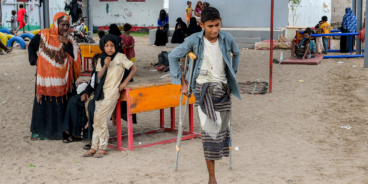
Three years on, Sudan remains the world’s largest displacement and humanitarian crisis. Since April 2023, an estimated 14 million people have been forced from their homes, both within Sudan and across its borders.[10] Thirteen million children are out of the classroom. Health and aid workers, humanitarian convoys and food supplies face targeted attacks.[11] Some 34 million people need aid – a figure that is four million higher than mid-June 2025 and represents two-thirds of the total Sudanese population.[12] The crisis is compounded by the “targeting of political leaders, lawyers, human rights defenders, journalists, and civilians.”[13]
Council action on Sudan, including recent developments
Since the October 2025 adoption of resolution 60/3, which last extended the FFM’s mandate, the Council met twice in an urgent setting to address atrocity crises. In a special session held on 14 November 2025, it adopted resolution S-38/1 on the human rights situation in and around El Fasher. During its 62nd regular session (15 June-8 July 2026), it convened an urgent debate on the human rights situation in and around El Obeid and adopted resolution 62/1.
Despite ongoing challenges related to the UN’s financial crisis and Sudanese authorities’ refusal to allow its members and secretariat access to the country, as well as RSF-imposed access restrictions, the Mission has been able to carry out its work and regularly report to the Council.[14]
Voting results on the last annual resolutions on Sudan (57/2 and 60/3), as well as consensual adoptions of resolutions on El Fasher and El Obeid, showed broad support, across all regional groups, for the FFM’s work and sent a clear message in favour of ongoing investigations and accountability.
Further international efforts towards atrocity prevention and accountability
While recent developments, including resolutions S-38/1 and 62/1, showed the gravity of Sudan’s situation and the Council’s ability to assume its responsibilities, including by exercising its prevention mandate, they did not lead the international community to fully prioritise Sudan. As outlined above, the Council can do more, within the purview of its mandate, to contribute to centring accountability in international efforts to solve the conflict and in decisions regarding the future of the country and its people.
As the FFM continues to investigate and establish the facts, circumstances and root causes of violations, collect, consolidate, analyse, record and verify evidence, and identify individuals and entities responsible with a view to ensuring that they are held accountable, it is essential for the Council and other UN bodies to regularly hear from the Mission in the framework of public debates on Sudan.
This is even more important as the FFM has outlined steps in favour of accountability and justice pillars,[15] and independent experts and organisations have stressed that impunity is fuelling the violence and pointed to additional steps the Council could take to move the accountability agenda forward.[16] These include States exercising their universal jurisdiction, the Security Council expanding the ICC’s jurisdiction to the entire territory of Sudan, and investigating the political economy of the conflict. As part of the latter, the Council and other UN bodies, as well as UN experts, could do more to document and report on the role of external actors who have benefited from the conflict and enabled and fuelled atrocities by backing warring parties despite knowledge, evidence, and risks of further crimes under international law. The Council should further address the role of these external actors and stand ready to act to prevent, and respond to, atrocity crises, as it did through its special session on El Fasher and urgent debate on El Obeid.
These efforts towards accountability should be complemented by broader processes aimed at truth, reparations, institutional reform and guarantees of non-recurrence, as outlined by the FFM itself.[17] They could also be supported by initiatives such as the Coalition on atrocity prevention in Sudan,[18] whose launch signalled its member states’ willingness to enhance action to deter atrocities, support civilian protection initiatives, and support investigations and justice, as well as the Banjul Joint Declaration, adopted in May 2026 by Fact-Finding Missions from the UN and (AU) Union human rights systems. In it, among other things, the two FFMs reaffirmed their commitment to continue documenting violations and abuses, supporting efforts to protect civilians, and contributing to peace, justice, accountability and dignity for the Sudanese people.[19]
[1] “High Commissioner Türk on Sudan: Let aid in and keep weapons out,” 26 February 2026, https://www.ohchr.org/en/statements-and-speeches/2026/02/high-commissioner-turk-sudan-let-aid-and-keep-weapons-out (accessed on 13 July 2026).
[2] “Situation of human rights in the Sudan: Report of the United Nations High Commissioner for Human Rights,” UN Doc. A/HRC/61/24, 13 January 2026, paras. 102-103.
[3] “‘A war of atrocities’: Sudan civilians deliberately targeted, UN Fact-Finding Mission reports international crimes on large-scale,” 5 September 2025, https://www.ohchr.org/en/press-releases/2025/09/war-atrocities-sudan-civilians-deliberately-targeted-un-fact-finding-mission (accessed on 13 July 2026).
[4] “High Commissioner Türk on Sudan: Let aid in and keep weapons out,” op cit.
[5] “Sexual violence as a weapon of war in Sudan’s three-year conflict,” 26 June 2026, https://www.ohchr.org/en/stories/2026/06/sexual-violence-weapon-war-sudans-three-year-conflict (accessed on 13 July 2026). See also “Deputy High Commissioner Dabo: Sudan cannot be forgotten: Enhanced Interactive Dialogue on oral update of the fact-finding mission for the Sudan,” 15 June 2026, https://www.ohchr.org/en/statements-and-speeches/2026/06/deputy-high-commissioner-dabo-sudan-cannot-be-forgotten; FIDH and ACJPS, “Sudan: Sexual violence against Masalit women extends into exile in Chad,” 17 December 2025, https://www.fidh.org/en/region/Africa/sudan/sudan-sexual-violence-against-masalit-women-extends-into-exile-in (both accessed on 11 August 2026).
[6] OHCHR, “Sudan: Evidence in El-Fasher reveals genocidal campaign, targeting non-Arab communities, UN Fact-Finding Mission says,” 19 February 2026, https://www.ohchr.org/en/press-releases/2026/02/sudan-evidence-el-fasher-reveals-genocidal-campaign-targeting-non-arab (accessed on 13 July 2026).
[7] OHCHR, “Sudan: Mass killings, abductions, and gang rape carried out in El Fasher constitute distinct markers of genocide, UN Fact-Finding Mission says as it launches urgent inquiry into El Obeid,” 8 July 2026 https://www.ohchr.org/en/press-releases/2026/07/sudan-mass-killings-abductions-and-gang-rape-carried-out-el-fasher (accessed on 13 July 2026). In its latest El Fasher report, Amnesty International concluded that the RSF has committed eight crimes against humanity and ethnic cleansing in El Fasher (“Sudan: City Under Siege, Children Under Fire: Rapid Support Forces’ Crimes Against Humanity in North Darfur,” 1 July 2026, https://www.amnesty.org/en/documents/afr54/1116/2026/en/ (accessed on 5 August 2026)).
[8] “Information Supplementing the Report ‘Sudan: hallmarks of genocide in El Fasher’,” UN Doc. A/HRC/62/CRP.4, 8 July 2026, para. 115.
[9] See also Human Rights Watch, “From Bogotá to El Fasher: The UAE’s Role in the Deployment of Colombian Fighters and Other Backing to the Rapid Support Forces in Sudan,” 25 May 2026, https://www.hrw.org/report/2026/05/25/from-bogota-to-el-fasher/the-uaes-role-in-the-deployment-of-colombian-fighters (accessed on 28 July 2026).
[10] “Three years of war in Sudan: A crisis the world can’t ignore,” 20 April 2026, https://www.ohchr.org/en/stories/2026/04/three-years-war-sudan-crisis-world-cant-ignore (accessed on 13 July 2026).
[11] “High Commissioner Türk on Sudan: Let aid in and keep weapons out,” op. cit.
[12] “Deputy High Commissioner Dabo: Sudan cannot be forgotten,” op. cit.
See DefendDefenders et al., “Sudan: Extend the mandate of the Fact-Finding Mission for two more years,” op. cit.
[13] “Paths to justice,” op. cit., para. 64. See also CPJ, “CPJ submits joint report to UN ahead of Sudan human rights review,” 20 July 2026, https://cpj.org/2026/07/cpj-submits-joint-report-to-un-ahead-of-sudan-human-rights-review/ (accessed on 11 August 2026).
[14] See DefendDefenders et al., “Sudan: Extend the mandate of the Fact-Finding Mission for two more years,” op. cit. See also Amnesty International, DefendDefenders and Human Rights Watch, “Q&A: Why should the mandate of the Fact-Finding Mission (FFM) for Sudan be extended at HRC57?” 27 August 2024, https://defenddefenders.org/qa-extend-ffm-sudan-hrc57/ (accessed on 14 July 2026).
[15] “Paths to justice,” op. cit., para. 65.
[16] See OHCHR “High Commissioner Türk on Sudan: Let aid in and keep weapons out,” op cit.; “High Commissioner Türk calls for strong action at the highest level to prevent atrocity crimes in Sudan,” 3 July 2026, https://www.ohchr.org/en/statements-and-speeches/2026/07/high-commissioner-turk-calls-strong-action-highest-level-prevent (accessed on 13 July 2026); FIDH and ACJPS, “‘We demand justice. We deserve justice’: New report calls for urgent accountability for atrocities of Sudan,” 21 May 2025, https://www.fidh.org/en/region/Africa/sudan/we-demand-justice-we-deserve-justice-new-report-calls-for-urgent (accessed on 11 August 2026).
For context, see DefendDefenders et al., “Sudan: Extend the mandate of the Fact-Finding Mission for two more years,” op. cit.; “The Human Rights Council should convene a special session on Sudan to address the situation in and around El Fasher, North Darfur, and ensure urgent investigations,” 3 November 2025, https://defenddefenders.org/sudan-call-for-hrc-special-session-elfasher/; “Sudan: the Human Rights Council should urgently address the situation in and around El Obeid, North Kordofan, and take bold steps towards atrocity prevention and accountability,” 26 June 2026, https://defenddefenders.org/sudan-urgent-call-on-hrc-to-address-el-obeid/ (all accessed on 13 July 2026).
[17] “Information Supplementing the Report “Sudan: hallmarks of genocide in El Fasher,” op. cit., para. 118.
[18] See Human Rights Watch, “New Sudan Atrocity Prevention Coalition Needs to Act Fast,” 11 March 2026, https://www.hrw.org/news/2026/03/11/new-sudan-atrocity-prevention-coalition-needs-to-act-fast (accessed on 14 July 2026). Original statement: “UN Fact Finding Mission report on El Fasher: Sudan Core Group foreign ministers’ statement,” 26 February 2026, https://www.gov.uk/government/news/un-fact-finding-mission-report-on-el-fasher-sudan-core-group-foreign-ministers-statement (accessed on 14 July 2026).
[19] “Banjul Joint Declaration on Sudan Adopted by the Joint Fact-Finding Mission of the African Commission on Human and Peoples’ Rights on the Human Rights Situation in the Sudan & the United Nations Independent International Fact-Finding Mission for the Sudan,” 12 May 2026, available at: https://achpr.au.int/en/news/press-releases/2026-05-12/banjul-joint-declaration-sudan (accessed on 17 July 2026).
Ralph Bunche Institute for International Studies
The Graduate Center, CUNY
365 Fifth Avenue, Suite 5203
New York, NY 10016-4309, USA