13 November 2026
Podcast

The Global Centre for the Responsibility to Protect welcomes the landmark judgment by the International Court of Justice (ICJ) in The Gambia v. Myanmar case. By finding Myanmar responsible for genocide against the Rohingya, the Court has delivered a historic affirmation of the rights of Rohingya survivors and a powerful reminder that all states parties to the Genocide Convention share an obligation to prevent and punish genocide.
In a nine-to-six decision, the Court found that Myanmar committed genocide against the Rohingya in northern Rakhine State during the military’s 2017 “clearance operations,” including through killings, the infliction of serious bodily and mental harm and the imposition of measures intended to prevent births within the group. Taken together, the Court is convinced that the most logical conclusion is that Myanmar intended to destroy a substantial part of the Rohingya population.
The Court also found that Myanmar failed to prevent acts of genocide by individuals acting alongside its security forces, failed to punish genocide and other prohibited acts and failed to enact the domestic legislation necessary to give effect to its preventive obligations under the Genocide Convention. It further found that Myanmar had violated the Court’s third provisional measure in its January 2020 order to prevent the destruction and ensure the preservation of evidence of alleged genocidal acts.
The judgment is historic for international justice. The ruling marks the first time that a state has been found responsible for genocide. The judgment also marks an important development in international law. Building on its 2007 ruling in Bosnia v. Serbia, the ICJ has now explicitly clarified that states can be held responsible for failing to prevent genocide even if genocide does not ultimately occur. The obligation to prevent arises as soon as a state knows, or should normally know, of a serious risk of genocide. This reinforces the preventive nature of the Genocide Convention: states cannot wait for genocide to happen before they are required to act.
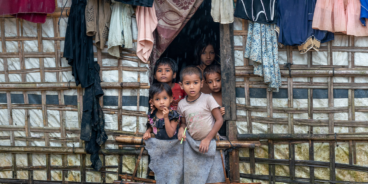
For Rohingya survivors, this ruling is an important step towards recognition, justice and redress. The Global Centre recognizes the courage of Rohingya and Myanmar civil society advocates, particularly women human rights defenders, who documented atrocities and demanded accountability at the national, regional and international level at great personal risk. Nearly a decade after the military’s 2017 “clearance operations” forced more than 900,000 Rohingya to flee Rakhine State, this judgment represents a historic milestone for a population that has endured decades of persecution, culminating in a genocide. Although no judgment can undo their suffering or restore the lives lost, it affirms a truth that Rohingya survivors have courageously fought for the international community to recognize.
Prior to the ruling, the perpetrators of atrocities against the Rohingya have enjoyed near-total impunity. The ICJ proceedings have provided a critical avenue for holding Myanmar accountable under international law, while reaffirming that sovereignty cannot shield states from their international legal obligations or excuse atrocity crimes committed against populations under their protection. We commend The Gambia, the Organisation for Islamic Cooperation and the 11 states who intervened in the case for their efforts to ensure justice for the Rohingya.
Savita Pawnday, Executive Director of the Global Centre, said, “The ICJ judgment is a historic recognition of the genocide committed against the Rohingya, but it must also serve as a call to action for every state party to the Genocide Convention. The obligation to prevent genocide does not end with a court ruling. States that welcome this judgment must now demonstrate their commitment by using every available political, economic and diplomatic lever to end support for those responsible for atrocities and protect the Rohingya and all populations at risk in Myanmar.”
Accountability for past atrocities must be accompanied by urgent action to prevent further crimes. Failure to translate this historic ruling into concrete preventive action risks perpetuating the conditions that enabled the Rohingya genocide. The Rohingya, both inside Myanmar and displaced beyond its borders, continue to face grave risks, including ongoing widespread abuses by the military and the Arakan Army. The same military responsible for the 2017 atrocities continues to commit war crimes and crimes against humanity across Myanmar following its 2021 coup. These ongoing abuses, compounded by discriminatory laws, the denial of citizenship, restrictions on movement and protracted displacement, perpetuate the conditions that enabled the 2017 genocide and place the Rohingya at heightened risk of further genocidal acts.
The judgment must be a catalyst for action. The Global Centre calls on all states, but particularly the states parties to the Genocide Convention, as well as relevant regional and international institutions, to take the following urgent actions:
The Global Centre urges Myanmar to comply fully and without delay with the Court’s binding judgment, including by enacting legislation, conducting credible investigations and prosecutions, providing assurances and guarantees of non-repetition and implementing the Court-ordered restitution measures. Myanmar must report to the Court within two years on the restitution measures it has adopted and, where full reparation through restitution is materially impossible, specify the amount and modalities of compensation.
Genocide does not end when a judgment is read. For Rohingya survivors, justice cannot be measured by legal recognition alone, but by whether they can finally live free from persecution, reclaim their rights and determine their own futures in safety and dignity. Every state that welcomes this ruling now faces a choice: continue business as usual with those responsible for atrocities, or use every available tool to uphold its obligations, protect the Rohingya and prevent further atrocities across Myanmar.
Ralph Bunche Institute for International Studies
The Graduate Center, CUNY
365 Fifth Avenue, Suite 5203
New York, NY 10016-4309, USA