9 September 2026
Atrocity Alert
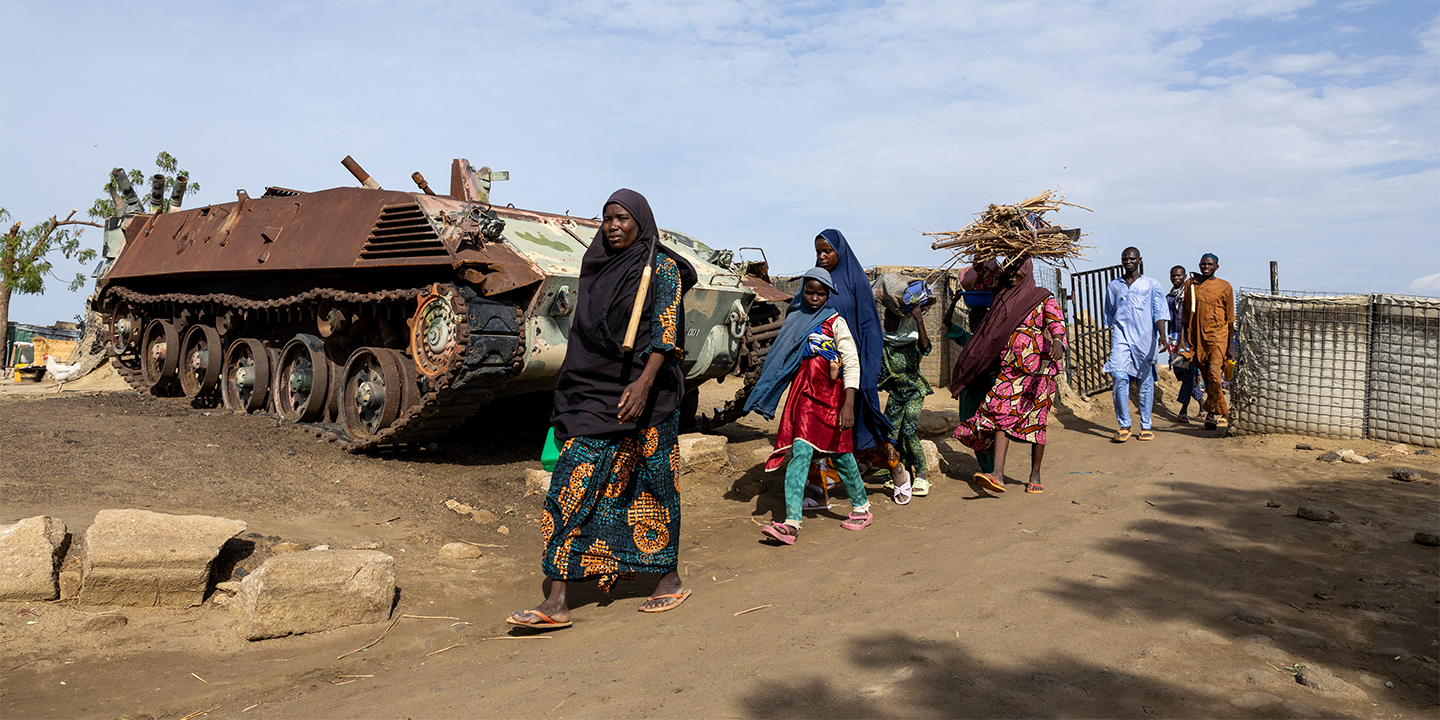
Airstrikes conducted as part of government counterterrorism and anti-banditry operations in Nigeria and the wider Lake Chad Basin continue to pose a grave risk to civilians. At least 100 civilians – including a significant number of women and girls – were reportedly killed in a Nigerian military airstrike on Tumfa market in Zurmi District, Zamfara State, on 10 May. Witnesses said military aircraft were seen circling the area around midday before returning hours later and striking the busy market. Amnesty International’s office in Nigeria described the scene as “chaotic” with “screams, blood and bodies all over the ground.” Following the attack, Amnesty International warned that “this pattern of human rights violations is increasingly becoming the norm, with villagers at the receiving end of atrocities by both armed groups, bandits and the military.”
In recent years, air operations have become an integral tactic in the Nigerian authorities’ counterterrorism and anti-banditry efforts against armed extremist groups — including Boko Haram and the so-called Islamic State in West Africa Province — as well as armed bandit groups in the northwest. These operations have intensified in response to escalating insecurity in the Lake Chad Basin, where armed groups continue to attack civilians and security forces, but have repeatedly resulted in civilian harm, particularly when they hit markets and other densely populated civilian areas. On 11 April the Nigerian Air Force carried out an airstrike on a crowded market in Jilli village in northeastern Nigeria, reportedly killing at least 200 civilians.
Risks to civilians are further compounded by cross-border military operations in the wider Lake Chad Basin – encompassing Cameroon, Chad, Niger and Nigeria – where regional forces are also conducting campaigns against Boko Haram and affiliated armed groups. Between 8 and 10 May Chadian fighter jets reportedly bombed islands on the Nigerian side of Lake Chad believed to be under Boko Haram control. According to local fishermen who escaped the attacks, at least 40 fishermen went missing and are feared to have drowned because of the airstrikes.
In response, UN High Commissioner for Human Rights Volker Türk stressed, “It is crucial that both Nigerian and Chadian authorities conduct prompt, thorough, independent and impartial investigations into these disturbing incidents and ensure that those responsible for any violations are held to account, in accordance with international standards.”
Nigerian and Chadian authorities should strengthen civilian harm mitigation measures, including improved intelligence verification, targeting procedures and precautionary steps to ensure compliance with the principles of distinction, proportionality and precaution. Independent and transparent investigations must be promptly carried out into all allegations of civilian harm resulting from airstrikes. Those responsible for violations of international humanitarian and human rights law should be identified and held accountable. The international community should also press both governments to reinforce accountability mechanisms and adopt stronger civilian protection policies in military operations.
Intensifying clashes between rival gang factions in Haiti erupted on 10 May, killing at least 78 people, injuring 66 others and displacing more than 5,300 residents in Cité Soleil and Croix-des-Bouquets on the outskirts of Port-au-Prince. While there is no confirmed overall civilian death toll yet, initial reporting from the UN Integrated Office in Haiti (BINUH) said 10 civilians were among those killed. Homes and civilian property were also burned, while families fled and sheltered along major roadways amid ongoing gunfire.
The clashes disrupted access to healthcare and other essential service, forcing La Fontaine Hospital to evacuate patients and suspend operations on 12 May – the second time this year it has been forced to close. The announcement came one day after Médecins Sans Frontières reported treating dozens of gunshot victims in less than 12 hours before suspending operations in Cité Soleil.
Witnesses told local media that the violence allegedly involved the Terre Noire and Pierre 6 gangs against the Chen Mechan, 400 Mawozo and Taliban gangs. Although these groups belong to the same Viv Ansanm coalition, clashes between factions are not unusual as gangs compete for territorial control and revenue streams.
The latest violence follows months of sporadic clashes in Cité Soleil and Croix-des-Bouquets. Earlier outbreaks between rival gangs during March and April displaced thousands and caused significant casualties, highlighting the continued exposure of civilians to what the UN Human Rights Office has described as a “vortex of violence.” The deadly incidents also reflect the fragmented and volatile security environment in Haiti, as well as the limited capacity of authorities to protect populations facing heightened risks across Port-au-Prince and, increasingly, the Artibonite and Centre departments.
While recent security operations have limited some expansion of violence in parts of Port-au-Prince, widespread abuses – including killings, kidnappings and sexual violence – persist. Security forces themselves have also been implicated in violations. According to BINUH, at least 1,642 people were killed and 745 injured between January and March. More than 69 percent of these casualties resulted from operations by security forces, sometimes with support from a private military company using drones. BINUH also documented continued allegations of executions and attempted summary executions involving the police.
Ongoing insecurity has contributed to a sharp rise in sexual and gender-based violence. During the first quarter of the year, gangs were responsible for acts of sexual violence against 292 victims, mainly women and girls aged 12 to 17. According to BINUH, gang rape remained the primary violation, accounting for 83 percent of documented incidents. Gangs systematically use sexual violence, including collective rape, sexual slavery and mutilation, to exert territorial control and punish communities.
National and international partners should urgently strengthen civilian protection measures. Haitian authorities should accelerate police vetting, investigate all alleged violations and ensure accountability by fully operationalizing the specialized judicial units for mass crimes, including sexual violence and killings. Donors should also increase humanitarian funding to support affected communities.
Five months after a brutal crackdown on nationwide protests in January, reports have emerged of increasing repression by Iranian authorities against its population. Since 28 February over 4,000 people are estimated to have been arrested on charges related to national security and at least 21 have been executed, according to the UN High Commissioner for Human Rights. Individuals have been executed on charges relating to their participation in protests, alleged affiliation with opposition groups and supposed espionage.
During the January protests against the deepening economic crisis and state repression, thousands of individuals – with some estimates as high as 50,000 – were arrested. Thousands of Iranians were also killed, with estimates reaching tens of thousands. Many individuals remain detained, raising concerns over the risk of torture, coerced confessions and capital punishment. Ethnic and religious minority communities remain particularly vulnerable. In January the UN Independent International Fact-Finding Mission on the Islamic Republic of Iran (FFMI) reviewed reports of brutal crackdowns by authorities in ethnic minority provinces, while several Kurdish individuals are reported to be among those recently executed. The FFMI has also warned that ongoing violations by Iranian authorities may amount to crimes against humanity.
Meanwhile, Iranian authorities have maintained a near-total internet shutdown for 80 days – marking one of the longest shutdowns globally – in what Mai Sato, the UN Special Rapporteur on the human rights situation in the Islamic Republic of Iran, warned has made it “impossible to grasp the full understanding of the human rights situation in the country.”
These domestic human rights concerns continue to unfold alongside regional instability since 28 February, when the United States (US) and Israel launched a joint military attack on Iran. A briefing paper by Amnesty International underscored the “dual atrocity risks” faced by Iranians trapped between unlawful US-Israeli strikes and intensifying domestic repression, all while under a tenuous ceasefire.
Following an ongoing extension to an initial temporary ceasefire agreed on 8 April, recent clashes between US and Iranian vessels in the Strait of Hormuz have tested the truce. Continued disagreements between the US and Iran, including threats of renewed US strikes, have also prevented agreement on a permanent end to hostilities. Over 3,000 Iranians were estimated to have been killed during US-Israeli attacks between 28 February and 8 April, while dozens of educational, medical and energy facilities were damaged or destroyed, including in incidents that may amount to war crimes.
All states with influence must press for a permanent ceasefire between Iran and the US, including across the region. Iranian authorities must refrain from using intimidation tactics to repress dissent, including the use of capital punishment, and release all protesters detained for exercising their human rights. The international community must ensure investigations into, and accountability for, potential atrocity crimes committed by Iranian, US and Israeli authorities.
Ralph Bunche Institute for International Studies
The Graduate Center, CUNY
365 Fifth Avenue, Suite 5203
New York, NY 10016-4309, USA