30 September 2026
Atrocity Alert
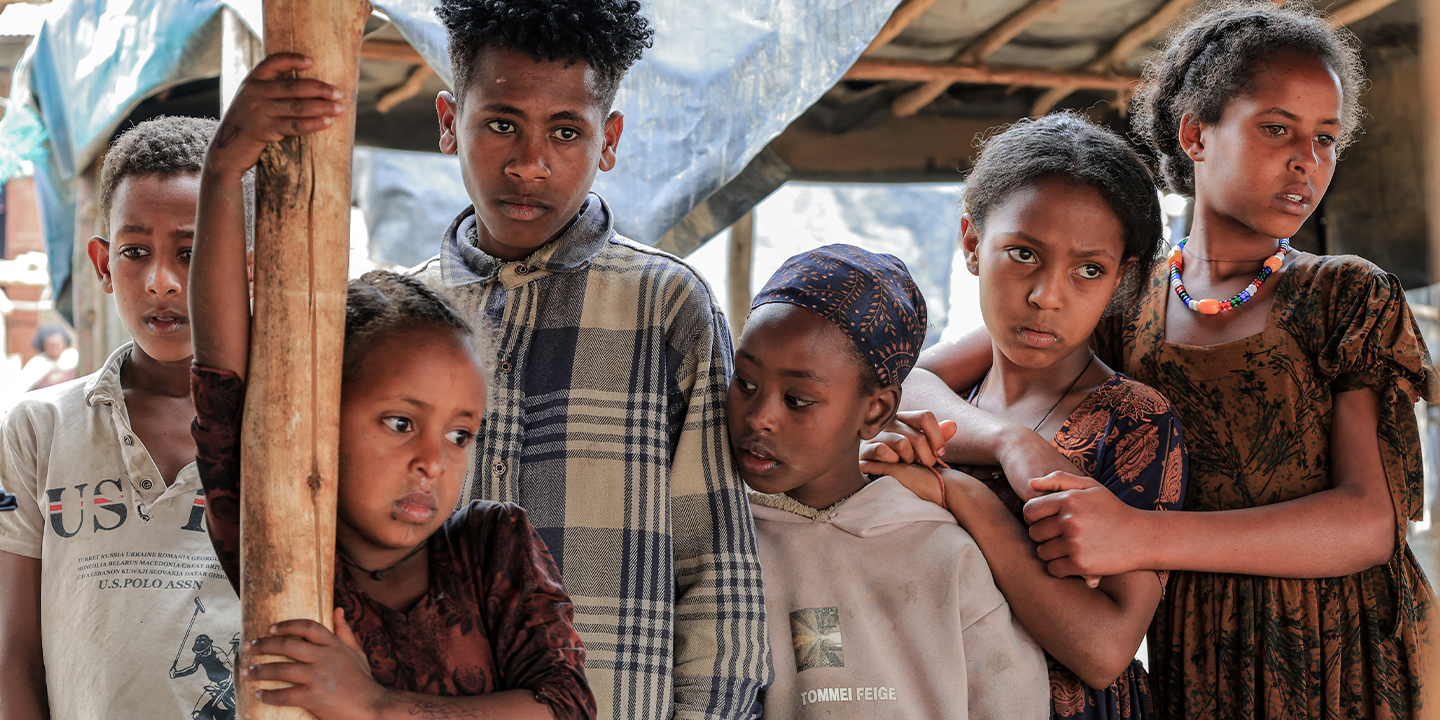
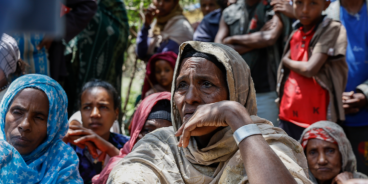
Civilian casualties are mounting nearly two weeks after large-scale fighting resumed across northern Ethiopia. Federal and allied forces retook Mekelle, the capital of Tigray, between 3-4 October after forces aligned with the Tigray People’s Liberation Front withdrew, but hostilities have continued elsewhere in Tigray. At least 52 people were reportedly killed in fighting around Alamata between 26 and 29 September. On 5 October humanitarian sources reported that airstrikes killed at least 17 people in Adwa and Sheraro. A separate drone strike reportedly killed at least eight civilians, including a child, at a displacement site near Sheraro. Responsibility for some of the recent strikes has not been independently verified.
The rapidly shifting frontlines place populations already devastated by the 2020–2022 war at renewed risk of atrocities. Reports of forced recruitment, including of boys as young as 15, have emerged alongside displacement and disruptions to humanitarian operations. Communications and access to parts of Tigray remain constrained, limiting independent monitoring of violations.
As the renewed hostilities have been unfolding, the conflict is becoming increasingly entangled in existing disputes with neighboring states. Over the past year, leaders in Eritrea and Ethiopia have engaged in increasingly hostile rhetoric due to Prime Minister Abiy Ahmed’s continuing demands for landlocked Ethiopia to gain maritime access to the Red Sea and other long-standing grievances. Since the start of the latest violence Ethiopia has accused Eritrea, Egypt and Sudan of supporting opposition forces in Tigray, allegations they deny. On 1 October Eritrea severed diplomatic relations with Ethiopia after Ethiopian authorities closed their embassy in Asmara and expelled Eritrean diplomats. The fighting now risks deepening regional rivalries and drawing neighboring states more directly into Ethiopia’s internal conflict, further threatening civilians and regional stability.
The Global Centre for the Responsibility to Protect’s Ethiopia Expert, Sarah Hunter, said, “Ethiopia’s unresolved internal conflicts are increasingly colliding with regional rivalries. Without credible avenues for resolving political grievances and meaningful progress toward accountability for past atrocities, renewed violence risks not only repeating previous patterns of civilian harm but also drawing competing regional actors deeper into the crisis.”
The UN Security Council should urgently convene a public briefing on Ethiopia and the regional escalation. UN member states should press for unhindered humanitarian access and independent monitoring of civilian protection and human rights conditions. The Human Rights Council should consider urgent action and strengthened UN Human Rights Office reporting if violations continue, while supporting accountability for past and ongoing violations. The African Union and UN should also support peaceful negotiations to address political grievances and resolve disputes over Red Sea access and other interstate disputes before competing regional alignments fuel further conflict.
Saturday, 10 October, will mark one year since the so-called ceasefire in Gaza took effect. Yet, Israel has denied Palestinians the much-needed reprieve offered by the agreement by imposing conditions unsuitable for life in Gaza. These conditions include near-daily attacks, an inescapable presence of military drones, continued aid restrictions, expanding Israeli control over the enclave and ongoing destruction, including continued attacks on healthcare. Israel’s ongoing attacks and restrictions reflect a pattern seen during previous ceasefire agreements.
Over the last year, more than 1,400 people have been killed. None of Gaza’s 57 hospitals and field hospitals are fully operational, and of those only 35 are partially functioning. Medical evacuations for thousands are being prevented, and the entry of lifesaving medicines and medical equipment is consistently rejected. All six wastewater treatment plants have shut down, affecting water, sanitation and hygiene systems. While approximately 81 percent of all structures in Gaza had been damaged or destroyed before the ceasefire, a recent UN assessment found that destruction of buildings has increased nearly 10 percent since last October. Newly updated satellite imagery has revealed the even greater extent of the destruction, capturing entire areas across the enclave that have been leveled. In August the Shelter Cluster estimated that 94 percent of Gaza’s population requires “shelter or household assistance” and that some “two thirds of households are living in tents, makeshift shelters or damaged housing.”
Medical Aid for Palestinians’ Gaza Director, Fikr Shaltoot, stressed, “Palestinians should not have to spend another year simply striving to stay alive as this genocide continues with impunity. Only when the killing stops, hospitals can function, families have enough food and clean water, and Palestinians can return home and begin rebuilding their lives can we call this a ceasefire.”
Despite mounting evidence of Israel’s ongoing atrocities in Gaza, including genocide, the ceasefire continues to be approached primarily as a post-conflict situation. As Israel continues to deny entry of reconstruction materials, the international community has nevertheless shifted its focus to devising funding initiatives for Gaza’s recovery. On 23 September the United States-led Board of Peace announced a $2.45 billion recovery plan for Gaza over the next six months. The plan has not yet secured funding, is conditioned on the decommissioning of Hamas and is significantly smaller in scope than the initial plan announced in January 2026.
The international community must prioritize the total implementation of the ceasefire, acting with the understanding that member states retain their responsibility to protect Palestinians from atrocity crimes, irrespective of the ceasefire’s status. Recovery and reconstruction must be underpinned by a human rights-based approach that is Palestinian-led and informed by their expertise, rights and agency. Such plans should include the blueprint for recovery developed by Oxfam International in partnership with Palestinian organizations. Accountability for Israel’s atrocities must remain central to coordinated multilateral action.
On 7 October the UN Human Rights Council (HRC) concluded its 63rd session in Geneva. During the session, member states discussed responses to ongoing atrocity crises, including in Myanmar (Burma), Syria, the Central African Republic, Belarus, Iran, Ukraine, Somalia, Haiti and the Democratic Republic of the Congo.
The HRC’s Special Procedures and investigative mechanisms play an essential role in providing early warning, maintaining scrutiny and identifying prevention and response strategies for atrocity crises. On 22 September the Group of Human Rights Experts on Nicaragua (GHREN) released its latest report, documenting enforced disappearances and deaths in state custody of people detained on political grounds. The Group verified 161 cases of enforced disappearance since April 2018 – likely an undercount – finding that since 2023 the practice has evolved into the strategic and prolonged disappearance of an increasingly diverse range of victims. As the only independent mechanism mandated to investigate crimes against humanity in Nicaragua, the GHREN remains essential to monitoring the government’s persecution.
Following sustained civil society calls, member states renewed the mandate of the Fact-Finding Mission (FFM) on Venezuela for two years. While the FFM acknowledged changes over the past nine months, including prisoner releases and modified political discourse, the Mission concluded that it “has not identified sufficient indications of a genuine and sustainable break” from the patterns of repression under President Nicolás Maduro. The FFM’s investigations will remain vital to measuring progress against concrete human rights benchmarks and assessing whether atrocity risks are receding or evolving.
Cross-regional member states, including four African states – The Gambia, Malawi, Mauritius and South Africa – supported the one-year renewal of the Sudan FFM. Notably, The Gambia and Malawi changed their positions from abstention to support. The resolution references the FFM’s February 2026 report, which concluded that Rapid Support Forces’ conduct in and around El Fasher constitute crimes against humanity and war crimes and may display hallmarks of genocide and noted the FFM’s call. It also reiterated the FFM’s calls for compliance with relevant Security Council resolutions, including the arms embargo on Darfur, and for the first time noted the FFM’s calls for military and material support to all parties to cease. Since September the Security Council has been discussing the future of Sudan’s sanctions regime and possible expansion.
Member states also renewed the mandate of the Special Rapporteur on Afghanistan, ensuring continued independent monitoring and reporting on the human rights situation, including the systematic violations and abuses committed against women and girls. The Special Rapporteur’s work, alongside that of the Independent Investigative Mechanism for Afghanistan, remains critical to documenting violations that may amount to gender persecution and other atrocity crimes and advancing accountability. The renewal comes two years after Australia, Canada, Germany and the Netherlands committed to hold the Taliban accountable for violations of the rights of women and girls under the Convention on the Elimination of All Forms of Discrimination Against Women, potentially before the International Court of Justice.
In urgent or protracted crises, HRC mandates remain indispensable to maintaining international attention on atrocity risks, and, for affected communities, are often the only avenue where they can be heard. UN member states must ensure their findings are matched by decisive action to make the promise of the Responsibility to Protect a reality.
Ralph Bunche Institute for International Studies
The Graduate Center, CUNY
365 Fifth Avenue, Suite 5203
New York, NY 10016-4309, USA