
23 October 2026
Podcast
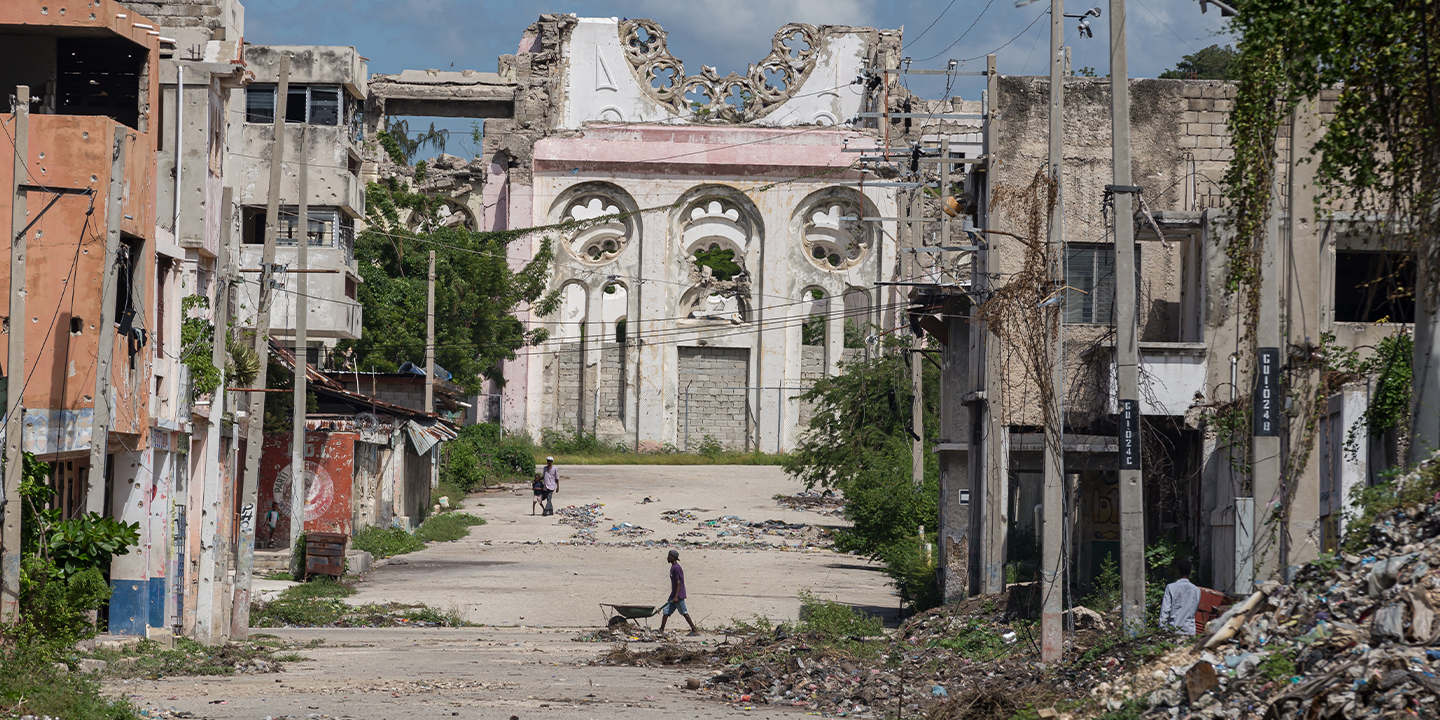
Following the 18 October ambush in which four Salvadoran personnel serving with the UN-backed Gang Suppression Force (GSF) went missing, El Salvador deployed some 2,500 military personnel to Haiti, initially for a search-and-rescue mission. Since then, security operations have intensified amid the involvement of multiple actors, including Haitian security forces, the GSF, a private military contractor and self-defense groups. The UN has indicated that most of the additional Salvadoran troops are operating outside the GSF’s mandate and monitoring mechanisms, raising concerns about command and accountability and the risk of further fragmentation.
The increased use of heavy weapons, attack helicopters and drones in densely populated areas of Port-au-Prince has significantly heightened risks to civilians. According to the National Human Rights Defense Network (RNDDH), at least seven explosive drones were deployed on 5 November in strikes targeting gang strongholds. Haitian authorities have confirmed that Mathias Saintil, leader of the Nan Boston gang, died following the operations. RNDDH reported that he sustained fatal injuries in a drone strike, and that the operations also resulted in civilian casualties. On 8 November Haitian police and Salvadoran troops destroyed the home of Wilson Joseph (Lanmò San Jou), leader of the 400 Mawozo gang.
Residents have reportedly been trapped between gangs and security operations, while heavy clashes and blocked roads restrict access to essential services. Médecins Sans Frontières has reported treating women and children wounded by gunfire and drone explosions, noting some patients taking several hours to reach its hospitals.
The scale of the Salvadoran deployment, unclear command arrangements and uncertain duration raise questions about whether it will extend beyond the stated rescue mission. President Nayib Bukele has argued that he could replicate in Haiti the hard-line crackdown pursued in El Salvador, which has come under intense scrutiny over serious human rights concerns. In March 2026 an independent group of international experts found reasonable grounds to believe that crimes against humanity had been committed under the state of exception.
Gangs have also adapted their tactics in response to intensified security operations. According to the UN Integrated Office in Haiti, they increasingly use retaliatory violence and intimidation against communities to preserve territorial control and spread fear. Before the deployment of additional Salvadoran troops, some gangs reportedly used civilians as human shields and prevented residents from fleeing. The UN Panel of Experts has documented how gangs adapt revenue-generating activities in response to security operations, including through kidnappings for ransom.
All armed actors must take every possible precaution to protect civilians, particularly in densely populated areas, and ensure that operations comply with International Human Rights Law. Haitian authorities and international partners should clarify command and accountability arrangements for all deployments, independently monitor and investigate civilian harm, including from drone strikes, and guarantee safe humanitarian access. Any use of force must comply with the principles of legality, necessity and proportionality. International support should advance a Haitian-led strategy that addresses the underlying drivers of gang violence, disrupts the networks and financing sustaining gangs and supports disarmament, demobilization and reintegration efforts.
Recurring attacks against civilians by armed groups continue to threaten populations across eastern Democratic Republic of the Congo (DRC). On 5 November armed men reportedly belonging to the Allied Democratic Forces (ADF), an armed group affiliated with the so-called Islamic State, attacked several villages in North Kivu province. According to local sources, at least 33 people were killed and more than 50 houses were set ablaze. Most victims reportedly suffered gunshot wounds, while others sustained severe burns or machete wounds.
During the latest attacks, the ADF also reportedly set fire to a local hospital in Cantine, forcing approximately 180 patients, including individuals with confirmed or suspected Ebola infections, to flee. The attack further jeopardizes an already fragile Ebola response, disrupting access to essential healthcare for populations facing public health risks. In a statement issued on 8 November, the Africa Centres for Disease Control and Prevention strongly condemned the deadly attack on civilians and stressed, “In an Ebola outbreak, every interruption to patient care, contact tracing and disease surveillance creates additional risks for communities already facing extraordinary hardship. People must be able to seek treatment safely, and health workers must be able to deliver essential services without fear of violence.”
The attack in Cantine is part of a broader pattern of insecurity that has repeatedly disrupted humanitarian operations and undermined efforts to contain the Ebola outbreak. According to the World Health Organization, as of 3 November, the outbreak had resulted in 10,668 confirmed cases and 5,198 deaths across 67 health zones in eight provinces, making it the largest and deadliest Ebola outbreak in the history of the DRC. Insecurity has further undermined the response, disrupting access to affected communities and essential medical services. On 24 August the International Red Cross and Red Crescent Movement reported 11 violent incidents during the first 100 days of the outbreak, during which 12 volunteers were injured, ambulances were damaged, including one that was set on fire, and emergency response equipment was destroyed.
The ADF and other armed groups must immediately cease attacks against civilians and civilian infrastructure, including healthcare facilities, respect the protection afforded to patients, healthcare workers and medical facilities and allow and facilitate safe, sustained and unimpeded humanitarian access to affected communities. The government of the DRC must adopt measures to strengthen the protection of civilians in North Kivu and other areas affected by attacks. The international community should maintain diplomatic engagement with the government of the DRC to strengthen civilian protection, address insecurity in eastern DRC and ensure accountability for atrocity crimes.
On 9 November a group of United States (US) lawmakers introduced a petition seeking to force a vote on legislation restoring Temporary Protected Status for Afghan nationals in the US. The petition requires 218 signatures to bring forward legislation to grant Afghans protection from deportation until mid-2029. The petition comes amid the Trump administration’s plans to deport at least 150 Afghans to Pakistan, which itself has engaged in a campaign of mass forced expulsions of Afghans. On 2 November 66 lawmakers urged the Trump administration to halt these deportations, and the following day a federal judge temporarily blocked them. At the time of writing, their status remains uncertain. If carried out, the deportations could expose those affected to serious risks of persecution.
The planned deportations form part of a wider pattern of forced returns to Afghanistan. The UN High Commissioner for Refugees recorded over 1.3 million returns from Iran and Pakistan between January and September 2026, 45 percent of which were deportations. In Pakistan, the threat of arrest and deportation is also undermining refugees’ access to essential services. Médecins Sans Frontières reported that Afghan refugees are delaying or foregoing medical care for fear of arrest, with some women and children experiencing preventable health complications.
Forcible return to Afghanistan is especially dangerous for women and girls, whose systematic discrimination likely constitutes gender persecution, a crime against humanity. Minorities, journalists and human rights defenders, as well as former government affiliates also face heightened risk of arbitrary detentions, enforced disappearances and systematic discrimination.
Pressure to deport Afghans is also mounting in Europe, where several states are seeking closer cooperation with Taliban de facto authorities to facilitate returns. On 23 June the European Commission hosted the first Taliban delegation in Brussels since the 2021 takeover. Such engagement risks conferring legitimacy on the Taliban while facilitating policies that expose Afghans to persecution. Nine UN experts warned European Union (EU) member states that deporting Afghan nationals risk breaching their non-refoulement obligations, cautioning that engagement without clear human rights conditions risks normalizing the Taliban’s abuses.
Afghanistan’s protection crisis requires sustained international engagement that places the rights and safety of Afghans – whether in their country of origin or abroad – at its center. The US, EU member states and regional governments should suspend scheduled forced returns and ensure that all Afghans receive individual assessments of their protection needs, in accordance with international law and the principle of non-refoulement. Any engagement with the Taliban should be conditional on measurable improvements in human rights protections. States should also scale up flexible, needs-based humanitarian funding for affected populations.
Ralph Bunche Institute for International Studies
The Graduate Center, CUNY
365 Fifth Avenue, Suite 5203
New York, NY 10016-4309, USA