
23 October 2026
Podcast
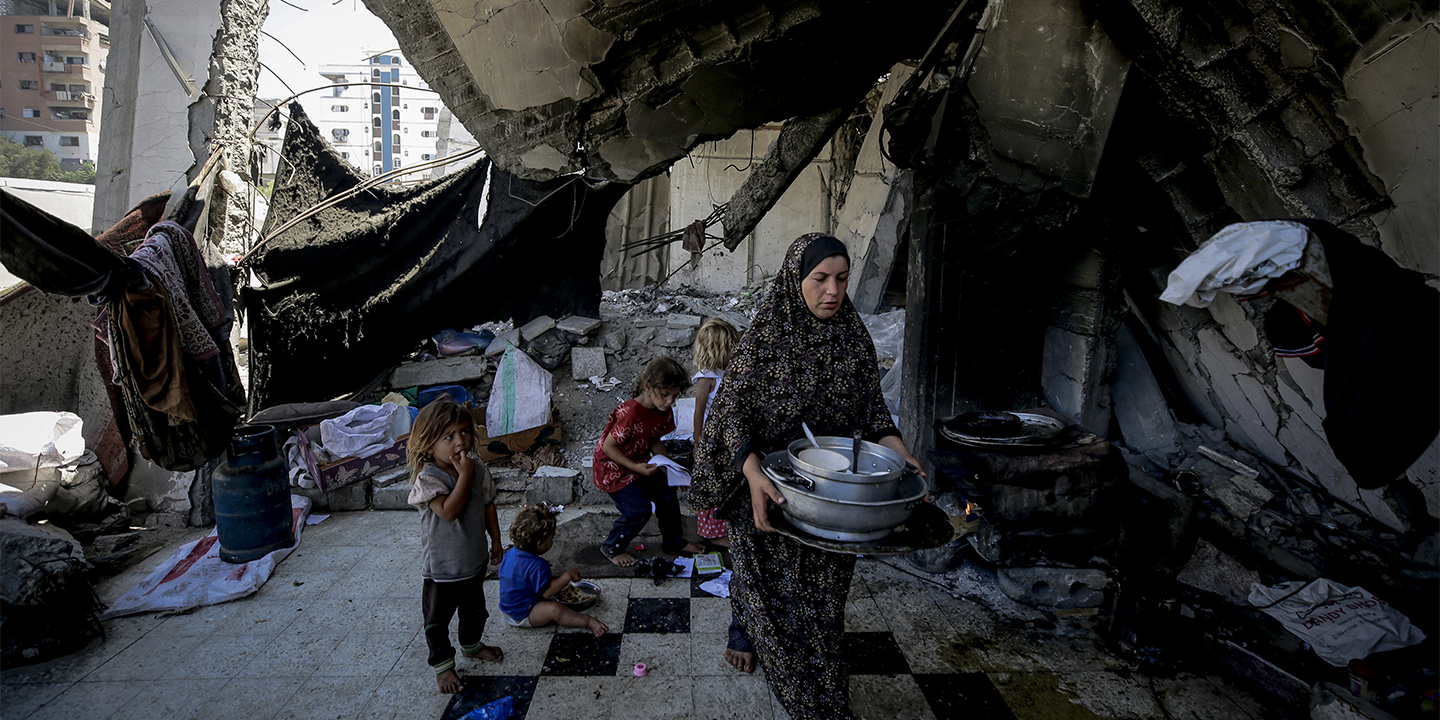
On 3 September Israel’s Minister of National Security, Itamar Ben-Gvir, unveiled a plan to forcibly displace roughly 2 million Palestinians from Gaza over the next seven years. The announcement followed comments by Defense Minister Israel Katz, who on 2 September renewed discussions on an earlier proposal to facilitate the “voluntary migration” of Palestinians from Gaza, stating that “in the end, there is no real solution for Gaza without this migration.” Ben-Gvir’s plan seeks to establish a so-called “ministry of migration” to manage the process and allocate funds to third countries to receive Palestinians. His announcement came days after he posted, and later deleted, an artificial intelligence-generated video on social media portraying himself overseeing Palestinian prisoners on a conveyor belt being sent to detention camps.
The renewed momentum to depopulate Gaza has drawn international condemnation, particularly as Ben-Gvir’s plan would amount to ethnic cleansing. Foreign Ministers of eight Arab and Muslim states – including Jordan, Türkiye and Egypt – issued a joint condemnation of the statements by Katz and Ben-Gvir, calling on the UN Security Council to “shoulder its responsibilities and firmly confront any attempts to impose a new demographic or geographic reality in the Occupied Palestinian Territory.” A European Commission spokesperson stressed that the European bloc rejects “any attempt at demographic or territorial changes in the Gaza Strip” and warned against forced displacement of Palestinians.
The Global Centre raised alarm in February 2025 that rhetoric supporting the so-called “resettlement” of Palestinians in Gaza – including from the United States – would “not only jeopardize the ceasefire, but also exacerbate the conditions that enable the commission of further atrocities and embolden perpetrators.”
Against this backdrop, recovery and reconstruction deliberations progress with negligible Palestinian participation or ownership. Despite more than 10,000 Palestinians believed to be buried under the rubble, Israeli authorities are engaged in the removal, crushing and relocation of rubble in areas of Gaza under their control. On 7 September UN Special Rapporteur on the situation of human rights in the Palestinian territory occupied since 1967, Francesca Albanese, warned that any large-scale removal of rubble in Gaza could lead to the destruction of evidence of “atrocity crimes,” including “genocide,” – as reports have suggested – and that any state or company supporting the destruction or removal “could incur international criminal responsibility in connection to those crimes.”
All states must urgently press Israel to halt any attempts at forcibly displacing Palestinians from Gaza, mobilize pressure to allow independent investigators into the enclave and ensure Palestinian agency and ownership in recovery and reconstruction efforts. Accountability for Israel’s atrocities must remain central to coordinated multilateral action, including measures to deter future crimes and prevent the deepening of Israel’s unlawful occupation.
The latest report by the UN Human Rights Council (HRC)-mandated Fact-Finding Mission (FFM) for the Sudan concluded that foreign recruitment and external support networks are fueling the war, strengthening the military capabilities of the warring parties and enabling increasingly sophisticated military operations. Among its findings, the report highlighted the role of foreign suppliers in expanding the drone capabilities of both the Rapid Support Forces (RSF) and Sudanese Armed Forces (SAF), enabling strikes beyond front lines. These enhanced capabilities have had a devastating impact on civilians, killing and injuring thousands and destroying homes, hospitals, schools, markets and other civilian infrastructure, while disrupting access to basic services and humanitarian assistance.
The report’s findings illustrate how networks spanning multiple countries are sustaining the conflict. Since the outbreak of fighting in April 2023, the RSF and SAF have been accused of receiving military, logistical, operational, financial and other support from foreign actors. The FFM found reasonable grounds to believe that private entities, recruiters and logistical facilitators operating from Colombia and the United Arab Emirates helped channel personnel, training, weapons and logistics to the RSF through transit hubs in Chad, southeastern Libya and Somalia. Experts also documented the deployment of up to 2,000 former Colombian military contractors operating combat drones, artillery and advanced weaponry alongside RSF forces in Darfur and Kordofan. FFM expert Mona Rishmawi stated, “This support fed into RSF operations in Zamzam camp and later during the takeover of El-Fasher, where the Mission documented grave human rights and international humanitarian law violations and international crimes, including conduct displaying hallmarks of genocide.”
Foreign-supplied drones have also enhanced the SAF’s capacity to conduct long-range strikes, although the FFM noted that its findings regarding external support to the SAF remain preliminary.
States must act to prevent external support from further increasing the warring parties’ capacity to inflict civilian harm, including by ensuring the continued implementation of existing sanctions regimes and expanding their scope to close gaps that allow weapons and other military support to reach the warring parties who are using them to commit atrocity crimes. The international community should pursue a comprehensive strategy that brings the full range of available tools to bear, including coordinated measures to disrupt the economic networks and natural resource supply chains enabling the warring parties to continue the conflict.
The FFM’s findings also underscore the critical importance of maintaining independent international scrutiny of Sudan. Its investigations provide an essential mechanism for documenting violations, identifying patterns of abuse and preserving evidence of international crimes at a time when accountability remains severely limited. During its current 63rd session, the HRC must renew the FFM’s mandate in full for two years. Sustained investigations and reporting are vital to ensuring that emerging violations and atrocity risks are identified, documented and brought to the attention of the international community, while helping to lay the groundwork for future accountability.
Today, 9 September, the international community marks the annual International Day to Protect Education from Attack amid a continued global escalation in attacks threatening students, teachers and education facilities. Intensifying conflicts are having a devastating impact on access to learning, jeopardizing the futures of entire generations and eroding respect for global norms. Despite international legal protections, education facilities have been routinely bombed, burned or militarized, while students and teachers are killed, raped, threatened or abducted.
According to the Global Coalition to Protect Education from Attack’s (GCPEA) 2026 report, attacks on education and the military use of schools in armed conflicts, as well as the number of students and staff killed, injured, abducted or otherwise harmed, reached record levels. Attacks on schools and universities surged by 50 percent compared to 2022–2023, with at least 9,259 incidents documented in 2024 and 2025. GCPEA also identified 2,100 instances of the military use of schools or universities, mostly by insurgent forces, almost double the figure documented from 2022–2023. Attacks harmed 10,600 students, teachers, professors and other education personnel – an increase of six percent. These figures are likely an undercount due to monitoring and reporting challenges, including reduced humanitarian access, funding cuts to the UN’s monitoring and reporting mechanism (MRM) and less engagement by states with an MRM presence.
These violations affect all regions but are particularly acute in atrocity situations. GCPEA recorded the highest incidence of attacks on education in Palestine, Ethiopia, Ukraine, the Democratic Republic of the Congo and Haiti. Myanmar (Burma), Nigeria, Yemen and Cameroon recorded the highest numbers of people harmed or killed because of attacks on education. Three new countries were added since the last GCPEA report, including: Haiti, amid increasing violence targeting education, and Israel and Lebanon, amid intensifying armed conflict. Many attacks in Israel and Lebanon involved the use of explosive weapons in populated areas (EWIPA), resulting in casualties, infrastructure damage and school closures.
Lisa Chung Bender, Executive Director of GCPEA, said the report’s findings are “a warning that the world is drifting toward a place where even the youngest are no longer off‑limits. And a warning that if we do not hold the line now, we may never get it back.”
All UN member states should endorse and implement the Safe Schools Declaration and its Guidelines, taking all feasible measures to protect schools, teachers and children in accordance with international law. States must also support and fund the MRM, as well as investigative peacekeeping and protection mechanisms to ensure that violations affecting education are documented and perpetrators are held accountable. To effectively mitigate civilian harm, states must actively translate the Political Declaration on EWIPA into concrete military policies, operational restraints and systemic civilian harm tracking.
Ralph Bunche Institute for International Studies
The Graduate Center, CUNY
365 Fifth Avenue, Suite 5203
New York, NY 10016-4309, USA