14 October 2026
Atrocity Alert
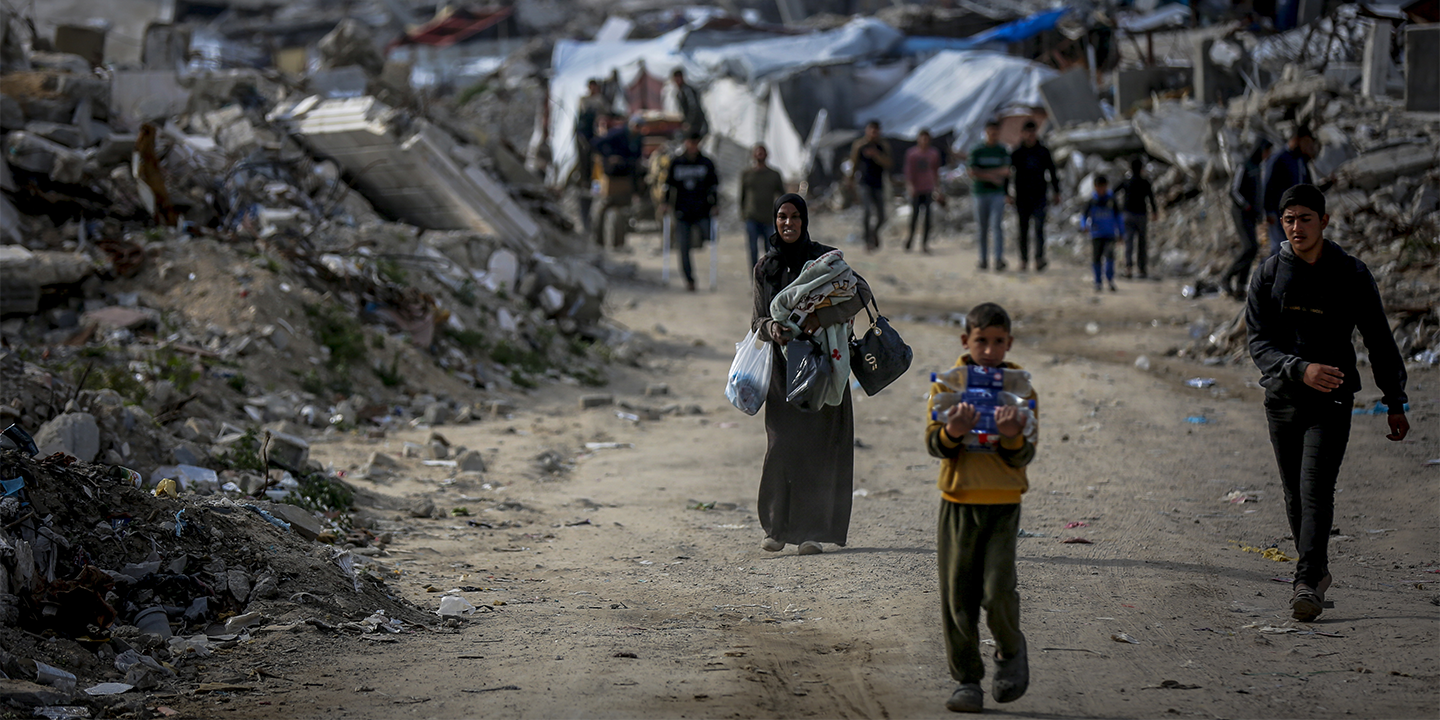
On 28 April Médecins Sans Frontières (MSF) issued a report documenting Israel’s deliberate denial of access to water to Palestinians in Gaza, asserting that it is an “integral part of Israel’s genocide” and form of collective punishment. MSF found that water scarcity is “engineered” by Israel and part of a recurrent, systematic and cumulative pattern, occurring alongside direct killings of Palestinians and the imposition of destructive living conditions. MSF Emergency Manager Claire San Filippo stressed that “Israeli authorities know that without water life ends, yet they have deliberately and systematically obliterated water infrastructure in Gaza – while consistently blocking water-related supplies from entering.”
Despite the so-called ceasefire, Israel has continued to rebuff its obligations under the agreement and as an occupying power by impeding the delivery of aid. This includes critical items such as chlorine tablets for disinfecting drinking water, specialized compounds that prevent bacterial growth, as well as rodenticide and insecticides. A recent Rapid Damage and Needs Assessment (RDNA) conducted by the UN, European Union and World Bank found that Israel has destroyed or damaged nearly 90 percent of Gaza’s water and sanitation infrastructure, including desalination plants, boreholes, pipelines and sewage systems. Warnings have also emerged of growing infestations of rats and parasites in overcrowded displacement camps, with reports of rat bites and rising risks of disease outbreaks.
Israeli restrictions have also obstructed the entry of critical reconstruction materials, compounding the effects of its atrocities in the enclave. The RDNA estimates that Gaza has lost 77 years of human development and that more than $70 billion will be required for rebuilding. Several UN experts expressed concern for the extent of the destruction documented by the RDNA, but stressed that the assessment is “shockingly silent on the most obvious conditions required for any reconstruction in Gaza to commence or succeed,” including an end to Israel’s occupation and systemic discrimination against Palestinians.
Meanwhile, Israel has expanded its military control within Gaza. Newly issued maps show that Israel’s so-called yellow line – which effectively delineates a deadly no-go zone for Palestinians and marked the initial withdrawal boundary for Israeli forces under the ceasefire – has been extended by approximately 11 percent through the introduction of a new “orange line.” This expansion places nearly two-thirds of Gaza under Israeli control. Residents have received little to no information about these expanded boundaries, which also lack clear demarcation, leaving civilians at heightened risk. One resident stressed, “People don’t know what is what, (the orange) line is here today, you sleep, and you wake up, and you find it has passed you.”
Israel must guarantee the unimpeded delivery of aid, refrain from further expanding its control in Gaza and rapidly bring its unlawful occupation to an end. The international community must support a rights-based reconstruction process that ensures Israel neither obstructs nor benefits from reconstruction efforts and that provides effective redress for Palestinians.
On 26 April the first public criminal proceedings in Syria against senior officials who served under the government of former President Bashar al-Assad began. Atef Najib, a cousin of Assad and former head of political security in Daraa, a southern governorate of Syria, faces charges related to “crimes against the Syrian people,” including overseeing violent crackdowns on protesters during the 2011 uprising. Other senior officials from the Assad government are also being tried in absentia on charges of torture, killing and extortion. Claudio Cordone, Deputy Special Envoy of the UN Secretary-General for Syria, described the trials as “a key moment for accountability.”
Victims’ families and representatives of human rights organizations filled the courtroom for the first proceedings against Najib, while crowds gathered outside. One petitioner shared, “…we have finally achieved a sense of safety, witnessing accountability for those who have oppressed us and committed horrific crimes in Daraa,” adding that “justice will only be complete” when Assad and his wife “stand before this court too.” Focused on crimes committed in Daraa, Najib’s trial holds particular significance as the governorate is often referred to as the “birthplace” of the Syrian Revolution. Protests there in 2011 triggered nationwide uprisings after the Assad government arrested and tortured teenagers in Daraa who spray-painted revolutionary slogans on school walls.
Amid these developments, Syrian authorities have also recently arrested Amjad Youssef, a military intelligence officer under Assad’s government and the suspected leader of the 2013 Tadamon massacre, in which at least 41 men were killed and left in a mass grave.
While these trials mark an important step toward justice, core international crimes – including war crimes and crimes against humanity – have yet to be codified into domestic legislation, limiting prosecutions to ordinary criminal offenses as opposed to large-scale atrocity crimes. At the same time, cases under universal jurisdiction continue in other countries. On 4 May a court in Sweden sentenced an individual to life imprisonment for serious violations of international law committed in Syria between 2012 and 2013. Hearings are also ongoing in the United Kingdom for a former Syrian colonel charged with crimes related to widespread attacks on civilians, including murder as a crime against humanity, while a court in the Netherlands began proceedings in early April against a Syrian man charged with complicity in torture, as well as rape and sexual violence, as crimes against humanity.
Members of the international community should continue providing technical and financial support to enhance the capacity of Syria’s judiciary and sustain ongoing accountability efforts. Syrian authorities should uphold due process rights for defendants and codify core international crimes into domestic law to enable meaningful accountability for atrocity crimes.
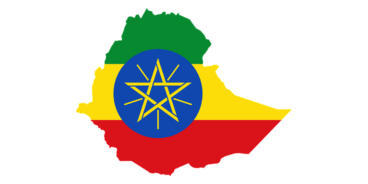
Recent developments across Ethiopia have threatened the November 2022 Cessation of Hostilities Agreement (CoHA), raising concerns about renewed fighting and the commission of atrocities. On 5 May the Tigray People’s Liberation Front (TPLF) announced it had restored the Tigray State Council – a pre-war legislative body suspended after the CoHA – and that the council had elected TPLF chair Debretsion Gebremichael as regional president, replacing the federally-backed interim administration. Prior to these actions the TPLF accused the federal government of violating the CoHA by withholding civil servant salaries and extending the interim administration’s mandate, further heightening rising tensions.
The sustainability of the CoHA was already under significant strain amid escalating internal and regional risks of conflict. Credible reports indicate troop movements and a renewed military build-up along Tigray’s borders, as well as skirmishes since January between the Tigray Defence Forces and the federal army and government-aligned fighters. This deterioration over recent months has prompted calls for de-escalation by the European Union, the UN High Commissioner for Human Rights and others.
Patterns of identity-based persecution against Tigrayan populations persist. A recent report by Human Rights Watch documents ongoing discrimination, arbitrary detention and restrictions on movement targeting Tigrayan civilians across multiple regions. These abuses reflect structural dynamics that fueled previous atrocities, including ethnic profiling and state-led marginalization. Without meaningful transitional justice, accountability and institutional reform, these conditions continue to heighten the risk of recurring atrocity crimes.
Similar patterns of abuse are evident elsewhere in Ethiopia, particularly in the Amhara and Oromia regions, where federal forces have targeted civilians based on ethnicity and perceived support for armed groups. In Oromia, a recent report by Amnesty International details widespread abuses, including killings, conflict-related sexual violence and abductions by state forces and non-state armed groups. In Amhara, ongoing hostilities between federal forces and armed groups have resulted in unlawful killings, sexual violence and other forms of gender-based violence, often carried out with impunity.
Alongside these protection risks, Ethiopia faces a worsening humanitarian situation. Aid delivery has been severely impacted by funding shortfalls and fuel shortages. The United States’ Joint Emergency Operation, previously funded through USAID, is set to end in June 2026. Without renewal or replacement, it could jeopardize food assistance for 3.1 million people, including 1 million internally displaced persons.
With national elections scheduled for June, the international community must urgently refocus its attention on Ethiopia. The Global Centre for the Responsibility to Protect’s Ethiopia expert, Sarah Hunter, said, “The international community must prioritize de-escalation by pressing all parties to uphold the CoHA, halt mobilization and engage in dialogue to prevent a return to large-scale conflict. Ethiopians across the country have already paid the price of international inaction; a repeat of such failure cannot happen again.” States should issue clear, consistent messaging that reinforces the protection of civilians and respect for international law. Donors must act urgently to prevent a deepening humanitarian crisis.
Ralph Bunche Institute for International Studies
The Graduate Center, CUNY
365 Fifth Avenue, Suite 5203
New York, NY 10016-4309, USA