13 October 2026
Election Profiles
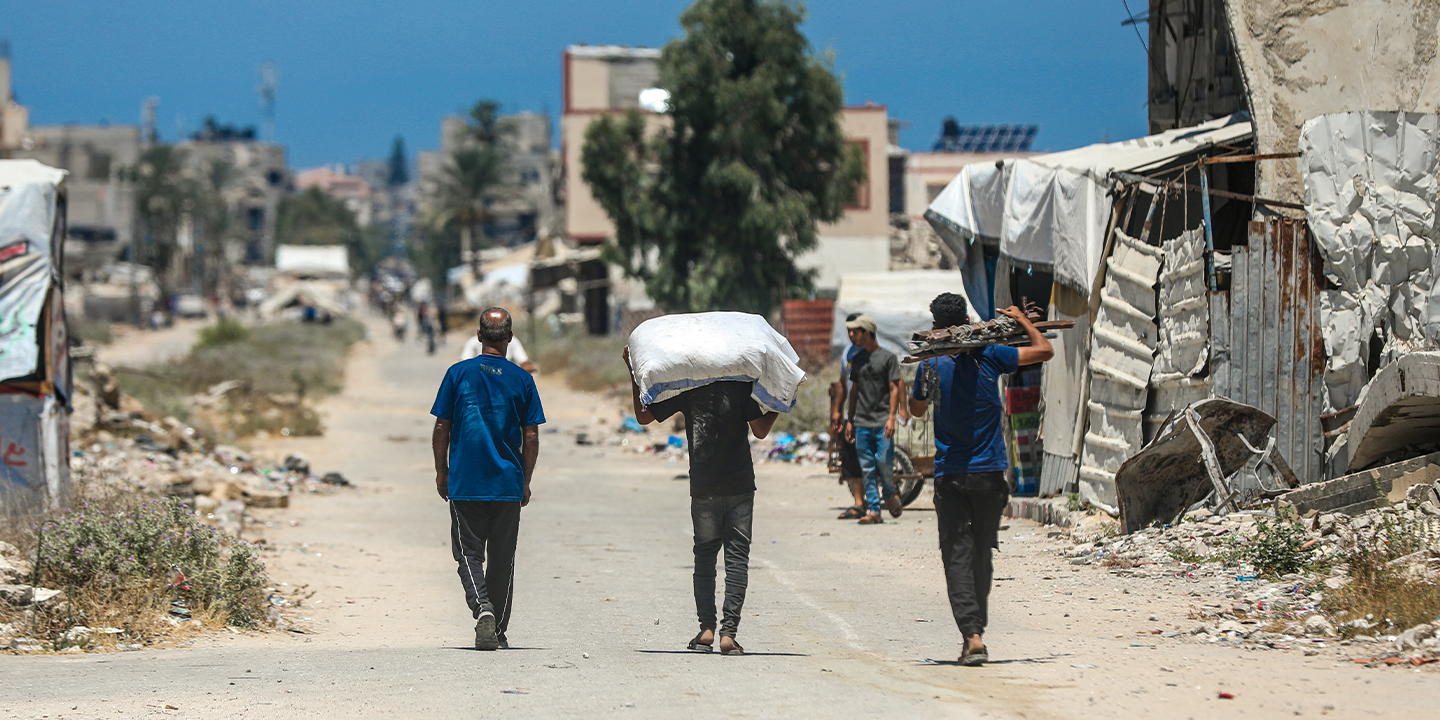
Escalating Israeli attacks on Gaza continue to put Palestinians at risk across the blockaded and besieged enclave. The non-governmental organization, Armed Conflict Location & Event Data, documented over 40 Israeli attacks on Gaza in June alone, marking the highest monthly record since the so-called ceasefire took effect in October 2025. The escalation has continued into July, with the UN recording at least 57 Palestinians, including six children, killed in Gaza between 13 and 20 July alone. Reported incidents have included attacks on a hospital in northern Gaza, crowds gathered for a funeral procession and families in residential buildings. Recent Israeli attacks have also struck police forces in Gaza, contributing to an emerging pattern of targeting police personnel.
The Office of the UN High Commissioner for Human Rights warned, “The killing of civilians in these attacks raises concerns of continuing violations of international humanitarian law, war crimes and other possible atrocity crimes.” Nine months after the so-called ceasefire took effect, more than 1,100 Palestinians have been killed, bringing the death toll since October 2023 to at least 73,000.
Palestinians also continue to be corralled into further shrinking spaces, as Israel’s so-called yellow line of control has further expanded. The yellow line now encompasses an estimated 70 percent of the Gaza Strip, up from approximately 53 percent in October 2025 when the ceasefire agreement started. Israeli Defense Minister Israel Katz recently announced plans to establish three Nahal outposts in northern Gaza. Nahal outposts are military bases combined with agricultural communities and have often served as a precursor to illegal Israeli settlements.
These developments have coincided with political changes concerning governance in Gaza. In a 6 July announcement, Hamas vowed to dissolve its government and hand over civil authority in Gaza to the National Committee for the Administration of Gaza (NCAG), a Palestinian technocratic body established under the Board of Peace (BoP). Despite this announcement, the NCAG has not yet been granted access to Gaza and Israel’s Foreign Minister Gideon Saar has claimed that Hamas’ announcement is a “trick” and “designed to prevent its own disarmament.” Meanwhile, with an estimated 60 million tonnes of rubble still covering Gaza, the BoP has continued to condition recovery and reconstruction upon Hamas’s disarmament.
The international community must resolutely denounce Israel’s ongoing violations of the ceasefire and press for a complete cessation of hostilities. All states must reject attempts to condition Palestinians’ rights or access to recovery and reconstruction. Amid ongoing atrocity crimes, including genocide, states should pursue all available avenues for justice and accountability, hold Israeli officials accountable and refrain from providing any assistance that could enable or contribute to the commission of further atrocities.
A wave of attacks by Village de Dieu gangs, part of the Viv Ansanm gang coalition, has devastated communities in Kenscoff, underscoring Haiti’s rapidly deteriorating protection crisis. Between 4 and 9 July the gang killed at least 61 residents, including 14 children. Victims were killed while fleeing, inside their homes or after encountering gang members on roads and footpaths. The attacks also destroyed homes and telecommunications infrastructure. According to the International Organization for Migration, the violence displaced nearly 6,000 people in five days – the largest displacement incident in Kenscoff since February 2025 – and forced the closure of three displacement sites, uprooting people who had already fled previous violence.
Communities in Kenscoff, a strategic community in the mountains above Haiti’s capital, have faced intermittent attacks since January 2025, when the Viv Ansanm coalition launched coordinated assaults on the commune. Since its formation, Viv Ansanm has perpetrated atrocities and enabled armed groups to expand into areas previously considered relatively secure, consolidating control beyond their traditional strongholds. Gangs continue to expand control beyond central Port-au-Prince and now operate across at least five of the country’s ten departments, with violence spreading into the Artibonite, Centre and South-East departments.
Although recent security operations have disrupted some gang activity in parts of Port-au-Prince, widespread killings, kidnappings and sexual violence persist. The UN documented at least 2,310 killings, 99 kidnappings and 699 victims of sexual violence during the first six months of 2026. During the first quarter of the year, more than 20 women and girls were subjected to sexual violence every day on average. Child recruitment has tripled over the past year, and as many as one in every two gang members is now a child. During his recent visit to Haiti, UN Secretary-General António Guterres warned that “the biggest disgrace is indifference,” stressing that “there’s a direct connection between the absence of the international community and the absence of security for the Haitian people.”
Authorities remain unable to provide sustained protection for civilians, while security forces have also been implicated in human rights violations. The UN High Commissioner for Human Rights’ Designated Expert on Haiti stated that the recent surge in attacks may reflect gangs positioning themselves to maintain control over territory and resources ahead of more robust operations by the recently deployed UN-mandated Gang Suppression Force (GSF).
While stronger security operations are urgently needed, all efforts to counter gangs must comply with international law and prioritize civilian protection. UN member states should provide the political, financial and operational support required to strengthen international security efforts, including the GSF, while ensuring robust oversight and accountability. Efforts to restore security must be matched by increased humanitarian assistance and sustained support for Haitian institutions to prevent further atrocities.
On 8 July the UN Human Rights Council (HRC) concluded its 62nd session in Geneva. The session convened nearly 20 years after the HRC held its inaugural meeting on 19 June 2006. Over the past two decades, it has become a critical platform through which states uphold their Responsibility to Protect (R2P).
At the opening of the session on 15 June, UN High Commissioner for Human Rights Volker Türk warned that “an unprecedented, shameless onslaught against international law is causing appalling human suffering” in atrocity crises around the world, including in Iran, Occupied Palestinian Territory (OPT), Myanmar, the Central Sahel and Haiti. Throughout the session, HRC-mandated investigative mechanisms presented findings on Sudan, Israel and the OPT, the Democratic Republic of the Congo and South Sudan, while member states held dialogues with the High Commissioner on Ukraine and Venezuela.
Beyond these interactive dialogues, the HRC also responded to imminent atrocity risks in line with its prevention mandate. On 3 July member states held an urgent debate on Sudan focused on the situation in and around El Obeid, North Kordofan. Through the resolution, the HRC requested the Fact-Finding Mission on Sudan to conduct an urgent inquiry. Regrettably, member states fell short of naming external actors arming and enabling the warring parties, including the United Arab Emirates, despite a joint call from 38 civil society organizations, including the Global Centre, issued ahead of the debate.
On 6 July the Council extended the mandate of the Special Rapporteur on the situation of human rights in Eritrea for one year, resisting sustained efforts by the Eritrean government to terminate the mandate. Eritrea’s pattern of abuses also extends beyond its borders, as its military involvement in the conflict in Ethiopia’s Tigray region has exposed civilians, as well as Eritrean refugees in Ethiopia, to serious human rights abuses.
Despite overwhelming evidence that atrocity crimes and other grave violations continue across Ethiopia, the crisis remains entirely absent from the HRC’s agenda following the termination of the UN International Commission of Human Rights Experts on Ethiopia nearly three years ago. Against this backdrop, on 25 June the Global Centre co-hosted a side event, during which experts underscored the urgent need to restore meaningful international scrutiny on the multidimensional crises in Ethiopia and advance accountability for past and ongoing violations and abuses.
Delivering a joint statement on 16 June, the Group of Friends of R2P emphasized that for many populations facing atrocity crimes, the Council remains one of the few remaining international avenues to ensure their situation is seen, discussed and addressed. As the HRC enters its third decade, its credibility will depend not only on its willingness to respond to emerging atrocity risks, but on its resolve to sustain scrutiny wherever populations remain at risk, without exception or selectivity.
Ralph Bunche Institute for International Studies
The Graduate Center, CUNY
365 Fifth Avenue, Suite 5203
New York, NY 10016-4309, USA