16 September 2026
Atrocity Alert
También disponible en español.
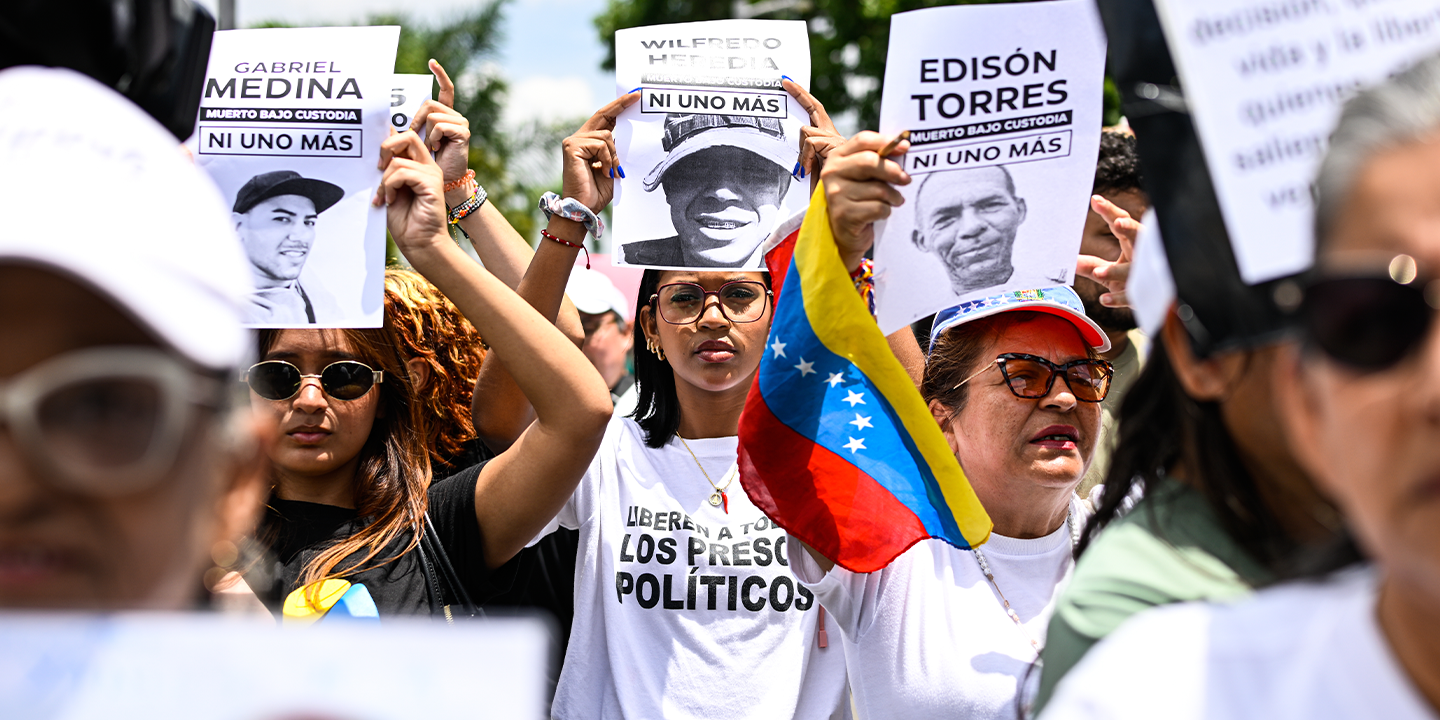
For many Venezuelans, the unlawful removal of Nicolás Maduro on 3 January 2026 seemed to promise the end of an era – the unraveling of a system of power built under Hugo Chávez and hardened over the decades that followed. For a population that had watched that apparatus outlast stolen elections, mass protests, a protracted humanitarian emergency and the exile of some eight million people from the country, the moment carried an almost unbearable weight of expectation. Yet, as with many countries before Venezuela, the machinery that enabled atrocity crimes – the security structures, the compromised courts, the laws written to persecute rather than protect – rarely disappears with the individual who presided over them. Moments of transition and regime survival like this may produce some improvements on the surface while leaving significant risks unaddressed; they may generate reforms that are partial, reversible or aiming to secure international legitimacy without meaningful change for populations. Yet they may also open something long thought impossible: a genuine chance to dismantle the structures at the root of the crisis and to deliver the change Venezuelans have sought for so long.
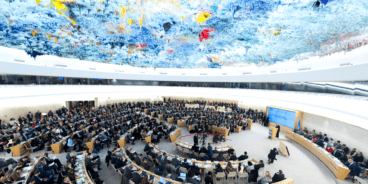
That makes the upcoming 63rd session of the UN Human Rights Council (HRC) particularly consequential. In September the HRC will decide whether to renew the mandate of the Independent International Fact-Finding Mission on Venezuela (FFM). The FFM’s establishment in 2019 was hard-won – the result of a large coalition of Venezuelan and international civil society organizations and principled leadership by governments in the Americas. I remember the elation my Venezuelan partners and I felt when the FFM was created, and the recognition of harm each successive report provided. I also remember the fatigue of watching Venezuela pass through one cycle after another – from international isolation to waves of electoral repression – without the deeper change we had all worked toward.
Over the past eight months, however, the context has changed again, and this time fundamentally. With it has come a narrow but genuine opportunity. The acting authorities’ strong interest in international legitimacy has already yielded concessions that would have been unthinkable under Maduro, opening real space to press for deeper change. But an opening is only as valuable as the pressure that can be exerted through it, and that pressure depends on the ability to distinguish genuine change from merely cosmetic concessions. The challenge for the international community is to determine – and influence – whether these moments result in the changes needed to dismantle the structures and risk factors that enabled past crimes.
Maintaining scrutiny does not mean assuming that nothing has changed, nor treating the new authorities as the old ones by another name. It is to demand that change be demonstrated, not merely declared – and that an independent body, rather than those in power, determine what has truly shifted, what remains intact and whether reforms address the structures and risk factors underlying past crimes. This is what independent investigative mechanisms make possible. Moments of political transition are precisely when their value extends beyond documenting abuses to assessing whether transformation is occurring, with a particular preventive value. They can establish benchmarks for meaningful institutional change, assess how atrocity risks are evolving and provide continued independent evidence and public reporting on which states can base diplomatic pressure and other forms of leverage. Importantly, they also preserve institutional memory when political landscapes change. In this way, investigative mechanisms can help close protection gaps, advance accountability and encourage the structural change that a moment of transition briefly puts within reach.
The fate of the FFM at HRC63 will therefore say a great deal about whether the international community understands what these mechanisms are for: not merely to document atrocities already committed, but to keep the international gaze on a situation and its leverage intact at the very moments when it is most inclined to look away.
One of the first and most easily overlooked truths of political transitions is that the machinery of repression is designed to outlast any one hand that builds or wields it. The removal of a single individual does not dismantle a system designed to repress, nor does it address the structural root causes that have enabled the commission of atrocity crimes.
Although Venezuela’s acting authorities have sought to project an image of transition, many of the individuals, institutions and security structures responsible for facilitating possible crimes against humanity remain in place. There has been no meaningful commitment to reform the judiciary, the electoral system or the security sector, and no dismantling of the legal and institutional frameworks that enabled political persecution and the systematic suppression of civic space for more than a decade.
This continuity was evident in the aftermath of 3 January, when domestic authorities issued emergency decrees, deployed colectivos in public spaces and temporarily detained journalists, demonstrating that the state’s repressive apparatus remains capable of carrying out systematic political persecution. The replacement of some senior officials, including the country’s attorney general or defense minister, with other long-standing regime figures illustrates the limited nature of these changes and risks perpetuating the same structures responsible for atrocity crimes under Maduro.
Governments in transition seeking international legitimacy have a powerful incentive to signal progress. The challenge is to determine whether announced measures reflect a genuine commitment to structural reform, or whether they are limited, cosmetic steps calibrated primarily to secure legitimacy.
Since 3 January Venezuela’s acting authorities have introduced measures that could, in principle, address some structures of repression and abuse – most notably the release of political prisoners, the adoption of an Amnesty Law and announced possible reforms of the Supreme Tribunal of Justice. While these measures are marred by significant shortcomings, they show that sustained international pressure can extract concessions that were previously politically unthinkable. But the existence of such concessions, taken alone, tell us almost nothing about whether these incremental measures are actually addressing the conditions that lead to the commission of systematic human rights violations and atrocity crimes.
Investigative mechanisms are particularly well placed to assess whether such measures reflect a genuine commitment to dismantling the structures that enabled widespread and systematic violations, or whether they are rhetorical steps intended to deflect scrutiny. By maintaining independent investigations and public reporting, they give an objective basis for assessing progress and help sustain the evidence that can incentivize further reform. Remove that capacity, and member states are left with far less independent evidence against which to assess a transition – and with greater reliance on the assurances of the very authorities whose conduct is in question.
Although a fundamentally different context, the recent experience of Syria after the fall of the Assad regime demonstrates why this matters beyond Venezuela. Continued violations and the sheer scale of what the Syrian transitional authorities must do – deliver justice, guarantee non-recurrence and rebuild institutions and the rule of law – have made independent investigations through the Commission of Inquiry (CoI) more necessary than ever, not less. Syria demonstrates that a transition can expand the functions of an investigative mechanism: from documenting abuses under a former government to helping the international community assess new risks, preserve evidence and support national accountability efforts.
Political transitions are inherently dynamic: as power shifts and reshuffles, existing risk factors evolve and new ones emerge. One of the greatest contributions of investigative mechanisms are their ability to look beyond isolated incidents to the structural causes of repression. The years of investigations allow them to identify which risk factors remain unchanged, assess new risks emerging from a shifting landscape and evaluate whether institutional reforms are sufficient to reduce the likelihood of renewed violations. This level of analysis gives member states an objective basis of evidence to calibrate their bilateral, regional and multilateral engagement, while providing an important foundation for the HRC’s early warning and prevention functions. Investigative mechanisms are therefore central to prevention.
The 2019 report of the CoI on Burundi, which applied the UN Framework of Analysis for Atrocity Crimes, helped focus international attention on the risks building ahead of the 2020 elections and has been credited with helping to deter large-scale violence on voting day. The FFM on Myanmar likewise warned of the risks of renewed atrocities long before the 2021 military coup, while the Commission on Human Rights in South Sudan has consistently placed early warning and risk assessments at the center of its analysis. In October 2023 the International Commission of Human Rights Experts on Ethiopia (ICHREE) published a report whose very title – Acute Risk of Further Atrocity Crimes in Ethiopia – spoke directly to the preventive function these mechanisms serve. In each case, their value lay not only in documenting what had already happened, but in helping the international community understand a shifting political landscape and where possible risk factors might lead.
The situation in Venezuela today is more fluid than it has been in years. The political landscape remains uncertain, domestic and international calls for fresh elections are growing and there are tentative signs of possible dialogue between the government and parts of the opposition. Such moments of flux sharpen the need for scrutiny, not soften it. Set against a well-established pattern of repression – most recently the wave of persecution that followed the opposition’s landslide victory in July 2024 and the authorities’ refusal to cede power – the prospect of further electoral processes and an unsettled political transition capable of moving in several different directions makes independent monitoring and assessment particularly important. The possibility of further change is not a reason to stand down the FFM. It is one of the strongest reasons to renew it.
Over the past seven years, the FFM has built an unparalleled understanding of the institutional drivers of repression and provided recommendations regarding the judicial, security and governance reforms needed to address them. An investigative mechanism’s contribution to preserving institutional memory and establishing a historical record gives them a distinct place in the wider accountability architecture.
Each part of that architecture has a necessary role, and they reinforce rather than duplicate one another. The International Criminal Court’s (ICC) investigation into possible crimes against humanity in Venezuela, opened in November 2021, pursues individual criminal responsibility through judicial proceedings. The FFM’s contribution is complementary: it investigates patterns – the structures, chains of command and institutional drivers that make atrocity crimes possible – reports publicly to keep the HRC and wider world informed in real time and maintains pressure on cross-regional governments to respond to the crisis through a human rights lens. Its findings support accountability well beyond The Hague, from universal jurisdiction proceedings to truth-telling and establishing an independent historical record on which any future, victim-centered transitional justice will depend. That the ICC closed its Caracas office in December 2025, and Venezuela’s announcement in July 2026 of its intention to withdraw from the Rome Statute only underscores how much rests on preserving every avenue of independent scrutiny and investigation.
The FFM and the Office of the UN High Commissioner for Human Rights (OHCHR) work in the same complementary spirit. OHCHR fulfills a vital but distinct mandate – monitoring the overall human rights situation and engaging state institutions through technical cooperation to close protection gaps. The FFM’s recommendations on structural reform should help direct that cooperation toward addressing the root causes of violations and atrocity risks.
Preserving the FFM does not duplicate OHCHR’s role; rather, it creates an incentive for the authorities to engage with the UN human rights system and enables OHCHR to function effectively. The presence of an independent investigation has been instrumental in fostering engagement between the authorities and OHCHR and in sustaining the access on which its work depends. The fragility of that access was evident in February 2024, when Venezuelan authorities expelled OHCHR staff after the Office raised concern about the detention of a prominent human rights defender in Caracas. Weakening the FFM risks reducing those incentives and undermining sustained cooperation.
None of this is unique to Venezuela. Across different contexts, independent investigative mechanisms have played precisely this connective role within the accountability architecture – analyzing patterns, preserving evidence for future justice and sustaining public attention while slower judicial and diplomatic processes take their course. The documentation gathered on the situations in Myanmar and Syria, to take two examples, has underpinned proceedings before national courts exercising universal jurisdiction and before international tribunals, and often long after political attention moved elsewhere. In each case, the mechanism’s value lay in continuity – in holding open an evidentiary and historical record that no single court, office or negotiation could sustain on its own.
While direct causality is inherently difficult to prove, there is evidence that FFM investigations have increased the political and reputational costs of abuse and, at times, contributed to changes in patterns of behavior. The clearest example is extrajudicial executions: Venezuelan NGOs documented a fall of more than 50 percent between January 2020 and December 2021, following the FFM’s first report. After the FFM highlighted the role of the Special Action Forces (FAES) and called for their dismantling, the government subsequently reduced the force’s visible participation in operations. Yet the FFM’s 2023 reporting found its successor, the Directorate of Strategic and Tactical Actions, was displaying “similar functions” and employing “the same modus operandi as the FAES.” That the authorities took the trouble to dissolve one body and reconstitute it under another name is itself telling: scrutiny shaped their calculations, even as they adapted to evade attention rather than ending repression. The lesson cuts both ways: public reporting can raise the costs of abuse and alter behavior, but only sustained investigation can keep pace as perpetrators reorganize to continue it in new forms.
A similar pattern holds for torture and ill-treatment, as documented by both the FFM and OHCHR. In July 2023 High Commissioner Volker Türk noted that documented reports of torture “continue to decrease,” and civil society analysis has pointed to a temporary deterrent effect from sustained public reporting. Such trends are no evidence that systemic violations have ceased. They do, however, illustrate how scrutiny can affect incentives by signaling that violations will be documented, analyzed and remembered.
The resurgence of arbitrary detention, torture and ill-treatment during and after the 2024 presidential election shows that patterns of repression can respond to shifting political incentives rather than follow a straight line toward improvement. As the acting authorities increasingly seek international legitimacy and engagement, sustained independent scrutiny is once again likely to influence those incentives, creating an opportunity for the FFM’s investigations and public reporting to encourage meaningful reforms while ensuring that any progress is measured against objective human rights benchmarks.
The reverse is also instructive. When the HRC abruptly ended the investigative mandate of the Group of Eminent Experts on Yemen in October 2021, civilian casualties increased by more than 80 percent in the following three months, while air raids rose by more than 40 percent over the same period. The discontinuation of the ICHREE in 2023 likewise removed independent oversight at a moment of acute atrocity risk and, in effect, granted perpetrators a green light to continue. These examples illustrate the risks of removing a source of monitoring evidence and public accountability while the structures and incentives that enable atrocity crimes remain in place. Ending an investigation too soon removes an important deterrent – and teaches perpetrators that the surest path to impunity is simply to wait for the world to look away.
This is a critical moment for Venezuela. For the first time in years, there is a real, if fragile, opening – a chance to press for the release of those still detained, meaningful institutional reform and a credible path toward democratization. It is an opening Venezuelans have fought for, often at great personal cost. Venezuelan human rights defenders, victims and civil society best understand what genuine change requires and what must be demanded of it. Their efforts, however, are strongest when matched by an international community that listens to them, looks clearly at the evidence rather than the gestures and sustains the pressure needed to turn a moment of possibility into lasting change. Renewing the mandate of the FFM is how the HRC can stand alongside Venezuelans and help ensure that this moment becomes the turning point they have been denied for so long.
The stakes, though, reach well beyond any one country. Independent investigative mechanisms are among the few tools the international community possesses to distinguish a genuine reform process from its imitation, provide early warning when risks are shifting and keep engagement anchored in evidence precisely when political convenience pulls in the other direction. Their value is greatest not only when a crisis is at its height, but also when its outcome remains uncertain – when the task extends beyond documenting what has happened to determining whether the transformation underway is genuine. To defend these mechanisms, in Venezuela and wherever populations remain at risk, is to defend the most basic promise of the Responsibility to Protect.
Para muchas personas venezolanas, la remoción ilegal de Nicolás Maduro el 3 de enero de 2026 pareció prometer el fin de una era: el desmoronamiento de un sistema de poder construido bajo Hugo Chávez y consolidado a lo largo de las décadas siguientes. Para una población que había visto a ese aparato sobrevivir a elecciones robadas, protestas masivas, una prolongada emergencia humanitaria y el exilio de unos ocho millones de personas del país, el momento cargaba con un peso de expectativa casi insoportable. Sin embargo, como en tantos países antes que Venezuela, la maquinaria que hizo posibles los crímenes atroces —las estructuras de seguridad, los tribunales cooptados, las leyes redactadas para perseguir en lugar de proteger— rara vez desaparece con la persona que la dirigió. Momentos de transición y de supervivencia del régimen como este pueden producir algunas mejoras superficiales mientras dejan sin abordar riesgos significativos; pueden generar reformas parciales, reversibles o dirigidas a asegurar legitimidad internacional sin un cambio real para la población. No obstante, también pueden abrir algo que durante mucho tiempo se creyó imposible: una oportunidad genuina de desmantelar las estructuras que están en la raíz de la crisis y de lograr el cambio que las personas venezolanas han buscado durante tanto tiempo.
Esto hace que el próximo 63.º periodo de sesiones del Consejo de Derechos Humanos (CDH) de la ONU sea especialmente trascendental. En septiembre, el CDH decidirá si renueva el mandato de la Misión Internacional Independiente de Determinación de los Hechos sobre Venezuela (MIIDH). El establecimiento de la MIIDH en 2019 fue una conquista difícil: el resultado de una amplia coalición de organizaciones de la sociedad civil venezolana e internacional y del liderazgo basado en principios de gobiernos de las Américas. Recuerdo la euforia que sentimos mis contrapartes venezolanas y yo cuando se creó la MIIDH, y cómo cada informe sucesivo reconocía el daño sufrido. También recuerdo el desgaste de ver a Venezuela atravesar un ciclo tras otro —del aislamiento internacional a las oleadas de represión electoral— sin el cambio profundo por el que todas y todos habíamos trabajado.
Sin embargo, en los últimos ocho meses el contexto ha vuelto a cambiar, y esta vez de manera fundamental. Con ello ha surgido una oportunidad estrecha, pero genuina. El marcado interés de las autoridades en funciones en la legitimidad internacional ya ha producido concesiones que habrían sido impensables bajo Maduro, lo que ha abierto un espacio real para presionar por cambios más profundos. Pero una apertura vale tanto como la presión que pueda ejercerse a través de ella, y esa presión depende de la capacidad de distinguir un cambio genuino de concesiones meramente cosméticas. El desafío para la comunidad internacional es determinar si estos momentos se traducen en los cambios necesarios para desmantelar las estructuras y los factores de riesgo que hicieron posibles los crímenes del pasado, y contribuir a que así ocurra.
Mantener el escrutinio no significa dar por sentado que nada ha cambiado, ni tratar a las nuevas autoridades como las anteriores con otro nombre. Significa exigir que el cambio se demuestre y no solo se declare, y que sea un órgano independiente —y no quienes ostentan el poder— el que determine qué ha cambiado realmente, qué permanece intacto y si las reformas abordan las estructuras y los factores de riesgo que subyacen a los crímenes del pasado. Esto es lo que hacen posible los mecanismos de investigación independientes. Los momentos de transición política son precisamente aquellos en los que su valor va más allá de documentar abusos para evaluar si la transformación está ocurriendo, con un valor preventivo particular. Pueden establecer parámetros de referencia para un cambio institucional significativo, evaluar cómo evolucionan los riesgos de crímenes atroces y aportar de forma continua evidencia independiente e informes públicos en los que los Estados puedan basar la presión diplomática y otras formas de influencia. Y, de manera crucial, también preservan la memoria institucional cuando los panoramas políticos cambian. De este modo, los mecanismos de investigación pueden ayudar a cerrar las brechas de protección, avanzar en la rendición de cuentas y favorecer el cambio estructural que un momento de transición pone brevemente al alcance.
Por ello, el destino de la MIIDH en el CDH63 dirá mucho sobre si la comunidad internacional comprende para qué sirven estos mecanismos: no solo para documentar atrocidades ya cometidas, sino para mantener la mirada internacional sobre una situación —y su capacidad de influencia intacta— precisamente en los momentos en que más se inclina a mirar hacia otro lado.
Una de las primeras verdades de las transiciones políticas que más fácilmente se pasa por alto es que la maquinaria de la represión está diseñada para sobrevivir a cualquiera que la construya o la maneje. La remoción de una sola persona no desmantela un sistema diseñado para reprimir, ni aborda las causas estructurales de fondo que han hecho posible la comisión de crímenes atroces.
Aunque las autoridades en funciones de Venezuela han buscado proyectar una imagen de transición, muchas de las personas, instituciones y estructuras de seguridad responsables de facilitar posibles crímenes de lesa humanidad permanecen en su lugar. No ha habido ningún compromiso significativo de reformar el poder judicial, el sistema electoral o el sector de seguridad, ni de desmantelar los marcos legales e institucionales que permitieron la persecución política y la supresión sistemática del espacio cívico durante más de una década.
Esta continuidad se hizo evidente tras el 3 de enero, cuando las autoridades nacionales emitieron decretos de emergencia, desplegaron colectivos en espacios públicos y detuvieron temporalmente a periodistas, lo que demostró que el aparato represivo del Estado sigue siendo capaz de llevar a cabo una persecución política sistemática. La sustitución de algunos altos funcionarios —como el fiscal general o el ministro de Defensa del país— por otras figuras del régimen de larga trayectoria ilustra el carácter limitado de estos cambios y entraña el riesgo de perpetuar las mismas estructuras responsables de crímenes atroces bajo Maduro.
Los gobiernos en transición que buscan legitimidad internacional tienen un fuerte incentivo para dar señales de progreso. El desafío es determinar si las medidas anunciadas reflejan un compromiso genuino con una reforma estructural o si son pasos limitados y cosméticos calibrados principalmente para asegurar legitimidad.
Desde el 3 de enero, las autoridades en funciones de Venezuela han presentado medidas que, en principio, podrían abordar algunas estructuras de represión y abuso, en particular la liberación de presos políticos, la adopción de una Ley de Amnistía y el anuncio de posibles reformas del Tribunal Supremo de Justicia. Si bien cada una de estas medidas está marcada por deficiencias significativas, en conjunto demuestran que la presión internacional sostenida puede arrancar concesiones que antes eran políticamente impensables. Pero la existencia de tales concesiones, por sí sola, no nos dice casi nada sobre si estas medidas graduales están abordando realmente las condiciones que conducen a la comisión de violaciones sistemáticas de derechos humanos y crímenes atroces.
Los mecanismos de investigación están particularmente bien situados para evaluar si tales medidas reflejan un compromiso genuino de desmantelar las estructuras que hicieron posibles violaciones generalizadas y sistemáticas, o si son pasos retóricos destinados a desviar el escrutinio. Al mantener investigaciones independientes e informes públicos, ofrecen una base objetiva para evaluar el progreso y ayudan a sostener la evidencia que puede incentivar nuevas reformas. Si se elimina esa capacidad, los Estados miembros quedan con mucha menos evidencia independiente con la cual evaluar una transición y con una mayor dependencia de las garantías de las mismas autoridades cuya conducta está en cuestión.
Aunque se trata de un contexto fundamentalmente distinto, la experiencia reciente de Siria tras la caída del régimen de Assad demuestra por qué esto importa más allá de Venezuela. La persistencia de las violaciones y la enorme magnitud de lo que las autoridades de transición sirias deben hacer —impartir justicia, garantizar la no repetición y reconstruir las instituciones y el Estado de derecho— han hecho que las investigaciones independientes a través de la Comisión de Investigación sean más necesarias que nunca, y no menos. Siria demuestra que una transición puede ampliar las funciones de un mecanismo de investigación: desde documentar los abusos cometidos bajo un gobierno anterior hasta ayudar a la comunidad internacional a evaluar nuevos riesgos, preservar evidencia y apoyar los esfuerzos nacionales de rendición de cuentas.
Las transiciones políticas son intrínsecamente dinámicas: a medida que el poder se desplaza y se reconfigura, los factores de riesgo existentes evolucionan y surgen otros nuevos. Una de las mayores contribuciones de los mecanismos de investigación es su capacidad de mirar más allá de los incidentes aislados hacia las causas estructurales de la represión. Los años de investigación les permiten identificar qué factores de riesgo permanecen sin cambios, evaluar los nuevos riesgos que surgen de un panorama cambiante y valorar si las reformas institucionales son suficientes para reducir la probabilidad de que se repitan las violaciones. Este nivel de análisis ofrece a los Estados miembros una base objetiva de evidencia para calibrar su interacción bilateral, regional y multilateral, a la vez que proporciona un fundamento importante para las funciones de alerta temprana y prevención del CDH. Los mecanismos de investigación son, por tanto, esenciales para la prevención.
El informe de 2019 de la Comisión de Investigación sobre Burundi, que aplicó el Marco de Análisis de las Naciones Unidas para los Crímenes Atroces, ayudó a centrar la atención internacional en los riesgos que se acumulaban de cara a las elecciones de 2020 y se le ha atribuido haber contribuido a disuadir la violencia a gran escala el día de la votación. De manera similar, la Misión de Determinación de los Hechos sobre Myanmar advirtió de los riesgos de que se repitieran atrocidades mucho antes del golpe militar de 2021, mientras que la Comisión de Derechos Humanos en Sudán del Sur ha situado de forma constante la alerta temprana y la evaluación de riesgos en el centro de su análisis. En octubre de 2023, la Comisión Internacional de Expertos en Derechos Humanos sobre Etiopía (CIEDHE) publicó un informe cuyo propio título —Riesgo agudo de nuevos crímenes atroces en Etiopía— hablaba directamente de la función preventiva que cumplen estos mecanismos. En cada caso, su valor no residió únicamente en documentar lo que ya había ocurrido, sino en ayudar a la comunidad internacional a comprender un panorama político cambiante y hacia dónde podrían conducir los posibles factores de riesgo.
La situación en Venezuela es hoy más fluida de lo que ha sido en años. El panorama político sigue siendo incierto, los llamados nacionales e internacionales a nuevas elecciones crecen y hay indicios incipientes de un posible diálogo entre el gobierno y sectores de la oposición. Estos momentos de cambio e incertidumbre agudizan la necesidad de escrutinio, en lugar de atenuarla. Frente a un patrón bien establecido de represión —el más reciente, la ola de persecución que siguió a la victoria aplastante de la oposición en julio de 2024 y a la negativa de las autoridades a ceder el poder—, la perspectiva de nuevos procesos electorales y de una transición política inestable, capaz de tomar varias direcciones distintas, hace que el monitoreo y la evaluación independientes sean particularmente importantes. La posibilidad de nuevos cambios no es razón para poner fin a la MIIDH. Es una de las razones más poderosas para renovarla.
A lo largo de siete años, la MIIDH ha desarrollado una comprensión sin igual de los motores institucionales de la represión y ha formulado recomendaciones sobre las reformas judiciales, de seguridad y de gobernanza necesarias para abordarlos. La contribución de un mecanismo de investigación a preservar la memoria institucional y a establecer un registro histórico le otorga un lugar distintivo dentro de la arquitectura más amplia de rendición de cuentas.
Cada parte de esa arquitectura cumple un papel necesario, y todas se refuerzan entre sí en lugar de duplicarse. La investigación de la Corte Penal Internacional sobre posibles crímenes de lesa humanidad en Venezuela, iniciada en noviembre de 2021, persigue la responsabilidad penal individual a través de procesos judiciales. La contribución de la MIIDH es complementaria: investiga patrones —las estructuras, las cadenas de mando y los motores institucionales que hacen posibles los crímenes atroces—, informa públicamente para mantener al CDH y al mundo en general informados en tiempo real, y mantiene la presión sobre gobiernos de distintas regiones para que respondan a la crisis desde una perspectiva de derechos humanos. Sus hallazgos respaldan la rendición de cuentas mucho más allá de La Haya, desde procesos de jurisdicción universal hasta la búsqueda de la verdad y el establecimiento de un registro histórico independiente del que dependerá cualquier proceso futuro de justicia transicional centrado en las víctimas. El cierre de la oficina de la CPI en Caracas en diciembre de 2025 y el anuncio de Venezuela en julio de 2026 de su intención de retirarse del Estatuto de Roma no hacen sino subrayar la importancia de preservar cada vía de escrutinio e investigación independientes.
La MIIDH y la Oficina del Alto Comisionado de las Naciones Unidas para los Derechos Humanos (OACNUDH) trabajan con ese mismo espíritu complementario. La OACNUDH cumple un mandato vital pero distinto: monitorear la situación general de derechos humanos e interactuar con las instituciones estatales mediante la cooperación técnica para cerrar las brechas de protección. Las recomendaciones de la MIIDH sobre reformas estructurales deberían ayudar a orientar esa cooperación hacia el abordaje de las causas de fondo de las violaciones y de los riesgos de crímenes atroces.
Preservar la MIIDH no duplica el papel de la OACNUDH; más bien, crea un incentivo para que las autoridades interactúen con el sistema de derechos humanos de la ONU y permite que la OACNUDH funcione con eficacia. La presencia de una investigación independiente ha sido fundamental para propiciar la interacción entre las autoridades y la OACNUDH y para sostener el acceso del que depende su labor. La fragilidad de ese acceso quedó en evidencia en febrero de 2024, cuando las autoridades venezolanas expulsaron al personal de la OACNUDH después de que la Oficina expresara preocupación por la detención de una destacada persona defensora de derechos humanos en Caracas. Debilitar la MIIDH conlleva el riesgo de reducir esos incentivos y de socavar la cooperación sostenida.
Nada de esto es exclusivo de Venezuela. En contextos muy diversos, los mecanismos de investigación independientes han desempeñado precisamente este papel conector dentro de la arquitectura de rendición de cuentas: analizar patrones, preservar evidencia para la justicia futura y sostener la atención pública mientras los procesos judiciales y diplomáticos, más lentos, siguen su curso. La documentación reunida sobre las situaciones de Myanmar y Siria, por tomar dos ejemplos, ha servido de base a procesos ante tribunales nacionales que ejercen la jurisdicción universal y ante tribunales internacionales, a menudo mucho después de que la atención política se hubiera desplazado a otra parte. En cada caso, el valor del mecanismo residió en la continuidad: en mantener abierto un registro probatorio e histórico que ningún tribunal, oficina o negociación por sí solo podría sostener.
Aunque la causalidad directa es intrínsecamente difícil de probar, existe evidencia de que las investigaciones de la MIIDH han aumentado los costos políticos y reputacionales del abuso y, en ocasiones, han contribuido a cambios en los patrones de conducta. El ejemplo más claro es el de las ejecuciones extrajudiciales: organizaciones no gubernamentales venezolanas documentaron una disminución de más del 50 por ciento entre enero de 2020 y diciembre de 2021, tras el primer informe de la MIIDH. Después de que la MIIDH destacara el papel de las Fuerzas de Acciones Especiales (FAES) y pidiera su desmantelamiento, el gobierno redujo posteriormente la participación visible de ese cuerpo en las operaciones. Sin embargo, el informe de 2023 de la MIIDH constató que su sucesora, la Dirección de Acciones Estratégicas y Tácticas, mostraba «funciones similares» y empleaba «el mismo modus operandi que las FAES». Que las autoridades se tomaran la molestia de disolver un organismo y reconstituirlo bajo otro nombre resulta, en sí mismo, revelador: el escrutinio moldeó sus cálculos, aun cuando se adaptaron para evadir la atención en lugar de poner fin a la represión. La lección funciona en ambos sentidos: los informes públicos pueden elevar los costos del abuso y modificar conductas, pero solo una investigación sostenida puede seguir el ritmo a medida que quienes perpetran los crímenes se reorganizan para continuarlos bajo nuevas formas.
Un patrón similar se observa en la tortura y los malos tratos, documentados tanto por la MIIDH como por la OACNUDH. En julio de 2023, el Alto Comisionado Volker Türk señaló que los informes documentados de tortura «continúan disminuyendo», y análisis de la sociedad civil han apuntado a un efecto disuasorio temporal derivado de los informes públicos sostenidos. Estas tendencias no son prueba de que las violaciones sistémicas hayan cesado. Sin embargo, sí ilustran cómo el escrutinio puede incidir en los incentivos al señalar que las violaciones serán documentadas, analizadas y recordadas.
El resurgimiento de la detención arbitraria, la tortura y los malos tratos durante y después de las elecciones presidenciales de 2024 demuestra que los patrones de represión pueden responder a incentivos políticos cambiantes en lugar de seguir una línea recta hacia la mejora. A medida que las autoridades en funciones buscan cada vez más legitimidad internacional y una mayor interlocución con la comunidad internacional, es probable que el escrutinio independiente sostenido vuelva a influir en esos incentivos, lo que crea una oportunidad para que las investigaciones y los informes públicos de la MIIDH impulsen reformas significativas, al mismo tiempo que se asegura que todo progreso se mida frente a parámetros objetivos de derechos humanos.
Lo contrario también es ilustrativo. Cuando el CDH puso fin de manera abrupta al mandato de investigación del Grupo de Eminentes Expertos sobre el Yemen en octubre de 2021, las víctimas civiles aumentaron en más del 80 por ciento en los tres meses siguientes, mientras que los ataques aéreos se incrementaron en más del 40 por ciento durante el mismo periodo. El fin del mandato de la CIEDHE en 2023 eliminó, de igual modo, la supervisión independiente en un momento de riesgo agudo de atrocidades y, en la práctica, dio luz verde a quienes perpetran los crímenes para que continuaran. Estos ejemplos ilustran los riesgos de eliminar una fuente de evidencia, de monitoreo y de rendición de cuentas pública mientras las estructuras y los incentivos que hacen posibles los crímenes atroces permanecen en su lugar. Poner fin a una investigación demasiado pronto elimina un factor de disuasión importante y enseña a quienes perpetran los crímenes que el camino más seguro hacia la impunidad es simplemente esperar a que el mundo mire hacia otro lado.
Este es un momento crítico para Venezuela. Por primera vez en años existe una apertura real, aunque frágil: la posibilidad de presionar por la liberación de quienes siguen detenidos, por una reforma institucional significativa y por un camino creíble hacia la democratización. Es una apertura por la que las personas venezolanas han luchado, a menudo a un enorme costo personal. Son las personas defensoras de derechos humanos, las víctimas y la sociedad civil venezolanas quienes mejor comprenden lo que se requiere para un cambio genuino y lo que debe exigirse de él. Sus esfuerzos, sin embargo, son más fuertes cuando se ven acompañados por una comunidad internacional que las escucha, que mira con claridad la evidencia en lugar de los gestos y que sostiene la presión necesaria para convertir un momento de posibilidad en un cambio duradero. Renovar el mandato de la MIIDH es la manera en que el CDH puede acompañar a las personas venezolanas y ayudar a asegurar que este momento se convierta en el punto de inflexión que se les ha negado durante tanto tiempo.
Lo que está en juego, no obstante, va mucho más allá de un solo país. Los mecanismos de investigación independientes se cuentan entre las pocas herramientas de las que dispone la comunidad internacional para distinguir un proceso de reforma genuino de su imitación, ofrecer alerta temprana cuando los riesgos cambian y mantener la interacción anclada en la evidencia precisamente cuando la conveniencia política empuja en la dirección contraria. Su valor es mayor no solo cuando una crisis está en su punto álgido, sino también cuando su desenlace sigue siendo incierto, cuando la tarea va más allá de documentar lo ocurrido para determinar si la transformación en curso es genuina. Defender estos mecanismos, en Venezuela y allí donde haya poblaciones en riesgo, es defender la promesa más elemental de la Responsabilidad de Proteger.
Ralph Bunche Institute for International Studies
The Graduate Center, CUNY
365 Fifth Avenue, Suite 5203
New York, NY 10016-4309, USA