14 October 2026
Atrocity Alert
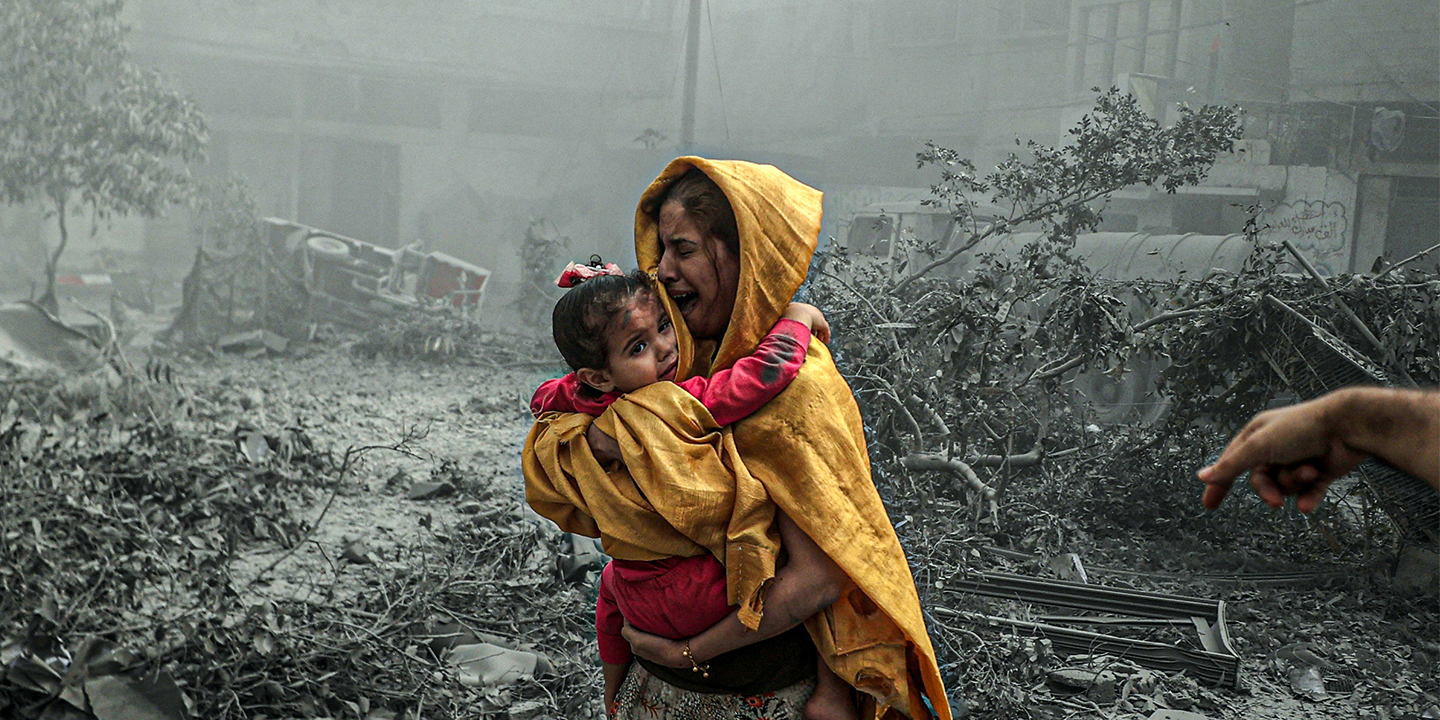
On 23 June the UN Independent International Commission of Inquiry (CoI) on the Occupied Palestinian Territory (OPT), including East Jerusalem, and Israel issued a report concluding that Israeli forces have deliberately targeted Palestinian children, amounting to genocide, crimes against humanity and war crimes in Gaza and war crimes in the Occupied West Bank. The CoI found the targeting of Palestinian children to be “central to establishing the genocidal intent” of Israeli authorities and forces, including by deliberately inflicting conditions of life calculated to bring about physical destruction and as a means to “destroy the future of the Palestinians in Gaza.”
Since 7 October 2023, Israeli forces have killed over 20,000 Palestinian children and injured some 44,000 more. Tens of thousands of children have been made disabled in Gaza, compelling the CoI to determine that “disability among Palestinian children has ceased to be an individual medical condition and has now become a defining demographic reality.” Israeli forces have exhibited a pattern of targeting infrastructure essential to children, including healthcare facilities and schools, and imposing conditions that negatively impact children’s survival, health and development. In addition, the CoI highlighted the widespread pattern of Israeli forces dehumanizing Palestinian childhood, including repeated instances in which soldiers recorded themselves “mocking, weaponizing and desecrating symbols of childhood in Gaza.”
The CoI reviewed cases in which Israeli forces targeted children waving white flags while evacuating under Israeli orders and sheltering in tents, as well as a breastfeeding infant being shot at by a quadcopter. Many of these instances involved Israeli forces either being close enough in proximity or using weapons with advanced enough precision that would leave little room for doubt over the identification. Medical practitioners observed a similar pattern of conduct by Israeli forces, treating children for wounds that indicated the use of precision weapons.
Throughout temporary pauses and ceasefires, Palestinian children continued to be targeted and killed. On 18 March 2025, the day that Israel broke the first ceasefire agreement in Gaza, at least 170 children were killed by mid-day. Since the most recent ceasefire, which took effect on 10 October 2025, children have also been killed while unintentionally going near or crossing the ambiguously defined so-called yellow line.
In the Occupied West Bank, the CoI documented similar deliberate targeting of Palestinian children, including during large-scale military operations and through the repeated, excessive and punitive use of force as “a tool of control, deterrence and collective intimidation.” Of the 213 Palestinian children killed in the West Bank between October 2023 and October 2025, 206 were boys, reflecting what the CoI assessed to be a policy of targeting boys as a distinct group due to their “perceived threat as ‘terrorists’ or ‘future terrorists.”
The findings of the CoI repeatedly underscored the culture of impunity underpinning Israel’s continued commission of atrocities against Palestinians. All states must resolutely condemn Israel’s ongoing atrocities in the OPT and uphold their duty to prevent genocide, including through ceasing military assistance to Israel, imposing targeted sanctions on responsible officials, suspending trade deals and pursuing avenues for accountability.
On 12 June the UN Human Rights Monitoring Mission in Ukraine (HRMMU) released its May 2026 monthly report documenting the highest civilian casualty toll since April 2022. The HRMMU verified at least 274 civilians killed and 1,763 injured during May, representing a 93 percent increase compared with May 2025. The sharp increase reflects Russia’s intensified use of long-range weapons against cities across Ukraine, as well as the growing use of short-range drones in frontline areas. The expanded use of short-range drones has also made civilian evacuations and humanitarian access increasingly perilous. Deliberate or indiscriminate attacks against civilians and civilian infrastructure may amount to war crimes.
The surge in civilian casualties comes amid a broader deterioration in Ukraine’s human rights and humanitarian situation. According to another HRMMU report released on 29 June, civilian deaths and injuries increased by 40 percent between December 2025 and May 2026 compared with the same period a year earlier. The report attributes this rise in part to Russia’s sustained campaign of strikes against Ukraine’s energy infrastructure, which has disrupted electricity, heating, water and healthcare services for millions of civilians. Repeated attacks have damaged homes, hospitals, schools and other civilian infrastructure, while hampering access to essential services and increasing humanitarian needs.
Briefing the UN Security Council on 29 June, Assistant Secretary-General Martha Pobee of the UN Department of Political and Peacebuilding Affairs stressed that civilians continue to bear the brunt of the conflict and warned that, “Over the past few weeks, the intensity and scope of attacks by the Russian Federation against Ukraine have increased significantly, causing greater civilian casualties and damage. Only today, at least 15 people were reportedly killed across Ukraine due to Russian aerial strikes.”
Ukraine has also continued to conduct long-range strikes against military and dual-use infrastructure inside Russia, which Ukrainian authorities say are intended to degrade Russia’s capacity to wage war. Russian authorities reported these attacks killed six people between 27 and 28 June.
As hostilities continue to intensify, the international community should strengthen efforts to protect civilians, support humanitarian operations and ensure accountability for violations of international humanitarian and human rights law. States should also renew diplomatic efforts toward a just and sustainable peace that safeguards Ukrainian territorial integrity, while reiterating that all parties to the conflict must uphold their obligations under international law.
A new report by the UN Office of the High Commissioner for Human Rights Office (OHCHR), published on 23 June, documents the widespread and systematic use of conflict-related sexual violence (CRSV) in Sudan since the outbreak of fighting in April 2023. The report highlights the brutality, scale and devastating consequences of CRSV in Sudan for survivors, their families and communities, with abuses perpetrated across Sudan, including during attacks on towns and villages, during house-to-house searches, in and around displacement camps, at checkpoints and along displacement routes. The vast majority of verified incidents were attributed to the Rapid Support Forces and its allies, while a smaller proportion were attributed to the Sudanese Armed Forces, affiliated security actors, Joint Forces and other armed movements and militias.
The report finds that sexual violence has been used systematically to terrorize, humiliate and punish civilians, including in retaliatory attacks targeting individuals perceived to be affiliated with parties to the conflict. In Darfur, many incidents targeted non-Arab communities and were accompanied by ethnically targeted, racially derogatory and dehumanizing language. UN High Commissioner for Humar Rights Volker Türk warned that “sexual violence is being used as a weapon of war” and stressed that “this is a war crime and, if committed as part of a widespread or systematic attack, a crime against humanity.”
From 15 April 2023 to mid-April 2026, OHCHR verified 546 incidents affecting at least 838 victims across 16 of Sudan’s 18 states, including 539 women, 284 girls, eight men and seven boys. These figures represent only a small fraction of the true scale of violations due to underreporting, verification challenges and endemic insecurity. Documented forms of violence include rape, gang rape, attempted rape, sexual slavery, forced marriage, forced prostitution, sexual torture, forced nudity, trafficking for sexual exploitation and other forms of sexual assault, often alongside killings, torture, ill-treatment and arbitrary detention. OHCHR has also received reports of 320 additional alleged incidents that are still undergoing verification.
As reports of grave violations against civilians continue to mount, including the widespread and systematic use of CRSV, concerns are growing over the escalating violence in and around El Obeid, North Kordofan. In response, a group of states has requested an urgent debate of the UN Human Rights Council to address the rapidly deteriorating human rights situation. The debate will take place on Friday, 3 July.
The international community must ensure that humanitarian actors, including local Emergency Response Rooms, are supported and resourced to deliver lifesaving services for survivors of CRSV, including clinical care, psychosocial support and sexual and reproductive health services. All perpetrators must be held accountable for violations and abuses of international human rights and humanitarian law. States providing military, logistical or other forms of support to the RSF – most notably the United Arab Emirates – must immediately cease such assistance to prevent further escalation and protect civilians.
Ralph Bunche Institute for International Studies
The Graduate Center, CUNY
365 Fifth Avenue, Suite 5203
New York, NY 10016-4309, USA