7 October 2026
Atrocity Alert
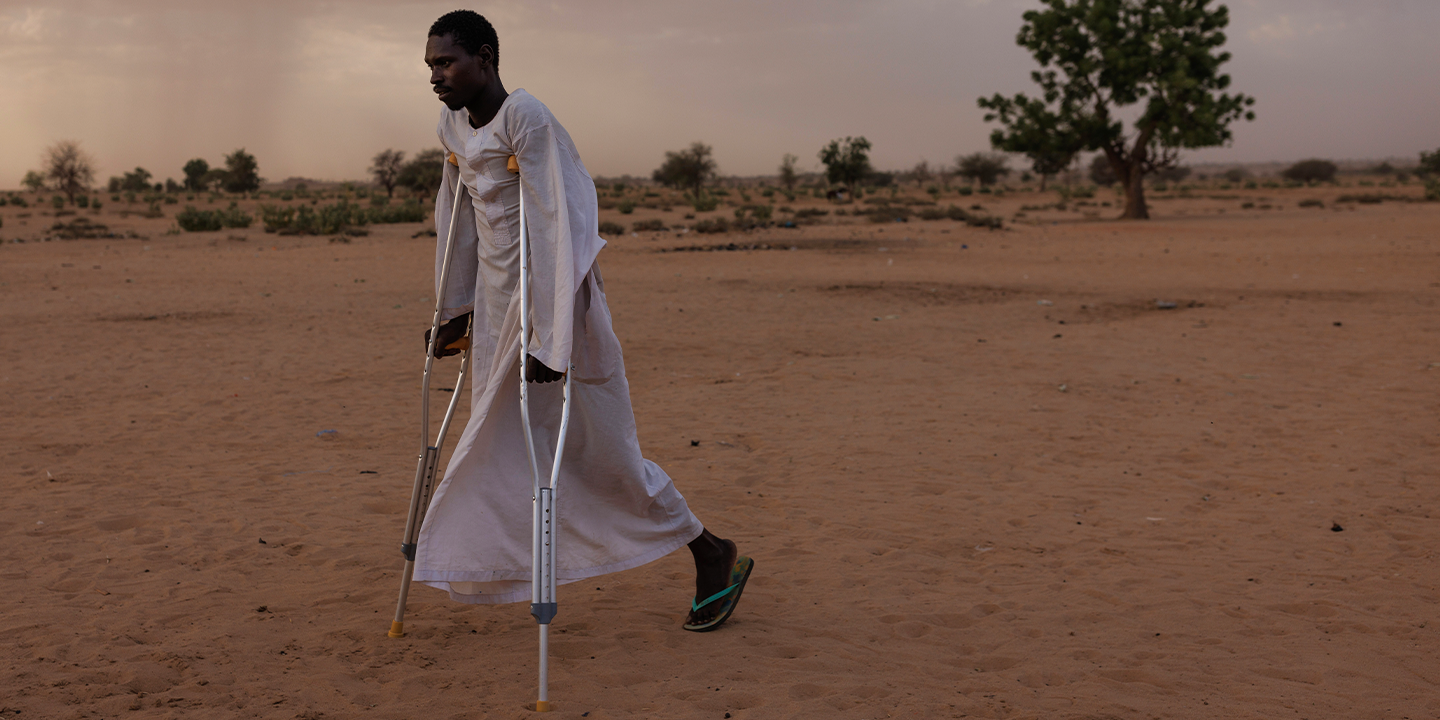
Drone strikes continue to intensify across Sudan. Amid ongoing fighting for control of El Obeid, the capital of North Kordofan, the city is increasingly being subjected to repeated attacks. A series of drone strikes beginning on Wednesday, 10 June, reportedly killed at least 30 people in and around the city. Among the incidents, one strike hit a funeral procession at a cemetery, killing at least four people and injuring several others. Drones also reportedly struck residential neighborhoods, the airport district and areas surrounding a Sudanese Armed Forces’ (SAF) base.
Control over El Obeid and the wider region has remained highly contested, with frontlines shifting repeatedly between the SAF and the Rapid Support Forces (RSF). Over the past week, there has been a significant build-up of RSF forces encircling the city, with a potential offensive appearing imminent as they seek to consolidate their position ahead of the rainy season. El Obeid is a strategic hub connecting the capital, Khartoum, to Darfur. In February 2025 the SAF broke a two-year siege imposed by the RSF in El Obeid, but over a year later RSF elements have continued to operate in the surrounding areas and retain the capacity to exert pressure on the city, including through drone strikes on city markets, electricity infrastructure, health facilities and residential areas. These strikes have caused significant civilian casualties and repeatedly disrupted the delivery of essential services.
The expanding use of drones has fundamentally transformed the security landscape in Sudan. In recent months, such strikes have intensified dramatically and demonstrated increasing precision for targeting civilian spaces, including markets, residential neighborhoods, hospitals and essential civilian infrastructure. On 15 June the UN High Commissioner for Human Rights reported that his Office has documented more than 1,000 civilians killed by drone strikes during the first five months of 2026.
Juliette Paauwe, Sudan expert at the Global Centre for the Responsibility to Protect, emphasized that “the evolving dynamics around El Obeid show patterns observed earlier in El Fasher, where prolonged encirclement and shifting frontlines culminated in large-scale attacks against civilians following sustained RSF operations. States with influence should use all available diplomatic channels to press for immediate de-escalation in Kordofan to ensure populations in El Obeid do not face the same fate as those in El Fasher.”
The RSF’s takeover of El Fasher in October 2025 was marked by widespread atrocities, including targeted ethnic violence, extrajudicial killings and executions. The UN Fact-Finding Mission on Sudan later concluded that the RSF committed crimes against humanity, war crimes and acts that may amount to genocide against non-Arab communities during its siege and subsequent takeover. Unconfirmed reports from December 2025 estimate that at least 60,000 people may have been killed since the RSF’s takeover.
All parties to the conflict must ensure the protection of civilians in El Obeid and across Kordofan, including by refraining from attacks that risk indiscriminate or disproportionate harm and ending all drone strikes on civilians and civilian infrastructure. Sustained humanitarian access must be ensured to affected populations in El Obeid and surrounding areas. International actors must increase support for local human rights and humanitarian organizations monitoring, documenting and reporting on civilian casualties.
On 15 June the UN Security Council renewed the mandate of the UN Assistance Mission in Afghanistan (UNAMA) until June 2027, reaffirming the importance of sustained international engagement amid escalating, multidimensional protection concerns across the country. The renewal follows rare public protests in Herat, home to a significant Hazara community, after Taliban authorities reportedly arrested at least 30 women and girls for alleged dress code violations. During the protests, Taliban authorities reportedly used excessive force, beating demonstrators and firing into the crowd, according to Human Rights Watch. As of 9 June, one child was killed, several people were injured and an unknown number were detained. Despite the violent response, protests continued over the subsequent days.
The arrests and protests took place against the backdrop of the Taliban’s institutionalized discrimination and repression imposed on women and girls, likely amounting to gender persecution, a crime against humanity. On 15 June the UN High Commissioner for Human Rights condemned a newly adopted law that effectively legitimizes child marriage, warning that it further entrenches the oppression of women and girls and must be abolished alongside all other discriminatory measures imposed since 2021. Hazara women and girls face particularly acute risks due to the intersection of their gender, ethnic and religious identities.
Beyond these internal protection concerns, heightened tensions between Pakistan and groups operating from within Afghanistan continue to place civilians at grave risk amid recurrent cross-border attacks. Although the intensity of clashes has decreased in recent weeks, sporadic hostilities and cross-border exchanges of fire have persisted. In early June, Pakistani authorities said 26 militants were killed in airstrikes targeting alleged terrorist hideouts and safe havens, while Taliban officials reported that 13 civilians, the majority of whom were children, were killed in three Afghan provinces. According to UNAMA, more than 750 civilians were killed or injured between 1 January and 31 March during cross-border hostilities involving Afghanistan’s de facto security forces and Pakistani military forces, with the majority of casualties caused by airstrikes conducted in February and March.
The further deterioration of women’s rights, violent restrictions on civic space and recurring cross-border hostilities underscore the indispensable role of continued international engagement in protecting civilians and addressing atrocity risks in Afghanistan. The Taliban de facto authorities must end discriminatory policies targeting women and girls and respect the rights to peaceful assembly and free expression. All parties must comply with their obligations under International Humanitarian Law and prioritize the protection of civilians. UN member states should sustain political and financial support for UNAMA and reinforce efforts to monitor violations and advance accountability.
Escalating violence in Nigeria’s Zamfara State is placing civilians at heightened risk of atrocity crimes. On 12 June at least 17 farmers were killed and several others injured while they were working in their fields in Goron Namaye in Maradun Local Government Area. While no group has claimed responsibility, local authorities attributed the attack to armed bandits, whose activities have intensified across the region in recent months.
Days earlier, on 8 June, armed bandits reportedly abducted at least 39 civilians during a reconciliation meeting in the nearby village of Magamin Diddi. The gathering had been organized to facilitate dialogue between local communities and the relatives of a notorious bandit leader, but the meeting ended in violence when the bandit leader arrived with members of his armed group.
In response to the recent attacks, Amnesty International urged the authorities to do more to end the almost daily atrocities committed by bandits and other armed groups, stating that “the authorities’ lethargy has allowed impunity to flourish and the killings to spread to many parts of the country, inflicting greater suffering on communities who already live in constant fear of the next attack.”
These incidents form part of a broader pattern of violence that has devastated communities across Zamfara and neighboring states for years. Banditry in northwestern Nigeria emerged gradually from a mix of local cattle-rustling networks, long-standing farmer-herder tensions and weak state presence. These groups became more organized and violent over time, expanding into kidnapping for ransom, extortion and attacks on villages as part of a broader criminal economy. Poverty, limited security provision and easy access to weapons have further entrenched these armed groups, which increasingly target civilians. Local community and reconciliation initiatives like the one in Magamin Diddi are increasingly common in northwestern Nigeria, where communities facing persistent insecurity often seek dialogue with armed groups amid concerns over inadequate state protection.
Security forces have carried out repeated operations, including airstrikes and ground deployments, but these efforts have had limited success in containing the violence. Concerns regarding the military’s conduct have also intensified. In a recent incident, a military airstrike on a market in Zamfara State allegedly killed at least 100 civilians. While authorities describe such strikes as targeting armed groups, the reported civilian casualties underscore broader concerns that some operations are indiscriminate or disproportionately harm civilians and pose risks to civilian protection.
Federal and state authorities must develop a coordinated strategy to address protection gaps for vulnerable populations. Social and political reforms remain essential to tackle the root causes of violence, including poor governance, corruption, poverty, youth unemployment, environmental degradation and climate change. Authorities should also strengthen protection of livelihoods and critical infrastructure, particularly for farming communities, to reduce civilian vulnerability to attacks and abductions.

Ralph Bunche Institute for International Studies
The Graduate Center, CUNY
365 Fifth Avenue, Suite 5203
New York, NY 10016-4309, USA