9 September 2026
Atrocity Alert
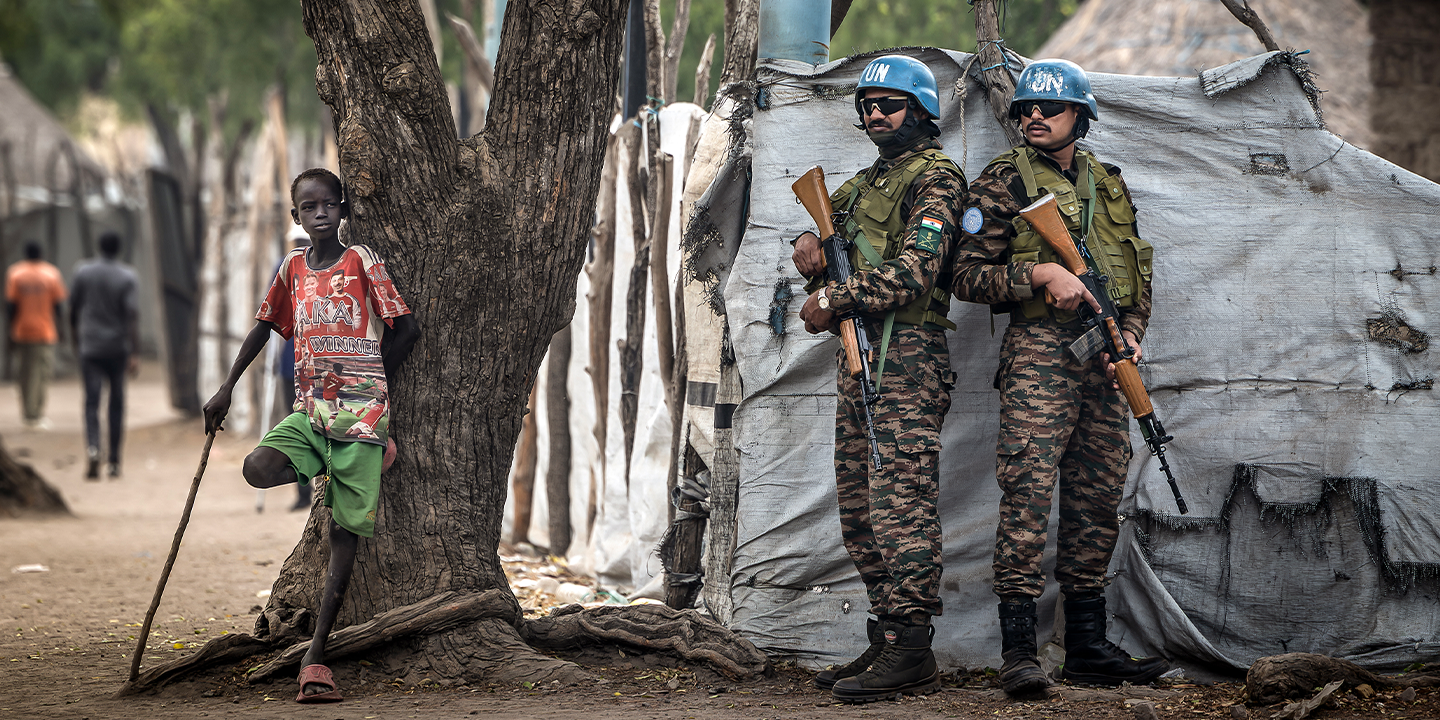
The security situation across South Sudan is deteriorating. Persistent clashes between national forces predominantly aligned with President Salva Kiir – the South Sudan People’s Defence Forces (SSPDF) – and opposition forces, including the Sudan People’s Liberation Army-in-Opposition (SPLA-IO), undermine the fragile peace process and heighten the risk of atrocities against civilians.
The escalation is particularly acute in Jonglei State, where fighting has intensified in recent weeks. In Akobo County, sustained clashes have caused large-scale displacement and civilian casualties. Control of the area has shifted repeatedly. In March the SSPDF seized the town after ordering civilians and the UN Mission in South Sudan (UNMISS) to vacate ahead of planned military operations. On 13 April the SPLA-IO, alongside allied White Army forces, retook Akobo.
In response to the escalating violence, the embassies of Canada, France, Germany, Japan, Norway, the Netherlands, the United Kingdom, the United States and the European Union stated on 17 April that recent events “lay bare the grave human cost and futility of this conflict,” stressing that “many lives have been lost” and the violence has “achieved nothing but further suffering.”
The escalation is unfolding amid growing constraints on UNMISS. Forced troop reductions and contingency planning linked to financial pressures are limiting the Mission’s ability to respond to protection threats. Briefing the UN Security Council (UNSC) on 17 April, Special Representative of the Secretary-General for South Sudan and Head of UNMISS Anita Kiki Gbeho emphasized the clear link between reduced troop levels and subsequent surges in violence, including in Akobo and Abiemnom.
The UN Commission on Human Rights in South Sudan’s (CHRSS) recent reporting has deepened concerns about the scale and nature of the violence. On 17 April the Commission expressed alarm over the discovery of bodies found during recent roadwork in Jonglei State, warning that “the true human cost of the country’s renewed violence may be significantly greater than currently known.” While preliminary information suggests the remains may be those of combatants killed in earlier clashes, the CHRSS stressed that it cannot exclude the possibility that civilians are among the dead or that the circumstances may amount to serious violations of international humanitarian and human rights law.
The international community should intensify efforts to ensure full implementation of the 2018 peace agreement. President Kiir and the ruling authorities, as well as opposition forces and armed groups, must urgently re-engage in meaningful dialogue and take concrete steps to restore momentum to the peace process. As the UNSC deliberates on the future of UNMISS during April, it is critical that the Mission is fully enabled to carry out its core mandate, including protecting civilians, supporting the peace process and monitoring and investigating human rights violations and abuses, as well as assisting preparations for credible and inclusive elections scheduled for December.
On 16 April Russian forces launched what Ukrainian authorities described as one of the deadliest waves of strikes this year. Hundreds of drones and missiles targeted civilians and civilian infrastructure, including in Kyiv, Odesa and Dnipro. At least 18 civilians were killed overnight, including children, and more than 100 were injured. Residential buildings and other civilian infrastructure were damaged or destroyed. Under international law, targeted and indiscriminate attacks on civilians and civilian objects are prohibited and constitute war crimes.
Victoria Andrievska, Public Information Officer at the UN Office for the Coordination of Humanitarian Affairs, described the human impact stating, “Once more, families have seen their homes damaged or destroyed in an instant. Others have spent the night in shelters or huddled at home, trying to comfort children terrified by the relentless alarms and blasts… We should not be forced to count the civilian toll every day. This cycle of violence against those who are simply trying to live their lives must stop.”
Four years since Russia launched its full-scale invasion of Ukraine, the human toll continues to rise at an alarming rate. The UN has verified over 15,000 civilian deaths since February 2022, though the true figure is likely significantly higher. According to the UN Human Rights Monitoring Mission in Ukraine, at least 211 civilians were killed and 1,206 injured in March 2026 alone. This marks a sharp increase from the previous month and the highest monthly toll since mid-2025.
During an emergency UN Security Council meeting on 20 April, Assistant Secretary-General for Humanitarian Affairs Joyce Msuya warned that “homes damaged once are hit again” and that communities already under strain are facing worsening hardship. She noted that the hostilities are increasingly impacting urban residential areas while the geographic spread of the strikes have widened. She also highlighted the continued widespread damage to energy infrastructure disrupting electricity, water, heating and essential services for millions.
Despite escalating violence, shifting geopolitical dynamics – linked in part to broader global instability, including the war in the Middle East – risks undermining hard-won efforts to support Ukraine in protecting civilians. The United States’ recent sanction exemptions on Russian oil, loosened in response to the global energy crisis due to the closure of the Strait of Hormuz, raise concerns that international pressure on Russia could weaken at a critical moment.
Loosening of further economic or financial sanctions and restrictions amid intensifying attacks risks emboldening further violations and fostering a climate of impunity. States should explore alternative ways to strengthen targeted sanctions against those responsible for atrocity crimes in Ukraine and ensure that political or economic considerations do not come at the expense of accountability. All parties must adhere to international law and ensure safe, sustained humanitarian access. Continued international pressure remains essential to protect civilian lives.
April marks Genocide Prevention and Awareness Month, a time to reflect on the grim anniversaries of the start of several genocides and to honor victims and survivors of these atrocities. These include the genocide against the Tutsi in Rwanda, the Armenian genocide, the Bosnian war and the Khmer Rouge’s rise to power in Cambodia. Throughout April we also commemorate the liberation of major Nazi concentration camps during 1945.
This month is not only about remembrance, but also about mobilizing the resolve needed to confront ongoing risks. Around the world, populations continue to face the threat of genocide and other atrocity crimes – not for anything they have done, but for who they are. The Genocide Convention does not simply condemn genocide; it obligates states to prevent it and protect those at risk. It establishes a clear legal and moral duty on governments to identify and respond to warning signs wherever they arise.
Too often, however, states fail to meet this obligation. Responses to early warning signs remain fragmented, politicized and inadequate, lacking the political will required for timely and decisive action. At the same time, governments are increasingly prioritizing narrow national interests over international obligations, eroding respect for established norms and weakening the collective capacity to prevent atrocities.
Despite protections under international law, we are increasingly witnessing a shift from civilians as incidental victims to the deliberate and systematic targeting of populations. Tragically, these violations are occurring with greater consistency than efforts to stop them.
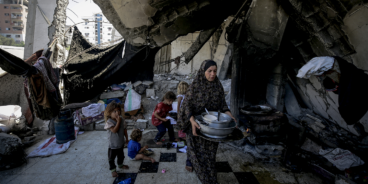
Today, Israeli authorities continue to inflict conditions of life calculated to bring about the physical destruction of Palestinians in the occupied Gaza Strip, amounting to genocide, with no indication of a change in intent despite the current ceasefire. In Darfur, the Rapid Support Forces have perpetrated acts that may constitute genocide, following well-documented patterns of ethnically targeted violence, siege tactics and attacks on civilians. In both cases, insufficient international action, and the complicity of third states, has enabled ongoing atrocities and entrenched impunity.
UN Secretary-General António Guterres emphasized, “It’s not enough to remember the dead. We must learn from past failures and protect the living – by rejecting hatred, inflammatory rhetoric and incitement to violence; by investing in the social fabric to deepen community resilience; and by strengthening institutions that help prevent mass atrocities.”
Preventing genocide is a shared responsibility. Every government and institution has the capacity and the obligation to act. Member states must uphold their legal commitments by ensuring accountability for atrocity crimes, taking proactive measures to protect civilians and halting actions, including arms transfers, that enable such crimes.
History shows that inaction in the face of atrocity crimes allows the unthinkable to become reality. The suffering of those at risk of or facing genocide cannot be ignored. The promise of “never again” demands more than words – it demands decisive and sustained action.

Ralph Bunche Institute for International Studies
The Graduate Center, CUNY
365 Fifth Avenue, Suite 5203
New York, NY 10016-4309, USA