26 March 2026
Open Letter
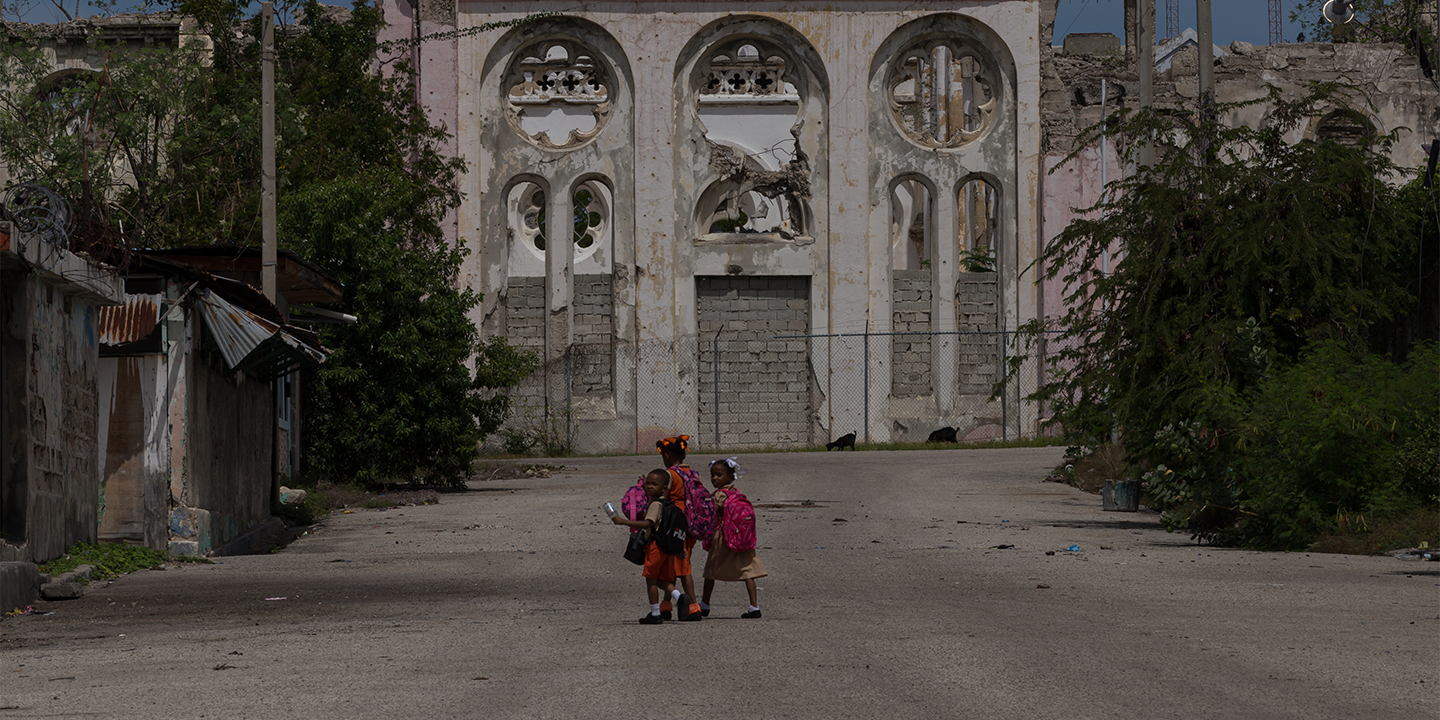
At least 70 people were killed and dozens remain missing following coordinated attacks by heavily armed gang members in central Haiti’s Petite-Rivière de l’Artibonite on 29-30 March. Members of the Gran Grif gang stormed the rural area of Jean-Denis in the early morning, opening fire and burning homes. Videos circulating on social media showed bullet-riddled bodies. Roads were reportedly blocked to prevent police from intervening. Armed men withdrew from Jean-Denis but later repositioned themselves in nearby Pont Benoit, where they reportedly attacked several rural towns on the outskirts of Marchand Dessalines on 31 March.
Gran Grif, the largest gang in the Artibonite region, has a history of grave abuses against civilians, including an attack on the same town nearly a year ago. The National Network for the Defense of Human Rights said Gran Grif’s attack on Jean-Denis followed weeks of threats and residents did not flee because they believed a self-defense group would protect them.
This attack reflects a deepening pattern of escalating and expanding violence across Haiti. A new report by the Office of the UN High Commissioner for Human Rights (OHCHR) warns that civilians are increasingly caught in a “vortex of violence.” This violence is fueled by the extreme brutality of gangs consolidating control, the rise of self-defense groups amid inadequate state protection and operations by security forces and the private military company, Vectus Global.
Within this context, gangs have intensified indiscriminate attacks on civilians. Individuals perceived as defying their authority or cooperating with police have been deliberately targeted, with some victims executed. Entire communities remain trapped in gang-controlled areas or along shifting frontlines, living under constant threat.
Self-defense groups – often armed with stones, machetes and increasingly high-caliber firearms – have also committed serious abuses, including lynching individuals suspected of gang affiliation and burning their bodies. In some cases, killings were allegedly encouraged or facilitated by police.
Civilians face additional risks from increased ground and air operations by state forces and private actors. OHCHR has documented the use of unnecessary and disproportionate lethal force, including summary executions of at least 196 individuals accused of gang affiliation. Some people were targeted solely because of where they lived or because they lacked identification. Between 1 March 2025 and 15 January 2026 at least 3,301 people were killed and 1,691 injured during anti-gang operations. Twenty-two percent of victims were civilians, often struck by stray bullets in homes or public spaces.
The involvement of private military actors, such as Vectus Global, has further heightened risks. Its use of explosive drones and helicopter gunfire in densely populated areas has killed at least 60 civilians, including 13 children. Many of these strikes may amount to targeted killings, in violation of International Human Rights Law (IHRL).
The growing proliferation of armed actors is fragmenting the security environment and heightening atrocity risks. Haitian authorities should accelerate police vetting, investigate all alleged violations and ensure accountability. All security operations, including those involving private actors, must comply with IHRL. National and international responses should prioritize civilian protection, prevention and community-based approaches to restoring security and social cohesion.
As Sudan approaches the third anniversary of the conflict on 15 April, violence shows no sign of abating. The Sudanese Armed Forces (SAF) and Rapid Support Forces (RSF) continue to fight to preserve and expand territorial control. Shifting frontlines and repeated offensives are deepening instability across the country. The involvement of allied armed groups has further fragmented the conflict, heightening risks for civilians caught in contested areas.
Over the weekend, the RSF and its allied armed group, the Sudan People’s Liberation Movement-North (SPLM‑N al‑Hilu), launched an attack on Dilling, South Kordofan, in an apparent attempt to recapture the city. Heavy artillery strikes in residential areas killed at least 14 civilians – including two women and five children – and injured dozens more. Although the SAF reportedly repelled a major attack on the city, the latest bombardment underscores the fragility of recent gains after the SAF broke a nearly two-year RSF siege earlier this January. Meanwhile, in Blue Nile state, hundreds of families were forced to flee the town of Geissan last week as RSF and SPLM‑N forces gathered around the area. This appears to be preparation for a large-scale attack following their recent capture of Kurmuk and other nearby towns.
These developments reflect a broader and deeply concerning pattern of escalating violence against civilians and civilian infrastructure. During Eid celebrations on 20 March, a drone strike allegedly carried out by the SAF hit the El-Daein Hospital in East Darfur, killing at least 70 people, including 13 children, and injuring more than 146 others. Tedros Adhanom Ghebreyesus, Director-General of the World Health Organization (WHO), said, “Enough blood has been spilled. Enough suffering has been inflicted. The time has come to de-escalate the conflict in Sudan and ensure the protection of civilians, health workers and humanitarians.”
Echoing this concern in a statement on 28 March, members of the Coalition for Atrocity Prevention and Justice in Sudan described the attack on the El-Daein Hospital as “unacceptable and deplorable,” stressing that it is not an isolated incident but part of a clear pattern of attacks on protected persons and objects, with devastating consequences for civilians. According to the WHO, 2,036 people have been killed in 213 attacks on health care since the outbreak of the conflict in 2023.
The escalation of hostilities reinforces the growing risk of further atrocity crimes in Sudan. All parties to the conflict must immediately agree to a permanent cessation of hostilities, and all forces under their command must fully comply with international humanitarian and human rights law. States providing political, military or financial support to parties to the conflict must also be held accountable for any role their assistance plays in enabling violations of international law, fueling violence and contributing to atrocity risks.
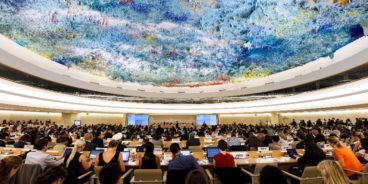
On 31 March the UN Human Rights Council (HRC) concluded its 61st session in Geneva. During the session, UN member states received updates from independent experts and investigative mechanisms and engaged in discussions and negotiations on how to address ongoing atrocity crises around the world.
Opening the session on 23 February, UN High Commissioner for Human Rights Volker Türk drew attention to ongoing atrocity crises in Gaza, Ukraine, Myanmar (Burma) and Sudan, while also expressing serious concern about escalating risks in South Sudan and Ethiopia. Throughout the session, UN member states received critical updates from HRC-mandated investigative mechanisms on Venezuela, Nicaragua, Ukraine, Iran and Belarus. In response to the rapidly evolving crisis in the Middle East, the HRC held two urgent debates addressing unlawful military strikes by the United States and Israel on Iran, as well as the broader impact of escalating retaliatory attacks by Iran across the region.
Building on these discussions, on 30 March the HRC adopted its bi-annual resolution on the prevention of genocide under the leadership of Armenia, calling for “the integration of genocide prevention as a system-wide, cross-pillar priority” during the ongoing UN80 reform process. UN member states also renewed key investigative mandates for South Sudan, Ukraine and Belarus, as well as Special Procedure mandates for the Democratic People’s Republic of Korea, Myanmar, Mali and Haiti. The HRC further renewed the mandate of the Commission of Inquiry (CoI) on the Syrian Arab Republic. While the CoI will continue to investigate atrocity crimes in line with its existing mandate, the resolution also requests that it provide methodological advice to support national investigations into alleged human rights violations and abuses.
Importantly, beyond deliberations and mandate renewals, the session also demonstrated the HRC’s ability to mobilize concrete follow-up action. On 19 February the Fact-Finding Mission on Sudan released a report concluding that the Rapid Support Forces (RSF) committed crimes against humanity, war crimes and genocide against non-Arab communities in and around El Fasher, North Darfur, during their siege and subsequent takeover in late October 2025. In response to the report – which marked the first time a UN mechanism determined genocidal intent by the RSF – Germany, Ireland, the Netherlands, Norway and the United Kingdom launched the Coalition for Atrocity Prevention and Justice in Sudan.
Taken together, these developments highlight the critical role the HRC can play in catalyzing concrete action on atrocity situations. Over the past two decades, the HRC has provided a space for affected communities to demand attention, recognition and action, created pressure on perpetrators and kept the promise of a rules-based order and accountability alive. Savita Pawnday, Executive Director of the Global Centre for the Responsibility to Protect, emphasized, “The case of Sudan demonstrates that when there is political will, meaningful follow-up is possible. At a time of unprecedented strain on multilateralism, it is vital that UN member states protect and preserve the human rights system by ensuring its findings translate into credible and concrete action, regardless of where atrocity crimes occur.”
Ralph Bunche Institute for International Studies
The Graduate Center, CUNY
365 Fifth Avenue, Suite 5203
New York, NY 10016-4309, USA