22 July 2026
Atrocity Alert
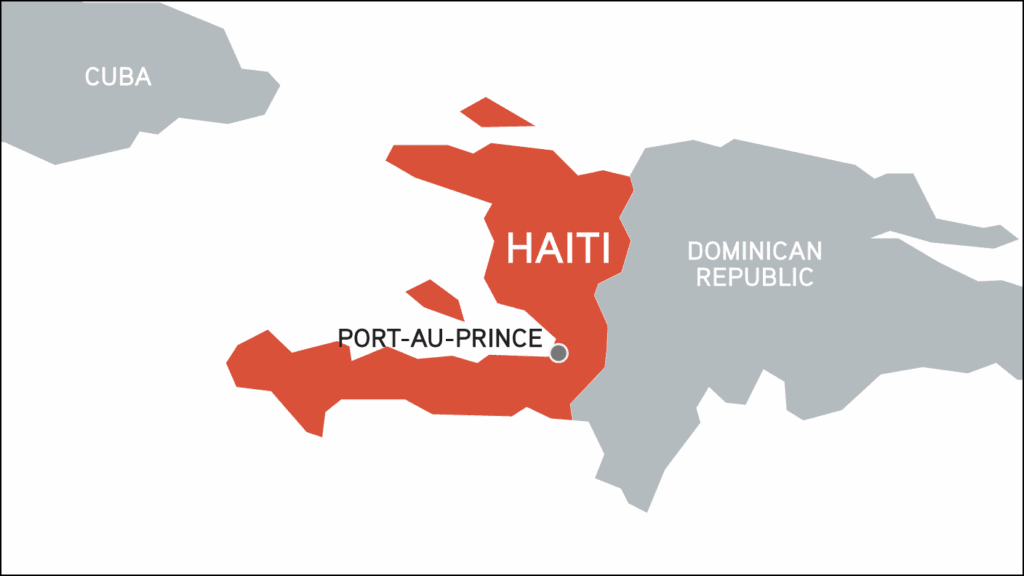
Populations in Haiti are facing possible atrocity crimes due to widespread violence and systematic abuses by armed gangs.
Since the assassination of President Jovenel Moïse in July 2021, violence in Haiti has escalated significantly, particularly in Port-au-Prince, where gangs have expanded and operate with near-total impunity, perpetrating widespread abuses. According to the Office of the UN High Commissioner for Human Rights (OHCHR), over 16,000 people have been killed and 7,000 injured since January 2022, including over 8,200 killed between January 2025 and March 2026 alone. Around 300 criminal groups are active, alongside 270,000 to 500,000 illegally circulating firearms, the majority controlled by gangs. Insecurity has compounded an existing humanitarian crisis, with 6.4 million Haitians requiring assistance and nearly 1.5 million internally displaced.
Violence against civilians and civilian infrastructure has intensified and spread since late February 2024, when two of the largest gang coalitions, G9 and Gpèp, formed an alliance known as Viv Ansanm and launched coordinated attacks across Port-au-Prince. Violence has also spread in the Artibonite and Centre department. Populations are confined to their neighborhoods as gangs deliberately target civilians and destroy or loot essential infrastructure, including schools, markets and medical facilities, while manipulating aid distribution to depopulate territory and consolidate control. In May 2025 the Organization of American States’ then-Special Adviser on R2P determined that mass killing, rape, torture and enslavement in Haiti constitute crimes against humanity, citing the coordinated and widespread nature of abuses, organizational policies to instill fear and control populations and organizational command structures, supported by transnational arms pipelines.
The Haitian National Police (HNP) lack the capacity to contain gang violence. Vigilante self-defense groups have emerged to fill security gaps and are increasingly supporting HNP operations, but they are also implicated in abuses. This has triggered a pattern of retaliatory violence, with gangs targeting communities under vigilante protection. In late February 2025 the transitional government (TPC) established a task force to intensify anti-gang operations, contributing to a significant increase in casualties in 2025 due to the shift in operational tactics.
Women and children have been disproportionately affected. UN officials and experts report the deliberate, systematic and pervasive use of sexual violence, including collective rape, sexual slavery and mutilation, as a means of exerting territorial control and to punish communities. UN Women reports that in makeshift camps, sexual violence is also used to control access to scarce humanitarian aid. According to the UN Children’s Fund, children comprise up to 50 percent of armed group members, with recruitment increasing by 200 percent in 2025. More than 500,000 children live in gang-controlled areas, exposing them to heightened trafficking risks.
The crisis is compounded by prolonged political deadlock, a dysfunctional judiciary and the absence of functioning executive or legislative bodies. Since the assassination of President Moïse, Haiti has cycled through competing transition frameworks, deepening political mistrust and public disengagement.
The multinational response has been insufficient to address the scale, complexity and urgency of the protection crisis. In October 2022 the UN Security Council (UNSC) imposed a sanctions regime and arms embargo aimed at restricting the flow of funds and weapons to gangs. Several governments have also adopted targeted sanctions. In September 2025 the UNSC transformed the Multinational Security Support mission into a new international force known as the “Gang Suppression Force (GSF)” and established a UN Support Office to support its operations.
Civilians are increasingly caught in escalating violence fueled by all armed actors. As of mid-2026 gangs have expanded beyond Port-au-Prince to at least five of Haiti’s ten departments. The South-East department has emerged as an area of growing concern, with seven gang-related incidents in the first months of 2026, compared with just one in 2018.
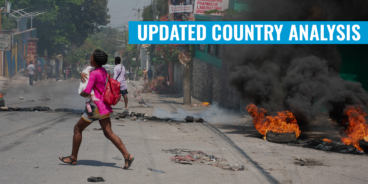
Gangs have intensified indiscriminate and deliberate attacks on civilians, targeting individuals perceived as defying their authority or cooperating with the HNP, with some victims executed. Civilians have also been caught in the crossfire amid gang rivalries. In Cité Soleil and Croix-des-Bouquets alone, at least 390 people were killed between 6 March and 16 May amid clashes over control of the Plaine du Cul-de-Sac, a strategic area north of Port-au-Prince. Clashes in June highlight how civilians remain vulnerable to localized violence due to gang-on-gang disputes.
Since late December the HNP, supported by international forces and the private military company Vectus Global, has intensified anti-gang operations and reportedly retaken some areas of Port-au-Prince. Operations have increasingly involved armored vehicles and explosive drones, which have caused growing civilian harm. While these operations have constrained gang expansion in parts of Port-au-Prince, security forces have also been implicated in extrajudicial executions and attempted summary executions, according to BINUH. As security forces target gang strongholds in Port-au-Prince, armed groups are aggressively expanding their reach elsewhere to consolidate control over key transport routes and revenue sources.
Following the end of the TPC’s mandate in February, political actors and civil society representatives signed an agreement recognizing Prime Minister Alix Didier Fils-Aimé as the head of the transition. The agreement assigns the government responsibility for restoring security and organizing elections, the first in a decade. Continued delays in organizing elections risk further entrenching the political vacuum, shrinking civic space and limiting participation – particularly for women.
More than 1,000 troops have arrived in Haiti for the GSF since April, which is not expected to reach full operational capacity until October. The force operates independently and is mandated to neutralize gangs, protect civilians and critical infrastructure and facilitate humanitarian access.
What began as fragmented gang violence has become a coordinated assault on Haitian society. The violence is not random criminality but deliberate, organized and sustained. The scale and systematic nature of the gangs’ predatory tactics pose clear atrocity risks. Gang violence is not merely a security or law enforcement issue; it can create conditions for atrocity crimes and may itself constitute crimes against humanity.
Women and girls face overlapping forms of discrimination linked to gender, poverty and living in gang-controlled areas, increasing their exposure to sexual violence and exploitation. Children face similar compounded risks, with gender shaping the forms of violence they experience and their roles within gangs.
Insecurity has severely restricted access to public services, deepening structural inequality and reinforcing exclusion – drivers of recruitment. Gangs increasingly function as de facto authorities, exercising territorial control and regulating daily life. Their control of key resources and transport routes has increased their autonomy and economic power – often through extortion and drug and arms trafficking.
These dynamics are partly fueled by long-standing ties between gangs and elites, as well as the power vacuum since 2021. Historically, gangs have been instrumentalized by political and security actors, receiving funding, arms and protection from accountability. The unification under Viv Ansanm has transformed gangs into a more coordinated and strategically capable force, though internal rivalries reflect the fragmented security environment and continued competition over territory and revenue streams.
The international community, particularly the United States, must impose stricter measures to prevent the illicit flow of small arms, light weapons and ammunitions into Haiti. Individuals and entities responsible for serious violations or for financing armed groups should be investigated and prosecuted. The UNSC should expand sanctions listings to include those responsible for supporting, ordering or facilitating violations of International Human Rights Law.
The two specialized judicial units – mandated to prosecute mass crimes and corruption – should be staffed with personnel trained in human rights-based, trauma-informed and child-sensitive procedures. Haitian authorities must ensure that the units operate independently and impartially. Meaningful judicial reform must be accompanied by efforts to address poverty and corruption, as well as dismantle criminal networks.
The GSF, in cooperation with BINUH, OHCHR and civil society, must implement robust human rights safeguards, including monitoring, accountability mechanisms and clear rules of engagement. Human rights monitoring capacity should be expanded beyond Port-au-Prince to all areas of deployment.
The Haitian government should strengthen protection and prevention measures, including access to healthcare and legal services for survivors of sexual violence, particularly in displacement settings. Efforts are also needed to support the disarmament, rehabilitation and reintegration of children associated with gangs.
States in the region must end collective expulsions and forced returns of Haitians.

Ralph Bunche Institute for International Studies
The Graduate Center, CUNY
365 Fifth Avenue, Suite 5203
New York, NY 10016-4309, USA