28 October 2026
Atrocity Alert
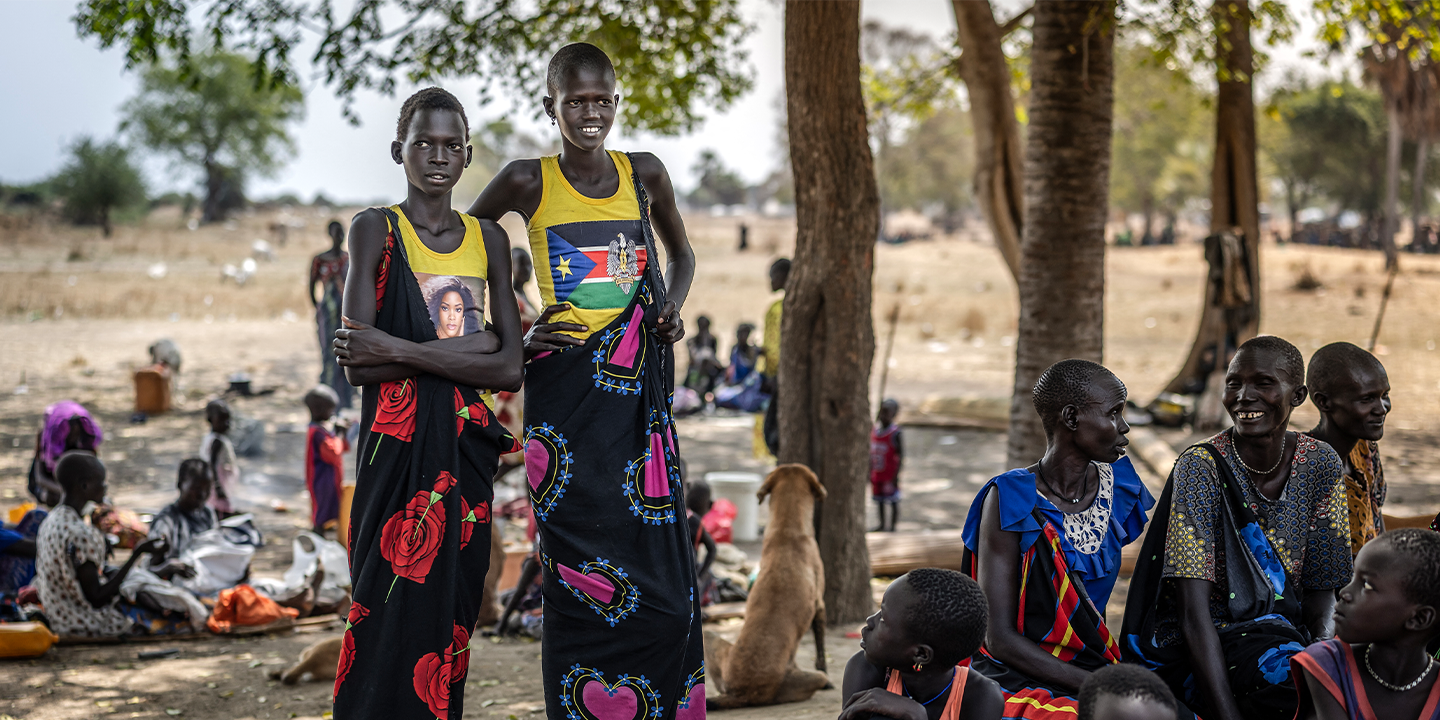
On 26 and 27 October armed violence in South Sudan’s Akop Payam in Tonj North County of Warrap State, reportedly killed at least 84 people and injured 60, according to state authorities. The attackers allegedly included armed youth from Mayom County in Unity State and sections of Alabek Payam in Warrap State. Cattle were stolen from Majak-kou cattle camp, while the markets of Athieng-puol and Rual-malith, as well as several homes in surrounding villages, were deliberately set ablaze. The attack followed an incident on 24 October in Mading-Juer, where eight civilians were reportedly killed.
These attacks form part of a recurring cycle of cattle raids, retaliatory killings and inter-communal violence in Warrap State. At least 60 people were killed and 50 injured in the same area during August. Although the latest cattle raids are rooted in longstanding inter-communal grievances and competition over livestock and resources, they are unfolding amid growing political fragmentation and tensions and increasingly militarized competition for power as the country approaches its scheduled December 2026 elections.
This violence raises concerns about the security conditions in which elections will take place. Cattle raids, inter-communal violence and competition over local authority risk becoming further intertwined with broader political and security dynamics and could disrupt voter registration and other election-related activities, including safe access to polling areas. The mobilization of large numbers of armed youth, including across state boundaries, raises further concerns about the authorities’ capacity to prevent retaliatory violence and protect civilians.
Addressing the UN General Assembly on 27 October, the Commission on Human Rights in South Sudan (CHRSS) warned that the concentration of executive power, renewed fighting and the failure to unify tens of thousands of combatants under a single command structure have created conditions in which elections could trigger a broader conflict. The Commission reiterated concerns raised in its August assessment, which found that most of the risk factors identified in the UN Framework of Analysis for Atrocity Crimes were present and intensifying. It warned that rushing to elections without key safeguards risks deepening existing conflicts and increasing the risk of atrocity crimes. Yasmin Sooka, Chair of the CHRSS, stressed, “A peaceful democracy cannot be built on a foundation of armed conflict, fear and exclusion. Yet the very safeguards designed to prevent a return to war are being dismantled as the country moves towards the ballot box.”
South Sudanese authorities must urgently investigate the latest attacks, hold those responsible accountable and take effective measures to prevent further retaliatory violence. As the country approaches elections, all political and armed actors must refrain from exploiting communal divisions and ensure that political competition does not further endanger civilians. The international community, including the African Union and Intergovernmental Authority on Development, should intensify preventive diplomacy and urge South Sudanese leaders to restore inclusive political dialogue and strengthen accountability and civilian protection mechanisms.
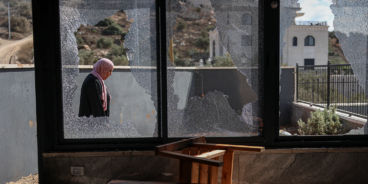
Israeli forces continue to prevent Palestinians from returning to their homes and corral them into ever-shrinking spaces. Over the last two weeks, the UN Human Rights Office in the Occupied Palestinian Territory (OPT) documented the westward expansion of Israeli forces across Gaza, which triggered repeated displacement of residents. As they expand their area of control, Israeli forces have attacked displacement encampments and detonated remaining infrastructure in affected areas. On 30 October the Office of the UN High Commissioner for Human Rights (OHCHR) raised alarm over the continued concern of ethnic cleansing in Gaza and warned against the ongoing forcible transfer of Palestinians within the enclave, a war crime that may also amount to a crime against humanity.
According to a recent report by the Danish Refugee Council and the Agricultural Development Association, 86 percent of Gaza’s population is currently experiencing protracted displacement. The report outlines how Israel’s policy of displacement in Gaza has not ended but has instead “changed shape,” with its defining feature shifting from being one of “movement” to “confinement.” The expansion of the vaguely defined so-called yellow line has been central to this process. Since the yellow line, which demarks areas of Gaza under Israeli control, was established under the October 2025 ceasefire agreement, Israeli forces have expanded their military control over the enclave from around 58 percent to an estimated 70 percent.
OHCHR has warned that Israeli forces appear to treat the demarcation line as a “kill zone” and documented the killing of more than 330 Palestinians in the vicinity of the yellow line. Palestinians have consequently been confined to approximately a third of Gaza’s territory, with limited access to essential services and humanitarian aid. Freedom of movement, including for humanitarian workers, has been severely curtailed, while demolitions of buildings continue to expand.
These developments are unfolding alongside the continued commission of genocide in Gaza. On 26 October the Independent International Commission of Inquiry (CoI) on the OPT, including East Jerusalem, and Israel presented its latest report to the UN General Assembly, finding that Israel continues to commit genocide in Gaza. CoI Chair Srinivasan Muralidhar stressed that, three years on, “little to no action is being taken by Israel or Member States to stop the atrocities against the Palestinian people.” He further underscored that “the Commission’s findings on continuous harm to civilians stand in contrast to the Board of Peace’s report to the Security Council in May this year, which claimed that the ceasefire has largely held, bringing ‘enormous relief to the civilian populations.’”
States with influence must urgently press for Israel to cease the forcible transfer of Palestinians within Gaza, allow those displaced to return safely to their homes and halt the expansion of the yellow line. The international community must exhaust diplomatic, legal and economic means to press Israel to comply with the legally binding provisional measures ordered by the International Court of Justice, including measures aimed at preventing acts prohibited under the Genocide Convention.
On 26 October the Group of Human Rights Experts on Nicaragua (GHREN) briefed the Third Committee of the UN General Assembly, emphasizing that there are reasonable grounds to believe that the Nicaraguan government continues to perpetrate crimes against humanity as part of a strategy “to eliminate all real or perceived opposition and ensure the permanent concentration of power.”
Among the government’s methods of repression, enforced disappearances have become a key instrument of control, alongside arbitrary detentions, torture and ill-treatment and political persecution. As of September 2026, the GHREN had confirmed at least 161 cases of enforced disappearance since 2018. The actual figure is almost certainly higher, as many families remain silent for fear of reprisal. According to the GHREN, Nicaraguan authorities have steadily transformed short-term disappearances into a “strategic and recurring practice of prolonged disappearances” stretching over months or years and affecting an increasingly broad spectrum of victims. These disappearances involve multiple state institutions.
The reach of the government’s repression now extends beyond its borders, with digital tools playing a growing role in political persecution. The GHREN has recorded threats, assaults, financial coercion, entry bans, the withholding of passports and consular services, surveillance and pressure applied through relatives against Nicaraguans living in exile. Their online activity is monitored, and their devices targeted through spyware, hacking and the interception of communications. The country’s telecommunications regulator, TELCOR, is embedded in the intelligence apparatus and supports these operations. The GHREN previously warned that, since 2018, authorities have unlawfully diverted state funds, including money earmarked for social programs, by channeling resources through a parallel party structure to pro-government armed groups and operations targeting critics at home and abroad.
Meanwhile, the country’s remaining checks on executive power are being progressively dismantled. On 1 September the National Assembly gave first-round approval to constitutional amendments extending presidential and legislative terms from six to seven years and disqualifying anyone labeled a “traitor to the homeland” from holding public office. The reforms also extend the terms of mayors, judges, electoral and prosecutorial authorities, and the leadership of the army and police. If approved in a second reading in the coming months, the amendments would formalize the end of competitive elections that Co-President Daniel Ortega signaled in July.
As the sole independent body mandated to investigate crimes against humanity in Nicaragua, the GHREN is indispensable for investigating and reporting on how the government’s persecution has adapted over time, including its growing targeting of exiled communities and increasing reliance on surveillance and other digital tools. UN member states should pursue accountability for victims, including through universal jurisdiction, strengthen and broaden targeted sanctions against senior officials and members of the Ortega-Murillo administration and leverage the GHREN’s findings across their security, financial and trade relations to raise the cost of repression to a level the government can no longer sustain.
Ralph Bunche Institute for International Studies
The Graduate Center, CUNY
365 Fifth Avenue, Suite 5203
New York, NY 10016-4309, USA