9 October 2026
Open Letter
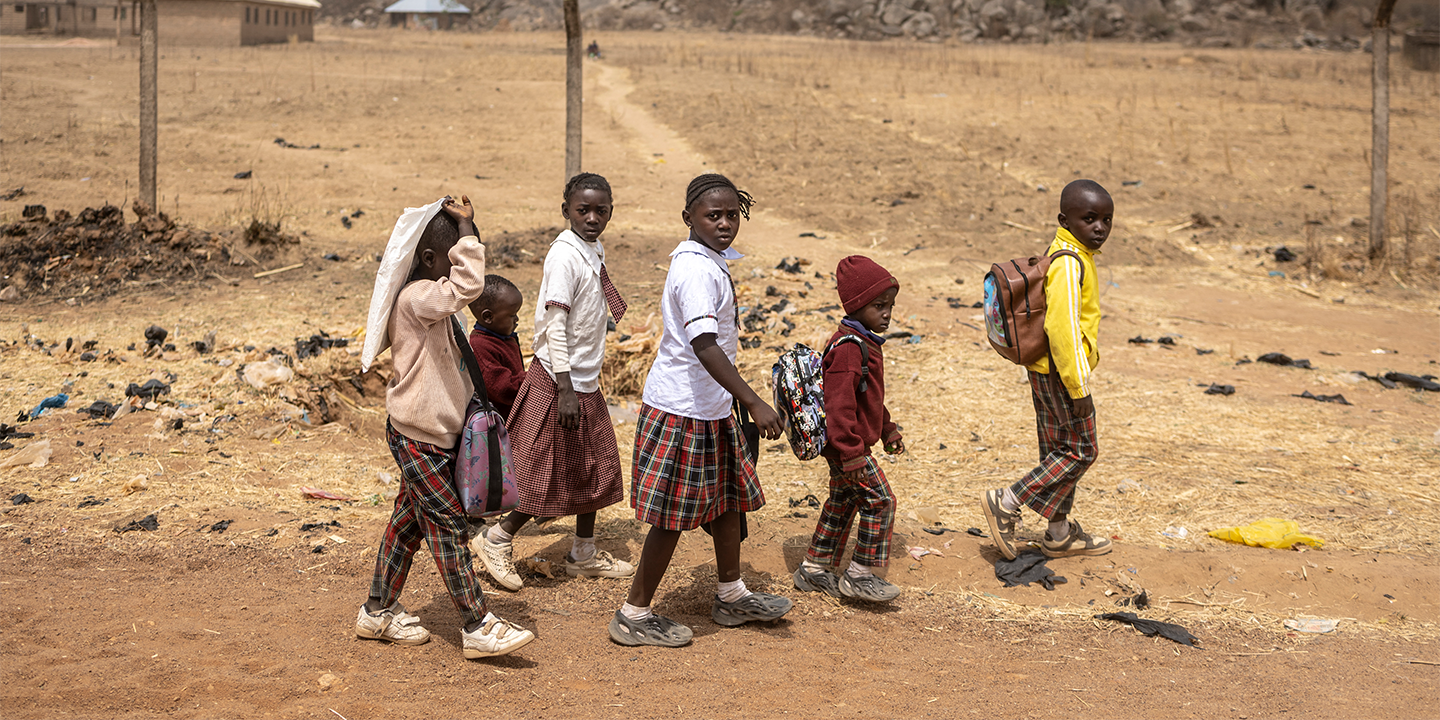
On 21 August armed men reportedly attacked several communities in Borgu district in Nigeria’s north-central Niger State, including worshippers gathered for Friday prayers at a mosque in the village of Dekera. Residents reported that as many as 600 people – predominantly women, children and older persons – were abducted and taken into surrounding forested areas. Local sources claim that 30 people were killed and at least 2,000 people fled into neighboring Benin. While the number of people abducted could not be verified, a video subsequently circulated on social media appeared to show hundreds of captives surrounded by armed men.
Following the attacks in Dekara, Amnesty International Nigeria warned on social media that “those abducted are frequently subjected to torture, starvation, amputation, rape and forced to witness or commit atrocities. Many of the communities affected by the abductions have for years also endured frequent attacks by gunmen.”
On 25 August President Bola Ahmed Tinubu ordered Nigeria’s military and security agencies to launch an immediate operation to locate and rescue the abducted civilians. No group has publicly claimed responsibility for the attacks, although the perpetrators are believed to be heavily armed criminal groups, commonly referred to as “bandits,” that operate across northwestern and north-central Nigeria.
Over the past several years, armed groups have exploited weak state presence, difficult terrain and limited security capacity to carry out large-scale attacks against civilian populations. Mass abductions, alongside attacks on villages, displacement camps, schools and major roads, have become increasingly common in parts of northern Nigeria. Kidnapping for ransom provides armed groups with a source of revenue that enables them to sustain and expand their operations. In March suspected Islamic militants attacked the town of Ngoshe in Borno State, reportedly abducting more than 300 civilians.
The attacks in Borgu district are part of a broader pattern of violence against civilians across northern Nigeria, with kidnapping also a significant problem nationwide. In August SBM Intelligence, an Africa-focused market intelligence, security analysis and strategic consulting firm, reported that at least 7,825 people were abducted in 1,713 kidnapping and related incidents across the country between July 2025 and June 2026, representing a 66 percent increase in the number of victims compared with the previous reporting period. At least 1,142 people were also killed during this period.
The Nigerian authorities should prioritize the safe and immediate release of all abducted civilians while ensuring that rescue operations minimize risks to hostages and other civilians. Federal and state authorities should strengthen civilian protection through improved intelligence-sharing, early warning and rapid response mechanisms and ensure that survivors and displaced populations have access to medical care, psychosocial support and other essential assistance. The authorities should also investigate attacks against civilians and hold perpetrators accountable. The international community should provide technical, financial and logistical support where needed.
The situation in the Occupied West Bank has continued to rapidly deteriorate in recent months amid unprecedented levels of state-backed settler violence, ongoing raids by Israeli forces and expanding settler outposts. Israeli authorities have also escalated their illegal settlement expansion policies. While briefing the UN Security Council in August, Ramiz Alakbarov, then UN Deputy Special Coordinator for the Middle East Peace Process, warned that the West Bank is at a “breaking point” and called for the situation to be “treated as an emergency requiring urgent action.”
Since the start of 2026, at least 76 Palestinians have been killed across the West Bank, 23 of them during settler attacks, according to the UN Office for the Coordination of Humanitarian Affairs. Settler attacks have accounted for roughly 55 percent of the more than 1,870 Palestinians injured this year, while some 3,800 Palestinians have been displaced due to settler violence, evictions and demolitions. Meanwhile, Israeli officials have armed and funded settlers while Israeli forces have continued to frequently shield, participate in and acquiesce to settler attacks.
Amid this escalation, the scope and reach of settler violence and encroachment has also expanded across areas under Palestinian civil control. The Oslo Accords designated three areas of the West Bank, leaving Area A under Palestinian civil and security control, Area B under Palestinian civil control and shared security control with Israel and Area C under Israeli civil and security control. Area C constitutes approximately 60 percent of the West Bank and is where most Israeli settlements and settler violence have historically been concentrated. A report published on 21 August by Israeli rights organization Yesh Din warned of “deeper territorial penetration” by Israelis in the West Bank, with over 20 settler outposts erected in Area B since 2024, while several are reportedly underway in Area A. Over 62 percent of violent settler incidents documented by Yesh Din in 2026 occurred in Areas A or B, compared with 32.4 percent of incidents in 2025.
In Qusra village in Area B, settler violence has heightened since the establishment of an outpost in November 2025. More recently, on 9 August settlers besieged several homes, and subsequently on 29 August dozens of settlers attacked the village. Similarly, in the nearby village of Jalud, where a new settler outpost was established in April, settlers imposed a two-week siege in July on several Palestinian families, ultimately forcing them from their homes. Amid these developments, last month Israel opened a new tender for the construction of over 1,200 settlement homes under the illegal E1 plan, which would effectively bifurcate the West Bank.
States must urgently act to confront state-backed settler violence and settlement expansion, including by imposing targeted sanctions, enacting a two-way arms embargo on Israel, banning trade with illegal settlements and refraining from rendering assistance to Israel’s unlawful presence in the Occupied Palestinian Territory.
A recent attack in Kenscoff, a strategic commune in the mountains on the outskirts of Haiti’s capital that has been the target of intermittent gang attacks since January 2025, has once again devastated the community. In the evening of 23 August, some 150 heavily armed gang members stormed several areas of downtown Kenscoff and opened fire at residents attempting to flee, killing at least 13 people. They subsequently pursued residents who had sought safety in a church, executing 22 in the courtyard and 12 others behind the church. Children and elderly who could not run were killed inside their homes. Others were burned alive after gunmen set at least a dozen houses on fire.
At least 52 people were also abducted, in what is believed to be one of the biggest mass kidnappings in Haiti in recent years. In an audio recording shared on social media on 24 August, one gang leader threatened to execute the hostages if security operations against the group continue. Haiti’s National Police said it ordered an investigation into the attack and deployed additional specialized units to the area. Following an intervention by community leaders and the UN Children’s Fund, the gang later released six children and seven women, but dozens remain in captivity.
During an emergency meeting of the UN Security Council on 28 August, Carlos Ruiz Massieu, Special Representative of the Secretary-General for Haiti and Head of the UN Integrated Office in Haiti (BINUH) said, “The massacre is deeply shocking, but it is not an isolated tragedy.” Recurrent attacks underscore how gangs rely on large-scale killings of civilians to maintain and expand their presence in rural and remote areas, control civilian populations and establish their authority. According to the UN, Kenscoff has endured a dozen gang attacks since last year, including an incursion in July 2026 that killed 61 people. According to BINUH, more than 3,050 people were killed throughout Haiti from January to June. At least 81 people were kidnapped from April to June, a more than 40 percent increase compared with the previous quarter.
The announced police reinforcements must prioritize civilian protection, including for those who have been abducted, and all security operations must be carried out in full compliance with International Human Rights Law. As gangs linked to the Viv Ansanm coalition continue to capitalize on limited police capacity, recurrent attacks highlight the urgent need for the full deployment of the UN-mandated Gang Suppression Force. Specialized judicial units to investigate mass crimes must be promptly and fully operationalized to combat impunity for ongoing atrocities. The international community must provide urgent and sustained support to the Haitian authorities so they can fulfill their responsibility to protect.
Ralph Bunche Institute for International Studies
The Graduate Center, CUNY
365 Fifth Avenue, Suite 5203
New York, NY 10016-4309, USA