1 July 2026
Atrocity Alert
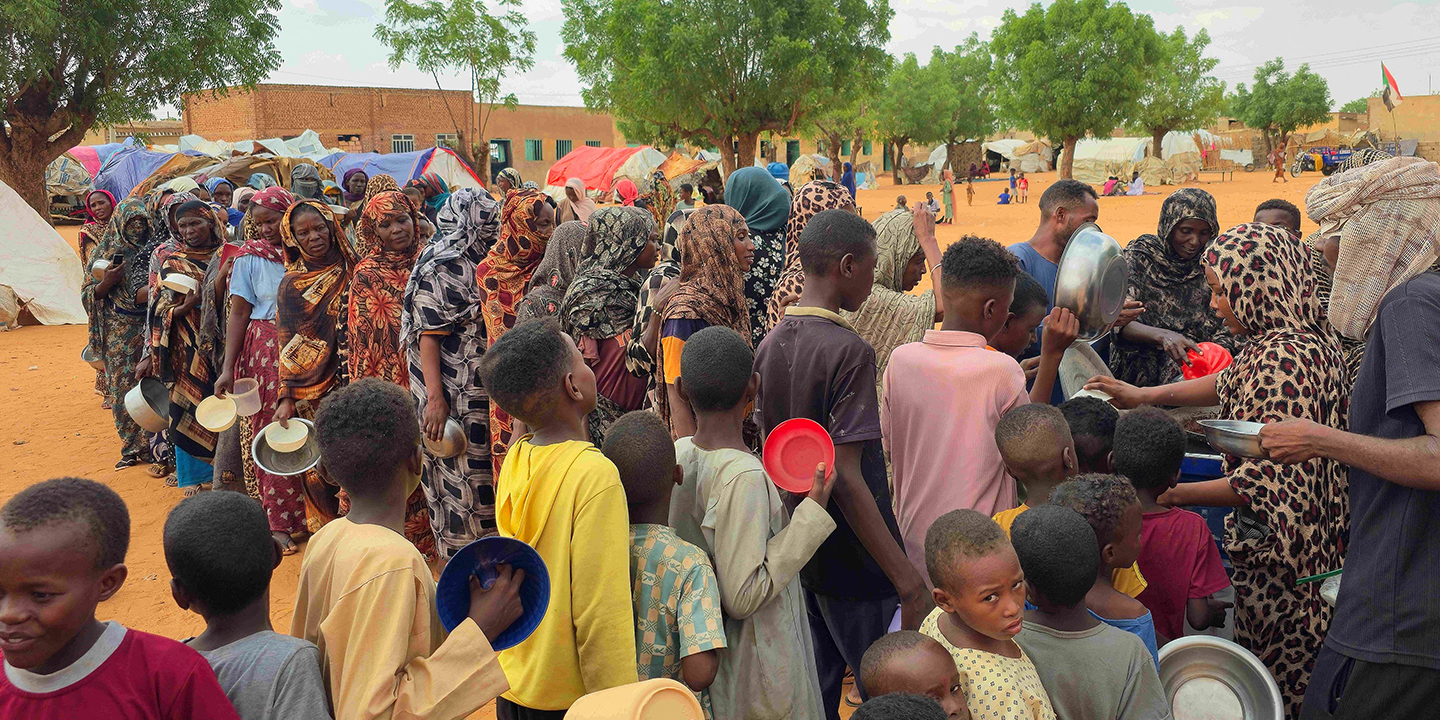
Intensifying clashes in and around El Obeid, the capital of North Kordofan, are raising serious concerns over the heightened risk of atrocity crimes against civilians. Over the past few weeks, Rapid Support Forces (RSF) have reportedly built-up their presence by encircling the city and begun a siege from at least three directions, with a potential offensive appearing imminent. Repeated drone strikes have already led to widespread civilian casualties. Estimates indicate that approximately 500,000 civilians in El Obeid are at risk of large-scale atrocities, including more than 100,000 internally displaced persons.
On 29 June the Yale School of Public Health’s Humanitarian Research Lab (HRL) reported satellite evidence covering the period 25 May to 25 June, indicating widespread and escalating damage to protected civilian infrastructure, including electricity generation facilities, fuel storage sites, multiple gas stations and the main market. Yale HRL concludes that the damage “is consistent with intentional bombardment of civilian infrastructure necessary for the sustainment of life.”
Control over El Obeid and the wider region has remained highly contested, with frontlines shifting repeatedly between the Sudanese Armed Forces and the RSF. The emerging pattern of encirclement, siege warfare and sustained strikes on civilian infrastructure mirrors RSF tactics previously documented in El Fasher, North Darfur, where similar methods were used to isolate the city, degrade essential services and intensify pressure on civilian populations through sustained bombardment and encirclement.
During an Enhanced Interactive Dialogue on the UN Fact-Finding Mission (FFM) for the Sudan’s oral update to the UN Human Rights Council (HRC) in June, Norway delivered a statement on behalf of the Coalition on Atrocity Prevention in Sudan and 21 other states, expressing grave alarm at “the urgent risks of atrocities and deliberate killings in Sudan,” and urging all parties “to immediately de-escalate and comply fully with international humanitarian law.” On 20 June the UN Security Council also expressed concern “at the imminent risk of mass atrocities and demanded the RSF immediately halt its assault on El Obeid.”
As atrocities continued to mount, the Global Centre, together with other NGOs, urged the HRC to urgently address the situation in and around El Obeid and take steps towards atrocity prevention and accountability. The HRC convened an urgent debate on 3 July and adopted a resolution on 6 July requesting the FFM to conduct an urgent inquiry.
In light of the rapidly deteriorating situation and the heightened risk of atrocity crimes, all parties must immediately cease attacks on civilians and civilian infrastructure and fully comply with their obligations under international humanitarian law. The international community should move beyond repeated reactive debates and ensure that investigations and reporting are systematically translated into timely political action. States should base their responses on existing credible findings regarding actors fueling the conflict and ensure that early warning is followed by concrete preventive and accountability measures.
On 26 June Lebanon, Israel and the United States (US) signed a Trilateral Framework affirming their “shared goal of achieving lasting peace and security.” Brokered by the US after a series of direct talks between Lebanon and Israel, the fourteen-point Framework claims to serve as starting point from which parties will work towards a “full comprehensive peace and security agreement.” However, concerns have been raised over the viability of this Framework and the extent to which its stipulations may undermine justice, accountability and a lasting political resolution. The Framework was signed amid an ongoing ceasefire that has been subject to near-daily violations by Israel, resulting in thousands of casualties.
Despite some of the parties stressing that the Framework does not waive the right of victims to seek justice, clause 13 of the agreement commits Israel and Lebanon to the “cessation of all hostile or adverse actions in international political or legal fora,” which could constrain accountability efforts for Israel’s atrocity crimes in Lebanon, including attempts to revitalize suspended efforts by Lebanon to accept the jurisdiction of the International Criminal Court (ICC) following hostilities with Israel in 2024. Six human rights and press freedom organizations issued a statement warning that the agreement “threatens to betray war crimes victims in Lebanon,” including by appearing to obstruct recourse to justice before international courts and “acquiesce to the prolonged and indefinite forced displacement” of residents from the south.
Since 2 March Israeli forces have progressively moved to occupy an estimated six percent of Lebanese territory, including large swathes of southern Lebanon, and established and expanded a so-called yellow-line. Dozens of villages have been destroyed and over 1 million people have been forcibly displaced by the occupation.
The Framework upholds measures that would delay and prevent the return of tens of thousands of people who remain displaced. Without explicit mention of the withdrawal of Israeli forces, the Framework effectively conditions the “redeployment” of Israeli forces outside of Lebanese territory on the disarmament of Hezbollah – a task assigned to the Lebanese Armed Forces, which continues to present significant challenges for Lebanon despite efforts to do so since 2024. In the days following the signing of the Framework, Israeli Prime Minister Benjamin Netanyahu and Defence Minister Israel Katz reportedly instructed forces to prepare for a long-term presence in “security zones” in southern Lebanon.
Parties to the Framework must ensure its implementation neither prevents the return of displaced populations nor impedes recourse to justice for victims of atrocity crimes. Lebanon should finalize earlier moves to grant ICC immediate jurisdiction. States must press for the immediate, unconditional withdrawal of Israeli forces from Lebanon, support victims in their pursuit of justice and exert influence on parties to adhere to the ceasefire.
On 24 June two powerful earthquakes – magnitudes 7.2 and 7.5 – struck Venezuela less than a minute apart, the strongest to hit the country in over a century. Centered in the state of Yaracuy, the quakes also caused widespread destruction across the Capital District and the states of La Guaira, Miranda, Aragua, Carabobo and Falcón, among others. The coastal city of La Guaira, north of Caracas, was among the worst hit, with entire neighborhoods reduced to rubble.
At the time of publication, the official death toll released by Venezuelan authorities has climbed above 3,600, but is estimated to be significantly higher as efforts to recover and identify victims remain ongoing and thousands of people remain unaccounted for. More than 16,700 individuals have been reportedly injured and over 17,000 people left homeless, while at least 1,000 buildings, including hospitals, were damaged or destroyed.
Venezuelan authorities have come under intense criticism for a response widely described as grossly inadequate. Rescue efforts were significantly delayed and under-resourced, leaving families to search for and recover victims from the rubble themselves. National humanitarian organizations, international rescue teams, UN agencies and hundreds of civil society volunteers have since carried out the vast majority of the relief effort. Venezuelan human rights NGO Provea also warned of the deployment of security bodies with no legal competence in disaster response – including the military counterintelligence directorate (DGCIM) and the intelligence service (SEBIN) – which could obstruct relief efforts and give rise to human rights abuses.
The catastrophe has struck a country already gripped by a multidimensional protection crisis that has left populations without reliable access to basic services, including clean water and sanitation, nutrition, health care and electricity for over a decade. Venezuelan civil society platform HumVenezuela estimates that 18.2 million people were in need as of January 2026, 12.4 million of whom faced critical humanitarian needs. The authorities’ incompetence is the product of more than two decades of large-scale corruption and the erosion of the rule of law. The UN Fact-Finding Mission on Venezuela has documented how state actors, including the DGCIM and SEBIN, have been used as instruments of regime survival, responsible for crimes against humanity and silencing dissent. State-led repression has been accompanied by years of systematic attacks against civic space, including criminalization of civil society organizations and independent media, both of which are central to current relief efforts. These dynamics now threaten to place Venezuelans at even greater risk and further exacerbate unprecedented suffering and despair.
Venezuelan authorities must immediately lift restrictions on civic space, allow full and unrestricted access for humanitarian actors and independent media and guarantee prompt and transparent information on relief efforts. Authorities must also urgently ensure the recovery and identification of the dead, provide families with accurate information on those still missing and ensure that affected communities are able to mourn and bury their loved ones with dignity.

Ralph Bunche Institute for International Studies
The Graduate Center, CUNY
365 Fifth Avenue, Suite 5203
New York, NY 10016-4309, USA