10 September 2026
Statement
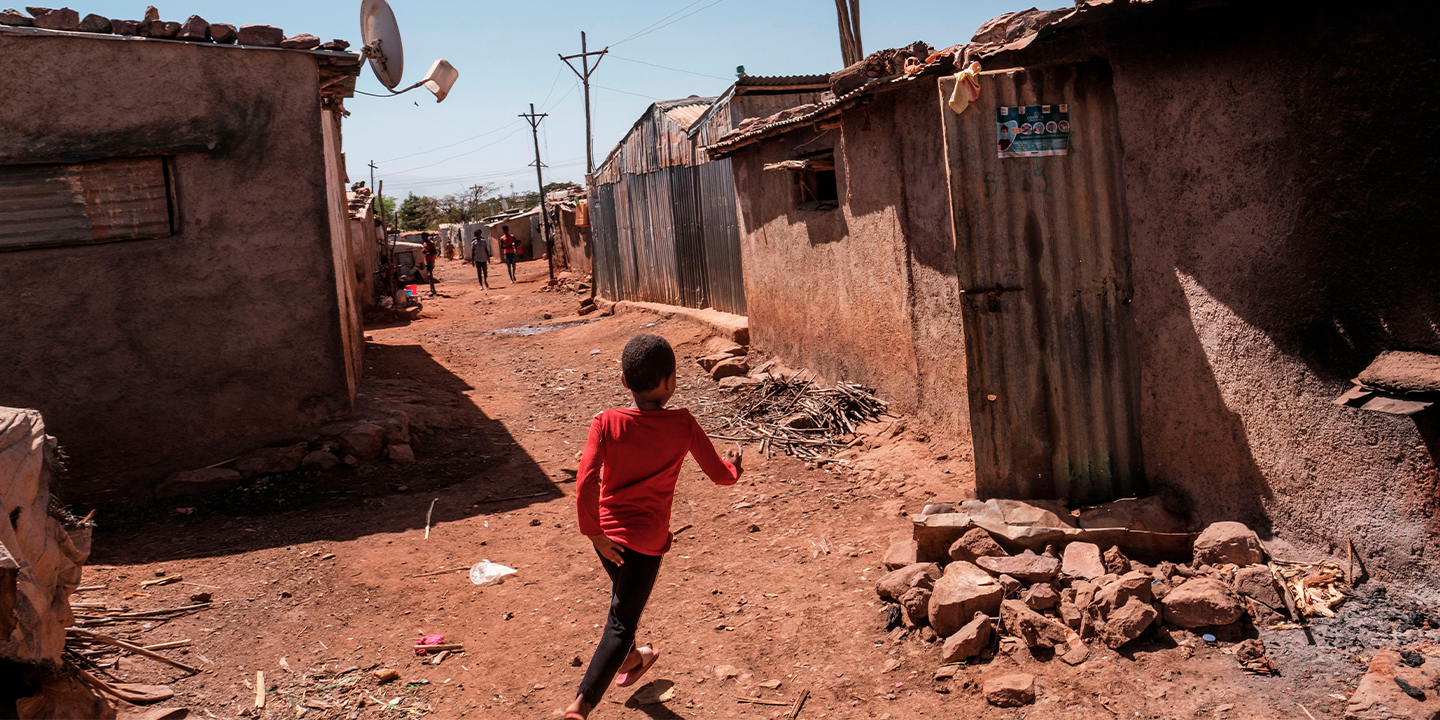
On 19 June the UN Special Rapporteur on the situation of human rights in Eritrea, Mohamed Abdelsalam Babiker, concluded that there remain “reasonable grounds to believe that crimes against humanity continue in Eritrea.” Presenting his latest report to the UN Human Rights Council (HRC), he warned that there are “no signs of meaningful improvement” in the country’s human rights situation and highlighted the government’s ongoing reliance on repression, arbitrary detention, enforced disappearance and indefinite national service. He further noted that grave violations persist amid widespread impunity, with no accountability for past or ongoing abuses.
The report highlights the Eritrean government’s continued use of arbitrary arrest and detention, restrictions on freedom of expression, religion and association, as well as the enduring system of indefinite national service that have shaped Eritrean society for decades. The Special Rapporteur also noted ongoing patterns of transnational repression targeting Eritrean diaspora communities abroad. Due to the grave human rights situation, thousands of Eritreans still flee the country.
The Special Rapporteur’s findings are consistent with more than a decade of UN reporting documenting widespread and systematic violations in Eritrea. Since the establishment of the Special Rapporteur’s mandate in 2012, successive reports and investigations have detailed patterns of arbitrary detention, enforced disappearances, torture, restrictions on fundamental freedoms and indefinite conscription. In 2016 the UN Commission of Inquiry on Eritrea concluded that many of these abuses may constitute crimes against humanity. Ten years later, little progress has been made toward accountability.
Despite repeated recommendations from UN human rights mechanisms, Eritrean authorities have failed to implement meaningful reforms or engage constructively with independent international scrutiny. Eritrea remains among the very few states that have never received any official visit by a special procedure mandate holder and continues to deny access to independent investigators. The absence of accountability for these systematic violations sustains the risk of further atrocities.
The consequences of impunity are not confined to Eritrea’s borders. Eritrean forces played a significant role during the conflict in Ethiopia’s Tigray region, where credible investigations documented widespread violations of international humanitarian and human rights law, including extrajudicial killings, conflict-related sexual violence, attacks against civilians and ethnic cleansing. The Office of the UN High Commissioner for Human Rights has also found that Eritrean forces remain present in some border areas and have continued to commit “abductions, rape, property looting and arbitrary arrests.” The continued absence of accountability for abuses committed in Tigray reinforces broader patterns of impunity and increases the risk of future atrocities.
As the HRC deliberates the renewal of the Special Rapporteur’s mandate, member states should support its renewal and request that the Special Rapporteur assess and report on concrete pathways to justice, accountability and victim-centered remedies for serious violations committed in Eritrea and by Eritrean forces abroad.
On 16 June the Special Criminal Court (SCC) in the Central African Republic (CAR) opened a landmark trial against former president François Bozizé, who is accused of crimes against humanity, including torture, murder, arbitrary detention and enforced disappearances. The crimes were allegedly committed between February 2009 and March 2013 by his presidential guard and other security forces at a civilian prison and the Bossembelé military training center. Three former senior military officers are also facing proceedings before the court. Bozizé, who ruled CAR from 2003 until his overthrow in 2013, is the highest-ranking official ever tried by the SCC.
Despite the SCC issuing an arrest warrant for Bozizé in February 2024, the government of Guinea-Bissau, where the former president has been living in exile, refuses to extradite him. Trying Bozizé in absentia raises concerns regarding international fair trial standards. The SCC’s legal framework permits trials in absentia, allowing proceedings to continue despite an accused person’s absence. Nevertheless, it is essential that Bozizé is arrested, extradited and faces the court in person.
Since its establishment, the SCC has faced funding shortfalls and enforcement challenges, and at least 30 of the individuals the court has issued arrest warrants for remain at large. For victims and survivors, Bozizé’s trial represents a rare opportunity to confront some of the darkest chapters of the country’s history. Christine Caldera, CAR expert at the Global Centre for the Responsibility to Protect, said, “The trial reflects a determination to uphold victims’ rights to justice and reparations and to confront impunity despite significant challenges. It also sends a strong message that accountability can reach even the most powerful perpetrators.”
The case unfolds against a backdrop of persistent instability, armed group activity, inter-communal tensions and attacks on civilians. Following a recent visit to the country, the UN Independent Expert on CAR reported violence against civilians, extortion, forced displacement, conflict-related sexual violence and human rights violations committed by armed groups and during some security operations. Protection concerns are particularly acute in the south-east prefectures of Haut-Mbomou and Mbomou, where the Azande Ani Kpi Gbe, a predominantly ethnic Azande militia accused of serious human rights violations, continues to carry out attacks and kidnappings. Since April combatants belonging to the Lord’s Resistance Army (LRA) have also renewed activities in the area, perpetrating the largest LRA attacks against civilians in CAR since 2020 through a string of abductions and killings. In the north-east, cross-border incursions and clashes continue to occur between local self-defense groups and Sudanese armed elements linked to the Rapid Support Forces, resulting in civilian targeting and displacement.
National authorities and international partners must strengthen efforts to protect civilians and advance the rule of law, justice and reconciliation. The international community should provide increased support to ensure the SCC has sufficient resources to effectively carry out its mandate. Bozizé and all other suspects subject to SCC arrest warrants should be arrested and brought before the Court without delay.
Today, 24 June, the UN Security Council is holding its annual open debate on children and armed conflict (CAAC) to discuss the UN Secretary-General’s latest report, which documents a grim new record of 38,558 verified grave violations against children in 2025. For the first time, government actors were the main perpetrators, committing more violations than armed groups. This reflects a broader pattern of states blatantly violating applicable legal protections for children in conflict and failing to uphold them consistently.
The report covers 23 conflict situations where violations affected a total of 24,174 children, up 7.5 percent from 2024 despite the report covering three fewer conflicts. This marks the highest number of children affected since the UN established the CAAC mandate 30 years ago. Most violations occurred in countries experiencing or recovering from atrocity crimes. The highest numbers were recorded in Israel and the Occupied Palestinian Territory (IOPT), Democratic Republic of the Congo (DRC), Nigeria, Myanmar and Somalia. For the third consecutive year, IOPT recorded the highest number of verified violations, with 12,445 cases. Israeli armed and security forces were responsible for the highest number of verified violations globally in 2025.
Throughout these conflicts, ground operations, widespread destruction of civilian infrastructure, prolonged urban warfare and the growing use of explosive weapons in populated areas exposed children to severe risks. Emerging military technologies, including unmanned aerial systems and AI-enabled targeting, have further compounded these threats. Abduction, recruitment and use and sexual violence increasingly occurred together, exposing children to multiple violations. Although sexual violence remains significantly underreported, verified cases continued unabated, including increasing instances of gang rape against children as a tactic of war. This year’s CAAC debate focuses on the protection of education amid a steadily increasing trend in attacks on schools. The Global Coalition to Protect Education from Attack documented a 40 percent increase in attacks on education during 2024–2025 compared with the previous two-year period.
The Secretary-General also highlighted monitoring challenges, particularly in Burkina Faso and Ethiopia, and reduced capacity in the DRC, Mali and Sudan, underscoring that verified cases likely represent only a fraction of violations against children. The report also notes persistent efforts by some member states to undermine independent human rights monitoring.
This year’s annexed list of perpetrators includes new parties in Haiti, Niger and Sudan. The Secretary-General also warned that several actors could be listed in future reports absent meaningful improvement, including the Armed Forces of the DRC, the Haitian National Police and Special Security Task Force, Israeli settlers and Israeli armed and security forces operating in Lebanon. Concerns were also raised regarding recruitment and use of children by the Sudanese Armed Forces.
Vanessa Frazier, the Special Representative of the Secretary-General for Children and Armed Conflict, stressed, “Humanity must take its responsibilities and recognize the mayhem that it has created for generations to come. Words are not enough; durable and resolute actions are needed.” States should ratify and implement the Optional Protocol to the Convention on the Rights of the Child, the Paris and Vancouver Principles, the Safe Schools Declaration and the Explosive Weapons in Populated Areas Political Declaration. The international community must ensure accountability for all perpetrators, whether state forces or non-state armed groups.
Ralph Bunche Institute for International Studies
The Graduate Center, CUNY
365 Fifth Avenue, Suite 5203
New York, NY 10016-4309, USA