
22 July 2026
Atrocity Alert
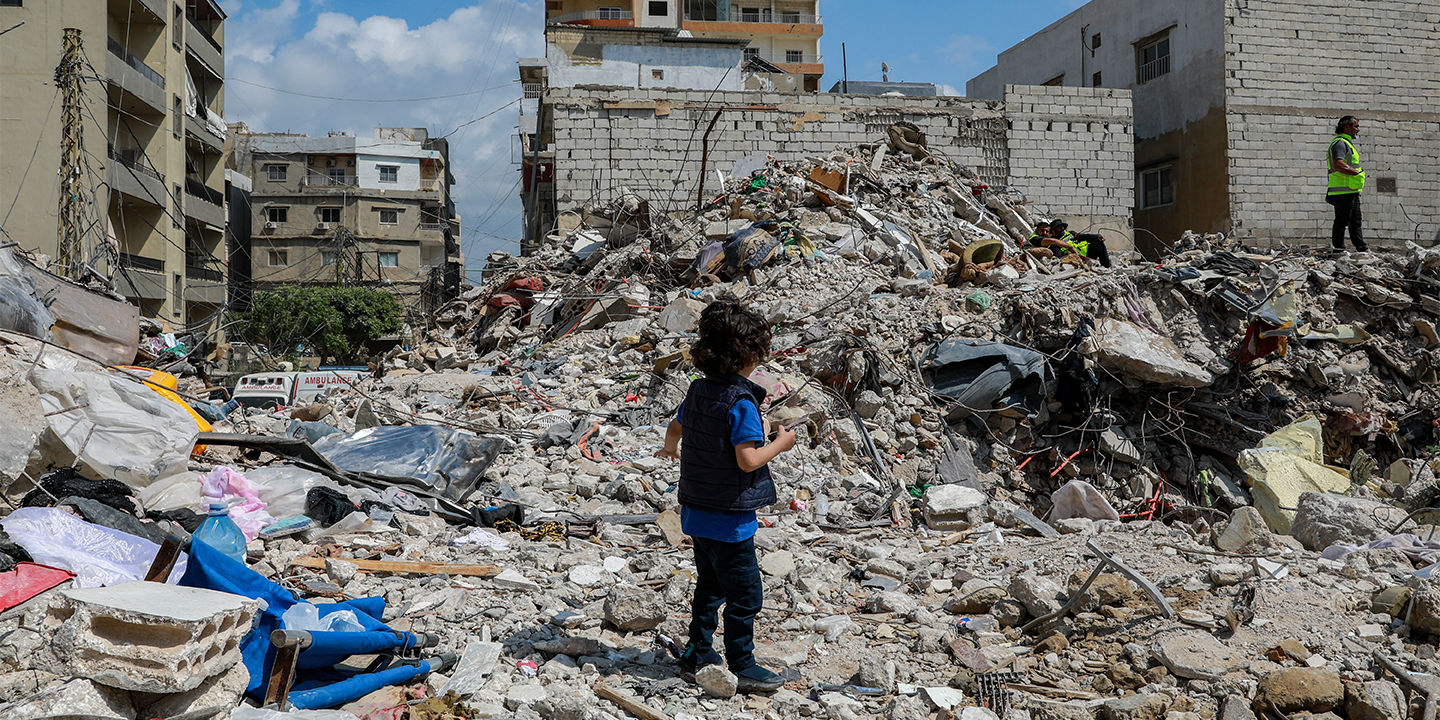
Despite the three-week extension of the fragile ceasefire between Israel and Lebanon that started on 23 April, ongoing hostilities between Israeli forces and Hezbollah pose significant risks to civilians. On 26 April alone the UN Interim Force in Lebanon (UNIFIL) documented 299 firing incidents originating from Israel, south of the Blue Line, and Lebanese authorities recorded at least 14 people killed and 37 injured by Israeli strikes, marking the deadliest day since the start of the ceasefire.
A report by the Office of the UN High Commissioner for Human Rights, covering the first three weeks of hostilities, found that Israeli forces conducted direct attacks on civilians, including medical personnel, prevented residents from evacuating safely and targeted infrastructure critical to livelihoods, including farmland. The Office warned that similar incidents have continued following the ceasefire. According to the Lebanese Health Ministry, over 2,500 people have been killed and nearly 8,000 injured in Lebanon since 2 March, while more than 115,000 people remain displaced.
Days after the initial ceasefire took effect on 16 April, the Israeli military announced the establishment of a military boundary demarcated by a so-called yellow line extending approximately 10 kilometers into southern Lebanon. As a result, approximately 55 villages below the line have been isolated from the rest of the country and residents have been prohibited from returning. Israel has also continued to issue displacement orders, including for residents of 16 towns and villages in southern Lebanon on 28 April.
Israeli forces have also perpetrated widespread destruction of civilian infrastructure. Videos circulating this week show Israeli forces destroying solar panels that provided electricity, including power for water stations, to a southern Lebanese town. UNIFIL has also noted continued demolitions in several areas of the south, which Israel has justified under the pretext of targeting “terrorist” infrastructure. A recent BBC investigation, based on satellite imagery, documented Israel’s large-scale devastation of villages in southern Lebanon prior to the ceasefire, including the destruction of over 1,400 buildings.
Israel appears to be replicating in Lebanon tactics used to commit atrocities in Gaza, suggesting a parallel campaign of collective punishment. These include mass displacement orders, strikes on densely populated areas with little or no warning and the systematic destruction of civilian infrastructure. On 15 April over two dozen UN experts warned of these parallels, stressing that Israel’s “deliberate destruction of homes is a weapon of war and a form of collective punishment, particularly in Shiite areas in the rural South of the country,” and stressed that Israel’s conduct “also points to ethnic cleansing.” In Gaza, Israeli forces have demolished civilian property and displaced parts of the population to establish so-called buffer zones. Israel has also targeted essential services in Gaza, including electricity infrastructure. This conduct partly served as grounds for the International Criminal Court’s arrest warrant for Israeli Prime Minister Benjamin Netanyahu on charges of war crimes and crimes against humanity.
Efforts to ensure a sustained ceasefire that is fully respected and implemented by all parties must be urgently prioritized. States must refrain from providing assistance to Israel that would risk complicity in grave violations of international law, including potential atrocity crimes, and should impose a two-way arms embargo on Israel and targeted sanctions on Israeli officials.
On 25 April Islamic militant and separatist armed groups launched coordinated attacks across several locations in Mali, targeting the international airport in the capital, Bamako, as well as key cities in the central and northern regions. The attacks, claimed by al-Qaeda-affiliated Jama’at Nusrat al-Islam wal-Muslimin (JNIM) alongside the Tuareg separatist Azawad Liberation Front, mark one of the most complex and coordinated offensives in recent years. Civilians and military leaders, including Defence Minister Sadio Camara, were killed in the violence, although the government has not yet released an official death toll. The attacks raise serious concerns under International Humanitarian Law (IHL) and may constitute war crimes in some instances.
The scale and geographic spread of the attacks reflect an increasingly fragile security environment and highlight JNIM’s capacity to operate across vast distances – roughly 1,500 kilometers from Bamako to Kidal. An Associated Press journalist in Bamako reported sustained heavy weapons fire and automatic gunfire near the international airport. On 28 April a JNIM spokesperson reportedly announced the beginning of a “total siege” of Bamako and warned civilians not to position themselves between JNIM and the Malian armed forces (FAMa), or risk being targeted. Prior to this announcement, JNIM militants had already established checkpoints in Bamako’s suburbs in recent days. Videos circulating from Kidal – a former Tuareg stronghold retaken by Wagner-backed FAMa in November 2023 – and Gao, a key military hub, show gunfire exchanges and bodies lying in the streets. Unverified videos on social media also show militant convoys moving through another city, Kati, while residents look on fearfully. Casualties were reported among individuals gathered at a mosque that was destroyed.
Civilians in Mali have endured a pattern of atrocities perpetrated by armed Islamist groups, as well as by the FAMa and Wagner group, which Africa Corps has since replaced throughout the country’s protracted armed conflict. Recent accountability efforts highlight this pattern. Last week, three civil society organizations initiated a procedure before the African Court on Human and Peoples’ Rights concerning alleged serious violations committed against civilians in 2022 by the FAMa and Wagner Group. This marks the first known case seeking to hold a state accountable before the Court for contracting private military and security actors.
The latest wave of attacks and ongoing clashes also deepen uncertainty surrounding Mali’s military government, which seized power on the promise of restoring security. Instead, violence has intensified, civilian protection has deteriorated and the junta has systematically cracked down on civic space while consolidating power.
All armed actors must strictly comply with their obligations under IHL, including the protection of civilians and civilian infrastructure. JNIM’s continued expansion in Mali and the wider Central Sahel underline the urgent need to strengthen coordinated bilateral and multilateral security responses rooted in atrocity prevention and human rights protections, including bolstered safeguards for civilian protection, transparency and accountability.
On 21 April a court in El Salvador initiated a collective criminal proceeding against an estimated 486 individuals, marking one of the country’s largest mass trials for purported gang-related violence. Collectively, defendants are accused of committing more than 47,000 crimes between 2012 and 2022. The charges span a broad range of offenses, including homicide, femicide, extortion and arms trafficking.
Mass trials like this are being carried out in the context of a controversial state of emergency issued by President Nayib Bukele in March 2022. El Salvador’s Legislative Assembly approved legal reforms to formally allow courts to hold mass trials of up to 900 individuals in July 2023. Since then, mass trials have become a central instrument in President Bukele’s authoritarian crackdown on gang-related violence. The systematic denial of due process rights and the use of arbitrary prison sentences have become defining features of this approach, which has happened alongside the deliberate dismantling of democratic institutions, restrictions on civic space and the weakening of judicial independence.
Since the state of emergency was imposed, an estimated 89,000 to 91,000 individuals have been arbitrarily detained, frequently without substantiated evidence of gang affiliation, including children and adolescents. Human rights organizations have documented that state agents regularly carry out torture, enforced disappearances, sexual violence, extrajudicial killings and other inhumane acts, resulting in the deaths of more than 400 individuals in state custody as of August 2025. On 11 March a group of internationally recognized jurists warned that current state policies may amount to crimes against humanity.
Gang-related violence remains a persistent and widespread challenge across large parts of Latin America, with criminal groups often exercising territorial control over communities and, in some contexts, committing serious abuses that may amount to atrocity crimes. Over the past four years, President Bukele’s approach has been widely framed as delivering rapid and measurable security gains, including a marked reduction in homicide rates and consistently high public approval. However, these short-term outcomes obscure the longer-term consequences of a deeply securitized governance model, which disproportionately affects marginalized communities while entrenching cycles of institutional abuse and weakening the rule of law.
Elisabeth Pramendorfer, Latin America Expert at the Global Centre for the Responsibility to Protect, said, “The absence of strong, independent and accountable institutions, combined with entrenched inequality, corruption and persistent poverty, has been a key driver of urban violence in the first place, creating the very conditions the current policies claim to address. While it is essential that individuals responsible for gang-related violations and abuses are held to account, the current approach is not being implemented in accordance with international human rights standards while the deliberate dismantling of human rights protections has left populations not only exposed to gang violence but also crimes against humanity by state agents.”
Ralph Bunche Institute for International Studies
The Graduate Center, CUNY
365 Fifth Avenue, Suite 5203
New York, NY 10016-4309, USA