8 July 2026
Atrocity Alert
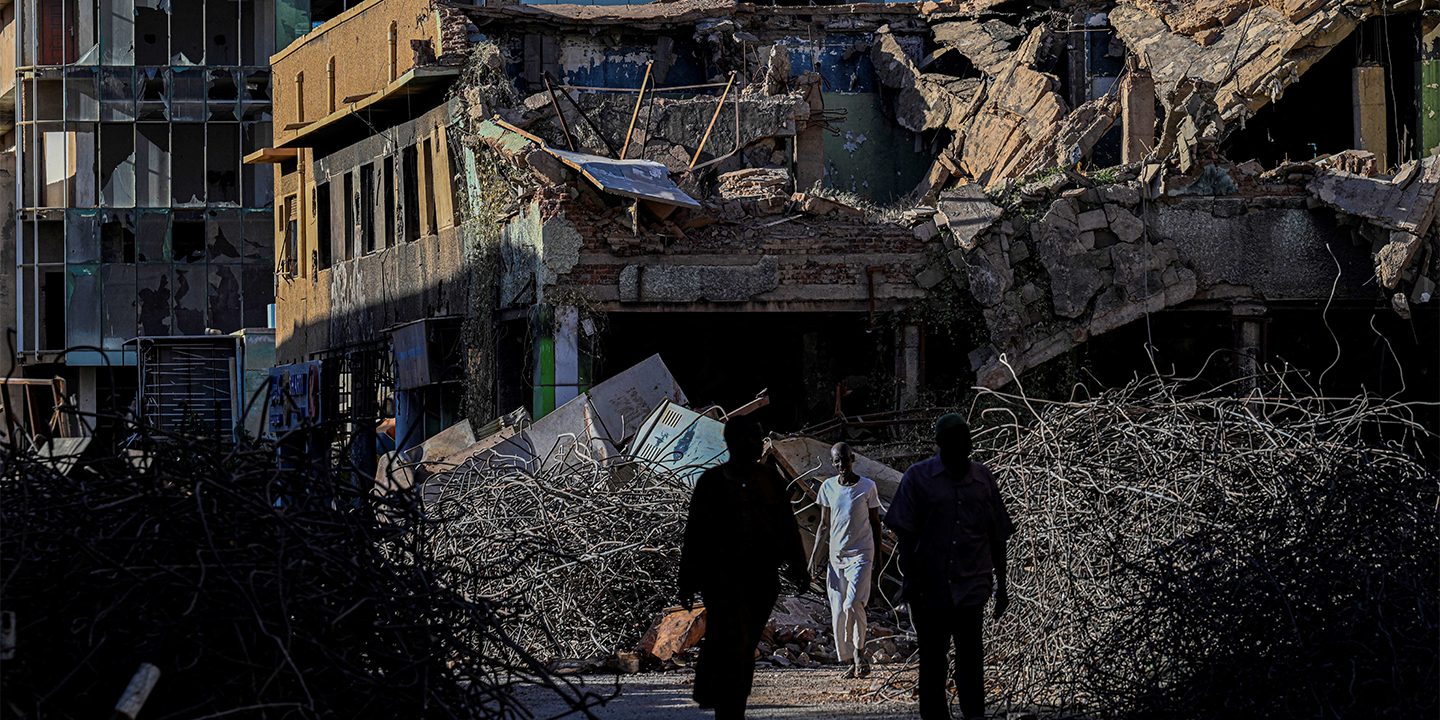
The conflict in Sudan is entering a new and deeply alarming phase as warring parties increasingly use drones in populated areas. Civilians now face immediate and heightened risks as attacks expand geographically. At least 30 people were reportedly killed and more than 60 injured in a series of drone attacks in North Darfur in recent days, including in Tine, Kernoi and Basaw. On 19 May a drone strike on a crowded market in Ghubaysh, West Kordofan, killed 28 civilians and injured dozens more. Earlier this month, drones targeted at least three strategic sites in Khartoum State, including the airport, which had only recently reopened to international commercial flights. Additional strikes on Al Quz in South Kordofan and near El Obeid in North Kordofan on 8 May reportedly killed 26 civilians.
The expanding use of drone capabilities has fundamentally transformed the security landscape across multiple regions of Sudan. Over recent months, drone strikes have drastically intensified and demonstrated increasing precision in their reach into civilian spaces, including markets, residential neighborhoods, hospitals and essential civilian infrastructure.
The Office of the UN High Commissioner for Human Rights (OHCHR) reported that drone strikes accounted for at least 880 civilian deaths – more than 80 percent of all conflict-related civilian deaths – between January and April 2026. During this period, 28 attacks on markets resulted in civilian casualties, while health facilities were struck at least 12 times. OHCHR further warned that the continued pattern of attacks striking civilians and destroying civilian infrastructure raises serious concerns regarding compliance with the fundamental principles of distinction, proportionality and precaution under International Humanitarian Law (IHL), and may amount to war crimes.
Violence is likely to persist and potentially intensify in the coming weeks as parties seek to secure or expand territorial control amid shifting frontlines. On 11 May UN High Commissioner for Human Rights Volker Türk warned, “This must not be allowed to happen. The international community is on notice that, unless action is taken without delay, this conflict is on the cusp of entering yet another new, even deadlier phase.”
The scale, frequency and geographic spread of drone attacks underscore the urgent need for accountability and international action. Parties to the conflict must immediately stop using drones in populated areas and ensure full compliance with IHL. There must be renewed international pressure for an immediate cessation of hostilities, particularly attacks on civilians and civilian infrastructure, alongside strengthened monitoring of arms transfers and other material support enabling drone warfare. The UN Security Council should respond to the escalating impact of drones on civilians by convening an urgent meeting to discuss the situation. Member states must also take responsibility for investigating and tracing the supply chains of drones, components and related technologies being routed into Sudan in violation of existing international obligations. Humanitarian actors must be granted full, safe and unimpeded access to all affected areas, including those newly exposed to drone strikes, to reach victims and communities in urgent need.
Reports of torture and other forms of ill-treatment against Palestinian detainees continue to grow, prompting renewed warnings from UN experts and human rights organizations. On 19 May the UN Special Rapporteur on torture and other cruel, inhuman or degrading treatment or punishment, Alice Jill Edwards, issued a press release warning of the continued risk of torture facing Palestinian detainees and calling on Israel to review and revise the policies, practices and laws that enable these abuses. Over 9,000 Palestinians are currently held in Israeli detention facilities, with approximately 40 percent detained without trial or charge under administrative detention – a longstanding practice used by Israel as a tool of repression.
The statement followed a joint communication Special Rapporteur Edwards submitted to Israeli authorities in March with the UN Special Rapporteur on extrajudicial, summary or arbitrary executions. The experts documented 52 incidents of torture and other ill-treatment, as well as 33 incidents of sexualized torture and other forms of sexualized ill-treatment since October 2023. The experts warned that these findings point either to a “pattern of grave neglect” by Israeli authorities or “a de facto policy that encourages, condones and institutionalizes the use of torture” and other forms of ill-treatment.
While Palestinian and international human rights organizations have documented these abuses for years, reported abuses have grown substantially since October 2023. In March 2026 the UN Special Rapporteur on situation of human rights in the Palestinian territories occupied since 1967, Francesca Albanese, released a report concluding that Israel’s systematic use of torture against Palestinians – inside and outside of detention facilities – meets the threshold for genocide.
Additional reporting has reinforced concerns regarding the widespread and systematic nature of abuses in detention. According to the Committee on the Protection of Journalists (CPJ), detained journalists are being subjected to a pattern of torture and other ill-forms of treatment. Of the 59 journalists interviewed by CPJ, 58 recounted being subjected to some form of abuse, including rape, medical neglect, beatings and starvation. More recently, following interviews with over 75 women detained across the Occupied Palestinian Territory, the Women’s Centre for Legal Aid and Counselling concluded that reports of sexual violence point to a “systematic” practice by Israeli guards and soldiers rather than isolated incidents.
On 7 October 2023 Israel imposed a ban on visits by the International Committee of the Red Cross (ICRC) to Palestinian detainees held in Israeli prisons and detention centers. Israeli authorities have only recently announced that they would facilitate partial access, allowing ICRC representatives to visit prisons while continuing to deny private meetings with individual detainees.
Israel must end its practice of administrative detention, rescind all policies and practices that expose Palestinian detainees to torture and other ill-forms of treatment and facilitate unhindered access for the ICRC and UN investigative bodies. Member states must press for prompt, independent and impartial investigations into allegations of torture and leverage all diplomatic and economic measures to pressure Israel to end these systematic practices.
On 20 May the UN Security Council (UNSC) held its annual debate on the protection of civilians (PoC) in armed conflict amid intensifying crises around the world. Despite the clear protections guaranteed to civilians under International Humanitarian Law (IHL) and International Human Rights Law, civilians are increasingly directly targeted in conflicts, including through killings, forced displacement, starvation, loss of livelihoods and the deliberate obstruction of aid. The scale of harm is staggering. In 2025 the UN documented more than 37,000 civilian deaths across 20 armed conflicts – which translates to one civilian being killed approximately every 14 minutes. The actual toll is likely far higher.
The erosion of protection is evident in attacks on humanitarian and medical personnel. Already in 2026, 144 humanitarian workers have reportedly been killed, injured, abducted or detained while trying to assist populations in need. A decade after the adoption of Resolution 2286 on protecting medical care in conflict, the UN recorded more than 1,350 attacks on healthcare in 2025 alone. Medical personnel have been killed, detained, intimidated and criminalized simply for carrying out their work.
Rapid technological change is reshaping warfare and compounding these risks. Armed drones and artificial intelligence are accelerating the pace and reach of violence, often in densely populated areas. The use of drones increased by 4,000 percent between 2020 and 2024 across multiple conflicts, contributing to civilian casualties, damage to critical infrastructure and disruptions to life-saving aid. Concurrently, disinformation and hate speech continue to inflame tensions, spread fear and place civilians and humanitarian workers at even greater risk.
The failure to uphold applicable legal frameworks consistently and enforce them without selectivity or double standards is devastating civilian populations across the world. As Edem Wosornu, Director of the UN Office for the Coordination of Humanitarian Affairs Crisis Response Division, warned during the debate, “None of this is inevitable. These patterns are the result of choices.” Despite repeated commitments by governments to PoC and the Responsibility to Protect, decisive action to prevent abuses and ensure accountability remains gravely insufficient and at times deliberately undermined. We have witnessed this failure repeatedly for populations in the Occupied Palestinian Territory, Sudan, Myanmar and elsewhere. At the same time, severe humanitarian funding cuts are straining the implementation of protection mandates and the ability to respond to growing needs.
The protection of civilians and prevention of mass atrocities are not optional; they are legal obligations and moral imperatives central to the UN’s legitimacy and the maintenance of international peace and security. Protecting civilians requires more than rhetoric. Member states, the UNSC and the broader UN system must demonstrate genuine political will through concrete and consistent action, including ensuring respect for IHL by all parties, strengthening accountability mechanisms and ensuring that ongoing reforms and funding decisions reinforce, rather than weaken, civilian protection.
Ralph Bunche Institute for International Studies
The Graduate Center, CUNY
365 Fifth Avenue, Suite 5203
New York, NY 10016-4309, USA