9 October 2026
Open Letter
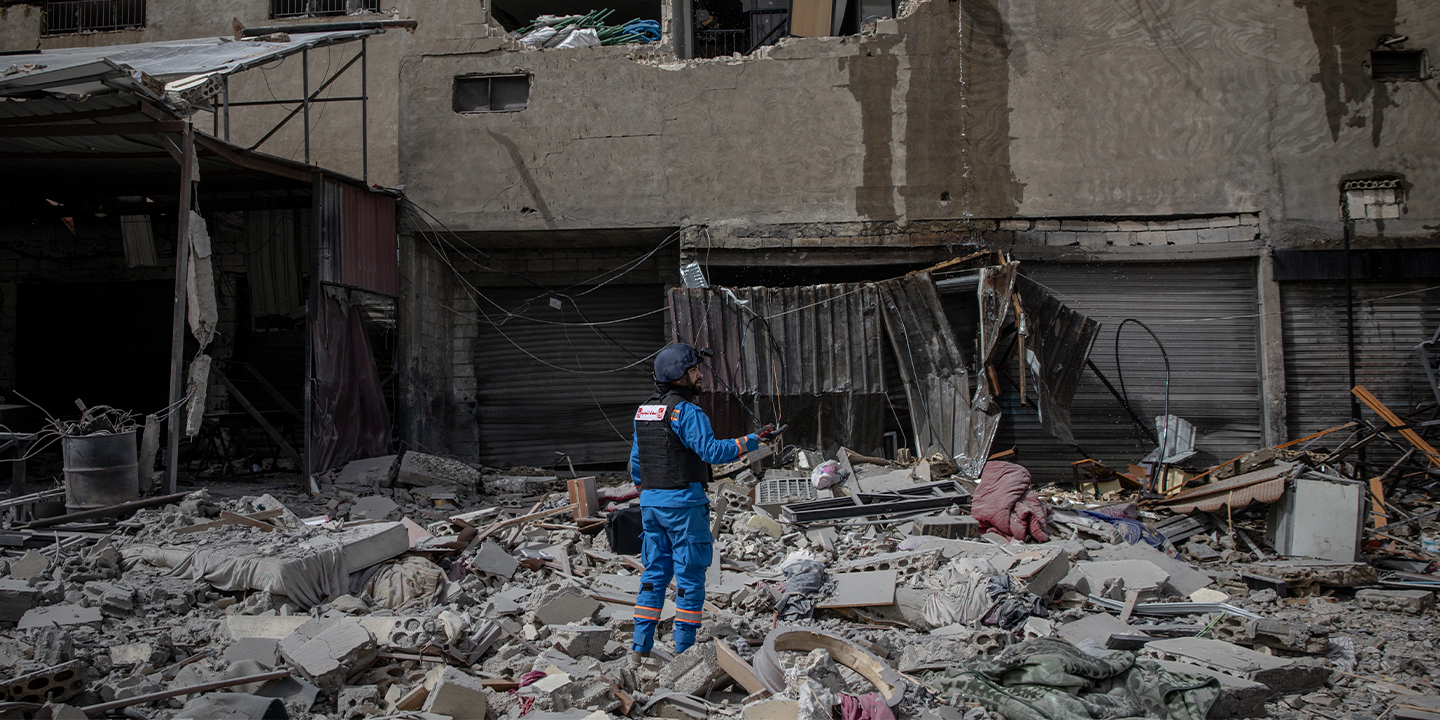
Over six weeks since Israel launched its latest military assault on Lebanon, more than 1,500 people have been killed and over 4,290 injured, according to Lebanese authorities, while roughly 14 percent of the country was placed under sweeping displacement orders within the first two weeks. On 7 April the United States and Iran agreed to a two-week ceasefire brokered by Pakistan. While Pakistan stated that the agreement would extend to Lebanon, Israel claimed otherwise and continued launching dozens of airstrikes across Lebanon. Iran has reportedly warned that it may withdraw from the ceasefire agreement if attacks on Lebanon persist.
Widespread destruction of civilian infrastructure and attacks on civilians reflect not only an escalation beyond tactics Israel used in previous attacks on Lebanon, but also the mirroring of conduct utilized in Gaza. Jonathan Whittall, former head of the UN Office for the Coordination of Humanitarian Affairs for the Occupied Palestinian Territory, stressed that Israel appears to be implementing its “Gaza doctrine” in Lebanon to “displace civilians, destroy infrastructure and fragment governance.”
Doctors who previously worked in Gaza report similar patterns ongoing in Lebanon, including a targeted campaign against the healthcare system. Medical clinics are under severe strain, and more than five dozen health workers have been killed. Attacks on civilian objects, including power stations, water infrastructure and financial institutions, have also been documented.
Recent announcements of plans to destroy homes in southern border villages and demolish bridges over the Litani River – under the guise of counterterror operations – risk severing southern Lebanon from the rest of the country. These measures mirror Israel’s use of displacement orders in Gaza to isolate the north from the south, as well as settlement-related policies in the Occupied West Bank that would effectively bifurcate the territory. Directives for widespread destruction indicate efforts to inflict lasting damage, undercut the temporary requirements of displacement and prevent the return of displaced residents. Numerous UN experts and rights organizations have called for investigations into potential war crimes committed by Israel.
Israel’s political and military leadership have clearly outlined a strategy to replicate the destructive model used in Gaza. Senior officials have announced their intent to turn districts in south Beirut into areas mirroring destroyed parts of Gaza, such as Khan Younis. They have also directed forces to operate along “the Beit Hanoun and Rafah models,” while signaling that parts of southern Lebanon may remain under prolonged Israeli control. Such rhetoric reflects a broader pattern of concern, with civil society organizations and UN officials warning of increasing normalization of disregard for International Humanitarian Law (IHL). The European Union Special Representative for Human Rights, Kajsa Ollongren, launched a video series on IHL, prompted partly by alarm raised over leaders’ statements indicating a willingness to violate fundamental IHL protections.
The reality unfolding in Lebanon demands immediate action. Statements by Israeli officials, combined with past conduct in Lebanon and ongoing operations in Gaza, underscore that the absence of accountability has enabled the continued commission of atrocity crimes. Efforts to ensure a lasting ceasefire between all parties must be urgently prioritized. States must refrain from providing assistance to Israel that would risk complicity in grave violations of international law, including potential atrocity crimes, and should impose a two-way arms embargo on Israel and targeted sanctions on Israeli officials.
A new report by Human Rights Watch (HRW) found that Burkina Faso’s military, allied militias and an Al-Qaeda-linked armed group have committed numerous war crimes and crimes against humanity. HRW documented 57 incidents between January 2023 and August 2025 across 11 regions, resulting in over 1,800 civilian deaths. Killings and other grave abuses appear central to the tactics of both military forces and the Islamist armed group, Jama’at Nusrat al-Islam wa al-Muslimin. Senior leaders on all sides may be responsible as a matter of command responsibility. Although the government has dismissed the report, the findings reinforce a growing body of evidence from multiple organizations reporting on atrocity crimes in Burkina Faso, including the Global Centre for the Responsibility to Protect and members of the People’s Coalition for the Sahel.
Military forces and allied Volunteers for the Defense of the Homeland (VDPs) have carried out killings and forced displacement, disproportionately targeting Fulani civilians whom they accuse of supporting the insurgency. According to HRW, the ethnic targeting of Fulani civilians by the Burkinabè military and VDPs through killings, enforced disappearances and looting, which resulted in the mass displacement of entire communities, amounts to ethnic cleansing. Since the 2022 military coup, hate speech, stigmatization and attacks against Fulani communities have increased, alongside expanded VDP recruitment and operations characterized by near-complete impunity. Counterinsurgency operations have often failed to distinguish civilians from fighters, resulting in mass killings and widespread abuses. Islamist armed groups have also recruited among marginalized Fulani communities, deepening cycles of violence, stigma and retaliation.
In Burkina Faso, repression and limited independent reporting obscure the scale of abuses, allowing violations to go underreported and unchecked. These dynamics reflect a broader pattern across the Central Sahel where military authorities in Burkina Faso, Mali and Niger have curtailed independent voices – including the media and human rights defenders – and resisted transitions to civilian rule, deepening impunity. Across the region, escalating conflict, authoritarianism and the erosion of the rule of law have left civilians at grave risk amid serious violations of international humanitarian and human rights law.
Despite the gravity of the protection crisis across the region, the international response remains inadequate. International partners, including the African Union, UN Security Council, Office of the UN High Commissioner for Human Rights, European Union and concerned states, must increase coordinated pressure for accountability and expand support for civilian protection. National authorities should pursue prompt, independent investigations, with international partners prepared to support these efforts or pursue accountability through universal jurisdiction where necessary.
Overnight on 1-2 April at least 43 people were killed in an attack by the Allied Democratic Forces (ADF) armed group in Bafwakoa village, Mambasa territory, in the Democratic Republic of the Congo’s (DRC) Ituri province. Witnesses report houses were set on fire, victims were killed with machetes or burned in their homes and two people were abducted. In response, the Congolese armed forces (FARDC) reportedly bolstered measures to protect civilians and intensified targeted operations to locate and dismantle ADF networks.
The attack occurred amid a surge in violence in Mambasa territory. As of 2 April, over 100 civilians were killed since 11 March, according to the UN Office for the Coordination of Humanitarian Affairs, while local humanitarian organizations report more than 390 abductions in the same period. The deteriorating security situation has triggered mass displacement, limiting access to life-saving assistance and exposing civilians to heightened protection risks. Widespread looting and theft of food and medical supplies have forced the closure of nine health facilities in the territory since 11 March.
Despite expanded joint operations in Ituri between the Ugandan armed forces and the FARDC since early 2025, alongside the presence of the UN peacekeeping mission (MONUSCO), the ADF continues to target civilians. Redeployment of FARDC troops to counter other armed groups, particularly in North and South Kivu, has created security vacuums in Ituri, which the ADF has exploited.
The FARDC have struggled to contain the ADF – an armed group from Uganda responsible for past crimes against humanity and war crimes – while simultaneously confronting multiple other armed groups across eastern DRC. The attack in Bafwakoa reflects this broader pattern of insecurity threatening civilians throughout Ituri. Between 31 March and 5 April MONUSCO repelled several attacks by other armed groups active in the region. Meanwhile, recent clashes in South Kivu have killed at least 20 civilians and caused mass displacement. In North Kivu’s Masisi territory, fighting between 28 and 29 March displaced around 6,000 people, adding to over 180,000 already displaced.
UN Deputy High Commissioner for Human Rights Nada Al-Nashif summarized the multifaceted crisis, stating, “The people of the Democratic Republic of the Congo are trapped in a dense web of crises: the proliferation of armed groups, foreign interference, ethnic tensions and fragile governance, amid a fierce competition over natural resources.”
All forces operating in the DRC must prioritize the protection of civilians and comply with international humanitarian and human rights law. The Congolese government, with international support, should strengthen military oversight across eastern DRC to better protect vulnerable populations from further atrocities. Ending violence in eastern DRC also requires addressing ethnic exclusion, strengthening governance by reinforcing local state authority and regulating natural resources to ensure they benefit local communities.
Ralph Bunche Institute for International Studies
The Graduate Center, CUNY
365 Fifth Avenue, Suite 5203
New York, NY 10016-4309, USA