16 September 2026
Atrocity Alert
As the United Nations (UN) Human Rights Council (HRC) marks its 20th anniversary, the multilateral protection architecture is facing growing institutional, political and financial pressure. Established to strengthen the capacity of the UN to prevent and respond to serious human rights violations and atrocity crimes, the HRC has developed a broad range of monitoring, investigative and accountability mechanisms aimed at documenting abuses, combating impunity and supporting prevention efforts. Yet in an increasingly fragmented geopolitical environment, important questions are being raised about the effectiveness and real-world impact of these mechanisms.
The Democratic Republic of the Congo (DRC) and Sudan illustrate both the importance and the limitations of the impact of the current multilateral system. Across both contexts, risks to civilians have spanned decades. The multilateral system has deployed an extensive array of tools, including peacekeeping operations, sanctions regimes, regional and international mediation efforts and proceedings at the International Criminal Court (ICC). Within this ecosystem, the human rights pillar has played a particularly important role, including through human rights monitoring and reporting, Special Procedures and Designated Experts and technical assistance and capacity-building. In the past three years alone, the HRC voted to establish investigative mechanisms for both contexts – including the Fact-Finding Mission (FFM) on Sudan and an FFM and subsequent Commission of Inquiry (CoI) for the DRC. Beyond documenting violations and preserving evidence, these mechanisms are mandated to analyze patterns, root causes and risk factors of atrocity crimes, which helps inform potential political action aimed at disrupting entrenched cycles of violence and abuses.
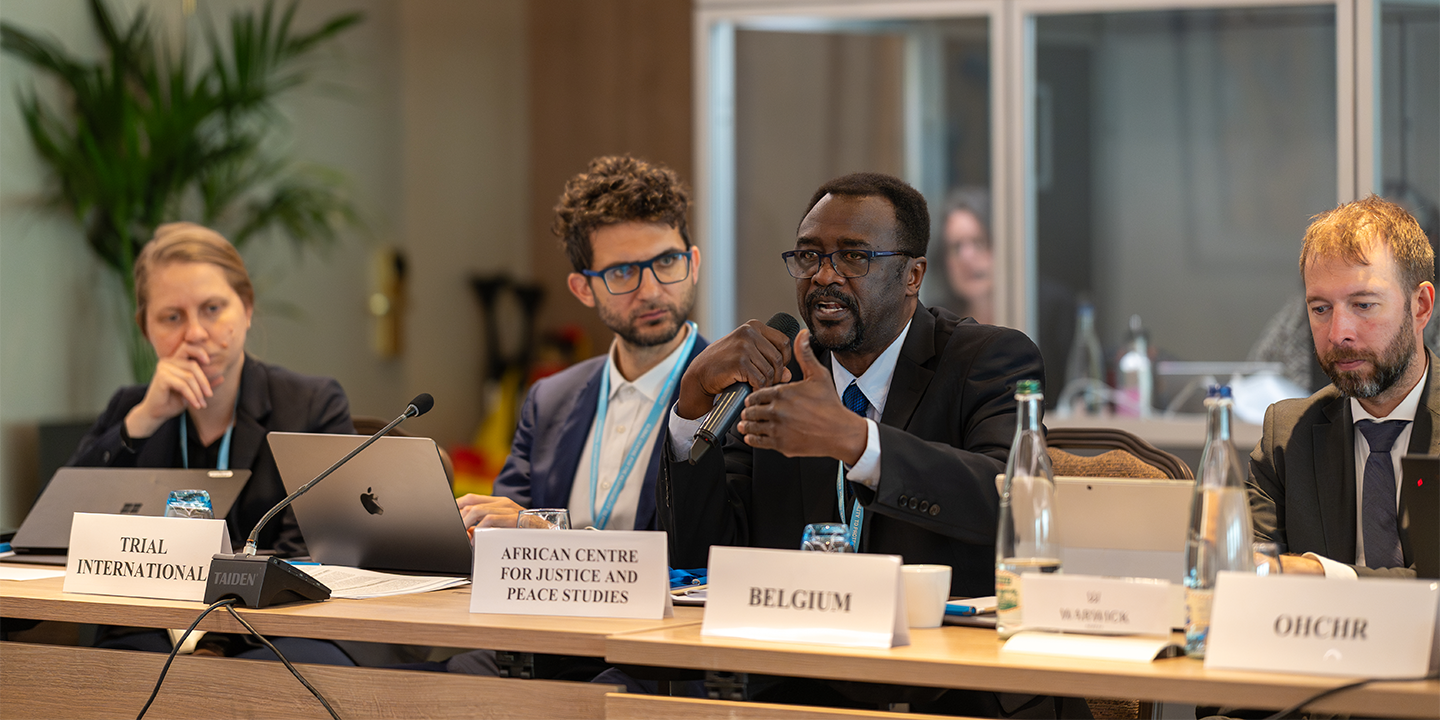
Against this backdrop, on 8 May 2026 the Global Centre for the Responsibility to Protect, with the support of the Open Society Foundations and the Geneva Academy of International Humanitarian Law and Human Rights brought together senior diplomats, investigators, renowned UN experts, representatives of Geneva and New York-based civil society organizations and human rights defenders from Sudan and the DRC to examine how UN human rights mechanisms contribute to the wider protection architecture and what impact they have for communities affected by atrocity crimes. Participants discussed their individual and collective roles in documenting violations, preserving evidence, identifying atrocity risks and sustaining international scrutiny for protracted atrocity crises such as Sudan and the DRC. They also underscored the urgent need to better anchor human rights analysis and risk assessments within political decision-making across the UN system, including at the UN Security Council (UNSC) in New York.
At a time of significant strain on multilateralism, the convening also highlighted the importance of sustained multistakeholder engagement and reaffirmed the central role of affected communities and civil society in shaping prevention, protection and accountability efforts. Underlining the importance of the convening, member states recognized the need for open and honest discussions as they look ahead. While it is important to acknowledge systemic challenges, the focus must shift toward identifying practical solutions and concrete paths forward. Member states also discussed the need to better navigate the current political and financial turbulence in ways that safeguard and strengthen the human rights pillar’s ability to deliver impact.
The meeting opened with remarks by Savita Pawnday, Executive Director of the Global Centre for the Responsibility to Protect; Mô Bleeker, Special Adviser to the UN Secretary-General on the Responsibility to Protect; Fiona Asuke, Program Manager for Transformative Peace at the Open Society Foundations; and Michael Camilleri, Chief of the Rule of Law, Accountability and Civic Space Branch at the Office of the UN High Commissioner for Human Rights (OHCHR); as well as high-level representatives from governments, including the Permanent Representative of the DRC to the UN in Geneva.
The opening panelists underscored a deep sense of concern about the continued proliferation of armed conflict and the persistent gaps in atrocity prevention and accountability, including the widespread neglect of early warning signals and the erosion of basic standards in the conduct of hostilities. They highlighted a stark structural reality: the international system is often most stretched and under-resourced precisely when humanitarian and protection needs are greatest, while constrained or declining resources undermining effective multilateral responses. At the same time, they stressed the importance of resisting resignation and instead engaging strategically to these constraints, including through more deliberate prioritization of limited resources across the human rights and atrocity prevention toolkit.
The convening was framed around a fundamental question: whether civilians facing atrocity risks are becoming safer as a result of international efforts, and what more is required to ensure that norms, analysis and early warning translate into timely and effective action, even in contexts marked by political paralysis and fragmentation. A central message conveyed by panelists was that the UN human rights pillar should be evaluated not by the number of mechanisms it creates, but by the extent to which it contributes in practice to protection, prevention and accountability. In a context of mounting global crises, financial constraints and ongoing UN reform, participants underscored the need to move beyond measuring outputs – reports, investigations and resolutions – and focus instead on whether these tools shape political decision-making, mobilize action and improve outcomes for populations facing atrocity risks.
Participants noted that the pathways from analysis and documentation to concrete political action remain uneven and uncertain. A recurring theme throughout the discussions was therefore the need to strengthen the connection between human rights findings and political follow-through, ensuring that evidence, recommendations and early warning generated by HRC-mandated mechanisms translate into meaningful outcomes on the ground. Against the backdrop of the UN80 reform process and the forthcoming appointment of a new Secretary-General, participants emphasized the importance of ensuring that human rights and atrocity prevention remain central to the UN’s future direction.
This session examined what “protection” means and what realistic impact looks like in the short, medium and long term, including how prevention should be understood in contexts where crises are entrenched and cycles of violence recur. It explored how the human rights pillar fits within the wider UN protection ecosystem – alongside peace operations, mediation, humanitarian response, sanctions and development engagement – in contexts such as Sudan and the DRC. The discussion focused on the unique contribution of the human rights system and how its analyses, documentation and risk assessments underpin the broader protection architecture over time.
The discussion emphasized how the human rights pillar adds to the wider protection ecosystem by offering continuity and presence, as well as “eyes on the ground” for analysis and potential framing of political discussions. Engagement in contexts such as Lebanon, Mali, Colombia, Sudan and the DRC – through CoIs, FFMs, Special Procedures, country offices and field presences – has given the human rights system experience in responding to acute situations and identifying early warning signs before they escalate into full-scale crises. This sustained engagement enables protection through presence and continuous monitoring and reporting, making it well placed to raise timely alerts when situations show signs of escalating into atrocity crimes. Human rights should therefore not be a discussion isolated to Geneva but should also be an integral part of political discussions within deliberations in New York.
UN human rights mechanisms apply robust standards of monitoring and reporting, drawing on multiple sources, independent analysis and verified information. Their rigorous methodology strengthens credibility and ensures that findings are treated not as allegations, but as documented evidence. At the same time, the human rights pillar operates as part of a wider system of tools rather than a standalone structure – working across departments, missions and actors. While acknowledging that some mandates may appear duplicative, participants emphasized that these mechanisms should be understood as complementary components of a broader protection architecture. Their effectiveness depends not only on the quality of their reporting, but also on how well their findings are integrated into political decision-making, coordinated across institutions and actors, adequately resourced and acted upon by member states and other stakeholders.
One of the most unique roles of the human rights system that participants emphasized was its contribution to accountability and evidence-based action across different stages of crises. When reporting is analyzed across contexts, it can generate insights into consistent patterns of perpetrator behavior, tactics of violence, escalation dynamics and methods used to evade scrutiny or accountability. Such comparative analysis can help identify emerging risks, map global trends across atrocity situations and inform more targeted prevention and policy responses. While different mandates already contribute to these objectives in various ways, participants highlighted the need for greater efficiency and cross-mandate learning so that evidence can simultaneously support accountability, early warning, advocacy and prevention efforts. This would also help ensure that victims and survivors are not treated merely as sources of evidence for future judicial processes, but that their testimonies actively shape policy discussions and draw attention to emerging patterns of abuse before they become further entrenched.
Participants also highlighted several limitations of the human rights system. For example, the gap between political decisions and timely, tangible action on the ground often remains significant, with delays in implementation and follow-up undermining the timely impact of analysis and early warning. After a resolution is adopted to establish a mandate or mechanism, bureaucratic, logistical and political obstacles often delay deployment for months or even years. By the time it becomes operational, perpetrators may have already consolidated their positions, while violence and violations have escalated. All participants widely recognized that persistent structural impunity impedes impact.
In the context of active conflict and atrocities, participants emphasized that humanitarian and human rights actors often operate in the same environments but pursue different, though mutually reinforcing, objectives. These functions can sometimes create tensions, particularly in active conflict settings where humanitarian organizations may prioritize preserving access and neutrality, while human rights actors are tasked with publicly reporting abuses and identifying perpetrators. However, both are essential components of a comprehensive protection strategy. Humanitarian presence often provides critical information on emerging risks and vulnerabilities, while human rights analysis helps identify the structural drivers of violence and informs longer-term prevention efforts. Greater coordination between these communities can help ensure that immediate protection needs, accountability efforts and prevention strategies reinforce rather than undermine one another.
Participants also noted that impact is often measured through ambitious outcomes such as prosecutions, peace agreements or large-scale reductions in violence, while smaller, but meaningful, changes in behavior frequently receive less attention. Yet in many contexts, the most immediate protection gains emerge through incremental shifts in conduct by armed actors, authorities or local communities. These can include improved humanitarian access, reductions in attacks on civilians, the release of detainees, the reopening of schools and health facilities or greater responsiveness to community concerns. Such changes may be temporary or localized, but they can save lives and create opportunities for broader protection efforts. Better methodologies are needed to identify, document and learn from these outcomes, allowing the international community to understand how human rights engagement contributes to behavioral change and how localized successes might be replicated or sustained.
Over the past two decades, UN investigative mechanisms have become one of the international community’s primary responses to atrocity situations, especially where the UNSC is politically deadlocked. These mechanisms have grown significantly in both number and sophistication, with stronger evidentiary standards, advanced digital documentation, gender expertise, survivor-centered approaches and closer links to accountability efforts. Concurrently, they face mounting structural and political challenges, including chronic underfunding, staffing shortages, access restrictions and increasingly difficult mandate negotiations.
As UN reform and budget cuts threaten to weaken their capacity, participants reflected on what these mechanisms have concretely achieved and contributed. What has become clear is that investigations and findings produced by HRC-mandated investigative mechanisms are a key pillar of the broader accountability ecosystem, making significant contributions to proceedings before the ICC, the International Court of Justice, regional judicial bodies and cases brought under universal jurisdiction. Investigative mechanisms also maintain extensive archives of information that are preserved and ready for use in judicial proceedings. Participants also noted that member states could do more to initiate accountability processes and that much of the information held in these archives remains underutilized, without a clear pathway into formal judicial action.
The most significant impact of these mechanisms is in the amplification of the voices of victims and survivors, placing their experiences at the center of fact-finding and accountability efforts. Some commissions use public hearings with testimonies from victims and witnesses, ensuring that personal accounts of harm are formally documented and contribute to the broader evidentiary record. Public reporting and investigations by HRC-mandated mechanisms further reinforce this by formally acknowledging that violations have been documented and investigated, offering a measure of recognition and validation for victims and survivors. This is particularly important in contexts where judicial processes can take years, or even decades, to produce tangible outcomes.
Participants also discussed the limits of what mechanisms can realistically deliver under current conditions. For human rights investigative mechanisms to meaningfully contribute to evidentiary and judicial processes, specialized expertise is required that is often not sufficiently available under current constraints. Their work goes beyond interviews and documentation of violations; it also involves establishing links between crimes and alleged perpetrators. However, the pressure to produce detailed reports and gather complex forms of evidence often exceeds available time, staffing and technical capacity, resulting in a persistent mismatch between expectations and what these mechanisms are realistically able to deliver. Significant progress has been made in the integration of a gender perspective throughout the work of investigative bodies or entities; however, gender expertise, as well as child rights expertise, are often among the first areas to be cut during liquidity crises, as they are too often regarded as “luxury expertise.”
Investigative bodies do not operate in isolation; their work is intended to be complementary to the broader human rights system. Participants recognized that, given current constraints, there is a need to more clearly make the case for the value of these mechanisms, not only in the context of criminal accountability, but also in their preventive and deterrent roles, including the exposure of perpetrators, identification of victims, shaping of narratives and analysis of root causes, as well as for the underpinning of sanctions regimes. Participants also highlighted the advocacy value of reports produced by HRC-mandated mechanisms. Findings that document atrocity crimes and related risks can play a significant role in shaping political discussions, helping to shift positions and catalyze action. One example is the recent establishment of the Coalition on Atrocity Prevention and Justice in Sudan by the core group of the Sudan resolution in Geneva, which followed shortly after the FFM’s report on atrocities committed in and around El Fasher when the Rapid Support Forces overtook the city in October 2025.
As debates around UN80 reform and budget rationalization unfold, member states face concrete choices about how the human rights pillar is positioned within the broader UN architecture. In this context, safeguarding the future of HRC mechanisms will require more than defending their existence. Participants repeatedly emphasized that the central question is no longer how to justify these mechanisms, but how to ensure that their findings are systematically embedded in political decision-making processes.
A recurring theme was that the value of HRC-mandated investigative mechanisms and OHCHR reporting is often framed too narrowly as supporting accountability processes. Participants argued that these mechanisms constitute the evidentiary foundation upon which a broad range of political, diplomatic and preventive tools depend. They provide answers to the questions political actors need in order to act: what is happening on the ground, who is responsible, what patterns are emerging, what root causes are driving violence, what risks are escalating – including risks of regional destabilization and cross-border spillover – and which actors may or may not be credible interlocutors in future political settlements. In this sense, the human rights pillar was described not as an add-on to political decision-making but as an essential source of analysis that should inform diplomacy, mediation, conflict prevention and peace and security responses.
Participants highlighted several examples demonstrating how these mechanisms can shape political action. The CoI on the DRC provided an opportunity to connect documentation and political engagement from the outset of a crisis response. The FFM on Sudan documented sexual violence, ethnically targeted atrocities, forced displacement and other patterns of abuse that are directly relevant to ongoing international policy discussions. The Commission on Human Rights in South Sudan was cited as evidence of the value of sustained scrutiny in protracted crises, particularly where cycles of violence and impunity persist over many years. Participants stressed that the relevance of these mechanisms extends well beyond intergovernmental bodies such as the HRC, General Assembly (UNGA) and UNSC, feeding into mediation efforts, regional organizations and conflict prevention initiatives.
The discussion also emphasized that accountability itself serves multiple political functions. Investigative mechanisms can increase the political and material costs for perpetrators and those enabling violations, strengthen deterrence, provide early warning signals and contribute to prevention efforts. Accountability also carries moral and historical dimensions, including the creation of an authoritative public record for victims and survivors. These functions are not separate from political decision-making; rather, they help shape the incentives, pressures and information environment within which political decisions are made.
Civil society organizations, human rights defenders and survivor networks were repeatedly identified as indispensable actors within this ecosystem. Participants stressed that these actors help mobilize political attention, provide information, brief states, support the development of mandates and maintain pressure for action. Their role was seen as reflecting the UN Charter’s commitment to “We the Peoples” and as a critical factor in ensuring that information generated by UN mechanisms translates into political engagement.
Participants also reflected on the structural challenge of bridging the disconnect between Geneva-based human rights processes and decision-making in New York. They noted that while efforts over the past decade have helped integrate human rights considerations into peace and security discussions, the relationship remains uneven and increasingly contested. One participant remarked that what was once described as a “gap” often resembled an “ocean,” despite gradual progress in mainstreaming human rights concerns into discussions on issues such as women, Indigenous Peoples, climate change, the environment and emerging technologies.
A number of participants argued that recent developments risk reversing progress. They expressed concern that human rights are increasingly being treated as a politically contested issue rather than as an integral component of the UN’s work, contributing to a broader trend of siloing and marginalization. While the UN is often described as resting on three pillars – peace and security, development and human rights – participants noted that this characterization is difficult to sustain when resources, political attention and institutional influence remain so unevenly distributed. One participant observed that in practice the system often functions as “two pillars and a quarter,” rather than three equal and mutually reinforcing pillars.
While concerns about selectivity and double standards also featured prominently, the discussion revealed a striking paradox. Despite frequent criticism and political contestation, the HRC continues to function as one of the most effective UN forums for responding to emerging atrocity situations, particularly when UNSC action is blocked. Participants noted that states routinely turn to the HRC when seeking a response to unfolding crises because the Council can convene special sessions, establish investigative mandates and generate authoritative findings without being constrained by veto powers.
The Sudan experience was repeatedly cited as illustrating both the strengths and limitations of the current system. Participants contrasted the experience of the 2004 Darfur CoI, which was established by the UNSC and reported directly to it, with more recent HRC-established mechanisms. The Darfur Commission benefited from broad political backing, access to the country, substantial staffing and a direct reporting relationship to the UNSC. Its findings shaped international understanding of the conflict, informed debates about responsibility and ultimately contributed to the Council’s decision to refer the situation to the ICC. By contrast, participants observed that more recent investigative findings on Sudan, including warnings about atrocities in El Fasher and assessments indicating hallmarks of genocide, have not generated comparable political follow-up despite being explicitly requested and welcomed by states. Several participants described this as a vivid illustration of the institutional divide between Geneva-generated analysis and New York decision-making.
This led to calls for more deliberate mechanisms to connect investigative findings with political action. Suggestions included strengthening channels for systematic engagement between investigative mechanisms and UNSC members, creating more regular opportunities for briefings and discussions, formally circulating reports across relevant UN bodies and developing coalitions or institutional arrangements specifically aimed at bridging atrocity prevention efforts across Geneva and New York. The objective, participants stressed, should be to ensure that evidence generated through human rights mechanisms is not treated as belonging to one part of the UN system, but rather as a resource for the organization as a whole.
Strengthening the role of human rights in UN decision-making
Bridging the gap between analysis and action
Safeguarding investigative mechanisms and strengthening accountability
Strengthening coordination across the protection architecture
Supporting civil society and affected communities
Protecting and strengthening the human rights pillar
In a context of growing geopolitical fragmentation, financial pressure and institutional reform, the discussions throughout the convening highlighted a fundamental reality: the challenge facing the UN human rights pillar is not primarily one of information, expertise or normative frameworks. Across atrocity situations, the international community is rarely lacking evidence of violations, analysis of risks or warnings of escalation. The more persistent challenge is ensuring that this information is consistently translated into political attention, preventive action and meaningful protection outcomes.
The discussions also reaffirmed that the human rights pillar remains an indispensable component of the broader UN protection architecture. Far from serving only an accountability function, human rights monitoring, investigations and reporting provide the evidentiary foundation upon which diplomacy, mediation, prevention, sanctions and accountability efforts depend. At a time when political divisions continue to constrain collective action, the ability of the human rights system to document violations, identify risks, preserve evidence and sustain international scrutiny remains essential.
The debates surrounding UN80, budget rationalization and the future configuration of the multilateral system therefore raise questions that extend beyond institutional design and resource allocation. They ultimately concern the place of human rights within the UN and whether prevention will be treated as a core organizing principle of the system. If the UN is to strengthen its capacity to respond to contemporary crises, human rights analysis and atrocity prevention cannot remain peripheral to political decision-making. They must be integrated more systematically into the institutions and processes responsible for peace, security and international cooperation.
The convening underscored that the future effectiveness of the human rights pillar will be measured by the extent to which its findings shape decisions, influence policy and contribute to better outcomes for populations at risk. Ensuring that evidence leads to action, that warnings lead to prevention and that accountability efforts are connected to broader protection strategies remains one of the central challenges facing the multilateral system. Meeting that challenge will require political leadership, institutional innovation and sustained commitment across the UN system and its member states.
At a moment of profound uncertainty for multilateralism, the discussions also pointed to a clear opportunity: to reimagine and strengthen the role of the human rights pillar as a central driver of prevention, protection and accountability. Whether that opportunity is seized will help determine not only the future relevance of the human rights system, but also the credibility of the international community’s commitment to protecting populations from atrocity crimes.
Ralph Bunche Institute for International Studies
The Graduate Center, CUNY
365 Fifth Avenue, Suite 5203
New York, NY 10016-4309, USA