21 September 2026
Open Letter
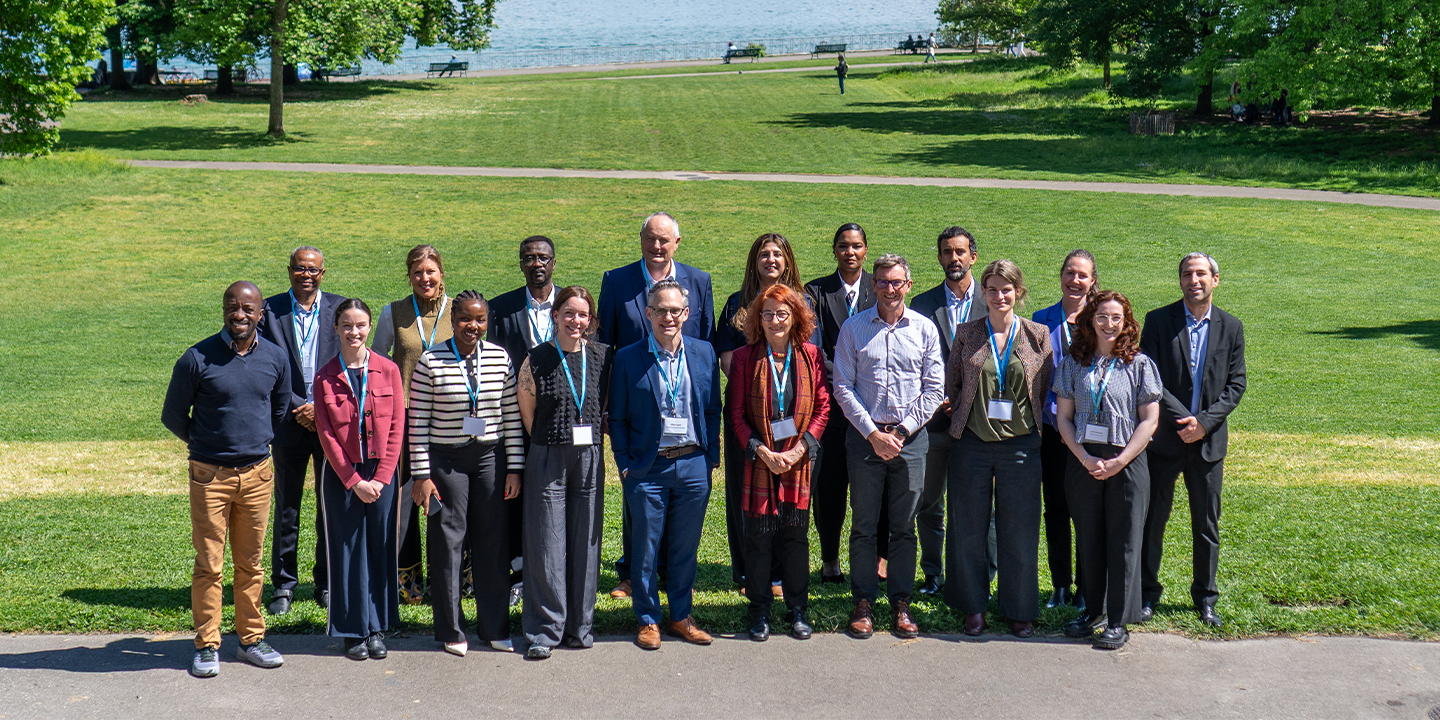
On 7 May 2026 the Global Centre for the Responsibility to Protect, with the support of the Open Society Foundations and the Geneva Academy of International Humanitarian Law and Human Rights, brought together civil society organizations, representatives of affected communities and technical experts to reflect on the impact of the human rights pillar and the wider United Nations (UN) protection architecture in protracted atrocity crises such as Sudan and the Democratic Republic of the Congo (DRC).
The full-day consultation examined how affected communities and civil society engage with and experience multilateral protection efforts, while also helping articulate the persistent gaps between international action and its tangible impact on civilian protection, human rights, accountability and long-term atrocity prevention. At a time of growing political fragmentation and financial strain within the multilateral system, participants emphasized that civil society engagement has become increasingly critical but also more complex, as advocacy efforts that succeed in generating resolutions, mandates or political attention do not necessarily translate into sustained political will or operational change on the ground. However, the discussion underscored that despite these challenges, the multilateral system remains an essential and indispensable forum for protecting populations at risk of, or experiencing, atrocity crimes.
Participants identified important examples of how civil society-led evidence-gathering, human rights mechanisms and coordinated advocacy have influenced policy decisions, advanced accountability processes and sustained international attention on populations facing ongoing atrocity risks. The examples referenced throughout the day – including monitoring, reporting and accountability tools established by the UN Human Rights Council (HRC) and Security Council (UNSC) for Sudan and the DRC – demonstrated the continued relevance of multilateral protection tools and the potential for greater impact when evidence is strategically linked to political action.
Evidence without traction: the challenge of translating information into political will
Participants observed that a growing number of human rights defenders and those representing communities affected by conflict, violence and atrocities are turning to the multilateral system in search of protection, solidarity, justice and accountability that are often unavailable or deliberately denied at the national level. For many, engagement with international mechanisms and multilateral bodies is no longer viewed as a measure of last resort, but rather as the only available avenue to seek recognition and redress.
Participants stressed that there is no shortage of information, reporting or evidence documenting atrocity risks and violations, as HRC-mandated mechanisms and other parts of the UN system continue to generate substantial documentation and analysis. However, participants expressed concern over the limited political movement that often follows. Discussions underscored that the central challenge is not the availability of data, but the absence of political will to translate findings into meaningful action, raising broader questions about how to mobilize actors in the current geopolitical environment. Participants reflected that in crisis situations where the multilateral system responded, significant advocacy efforts sometimes succeed in mobilizing international attention, but sustained political engagement and follow-up frequently diminish once mechanisms are established or resolutions are adopted.
Participants agreed that expectations regarding the immediate impact of mechanisms should be more realistic and focused on achievable objectives, rather than assuming they can contribute to an immediate end to conflict, violence or atrocity crimes or significantly alter the behavior of perpetrators in the short run. As such, it is critical for civil society stakeholders not to frame a resolution as a panacea that will automatically resolve crises, as doing so risks creating unrealistic expectations and can ultimately lead to disappointment and frustration when conditions on the ground do not meaningfully improve.
Understanding the impact of international scrutiny and multilateral protection mechanisms
Adopting resolutions, convening Special Sessions and establishing mandates and mechanisms, including human rights investigations, are important in and of themselves, as they signal international recognition of a crisis, help sustain political attention, create institutional pathways for accountability and protection and affirm that ongoing violations and abuses cannot simply be ignored or normalized.
Participants emphasized that, despite their limitations, investigative mechanisms and other multilateral monitoring, reporting and protection mandates can have important effects for civilians on the ground and should not be dismissed as merely symbolic. Several examples were raised to illustrate that international scrutiny can influence the behavior of parties to a conflict or perpetrators of atrocity crimes. In the case of Venezuela, participants noted that the establishment of the Independent International Fact-Finding Mission (FFM) coincided with a reduction in certain forms of state violence and repression, demonstrating the potential deterrent effect of sustained international attention. In Yemen, participants pointed to the termination of the mandate of the Group of Eminent Experts as a cautionary example on the absence of scrutiny, noting that civilian casualties and violations of International Humanitarian Law (IHL) reportedly increased significantly following the end of independent international monitoring.
In the context of peacekeeping, participants pointed to robust findings showing that peace operations can save lives and help prevent the escalation of conflict by deterring attacks, creating safe spaces for communities and enabling humanitarian access, particularly when they are equipped with strong Protection of Civilians (PoC) mandates, such as in the DRC. Similarly, visits by senior UN representatives – including the Secretary-General, Special Envoys or HRC-mandated Special Rapporteurs – were described as having measurable political effects, with high-level engagement often increasing international attention and pressure on parties to conflicts, including senior leadership of state and non-state actors.
The impact of UN action – including mechanisms and mandates established by the HRC – is often assessed through tangible indicators, such as the safe return of displaced populations, civilian survival in conflict settings or children’s ability to safely attend school. However, several participants emphasized that impact should also be understood in more personal and transformative terms. For women, for example, impact may be measured by the extent to which they are able to reclaim agency, rebuild their lives and meaningfully improve their circumstances after experiencing violence and displacement. While acknowledging the continued importance of multilateral action, including protection measures and humanitarian assistance, participants stressed that such measures alone are insufficient in the absence of sustainable peace.
Participants also highlighted the positive impact of integrating gender-sensitive language and analysis into investigative mandates, noting that this shapes how violations are documented and addressed. Beyond their accountability function, investigative mechanisms were recognized as important spaces for victims and affected communities to share their experiences and have their suffering formally acknowledged. Even when accountability remains distant, ongoing investigations can provide recognition, visibility and a sense that violations are being recorded rather than ignored.
Rebalancing accountability and prevention in atrocity contexts
Sudan was repeatedly cited as a stark example of recurring cycles of impunity. Participants acknowledged the important and credible work undertaken by the FFM on Sudan, while expressing uncertainty regarding whether their findings would translate into concrete action. Ongoing violence in places such as North Darfur, El Fasher and Kordofan demonstrates the continued deterioration of the situation despite sustained reporting, warnings and investigations. Participants therefore once again emphasized the importance of sustained political and diplomatic follow-up after monitoring and accountability mechanisms are established.
While investigative mechanisms and UN mandates may not have an immediate deterrent effect, they remain essential for advancing long-term justice and accountability. Participants acknowledged that accountability processes for mass atrocities often unfold over long periods of time and are deeply influenced by shifting political dynamics. While evidence collected today may not immediately lead to prosecutions or accountability measures, shifts in political conditions may create future opportunities for judicial processes that are currently unavailable. In this context, participants stressed the importance of preserving evidence, sustaining international attention and maintaining long-term political and institutional support for accountability efforts. Discussions focused on the need to ensure that current documentation and investigative work remain relevant and actionable over time, including by preventing situations from fading from the international agenda once political momentum declines.
At the same time, it was discussed that the international community too often centers its responses on international justice and sanctions as a “fallback position.” Yet, there is no sufficient investment or prioritization of preventing the recurrence of atrocity crimes. While justice is undeniably essential it often comes too late, after harm has already occurred.
Barriers to accessibility, resourcing gaps and the role of civil society
At present, many reports generated by the UN system – including by peacekeeping missions, human rights divisions and HRC-mandated mechanisms – are produced with considerable delay, often reflecting events from the previous months or year, which limits their operational value for timely responses to prevent atrocity crimes and ensure adequate civilian protection. The challenge is how to aid the system in moving closer to real-time documentation and analysis performed in a manner that is consistent and sustainable. Participants highlighted the impact of the FFM’s urgent inquiry into alleged violations and abuses of International Human Rights Law and violations of IHL committed in and around El Fasher in October 2025, while member states widely described this inquiry as a “groundbreaking” example that demonstrates the value of timely, well-framed reporting in shaping political attention and leading to immediate responses. Requested by the HRC in November 2025 and presented just three months later in February 2026, the report directly contributed to the establishment of the Coalition on Atrocity Prevention and Justice in Sudan by the governments of the United Kingdom, Germany, Ireland, the Netherlands and Norway.
At the same time, there is a deep frustration concerning duplication of documentation efforts. Civil society actors and those affected by grave human rights violations and atrocity crimes are often producing similar types of information, often in real time, but this rarely receives the same visibility or political weight, with member states tending to privilege UN-generated reporting.
Participants also identified several obstacles impacting meaningful engagement between affected communities and multilateral mechanisms. In particular, reports produced by the Office of the UN High Commissioner for Human Rights (OHCHR) and investigative mechanisms are often highly technical and written primarily in legal language to meet evidentiary and accountability standards. While participants recognized the importance of this rigor, they stressed that findings should also be made more accessible to affected communities. The Commission of Inquiry (CoI) on Burundi was cited as a positive example for translating findings into local languages, although participants noted that funding constraints often limit such efforts.
Access, accreditation and safe participation were also raised as major structural barriers to meaningful civil society engagement in multilateral processes. The UN Economic and Social Council accreditation process, administered through the NGO Committee, is widely perceived as opaque and, at times, antagonistic to effective participation. Additional concerns were raised regarding the growing challenges related to costs and visa access, particularly for civil society actors from conflict-affected and post-conflict contexts, which undermines inclusivity. Participants also raised serious concerns regarding risks of reprisals and transnational repression linked to engagement with international mechanisms.
Another factor that can significantly limit the impact of investigative mechanisms is the persistent mismatch between mandates and resources. Participants highlighted several instances in which mechanisms were established with ambitious mandates but were not provided with the funding necessary to carry out their work effectively. The CoI on the DRC illustrates this challenge. At the time of writing, resource constraints prevented it from conducting field missions, interviews or sustained investigative activities, severely restricting its capacity to produce meaningful findings and contribute to accountability efforts.
This reflects a broader structural gap between the creation of accountability mechanisms and the political and financial commitments required to operationalize them. As a result, mechanisms may exist formally on paper but lack the practical capacity to fulfill their mandates. This creates a situation where a country has a CoI or similar mechanism in name, but not in effect.
Established mandates must be properly resourced from the outset. Too often, there is an assumption that when UN capacity is limited, civil society can step in and fill the gap. That is neither realistic nor sustainable. Civil society organizations are not an interchangeable backstop; they also operate under serious constraints and are directly affected by the same crises. When capacity is reduced, the answer cannot simply be that others will compensate. That logic risks shifting responsibility onto actors who are already overstretched instead of addressing the underlying resourcing and mandate gaps. Civil society should be engaged as a partner, not treated as a default substitute for missing institutional capacity.
Recognizing and integrating locally led protection efforts
Participants also broadened the discussion beyond formal multilateral mechanisms, highlighting the role of community-based and locally led protection initiatives. These efforts often operate outside UN reporting structures and HRC processes, yet are frequently more immediate, adaptive and grounded in local realities. Some participants also observed that a degree of separation from highly politicized multilateral processes can, in certain contexts, help preserve the safety, integrity and independence of protection work on the ground. The challenge for the UN system is therefore not to absorb these initiatives, but to better recognize and understand them and ensure they meaningfully inform broader protection analysis and policy responses.
The convening reinforced the central role of civil society and affected communities in advancing human rights protections and shaping credible and effective atrocity prevention efforts. It also highlighted the persistent gap between the generation of evidence, the mobilization of political will and the delivery of meaningful protection outcomes for populations at risk.
At a time of growing geopolitical polarization, shrinking resources and increasing skepticism regarding the effectiveness of international institutions, the discussions reaffirmed that the multilateral protection architecture remains indispensable to efforts to prevent atrocity crimes, protect vulnerable populations and advance accountability. While many of the challenges confronting the international system are significant, the consultation underscored that the solution is not to retreat from multilateral engagement, but to strengthen and adapt the tools that already exist.
Over the past decade, the international community has invested heavily in human rights monitoring, investigative mechanisms and evidence collection. These investments have generated critical documentation of violations, informed accountability efforts and helped sustain international attention on crises that might otherwise have faded from view. Their value, however, should not be measured solely by the reports they produce or their contribution to future prosecutions. Rather, they represent some of the most important innovations within the multilateral system and remain among the few tools through which the international community can exercise meaningful protective influence in situations where political consensus is otherwise lacking.
The consultation highlighted that the challenge facing the protection community is no longer simply one of documentation, but increasingly one of utilization. Strengthening the connection between evidence, political strategy and preventive action will be essential if existing mechanisms are to realize their full protective potential. Examples identified during the discussion demonstrated that when evidence collection, accountability mechanisms and coordinated advocacy are strategically linked, they can shape policy responses, support accountability processes, counter denial and revisionism and sustain attention on populations facing ongoing atrocity risks.
Looking ahead, greater emphasis should be placed on ensuring that evidence generated through multilateral mechanisms is translated into political leverage, preventive action and tangible protection outcomes. This will require stronger connections between Geneva and New York, closer collaboration between civil society, affected communities and policymakers and a more deliberate effort to integrate accountability tools within broader protection strategies.
Ultimately, the consultation reaffirmed that while the multilateral system remains imperfect, it retains significant protective capacity. Preserving, strengthening and more strategically deploying that capacity will be critical to ensuring that international efforts to prevent and respond to atrocity crimes remain credible, effective and responsive to the needs of affected populations in the years ahead.
Ralph Bunche Institute for International Studies
The Graduate Center, CUNY
365 Fifth Avenue, Suite 5203
New York, NY 10016-4309, USA