23 October 2026
Podcast
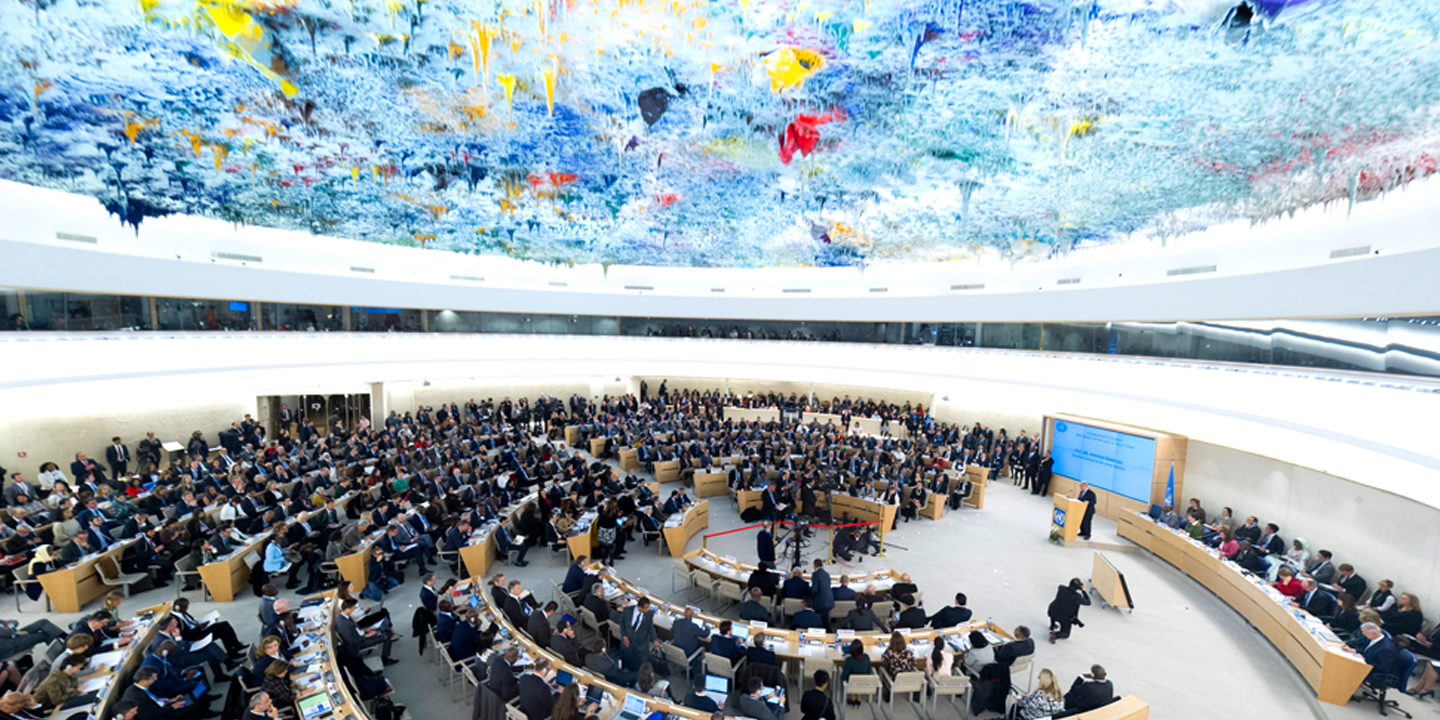
On 15 June the UN Human Rights Council (HRC) will commence its 62nd session in Geneva. Since its establishment in 2006, the HRC has become the principal multilateral forum through which communities affected by atrocity crimes can seek recognition, visibility and accountability. It also serves as a critical platform for states to uphold their Responsibility to Protect (R2P).
The HRC has consistently responded to human rights crises and atrocity situations. Its regular and special sessions serve as vital mechanisms to identify and address atrocity risks, spotlight perpetrators, acknowledge victims and mobilize international attention and follow-up action, particularly where domestic protection or justice mechanisms are absent or ineffective.
The Council has developed a broad and evolving toolbox, including investigative mechanisms, Special Procedures mandates, the work of the Office of the UN High Commissioner for Human Rights (OHCHR), as well as technical assistance and capacity-building. These tools are critical for early warning and response, promoting accountability and mobilizing action. Since its establishment, member states have adopted more than 90 country-specific and thematic resolutions that explicitly reference R2P, further underscoring the HRC’s integral role in translating political commitments into concrete action to prevent and respond to atrocity crimes.
Ahead of the upcoming session, the Global Centre for the Responsibility to Protect encourages all delegations to actively utilize the HRC’s full potential by engaging constructively and proactively on the priority issues outlined in the annex below. This engagement should aim to strengthen our collective efforts to prevent and effectively respond to atrocity risks and crimes.
Eritrea
A decade after the landmark report of the HRC-mandated Commission of Inquiry (CoI) on Eritrea, the government of Eritrea and the ruling People’s Front for Democracy and Justice (PFDJ) continue to perpetrate systematic and widespread violations that may amount to crimes against humanity. Subsequent reporting by the UN Special Rapporteur on the situation of human rights in Eritrea has consistently found that arbitrary detention, enforced disappearance, torture and inhuman treatment remain widespread, with no meaningful accountability or reform. Political prisoners and journalists are held incommunicado, while collective punishment against the families of perceived critics, deserters and asylum seekers remains a central tool of repression. Eritrea’s compulsory and indefinite national service remains a system of state-enforced enslavement, with conscripts subjected to forced labor, severe restrictions on movement and family life and punishment for draft evasion or desertion that frequently includes torture, sexual violence, arbitrary detention and reprisals against relatives.
Current regional dynamics are exacerbating risks of abuse and instability. Eritrean forces have been implicated in serious violations of international law during and after the conflict in Ethiopia’s Tigray region, including massacres, widespread sexual violence, looting and attacks on humanitarian infrastructure. Eritrean forces remain at Ethiopian border areas and allegedly continue to perpetrate killings, arbitrary arrests and sexual and gender-based violence. Renewed tensions between Eritrea and Ethiopia over Red Sea access have heightened regional instability in the past year. These dynamics are linked to political fragmentation in Tigray and allegations of Eritrean support to armed actors inside Ethiopia, further complicating the fragile post-conflict environment and increasing risks to civilians.
Since its establishment, the mandate of the Special Rapporteur on the situation of human rights in Eritrea has played a crucial role in ensuring independent monitoring and sustained scrutiny of ongoing abuses. The Global Centre therefore urges your delegation to support the renewal of the Special Rapporteur’s mandate. In this context, we specifically encourage you to ensure the following in line with a joint civil society call:
We also encourage you to actively participate in the Enhanced Interactive Dialogue (EID) with the Special Rapporteur, currently scheduled for 15 June. During the dialogue, we encourage your delegation to:
Democratic Republic of the Congo
Armed group violence and inter-communal conflicts have persisted in eastern Democratic Republic of the Congo (DRC) for more than three decades, exposing civilians to recurrent violations that may amount to war crimes and crimes against humanity. In recent years, insecurity has intensified across Ituri, North Kivu and South Kivu provinces due to escalating activity by armed groups, including the March 23 Movement (M23), the Allied Democratic Forces and Cooperative for the Development of Congo. Since M23’s re-emergence in 2021, and particularly following intensified offensives in 2025, populations in North and South Kivu have faced serious violations, including summary executions, widespread sexual violence, looting and indiscriminate attacks on civilian objects. Recent deadly attacks in Ituri further underscore the acute protection risks facing civilians across the eastern provinces.
In response to the deteriorating situation in eastern DRC, the HRC established the CoI on the Human Rights Situation in the South and North Kivu Provinces of the DRC in February 2025. The CoI will play a vital role in independently documenting violations and abuses, collecting and preserving evidence, identifying perpetrators and ensuring sustained scrutiny. Timely and comprehensive investigations into alleged violations of International Human Rights Law (IHRL) and International Humanitarian Law (IHL) are essential to advancing accountability, addressing root causes and ensuring justice for victims.
The Global Centre urges your delegation to actively participate in the EID with the CoI, currently scheduled for 29 June. During the dialogue, we encourage your delegation to:
Ethiopia
Since 2019 conflicts across Ethiopia have resulted in widespread human rights violations and a severe humanitarian crisis. Fighting involving the Ethiopian National Defense Forces (ENDF), regional forces and armed groups in Oromia, Amhara and Tigray has killed hundreds of thousands of civilians, displaced more than 3.3 million people and resulted in grave human rights violations and abuses. At the same time, civic space has been significantly restricted through crackdowns on civil society, journalists and the media.
Although the November 2022 Cessation of Hostilities Agreement formally ended the war in Tigray, the region remains highly fragile. Eritrean Defense Forces and Amhara-aligned forces continue to reportedly occupy parts of Tigray, where civilians remain at risk of killings, sexual violence and arbitrary arrest, alongside severe humanitarian needs due to displacement and destroyed infrastructure. Political instability has further deepened following divisions within the Tigray People’s Liberation Front. Clashes reignited in early 2026 in northwestern Tigray involving the Tigray Defense Forces, ENDF and Amhara militias, while tensions between Ethiopia and Eritrea have further escalated.
The HRC previously played a key role in accountability efforts through the International Commission of Human Rights Experts on Ethiopia, which documented war crimes and possible crimes against humanity committed by all parties to the conflict. However, the mandate was terminated in 2023, significantly weakening independent international scrutiny despite ongoing violations.
Given the deteriorating situation and escalating regional tensions, renewed HRC engagement is vital to prevent further atrocity crimes and strengthen civilian protection. The Global Centre urges your delegation to identify practical steps to ensure dedicated independent monitoring, reporting and accountability efforts in Ethiopia. We also encourage your delegation to request that OHCHR publicly release its ongoing monitoring of the situation in Ethiopia, and to call on the High Commissioner to provide member states with recommendations on preventing recurrence of atrocity crimes and strengthening civilian protection.
Occupied Palestinian Territory
For over two years Israel has subjected Palestinians in Gaza to genocide. Despite the October 2025 ceasefire agreement, Israel has continued to conduct attacks on Gaza and obstruct humanitarian aid delivery, killing over 900 Palestinians between 10 October 2025 and 2 June 2026 and allowing only a fraction of the agreed upon aid trucks into Gaza. Medical evacuations have been heavily restricted, while aid workers have continued to come under attack. Meanwhile, existing patterns of violence and de facto annexation in the Occupied West Bank have escalated, including state-sanctioned settler violence and the approval of measures that would further entrench Israel’s control as an unlawful occupying power. Atrocities will persist in the Occupied Palestinian Territory until there is a permanent ceasefire, the root causes of violence are addressed and a sustainable, just political solution is achieved.
The CoI and the Special Rapporteur on the situation of human rights in the Palestinian Territory occupied since 1967 play a vital role in documenting genocide, war crimes, crimes against humanity and ethnic cleansing in Gaza and the West Bank, as well as for identifying and monitoring risk factors, patterns of behavior and enabling circumstances facilitating further atrocity crimes.
The Global Centre urges your delegation to actively participate in the Interactive Dialogue with the CoI, currently scheduled for 15-16 June. During the dialogue, we encourage your delegation to:
South Sudan
South Sudan is at serious risk of returning to widespread armed conflict amid escalating political tensions, persistent localized violence and the continued failure to fully implement the 2018 peace Agreement. Since early 2025 tensions between President Salva Kiir and First Vice President Riek Machar have increasingly undermined the 2018 power-sharing agreement intended to end the country’s 2013–2015 civil war and chart a path toward stability.
Hostilities intensified sharply in late December 2025, contributing to a broader cycle of violence involving government and opposition-aligned armed groups. Clashes between forces aligned with Machar – including the loosely organized White Army, composed primarily of Nuer youth – and the South Sudan People’s Defence Forces, alongside inflammatory rhetoric and hate speech from senior officials have further heightened tensions. Localized conflicts and ethnically motivated violence continue to expose civilians to grave human rights violations and abuses.
Alongside the regular reporting of the Commission on Human Rights in South Sudan (CHRSS), the upcoming Interactive Dialogue on OHCHR’s technical assistance report, currently scheduled for 3 July, provides a vital opportunity to address ongoing risks in South Sudan. In this context, the Global Centre urges your delegation to:
Sudan
Since violent clashes erupted on 15 April 2023 between the Sudanese Armed Forces (SAF) and the Rapid Support Forces (RSF), both parties have continued to fight for territorial control across Sudan, with allied armed groups further intensifying and fragmenting the conflict. The fighting has included indiscriminate and deliberate attacks against civilians and civilian objects, including the use of drones, rocket fire, shelling, bombardments and heavy artillery in densely populated areas. Reports of sexual and gender-based violence remain widespread, including rape, sexual assault, exploitation and sexual slavery.
The RSF has continued to pursue a pattern of attacks that disproportionately affect non-Arab communities in Darfur and other regions. In February 2026 the Independent International Fact-Finding Mission (FFM) on Sudan concluded that the RSF committed crimes against humanity, war crimes and genocide against non-Arab communities in and around El Fasher, North Darfur, during the siege and takeover of the city in October 2025. Unconfirmed reports from December 2025 estimate that at least 60,000 people may have been killed since the RSF’s takeover, while an additional 150,000 residents remain unaccounted for.
The FFM plays a critical role in documenting violations and abuses of IHRL and IHL in the context of the ongoing conflict, including identifying patterns, perpetrators and root causes. Its findings are essential to informing international responses and advancing accountability efforts. The Global Centre urges your delegation to actively participate in the EID with the FFM, currently scheduled for 15 June. During the EID, we encourage your delegation to:
Ukraine
Since Russia’s full-scale invasion of Ukraine in February 2022, the human rights and humanitarian situations have continued to deteriorate, with civilians bearing the brunt of sustained attacks on populated areas and critical civilian infrastructure. The UN Human Rights Monitoring Mission has documented a sharp rise in civilian casualties driven largely by long-range missiles, air-dropped munitions and increasingly frequent short- and long-range drone strikes in populated areas. In 2025 alone, civilian deaths reached the highest level since the start of the war, with over 2,500 killed and more than 12,000 injured, reflecting marked deterioration in civilian protection.
In recent months, intensified aerial bombardment have continued, with repeated large-scale Russian missile and drone strikes on cities, causing civilian deaths, injuries and widespread destruction to energy systems, healthcare facilities, schools and residential buildings. In the first six days of May 2026, at least 70 civilians were killed and 500 injured across multiple regions, underscoring the continued targeting of populated areas and the sustained psychological toll on civilians living under constant threat. These developments reflect an entrenched pattern of attacks that international monitors continue to assess as potentially amounting to war crimes, with urgent accountability and protection measures still needed.
The Global Centre urges your delegation to actively participate in the Interactive Dialogue with the High Commissioner on the situation in Ukraine, currently scheduled for 3 July. During the dialogue, we encourage you to:
Venezuela
Following the removal of Nicolás Maduro during an unlawful military operation by the United States on 3 January, Venezuela continues to experience a fragile period after more than a decade of crimes against humanity. Senior individuals, institutions and state structures responsible for facilitating these crimes remain in place, while no meaningful measures have been taken to ensure judicial reform or repeal legislation enabling political persecution and the systematic restriction of civic space. Although a controversial Amnesty Law was adopted on 19 February to secure the release of individuals detained for political reasons, President Delcy Rodríguez announced in late April that the process “will be coming to an end,” raising concerns about the fate of an estimated 400 remaining political prisoners.
Both the investigative mandate of the FFM and the regular reporting of OHCHR have played a critical role in maintaining international scrutiny of Venezuela’s human rights situation. As interim authorities seek international legitimacy and re-engagement, this moment presents an important opportunity for member states to sustain attention on ongoing atrocity risks and press for meaningful reform.
The Global Centre urges your delegation to actively participate in the Interactive Dialogue with the High Commissioner, currently scheduled for 26 June. During the dialogue, we encourage your delegation to:
Ralph Bunche Institute for International Studies
The Graduate Center, CUNY
365 Fifth Avenue, Suite 5203
New York, NY 10016-4309, USA