16 September 2026
Atrocity Alert
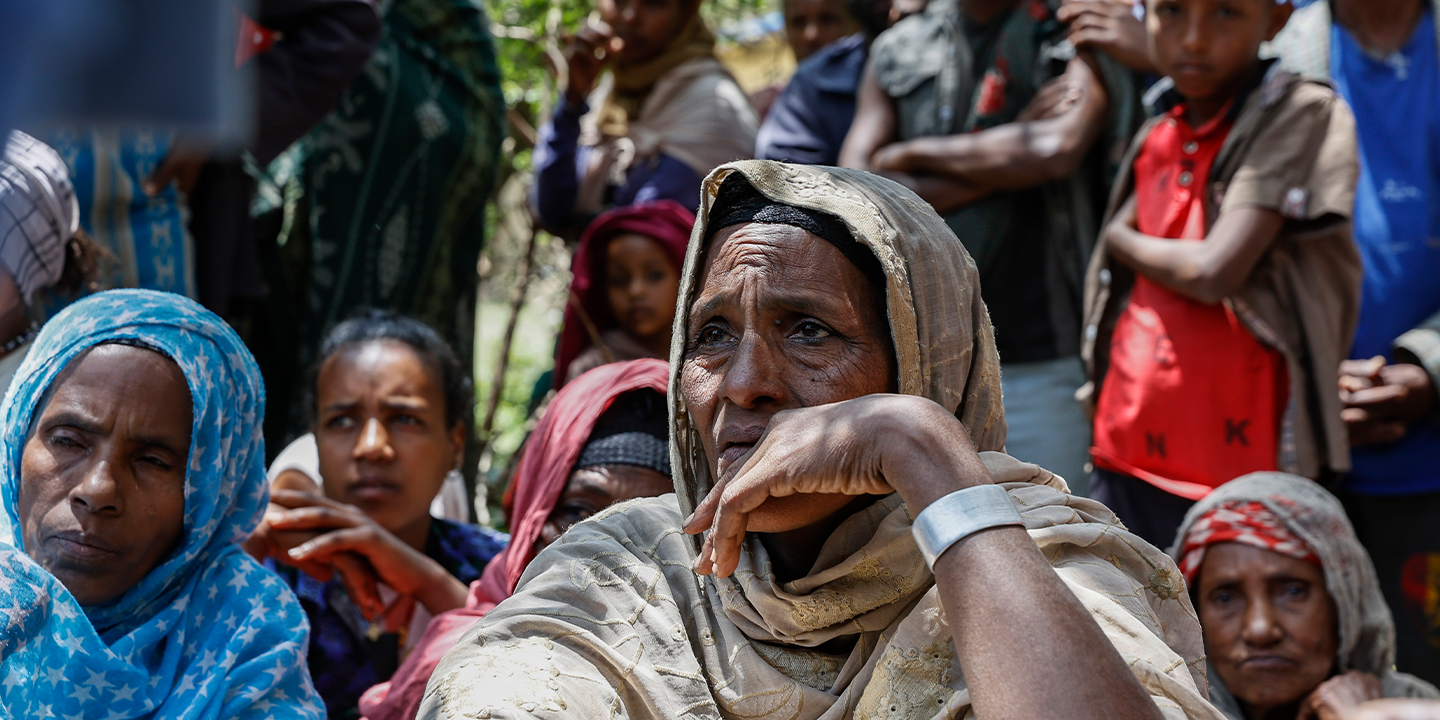
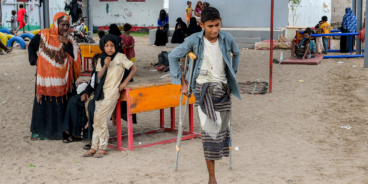
Ethiopia is facing the prospect of nationwide conflict as renewed war in northern Ethiopia converges with ongoing violence in Amhara and Oromia. On 21 September seven groups, including the Tigray People’s Liberation Front (TPLF), the Amhara Fano National Movement and Oromo Liberation Army (OLA), announced the creation of the Ethiopian Peoples’ Forces Alliance for Survival, which aims to overthrow the federal government. Days later, the TPLF – whose forces fought the federal government and its allies from 2020–2022 – seized key regional airports and advanced into the Amhara and Afar regions. Fighting intensified over the weekend, with the Ethiopian National Defense Forces (ENDF) reportedly retaking the strategic town of Alamata while TPLF-aligned forces advanced further into Afar. At least 150,000 people have been displaced in Afar and telecommunications across Tigray remain severely disrupted. As of 25 September, Médecins Sans Frontières reported that their treatment centers received at least 720 “war wounded” people.
UN Secretary-General António Guterres called on all parties to “exercise maximum restraint, immediately de-escalate tensions, protect civilians” and return to talks under the Pretoria Agreement (CoHA).
Before the large-scale fighting, the CoHA was already under significant strain amid escalating internal and regional conflict risks. Fighting between the ENDF and Tigrayan forces resumed on 1 August, with sporadic clashes continuing. Tigrayan regional authorities accused the federal government of launching airstrikes affecting civilians and civilian infrastructure. In August an alleged ENDF airstrike hit a residential compound in Mekelle that wounded 13 civilians, including seven children, prompting Human Rights Watch to call for an investigation into war crimes.
The 2020–2022 war in northern Ethiopia underscores the risk of renewed atrocities. The UN International Commission of Human Rights Experts on Ethiopia found that federal, Eritrean and allied forces committed war crimes and crimes against humanity in Tigray, while Tigrayan forces committed war crimes in Amhara and Afar. Just before its mandate ended in October 2023, the Commission warned that Ethiopia displayed most of the UN’s identified risk factors for future atrocity crimes.
The escalation is unfolding amid ongoing civilian protection concerns. Government forces have been implicated in unlawful killings, arbitrary detention, sexual violence and attacks affecting civilians in Amhara, while Fano forces have been implicated in atrocities against civilians in Tigray, Amhara and Oromia. Federal and regional forces and the OLA have also been implicated in grave abuses in Oromia, including indiscriminate drone strikes, enforced disappearances, rape and extrajudicial executions.
Regional escalation risks are also growing. Ethiopia’s military leadership has accused Eritrea, Sudan and Egypt of supporting opposition forces, allegations those governments have denied. Meanwhile, Sudan’s ongoing conflict continues to draw in regional players. At the same time, escalating tensions between Eritrea and Ethiopia over Ethiopia’s access to Red Sea ports are adding to the regional pressures surrounding renewed fighting in Ethiopia.
The African Union (AU) must urgently intensify mediation, including through former AU mediator Olusegun Obasanjo, while regional governments must refrain from fueling further escalation. UN member states should press for the protection of civilians, humanitarian access and the immediate restoration of telecommunications, while states at the Human Rights Council should be prepared to convene an urgent special session if the situation deteriorates further to ensure international scrutiny.
On 22 September President Salva Kiir dissolved South Sudan’s Transitional Government of National Unity, formally ending the power-sharing arrangement established under the 2018 Revitalized Agreement on the Resolution of the Conflict in South Sudan (R-ARCSS). The decree removed the country’s five vice presidents, ministers and local administrators, and dissolved the national and state assemblies. Kiir subsequently appointed a caretaker government and will retain the presidency until a new president assumes office following the planned 22 December 2026 elections, the country’s first national elections since independence in 2011.
The move came amid a deeply stalled peace process and heightened tensions between the government and opposition. On 21 September parliament amended the 2012 National Elections Act to remove requirements for a permanent constitution and national census before elections can take place. The amendments also provide for Kiir to remain in office and exercise his constitutional powers throughout the electoral period. With parliament and the national and state assemblies dissolved, Kiir now holds concentrated executive power as the country enters the electoral period, while remaining a candidate himself. This creates an urgent risk that the absence of meaningful checks and balances, combined with control over state institutions, could further restrict political space and undermine a credible and competitive electoral process.
In August 2026 the UN Commission on Human Rights in South Sudan warned that “elections without essential safeguards and genuine and inclusive political dialogue could fuel renewed conflict and increase the risk of atrocity crimes.” South Sudan enters this electoral period with a history of widespread violence against civilians, including killings, conflict-related sexual violence, forced displacement and ethnically motivated attacks. The country’s 2013–2015 civil war resulted in an estimated 400,000 deaths and the displacement of millions.
The 2018 peace agreement brought Kiir and principal opposition leader Riek Machar into a power-sharing arrangement, with Machar serving as First Vice President. However, the R-ARCSS has never been fully implemented and relations between the two leaders have deteriorated sharply, particularly following renewed clashes between government forces and forces aligned with Machar in Upper Nile State in February and March 2025. Machar was subsequently arrested and remains under house arrest, facing charges including crimes against humanity and treason. The fragmented security environment, exclusion of opposition actors and stalled implementation of the peace agreement, combined with inflammatory rhetoric and localized ethnic violence, increase the risk that political tensions could escalate into renewed armed conflict and attacks against civilians.
Political leaders should urgently recommit to the peace process and take steps to safeguard the political transition and protect civilians from further violence. The international community must insist on an inclusive electoral process that is free and fair, and make clear that elections should advance the peace process. International actors should also call for the release of political detainees, including Machar, and oppose restrictions on opposition parties, civil society and independent media.
On 23 September the International Criminal Court (ICC) convicted Mahamat Said Abdel Kani, a former Seleka armed group leader, of crimes against humanity committed in the Central African Republic (CAR) between April and August 2013. Said served as the head of the Central Office for the Repression of Banditry (Office Central de Répression du Banditisme), a security office and detention center with a long history of systematic abuses and international crimes. He was convicted of the crimes against humanity of imprisonment or other severe deprivation of physical liberty, torture, persecution and other inhumane acts. The judges did not find him guilty of war crimes charges.
The conviction relates to crimes committed during the 2012-2013 conflict, when predominantly Muslim Seleka rebels overthrew President François Bozizé and seized power through a campaign of violence against civilians. Christian anti-balaka militias subsequently emerged and launched attacks against Seleka forces. Both groups have been implicated in widespread atrocities against civilians.
The ICC opened an investigation into crimes committed since 2012, following a request from the government in 2014. This was the ICC’s second investigation into CAR, with the earlier one covering a 2002-2003 conflict. These efforts have been complemented by proceedings before the Special Criminal Court (SCC), a hybrid independent judicial mechanism which has issued verdicts in four cases and has several ongoing proceedings and investigations.
Christine Caldera, CAR expert at the Global Centre for the Responsibility to Protect, said, “The conviction of Said – the first ICC verdict against a senior Seleka commander – is a significant step toward combating impunity. It also comes as populations in CAR continue to face serious violations and abuses, underscoring the urgent need to strengthen accountability for crimes that fuel recurrent violence.”
Protection concerns remain particularly acute in the south-eastern prefectures of Haut-Mbomou and Mbomou, where killings, gender-based violence and abductions continue to be reported. Humanitarian activities in Haut-Mbomou have been suspended since July due to insecurity. Since May combatants belonging to the Lord’s Resistance Army (LRA) have renewed activities in the area, carrying out the group’s largest attacks against civilians in CAR since 2020. At least three serious incidents have been reported in Mbomou in recent months, including the abduction of 12 children in July. In September LRA forces abducted 44 people, including 13 children, during a clash with a communal militia. The 31 adults were subsequently released, while the 13 children remained in LRA custody.
The ICC must ensure that affected communities are informed about the judgment and next steps in the case, including the sentencing proceedings and reparations process. The SCC and national courts must work together to ensure independent, impartial and effective investigations and prosecutions of all perpetrators of atrocity crimes committed in CAR. The international community should provide increased support to ensure the SCC has sufficient resources to carry out its mandate. Amid growing pressure on the ICC, States Parties should also redouble efforts to protect the Court and those supporting its work.
Ralph Bunche Institute for International Studies
The Graduate Center, CUNY
365 Fifth Avenue, Suite 5203
New York, NY 10016-4309, USA