23 February 2026
Open Letter
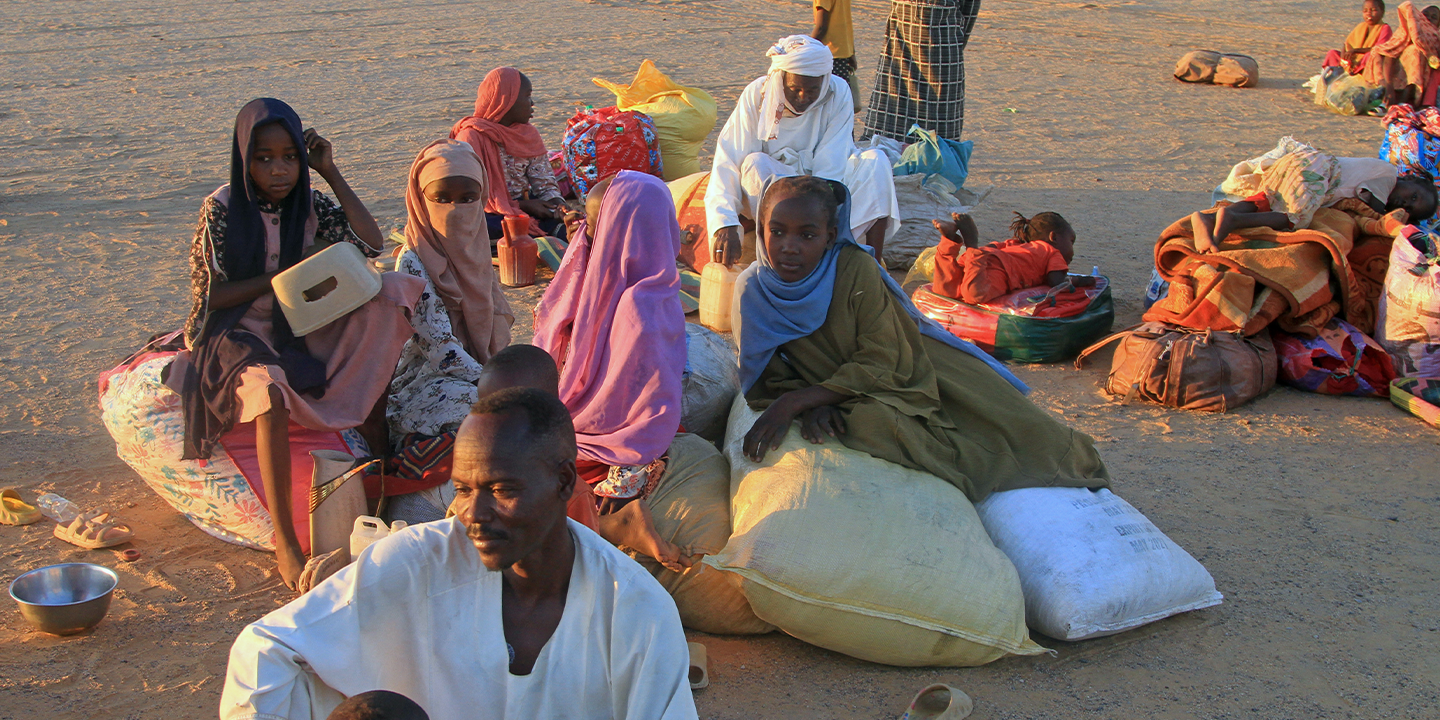
On 19 February the UN Fact-Finding Mission (FFM) on Sudan concluded that the Rapid Support Forces (RSF) committed crimes against humanity, war crimes and genocide against non-Arab communities in and around El Fasher, North Darfur, during their siege and subsequent takeover in late October 2025. The report described the RSF’s widespread and systematic abuses – including killings, ethnically targeted sexual violence, arbitrary detention, torture, enforced disappearances, extortion and forced displacement – while deliberately imposing conditions that made survival nearly impossible, such as denying food and destroying medical services. According to the FFM, “these acts were committed with knowledge, organization, and repetition, and were accompanied by dehumanizing and exterminatory language.”
This is the first UN report to determine that the RSF’s actions in El Fasher constitute genocide, marking a critical moment for accountability and international action. The FFM found that at least three main elements of genocide are clearly present: killing members of the group; causing serious bodily or mental harm to members of the group; and deliberately inflicting conditions of life calculated to bring about physical destruction, in whole or in part. Based on the scale and patterns of attacks, the targeting of the Zaghawa and Fur ethnic communities, statements by commanders and fighters expressing intent to kill and destroy and the devastating impact on victims individually and the protected group as a whole, the FFM concluded that the acts were carried out with genocidal intent.
The report also documented horrific sexual and gender-based violence that was closely intertwined with ethnic targeting. Women and girls were specifically targeted because of their combined gender and ethnic identities. By killing or displacing men and systematically attacking women and girls, the RSF struck at the core of the community, threatening its very survival.
As early as June 2023, the Global Centre for the Responsibility to Protect, alongside other human rights organizations – including Sudanese civil society and human rights defenders – documented the RSF’s operational patterns of ethnically targeted attacks, siege and encirclement tactics and systematic violence against civilians. Despite these warnings, inadequate action by the international community enabled the RSF to commit widespread atrocities in Darfur with impunity. Similar patterns are now emerging in the Kordofan regions. With violence ongoing, the international community must urgently uphold its obligations under the Genocide Convention to prevent and punish acts of genocide. As FFM member Mona Rishmawi warned on LinkedIn, “As violence spreads to other regions, particularly Kordofan, the risk of further genocidal acts remains acute.”
The FFM’s report underscores the urgent need for a dedicated atrocity prevention and civilian protection track, alongside the ongoing humanitarian response and ceasefire negotiations. Yesterday, 24 February, the UN Security Council (UNSC) imposed sanctions on four RSF leaders, including the RSF’s Deputy Commander, Abdul Rahim Hamdan Dagalo. However, sanctions alone are insufficient. The UNSC, the African Union and states with leverage over the warring parties, including the United Arab Emirates (UAE), Egypt and Saudi Arabia, must urgently devise a strategy to effectively protect civilians in Darfur, the Kordofans and elsewhere. States providing military, logistical or other forms of support to the RSF – most notably the UAE – must immediately cease such assistance to prevent further escalation and protect civilians.
The Office of the UN High Commissioner of Human Rights (OHCHR) released a report on 19 February raising concerns over ethnic cleansing across the Occupied Palestinian Territory (OPT). In Gaza – where over 80 percent of the population are refugees or descendants of those expelled around 1948 – OHCHR detailed Israel’s obstruction of aid, targeted destruction of neighborhoods, ongoing attacks and forced displacement as conduct “aimed at a permanent demographic shift.” In the West Bank, the findings highlighted the coercive environment created by Israel’s policies that have led to forced displacement and forcible transfer amounting to war crimes, while “altering the character, status and demographic composition.”
The report follows Israel’s recent efforts to advance annexation in the Occupied West Bank. Since 17 February over 100 UN member states and intergovernmental organizations have endorsed a joint statement condemning Israel’s unilateral measures “aimed at expanding [its] unlawful presence in the West Bank” in violation of international law. The foreign ministers of over two dozen states and organizations – including Slovenia, Jordan and Brazil – issued a separate joint statement condemning what they described as Israel’s “deliberate and direct attack on the viability of the Palestinian State.”
OHCHR spotlighted a “pervasive climate of impunity” and UN High Commissioner for Human Rights Volker Türk underscored that “impunity is not abstract – it kills. Accountability is indispensable. It is the prerequisite for a just and durable peace in Palestine and Israel.” Palestinian civil society and UN experts have long warned of ethnic cleansing in the OPT. As early as 2006, a former UN Special Rapporteur on the situation of human rights in the Palestinian territories occupied since 1967 reflected on Israeli practices in the Occupied West Bank, stating that, “in other regions, the forced displacement of persons by means of human rights violations is labelled ethnic cleansing.”
Referring to United States President Donald Trump’s plan for Gaza – endorsed in UN Security Council Resolution 2803 – OHCHR emphasized the imperative of accountability, reaffirming that “justice for victims must lay the foundation for the reconstruction of Gaza.” The report called for the immediate participation of Palestinians in governance structures for recovery and reconstruction and reiterates that “Palestinians’ right to self-determination must not be delayed.”
The international community must act decisively and urgently in response to the growing body of documentation on Israel’s ongoing atrocity crimes. Meaningful accountability measures – including upholding International Criminal Court arrest warrants, refraining from acts that recognize or sustain Israel’s unlawful presence in the OPT and adjusting bilateral relations in accordance with international law and respect for the rights of Palestinians – are essential. Without such steps, efforts to advance a political solution and a viable peace process risk becoming hollow and complicit in Israel’s ongoing crimes.
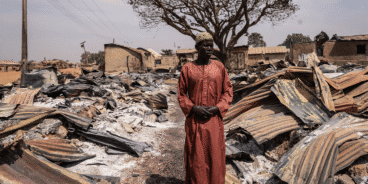
Beginning 14 February militants from the Group for the Support of Islam and Muslims (JNIM) launched a week-long series of coordinated attacks across eastern and northern Burkina Faso, reportedly killing more than 180 people, according to diplomatic and security sources. The attacks targeted military positions, civilian convoys, markets and telecommunications infrastructure in multiple towns, including Bilanga, Titao, Tandjari, Nare, Fada N’Gourma and areas near Ouahigouya. Internal reports by diplomatic missions describe how the recent operations were “unprecedented” in coordination across several provinces, underscoring JNIM’s growing operational reach and mobility across large swathes of territory.
In the eastern city of Fada N’Gourma, an assault on a base of the Water and Forestry Combat Units allegedly left between 60 and 70 people dead. While no official toll has been released, witnesses report that medical facilities were overwhelmed as bodies and wounded continued to arrive following the attack. A security source in Fada N’Gourma described the scene as “unbearable.” Meanwhile, in the northern town of Titao, coordinated groups of JNIM fighters looted a military camp, burned the central market and destroyed telecommunications infrastructure. Eight Ghanaian tomato traders were killed when their vehicle was set ablaze, leaving them “burnt beyond recognition,” according to Ghana’s Interior Minister. The attack on a routinely targeted supply route highlights the growing dangers confronting cross-border traders in the region.
The latest spate of attacks disrupted markets, supply routes and communications infrastructure, exacerbating already fragile humanitarian conditions. Burkina Faso has faced escalating violence from groups linked to Al-Qaeda, like JNIM, and the so-called Islamic State (IS-Sahel) for a decade. Despite pledges by the military authorities who took power in 2022 to restore security, violence has intensified. Tens of thousands of civilians and combatants have been killed since 2015, more than half in the last three years, according to the Armed Conflict Location & Event Data Project. Burkina Faso ranked as the country most affected by terrorism for the second consecutive year in the 2025 Global Terrorism Index. According to the SITE Intelligence Group, JNIM alone claimed nearly 500 attacks in Burkina Faso last year.
JNIM and IS-Sahel have systematically used sieges, blockades, improvised explosive devices and targeted attacks on supply routes to consolidate territorial control. At the same time, counterinsurgency operations by the military and allied militias have been associated with serious human rights violations, including mass civilian killings that may amount to crimes against humanity.
Christine Caldera, Central Sahel expert at the Global Centre for the Responsibility to Protect, noted, “The scale and coordination of the attacks highlight the urgent need for a recalibrated response centered on civilian protection, accountability and regional cooperation.” Authorities should deploy reinforced protection units to high-risk areas and establish community-based early warning mechanisms. Enhanced cross-border coordination with neighboring states is essential to protect supply routes and traders.
Ralph Bunche Institute for International Studies
The Graduate Center, CUNY
365 Fifth Avenue, Suite 5203
New York, NY 10016-4309, USA