21 September 2026
Open Letter
Your Excellency,
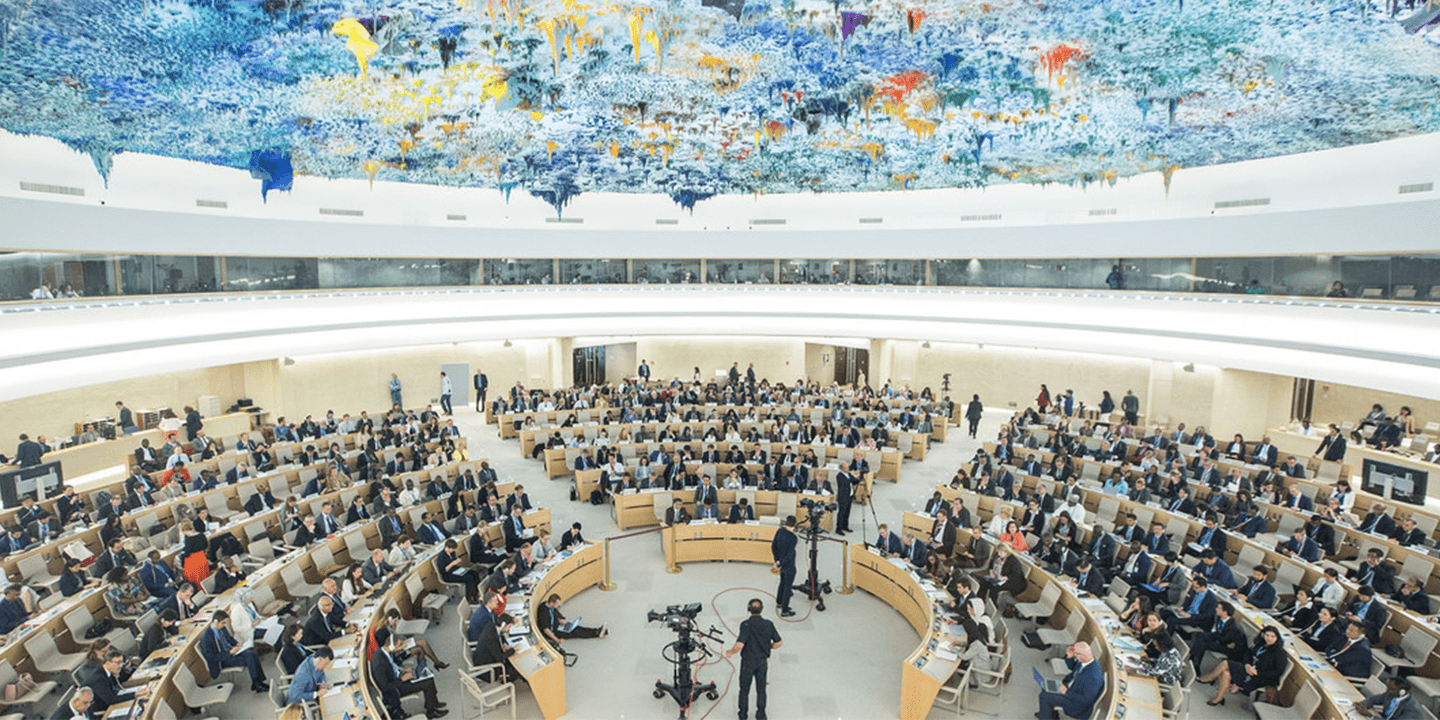
On behalf of the Global Centre for the Responsibility to Protect, I am writing to you regarding the 61st session of the UN Human Rights Council (HRC) in Geneva.
The HRC plays an essential role in the prevention of mass atrocity crimes by responding to situations where populations are at risk of, or are experiencing, genocide, war crimes, crimes against humanity or ethnic cleansing. During its 44th session in July 2020 the HRC adopted Resolution 44/14 on the Responsibility to Protect (R2P), recognizing the important contribution of the UN human rights system in addressing situations where there is a risk of atrocity crimes. This is in line with the Council’s prevention mandate, enshrined in UN General Assembly Resolution 60/251, which stipulates that it shall “contribute, through dialogue and cooperation, towards the prevention of human rights violations and respond promptly to human rights emergencies.”
I strongly urge you to uphold this shared commitment to prevent atrocity crimes. In this regard, enclosed below the Global Centre has produced a set of recommendations regarding situations on the agenda of the HRC this session where populations are facing or are at risk of mass atrocity crimes, including Afghanistan, Belarus, Democratic Republic of the Congo, Democratic People’s Republic of Korea, Haiti, Iran, Mali, Myanmar (Burma), Nicaragua, Occupied Palestinian Territory, South Sudan, Sudan, Syria, Ukraine and Venezuela. The Global Centre respectfully encourages you to consider these recommendations as you engage in the 61st regular session.
Since the Taliban de facto authorities assumed control of Afghanistan in August 2021, they have imposed repressive policies, denying women, girls and LGBTQIA+ persons their fundamental rights. These measures violate the Convention on the Elimination of All Forms of Discrimination Against Women. In August 2024 the Taliban codified over 100 edicts through so-called “vice and virtue” laws, effectively eradicating women and girls from public life, by mandating full face coverings, prohibiting them from speaking or being heard in public and severely restricting their freedom of movement, expression, employment, political participation and access to education and healthcare. Others are targeted for expressions of sexuality or gender identity deemed inconsistent with Taliban policy. These measures amount to the crime against humanity of gender persecution.
On 6 October the HRC established an independent investigative mechanism (IIM-A) to collect, preserve and analyze evidence of international crimes and grave violations of international law, and to prepare files to facilitate and expedite fair and independent criminal proceedings. Once operational, the mechanism will be the only international body examining violations and abuses of human rights committed by the Taliban, former government officials, warlords, members of international forces, non-state armed groups and others.
The Global Centre respectfully urges your delegation to utilize the upcoming Enhanced Interactive Dialogue on Afghanistan to underscore the urgent need for justice and accountability for likely atrocity crimes perpetrated during the country’s protracted conflict and since the Taliban’s 2021 takeover. We encourage your close attention to the update on the establishment of the IIM-A, particularly regarding the Terms of Reference, to ensure that the mechanism is robust, gender-competent and survivor-centered. The appointment of a Head of Mechanism with demonstrated expertise in international criminal investigations, gender-based crimes and survivor-centered approaches is critical to the effective fulfillment of the mandate. The international community must ensure that the IIM-A is fully funded, operational and able to carry out its mandate without obstruction, while maintaining clear complementarity with the Special Rapporteur’s mandate. Engagement with civil society is not only crucial to ensuring that the mechanism remains survivor-centered, but also vital to the success of its mandate, particularly given the limited prospects for access and cooperation from the Taliban de facto authorities.
Five years after the contested 2020 presidential election and subsequent protests, populations in Belarus continue to face systematic patterns of repression marked by widespread fear, persecution and a complete crackdown on fundamental freedoms. The Group of Independent Experts (GIE) on the situation of human rights in Belarus has documented the widespread use of arbitrary detention – often accompanied by torture or ill-treatment – and politically motivated persecution to silence dissent against President Aleksandr Lukashenko’s government. The GIE concluded that Belarusian authorities have committed the crimes against humanity of imprisonment and persecution on political grounds. The UN Special Rapporteur on the situation of human rights in Belarus has cautioned that, although presidential pardons led to the release of many detainees in 2025, they do not reflect broader human rights improvements. Systemic repression remains entrenched and many political prisoners continue to face ill-treatment and punitive detention conditions. The Special Rapporteur has also documented the routine misuse of so-called counterterrorism and anti-extremism laws against opposition politicians, human rights defenders, journalists and activists. Meanwhile, the authorities have intensified transnational repression and collective punishment against Belarusians forced into exile since 2020.
The government has increasingly rejected findings from human rights bodies, obstructed independent monitoring and refused to cooperate with international mechanisms. No meaningful domestic avenues for accountability exist. Therefore, the Global Centre respectfully urges you to renew the mandates of the GIE and Special Rapporteur. The complementary work of both HRC mandates is essential to addressing the ongoing crisis and ensuring sustained scrutiny of the systematic and grave nature of the crisis. The GIE plays a critical role in collecting, preserving and analyzing evidence of grave violations and, where possible, identifying those responsible, laying the groundwork for future accountability and justice for victims. The Special Rapporteur, in turn, maintains a vital link with Belarusian civil society and ensures that the international community remains alert to ongoing and emerging human rights violations.
In its landmark 2014 report, the HRC-mandated Commission of Inquiry (CoI) on human rights in the Democratic People’s Republic of Korea (DPRK) found that crimes against humanity were being committed as part of policies set at the highest levels of government. It documented systematic and widespread violations, including extermination, murder, enslavement, torture, imprisonment, rape, forced abortion, sexual violence, persecution, forcible transfer, enforced disappearance and the inhumane act of knowingly causing prolonged starvation. A September 2025 report by the UN High Commissioner for Human Rights provided an update on the situation since 2014, concluding that gross violations – many amounting to crimes against humanity – remain ongoing and unaddressed. The High Commissioner urged the DPRK to investigate and prosecute those responsible.
Holding the government criminally accountable faces severe structural and political obstacles, and meaningful redress extends beyond criminal prosecution. As a result, non-judicial accountability mechanisms remain indispensable for affected communities. Victims and survivors should be actively involved in shaping justice processes, policy decisions and any future political arrangements affecting the Korean Peninsula, ensuring that their dignity, agency and well-being are central to international responses.
The Global Centre respectfully encourages you to use the upcoming Interactive Dialogue on the report of the Special Rapporteur on the situation of human rights in the DPRK to reaffirm your commitment to the protection of the North Korean people and the prevention of crimes against humanity. States should call for a holistic UN response that bridges human rights, humanitarian and security approaches and confronts structural drivers of violations.
The Special Rapporteur remains the only international actor consistently reporting on ongoing violations in the DPRK. The Global Centre respectfully urges you to support the renewal of the Special Rapporteur’s mandate for another year and ensure that the Office of the UN High Commissioner for Human Rights (OHCHR) provides regular briefings to UN bodies, including the Security Council (UNSC).
Attacks by armed groups and recurrent inter-communal violence continue to threaten populations in the eastern provinces of the Democratic Republic of the Congo (DRC). These groups, as well as members of the Congolese Armed Forces (FARDC) and police, have committed widespread violations that may amount to war crimes and crimes against humanity. The situation is particularly dire in North and South Kivu, where the March 23 Movement (M23) intensified its offensive and consolidated control over mineral-rich areas throughout 2025. The UNSC-mandated Panel of Experts and the HRC-mandated Fact-Finding Mission (FFM) have documented that all parties – including M23, together with the Rwandan Defence Force, and the FARDC, together with allied Wazalendo militias — have perpetrated violations that may constitute war crimes and crimes against humanity. Despite the signing of peace agreements in 2025, the security situation remains volatile, with communities still at risk of violations and abuses of human rights, underscoring the need for sustained scrutiny and pressure from OHCHR and other UN bodies.
The Global Centre respectfully encourages you to participate in the upcoming Enhanced Interactive Dialogue with the High Commissioner, draw attention to the enduring risk of atrocities and express alarm over continued ceasefire violations. The Global Centre further encourages you to underscore the importance of sustained political and financial support to the CoI and the UN Joint Human Rights Office in the DRC, enabling continued technical and logistical assistance to the Congolese justice system and strengthening accountability for serious crimes.
Populations in Haiti are facing widespread abuses as armed gangs have proliferated, perpetrating widespread abuses with near-total impunity. Violence has particularly intensified since the February 2024 formation of the Viv Ansanm gang coalition, which has perpetrated indiscriminate killings, rape, torture, kidnappings, forced recruitment and the destruction and looting of critical civilian infrastructure, in climate of total impunity. Groups in the coalition are estimated to control 90 percent of the capital, Port-au-Prince, and have expanded into the Centre and Artibonite departments. Gangs are using systematic sexual violence, including collective rape and mutilation, as a means of exerting territorial control and to terrorize, isolate and inflict pain on communities. Widespread sexual violence and gendered humanitarian impacts led a UN official to conclude that Port-au-Prince “is the worst place in the world to be a woman.” The crisis has also had a devastating impact on children, with a dramatic increase in grave violations, particularly trafficking and use by gangs.
The Haitian National Police (HNP) have lacked the capacity to combat gangs and protect communities. The HNP, supported by the UN-authorized Gang Suppression Force (GSF) and a private military contractor, have carried out operations targeting gang strongholds, including drone strikes using explosive munitions, which have led to civilian harm. The security situation has further worsened due to protracted political deadlock, a dysfunctional judiciary and the absence of legitimate executive or legislative bodies.
The Designated Expert on the situation of human rights in Haiti plays a crucial role in providing technical assistance to the transitional authorities, national human rights institutions and civil society, as well as monitoring the human rights situation. The Global Centre respectfully urges you to renew the mandate for one year, requesting the Designated Expert conduct risk assessments on indicators of atrocities and alert the HRC on necessary action with timely and targeted recommendations to protect vulnerable populations. In addition, the Designated Expert, in cooperation with OHCHR and the UN Integrated Office in Haiti, should be mandated to help the GSF effectively implement and comply with robust human rights safeguards, monitoring mechanisms and accountability measures.
On 28 December 2025 demonstrations erupted across Iran in response to a deepening economic crisis. The demonstrations subsequently evolved into a nationwide movement opposing the government and its repressive policies. Iranian authorities responded with a violent crackdown, during which security forces committed unlawful use of force and mass arbitrary arrests. The HRC-mandated Independent International Fact-Finding Mission on the Republic of Iran (FFMI) has reviewed footage of security forces opening fire on protesters, including “particularly brutal” use of force in ethnic minority provinces. Thousands of protesters have been killed and detained in what has been deemed the most deadly and violent crackdown since Iran’s 1979 revolution. Verification remains difficult as the Iranian authorities have imposed a near-total internet shutdown and communications blackout to isolate protesters and suppress mobilization.
Iranian officials have used dangerous rhetoric against protesters, labeling them “terrorists,” threatening “no leniency” and deeming all “rioters” an “enemy of God,” an offense punishable by death. Although authorities have claimed that state executions would not take place, Iran is among the countries with the highest number of executions annually and has a documented history of arbitrary executions. The UN High Commissioner for Human Rights has stressed that “the scale and pace of executions suggest a systematic use of capital punishment as a tool of State intimidation, with disproportionate impact on ethnic minorities and migrants.”
The current crackdown is not an isolated event but part of a decades-long pattern of lethal force used against protesters challenging repression and deteriorating living conditions. The FFMI previously concluded that Iranian authorities committed crimes against humanity during the 2022-2023 “Women, Life, Freedom” protests. The FFMI also concluded that the crime against humanity of persecution on the basis of gender had been committed, and that the crime against humanity of gender persecution intersected with discrimination on the grounds of ethnicity and religion.
As the only independent international mechanism monitoring atrocity risks in Iran, the FFMI plays a critical role in the documentation of possible atrocity crimes committed in the context of the recent protests, as well as in informing the international community on necessary prevention and mitigation strategies. The Global Centre respectfully urges you to actively participate in the Interactive Dialogue with the FFMI and Special Rapporteur and emphasize that Iran is not solely a human rights crisis, but a situation that poses grave atrocity risks. We further encourage your delegation to call for the inclusion of an atrocity risk assessment in the FFMI’s investigation into the current situation. We also encourage you to call upon the Islamic Republic of Iran to fully and transparently cooperate with the FFMI and Special Rapporteur, including by granting full and unfettered access to both mandate holders.
The human rights situation in Mali remains dire amid recurrent and expanding violence perpetrated by armed Islamist groups, as well as security operations undertaken to confront them. All parties to the conflict have perpetrated violations that may amount to crimes against humanity and war crimes. Sustained offensives, blockades and sieges by armed Islamist groups have weakened state authority, exposed deep structural vulnerabilities and compounded hardship for civilians. At the same time, the Malian Armed Forces and allied Russian mercenaries from Africa Corps have perpetrated atrocities against civilians, particularly ethnic Fulani communities, including unlawful killings, rape and other forms of sexual violence, pillage and torture. Human rights defenders, journalists, political opponents and real or perceived critics of the transitional military authorities have also faced escalating reprisals, including threats, intimidation, enforced disappearances and arbitrary arrest and detention. Accountability remains limited, with few alleged perpetrators arrested, prosecuted or tried for war crimes and crimes against humanity.
The Global Centre respectfully urges you to support the extension of the mandate of the Independent Expert on Mali for a further one-year period. The Independent Expert has played a crucial role in calling on the transitional authorities to uphold their human rights obligations and in monitoring the implementation of these commitments. We also respectfully encourage you to support the inclusion of R2P language in the resolution by “stressing that the Transitional Government of Mali has the primary responsibility to protect its population.” Finally, we urge you to ensure that the Independent Expert is provided with sufficient resources to produce regular, in-depth reports on ongoing violations and atrocity risks, and that the Expert is granted full and unfettered access to the country to effectively carry out the mandate.
Since the February 2021 coup, Myanmar’s military has fueled a deepening human rights and protection crisis, killing over 7,700 people and displacing at least 3.6 million. The junta has carried out extrajudicial killings, torture, arbitrary detention, sexual violence, forced displacement and the destruction of civilian infrastructure through indiscriminate airstrikes, heavy artillery and scorched-earth tactics targeting towns and villages, including schools, hospitals, religious sites and displacement camps. It has also weaponized humanitarian access, deliberately obstructing aid and exacerbating food insecurity and suffering. UN officials and entities, including the Special Rapporteur on the situation of human rights in Myanmar and the Independent Investigative Mechanism for Myanmar, have indicated that these abuses likely amount to crimes against humanity and war crimes. Impunity for past atrocities has enabled the military to commit atrocities against civilians, particularly those from ethnic minority populations. The recently held heavily controlled elections, widely dismissed as a sham to legitimize military rule, are reflective of the junta’s deliberate strategy over the past five years to maintain power.
Armed groups continue to threaten civilians, taking control of large areas and committing abuses that may amount to war crimes. Populations remain at risk in Rakhine State, particularly the Muslim ethnic-minority Rohingya, who were targeted in a 2017 genocidal campaign by the military.
The Special Rapporteur plays a critical role in documenting systematic violations of International Humanitarian Law (IHL) and International Human Rights Law (IHRL), supporting accountability efforts, and urging the international community to take effective action. The Special Rapporteur has published invaluable reports on issues including arms and financial transfers to the military, the gendered impact of the conflict and human rights violations against children in Myanmar, offering targeted recommendations to protect vulnerable populations. We respectfully encourage you to support the renewal of the Special Rapporteur’s mandate and to advocate for the appointment of a strong expert following the end of the current term. We further urge support for including R2P language in the resolution, emphasizing that “the government of Myanmar has the primary responsibility to protect its population from crimes against humanity and war crimes.”
For the past eight years, Nicaragua has experienced an unprecedented human rights crisis amid a rapid descent into authoritarianism. Under President Daniel Ortega, various government structures have systematically repressed dissenting or independent voices, including human rights defenders, women’s rights groups, journalists, community, peasant movement and religious leaders, students and academics, business owners, political opponents and ordinary citizens through widespread violations and abuses that may amount to crimes against humanity, including murder, imprisonment, torture, sexual violence, deportation and politically motivated persecution. In February 2025 the HRC-mandated Group of Human Rights Experts on Nicaragua (GHREN) concluded that these crimes are part of a “deliberate and well-orchestrated State policy” executed through a defined chain of command from the presidency to local officials.
The Nicaraguan government has also intensified systematic transnational repression over the past two years. The GHREN reported that at least 452 Nicaraguans have been stripped of their nationality through court orders since February 2023, while state authorities are utilizing physical violence, threats, financial pressure, entry bans, the denial of consular services and passports, harassment, surveillance and coercion via family members of Nicaraguans in exile. Since 2021 there have also been a series of murders and assassination attempts of exiled Nicaraguans.
The Global Centre urges your delegation to utilize the upcoming Interactive Dialogue to call on President Ortega to immediately halt systematic persecution of actual or alleged opponents, allow independent media and civil society organizations to operate safely and freely and immediately release all arbitrarily detained individuals. We also encourage you to urge Nicaraguan authorities to commit to full and meaningful cooperation with regional and international human rights monitoring mechanisms. Lastly, we urge you to express alarm at the continued presence of an interconnected set of atrocity risk factors and your full support to continued investigations and public reporting by the GHREN, which remains crucial to ensure international scrutiny.
Since October 2023 Israel has perpetrated likely war crimes, crimes against humanity, ethnic cleansing and genocide in Gaza, killing over 70,000 Palestinians and injuring more than 170,000. The UN Special Rapporteur on the situation of human rights in the Occupied Palestinian Territory (OPT) has concluded that Israel has committed at least three of the constitutive acts of genocide in Gaza and that statements made by high-level Israeli military and government officials are evidence of genocidal intent. Likewise, the CoI has determined that Israel has committed at least four of the five acts prohibited under the Genocide Convention, including imposing measures to prevent births. The International Court of Justice (ICJ) has issued three sets of legally binding provisional measures ordering Israel, among other requests, to ensure its military does not commit acts which constitute a violation of the rights of Palestinians in Gaza as a protected group under the Genocide Convention and to provide basic services, including humanitarian aid, to address adverse conditions of life in Gaza.
Despite a so-called ceasefire agreement between Hamas and Israel that came into effect on 10 October 2025, Israel has continued its assault on Gaza, failed to adhere to withdrawal agreements and maintained the obstruction of humanitarian aid. Two months after the adoption of UNSC Resolution 2803, which gave effect to United States (US) President Trump’s plan for Gaza, the second phase of the ceasefire agreement was launched. As of 18 February, Israel has killed over 600 Palestinians since the ceasefire in Gaza took effect, destroyed more than 25,000 buildings and revoked the licenses of 37 international aid organizations.
Risks to populations are also high in the Occupied West Bank. OHCHR recently concluded that Israel’s policies of discrimination and racial segregation in the Occupied West Bank resemble apartheid.
The Global Centre respectfully urges your delegation to use the upcoming Interactive Dialogues with the High Commissioner and the Special Rapporteur to call for the ceasefire to be fully implemented and for an independent, international body to monitor ceasefire violations. We also urge your delegation to call on Israel to immediately lift the blockade on Gaza, ensure safe and unimpeded access for the delivery of humanitarian aid and implement the ICJ’s provisional measures orders. We further urge your delegation to encourage all states to implement UNSC Resolution 2803 in accordance with international law, call for affected Palestinians to hold a meaningful role in decisions on their future, cease arms exports to Israel to avoid aiding and abetting atrocities in the OPT and apply other economic and political measures necessary to ensure respect for international law and the prevention of further atrocity crimes.
South Sudan is at serious risk of returning to widespread armed conflict amidst escalating political tensions, localized violence and mobilization of forces along ethnic lines. As the country approaches its first-ever elections, tentatively scheduled for December 2026, political competition – particularly at the local level – is increasingly playing out through military action rather than democratic processes. Senior political and military leaders continue to manipulate long-standing enmities between rival ethnic communities, enabling the mobilization of armed groups. Inflammatory rhetoric from senior military officials is further escalating the risk of atrocities. Civilians continue to suffer from conflict-related sexual and gender-based violence, arbitrary detention, extrajudicial killings and other abuses, driven by entrenched impunity and the weakness or absence of formal justice institutions.
Since 2023 the HRC-mandated Commission on Human Rights in South Sudan (CHRSS) has consistently warned that the peace process is threatened by sub-national political violence with the active involvement of national actors. Delays in implementing the 2018 peace agreement, the R-ARCSS, appear to be a deliberate strategy by President Salva Kiir to maintain political and military dominance. Increased political repression in 2025, including arrests of SPLA-In Opposition leaders and the house arrest of former Vice President Riek Machar, effectively undermined the power sharing framework and signaled a collapse of the political settlement. Fragmentation and deepening ethnic divisions have led to grave human rights violations and atrocity crimes, while cattle raiding, revenge killings and resource competition exacerbated by climate change have triggered clashes between herding and farming communities.
The CHRSS has played a critical role in documenting violations and abuses of human rights and IHL violations. Given the near collapse of the peace process, the volatile security situation and the imminent risk of atrocity crimes, the Global Centre respectfully calls for your delegation to support the full renewal of the Commission’s mandate. This would enable the Commission to continue its independent investigations, collect and preserve evidence and clarify responsibility for alleged gross violations and abuses of human rights and related crimes. We also request that your delegation encourage the CHRSS to maintain its practice of assessing the presence of atrocity risk factors, as outlined in the UN Framework of Analysis for Atrocity Crimes – a critical tool for guiding accurate risk assessments and international responses. Furthermore, we encourage the CHRSS to share its reports and recommendations with relevant African Union (AU) and UN organs and to submit comprehensive reports to the General Assembly during its 81st session, followed by an interactive dialogue, to ensure sustained international attention and accountability.
Since April 2023 an armed confrontation between the Sudanese Armed Forces (SAF) and the paramilitary Rapid Support Forces (RSF) has resulted in at least tens of thousands of people killed across Sudan amid heavy fighting, aerial bombardments and shelling, including in densely populated areas. Armed actors have reportedly perpetrated widespread sexual and gender-based violence, including rape, gang-rape and sexual slavery, possibly amounting to war crimes and/or crimes against humanity. The RSF have utilized the conflict to accelerate a systematic campaign of ethnic cleansing and large-scale attacks targeting non-Arab communities in Darfur and other regions, perpetrating possible acts of genocide.
In October 2025, during the takeover of El Fasher, the capital city of North Darfur, civilians endured widespread rape, arbitrary detention and extrajudicial executions. Satellite imagery suggests evidence of door-to-door executions, mass graves and the burning of objects that may be consistent with bodies. Unconfirmed reports from December estimate that at least 60,000 people may have been killed since the RSF’s takeover. An additional 150,000 residents remain unaccounted for. As the RSF currently attempts to expand its control in the Kordofan region, civilians are facing sharply heightened atrocity risks. In November, the UN Special Adviser on the Prevention of Genocide and the AU Special Envoy on the Prevention of Genocide and Other Mass Atrocities warned that the crimes committed in Sudan display strong indicators of a deliberate intention to inflict conditions of life calculated to bring about the physical destruction, in whole or in part, of targeted communities. In a report published on 19 February 2026, the FFM confirmed that the coordinated campaign of destruction by the RSF against non-Arab communities in and around El-Fasher formed part of a planned and organized operation that bears the defining characteristics of genocide.
The Global Centre respectfully encourages you to use the Enhanced Interactive Dialogue on the FFM and High Commissioner’s reports on Sudan, with the participation of the Designated Expert, to draw attention to atrocity risks. The Global Centre also encourages you to explicitly highlight the critical role of the FFM in documenting and investigating grave human rights violations and atrocity crimes, as well as identifying emerging atrocity risks and gaps in human rights protection in a context of escalating threats to civilians.
On 8 December 2024, following decades of oppressive rule and more than 14 years of devastating conflict, the government of President Bashar al-Assad collapsed after opposition forces, led by Hay’at Tahrir al-Sham (HTS), captured Damascus, bringing newfound hope and relief to the Syrian people. The HRC-mandated CoI on the Syrian Arab Republic documented consistent war crimes and crimes against humanity perpetrated under President Assad, including over 130,000 Syrians detained and forcibly disappeared. Armed groups, including HTS, the so-called Islamic State, the Syrian National Army and others, have also been implicated in atrocity crimes throughout the conflict.
While the transitional government has made progress, including institutional reform, establishing authorities to search for the missing and advances on transitional justice, concerns remain. Despite the collapse of the Assad government, rights abuses continue, including torture, abductions and enforced disappearances, as well as waves of sectarian violence. Clashes erupted in March 2025 on Syria’s coast after Assad-loyal armed groups ambushed transitional government forces. More than 1,000 people – mostly from the Alawite minority – were killed and the CoI found that interim government forces, Assad loyalists and private individuals committed grave acts that may amount to war crimes. The CoI has warned that the spread of discriminatory incitement and hate speech, risks threatening Syria’s social cohesion.
Since its establishment, the CoI has been central to documenting atrocity crimes and advancing justice and accountability for Syrians. Amid a fragile political transition, continued atrocity risks and newly granted access to Syria, the CoI’s mandate remains essential not only for collecting and preserving evidence – past and present – but also for supporting the strengthening of Syrian national accountability mechanisms. The documentation and preservation of evidence is crucial in ensuring families of the missing can clarify the fate and whereabouts of their loved ones and in supporting future domestic and international accountability processes. As conditions remain uncertain and communities across Syria continue to face risks, the CoI can play a critical role in sharing expertise, good practices and guidance to build national capacity to investigate, prosecute and prevent atrocities. The Global Centre therefore respectfully urges the full renewal of the CoI’s mandate under Item 4 and encourages language that affirms the role of international mechanisms in supporting Syrian institutions through holistic, victim-centered judicial and non-judicial accountability processes.
Following Russia’s full-scale invasion of Ukraine in February 2022, the situation has evolved into a nationwide assault on Ukrainian civilians and their livelihoods. The UN Human Rights Monitoring Mission in Ukraine (HRMMU) and the CoI on Ukraine have documented war crimes and crimes against humanity, including indiscriminate attacks, torture, sexual and gender-based violence and the use of indiscriminate weapons in populated areas, such as heavy artillery, multiple launch rocket systems, missiles, airstrikes and illegal cluster munitions. The HRMMU has verified more than 14,600 civilian deaths since February 2022, while acknowledging that the actual figure is likely significantly higher. Civilian casualties rose by 31 percent in 2025 compared to 2024, and by 70 percent compared to 2023, largely due to expanded aerial bombardment using modified glide bombs that increase range while reducing precision. Continued attacks on energy infrastructure have left millions without water, heat or electricity during subzero winter temperatures.
Ukrainian and Russian forces have committed alleged abuses against prisoners of war, including torture and ill-treatment. In areas under their control, Russian forces have also carried out summary executions and other possible war crimes. Mass graves have been found in areas retaken from Russian forces. There are also credible reports of forced deportations of Ukrainians, including children, to Russia and forcible disappearances of local Ukrainian government officials.
Despite repeated mediation efforts, the conflict remains entrenched, particularly along civilian front lines. The Global Centre respectfully encourages you to adopt a resolution that unequivocally condemns Russia’s blatant violations of IHL and IHRL and renews the mandate of the CoI in full to ensure continued documentation, investigations and reporting.
Following the unlawful military assault on Venezuela by US security forces and the capture of Nicolás Maduro on 3 January, Venezuela has entered a period of profound uncertainty. Amidst this uncertainty, since the appointment of Delcy Rodríguez as interim President, the Venezuelan authorities have undertaken some steps to confront the country’s pattern of systematic arbitrary detention. Following an announcement on 8 January by National Assembly President Jorge Rodríguez, hundreds of political prisoners have been released from state-run detention facilities. However, the organization Justicia, Encuentro y Perdón has documented more than 800 individuals who remain detained for political reasons, with actual figures likely higher. Limited transparency surrounding release procedures has generated acute distress for affected families and increased the burden on civil society organizations providing documentation, legal assistance and support. While interim President Delcy Rodríguez’s announcement of a draft Amnesty Law may offer an opportunity to alleviate the suffering of those unlawfully detained, significant concerns remain regarding its scope, implementation and its capacity to deliver meaningful change.
Despite these developments, Venezuela’s repressive state apparatus remains intact. Senior officials identified as responsible for state-led repression continue to hold power, and institutions that have facilitated crimes against humanity – including the military and civilian intelligence agencies, security agents, the judicial system and the Attorney General’s office – remain unchanged. The refusal by both Venezuelan and US authorities to commit to genuine democratization underscores the need for cross-regional governments to emphasize that human rights, atrocity prevention, accountability and the restoration of the rule of law are binding benchmarks and red lines across their bilateral, regional and multilateral engagement frameworks.
In this context, the Global Centre respectfully encourages you to utilize the upcoming Interactive Dialogue with the FFM to express alarm over the lack of commitment to democratic reform and to underscore the importance of binding human rights and accountability benchmarks. We also urge you to highlight the critical role of the FFM in identifying evolving atrocity risks and protection gaps in this volatile environment. The Global Centre also encourages you to call on Venezuelan authorities to immediately end systematic repression, fully release all individuals arbitrarily detained, grant OHCHR staff full and permanent access to the country and to cooperate with the FFM.
Ralph Bunche Institute for International Studies
The Graduate Center, CUNY
365 Fifth Avenue, Suite 5203
New York, NY 10016-4309, USA