2 September 2026
Atrocity Alert
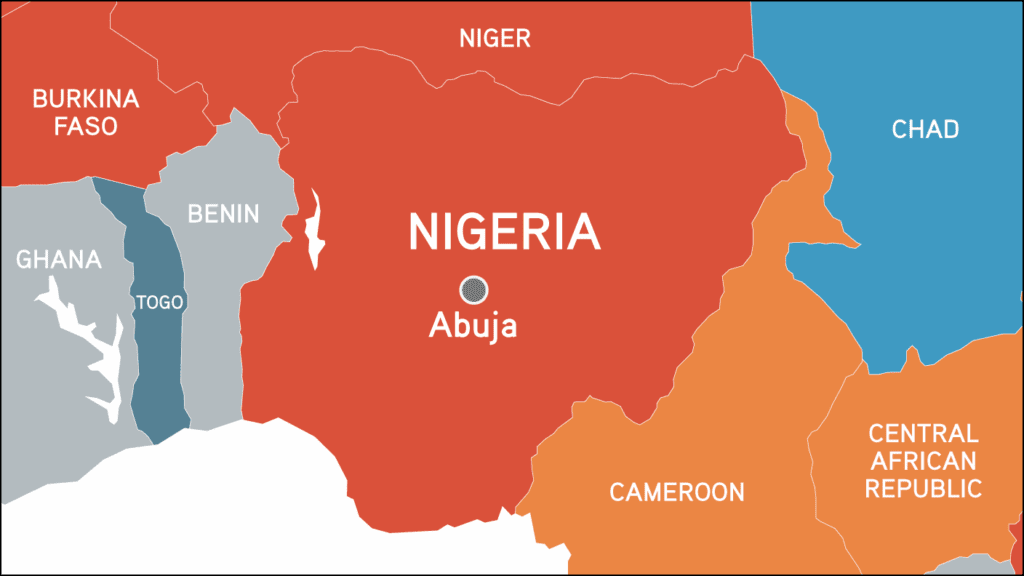
Escalating attacks by armed bandit groups, as well as violence by Boko Haram and the so-called Islamic State in West Africa, leave civilians in Nigeria at risk of atrocity crimes. An increase in airstrikes by the Nigerian military against armed groups also poses a direct risk to civilians.
For over 15 years, civilians in Nigeria have faced multiple security threats due to attacks by various non-state armed groups, as well as inter-communal violence in various parts of the country.
Recurrent violence between herding and farming communities over scarce resources has escalated in central and north-west Nigeria. Largely in response to these growing tensions, armed groups and gangs, including so-called “bandits,” have formed and expanded over the past decade. Such groups have perpetrated murder, rape, kidnapping and organized cattle-rustling, possibly amounting to crimes against humanity. Bandits sometimes occupy vast swaths of farmland, prompting farmers to abandon their land out of fear. Inter-communal violence has sharply risen in north-central Plateau and Benue states since 2025 while inter-communal tensions have also newly emerged in Kwara State.
The armed extremist group Boko Haram launched an insurgency in northern Nigeria in 2009 to establish an Islamic state. Since then, tens of thousands of people have been killed and over two million displaced. The group, and its splinter faction, the so-called Islamic State in West Africa Province (ISWAP), have carried out widespread abuses, including suicide bombings, mass abductions, torture, rape, forced marriages, recruitment of child soldiers and attacks on government infrastructure, education, traditional and religious leaders, and civilians. In recent years, both groups have escalated their campaigns, launching daily attacks on civilians and security forces, particularly in their strongholds in Yobe and Borno states.
Thousands of children have been abducted or kidnapped since 2014, largely in mass abductions targeting schools. Armed extremist groups, including Boko Haram and ISWAP, as well as local bandits, often use kidnappings to generate ransom or to recruit children. Survivors face lasting trauma, stigma and inadequate support. In September 2025 the UN Committee on the Elimination of Discrimination against Women found Nigeria responsible for grave and systematic violations of women and girls’ rights linked to ongoing abductions and failure to protect schoolchildren.
Nigerian security forces have reportedly committed human rights violations during counterterrorism operations, including extrajudicial killings, rape, torture, use of excessive force and arbitrary detentions. The government has also intensified military operations in affected areas, including through indiscriminate airstrikes, which have resulted in hundreds of civilian casualties.
In December 2020 the Chief Prosecutor of the International Criminal Court (ICC) concluded a preliminary examination into Nigeria, finding reasonable grounds to believe Boko Haram and Nigerian security forces committed war crimes and crimes against humanity.
Mass abductions by armed groups continue unabated across Nigeria. In March suspected Islamist militants attacked the town of Ngoshe in northeastern Borno State, reportedly abducting more than 300 civilians and killing many others. A renewed wave of school abductions spread fear across both northeastern and southwestern Nigeria, as at least 82 schoolchildren were kidnapped during coordinated attacks on schools in Borno and Oyo states during May. In June armed groups kidnapped at least 39 people in Zamfara State and 36 students in Borno State.
Airstrikes conducted as part of counterterrorism and anti-banditry operations are exacting a devastating toll on civilians. In April a Nigerian Air Force strike on a crowded market in Jilli village reportedly killed 200 civilians. Weeks later, another airstrike hit the busy Tumfa market in Zamfara State, reportedly killing at least 100 civilians, including many women and girls. As incidents of mass civilian casualties linked to military operations continue to mount, human rights organizations have warned of an alarming pattern in which communities already threatened by armed groups increasingly find themselves caught between insurgent violence and indiscriminate state responses. Meanwhile, the United States (US) and Chad continued airstrikes against alleged Islamic State-linked targets across Nigeria and the Lake Chad Basin, reportedly intending to curb abductions and other activities of armed groups.
In addition to civilian casualties caused by airstrikes, reports have also emerged of attacks targeting ethnic Fulani. Armed groups operating alongside Nigerian security forces reportedly carried out deadly attacks amid accusations that Fulani communities were collaborating with armed Islamist groups. In Niger State, coordinated raids in May reportedly killed scores of Fulani herders.
Large-scale and persistent violence and abductions are gradually becoming normalized across northern Nigeria. Armed groups are increasingly using abductions to fund other crimes and control villages in the mineral-rich northwestern region.
The resurgence of suicide bombings in Borno State and attacks in Yobe State have raised significant concerns about the security situation. Smaller factions stemming from Boko Haram complicate the accurate identification of armed groups responsible for attacks, posing ongoing challenges to respond effectively to threats against civilians. The deteriorating security situation in Kwara State underscores Nigeria’s deepening protection challenges. Its geographic location as a bridge to south-western Nigeria increases the risk that insecurity will spread further south.
Nigeria’s armed forces have been deployed in two-thirds of the states in the country and are overstretched as Boko Haram, ISWAP and bandit groups continue to expand their areas of operation. Authorities are struggling to contain escalating inter-communal violence, including in Benue and Plateau states. As Nigeria’s military has increasingly relied on airstrikes to confront armed groups, its forces have perpetrated deadly, erroneous airstrikes, raising concerns about the military’s identification of legitimate targets and disregard for civilian casualties. While the authorities have issued apologies and acknowledged responsibility for some attacks, minimal steps have been taken to seek justice or accountability or to ensure military operations minimize civilian harm.
Violence between herders and farmers has increased over the past two decades as population growth and agricultural expansion have reduced available grazing land. Climate change and desertification in the north have pushed herders into traditional farming areas, intensifying competition over land use, particularly in the Middle Belt, where these tensions often overlap with ethnic and religious divisions, with settled farming communities being predominantly Christian and herding communities predominantly Fulani Muslim. While armed bandit groups are driven largely by criminal motives, many bandits are ethnic Fulani and prey on farming communities, exacerbating existing ethnic tensions. Boko Haram’s insurgency in the northeast has further compounded these challenges by driving herders into the Middle Belt.
The federal government and state authorities must develop a common strategy that addresses ongoing protection issues for vulnerable populations. The government should utilize the Economic Community of West African States’ (ECOWAS) Early Warning System to increase police and military deployments in vulnerable areas. Nigerian authorities should strengthen civilian harm mitigation measures, including improved intelligence verification, targeting procedures and precautionary steps to ensure compliance with the principles of distinction, proportionality and precaution. The government must urgently reform the security sector, including by incorporating International Human Rights Law (IHRL) and International Humanitarian Law (IHL) into all military and police training, and fully implement the Safe Schools Declaration.
All attacks against civilians must be investigated and perpetrators of atrocities and human rights violations held accountable. The Chief Prosecutor of the ICC must request authorization to open a full investigation into alleged crimes committed by armed extremist groups and government security forces.
Social initiatives and political reforms remain crucial for confronting the root causes of conflict, including poor governance, corruption, poverty and youth unemployment – which have been exacerbated by the worst economic crisis in decades – environmental degradation and climate change. Local peace commissions established to mediate inter-communal tensions and build early warning systems, such as those in Adamawa, Kaduna and Plateau states, need to be replicated in other high-risk regions.
Regional and international actors should support Nigeria’s response to the multifaceted crisis through capacity-building, intelligence-sharing and humanitarian assistance. ECOWAS and the African Union must play a stronger role in facilitating early warning and cross-border security coordination. Nigeria’s international partners, including the US, should ensure that security cooperation programs adhere to IHL and IHRL and do not enable serious human rights violations.
Ralph Bunche Institute for International Studies
The Graduate Center, CUNY
365 Fifth Avenue, Suite 5203
New York, NY 10016-4309, USA