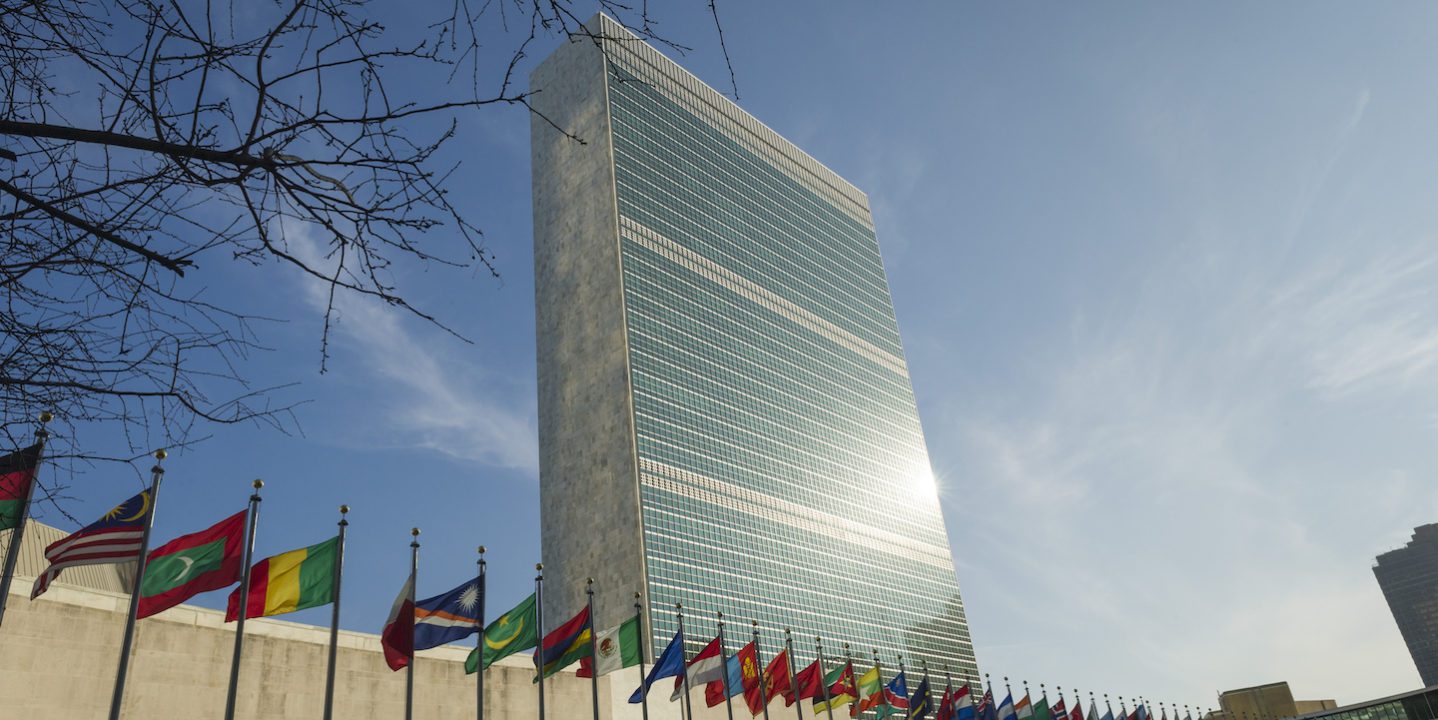
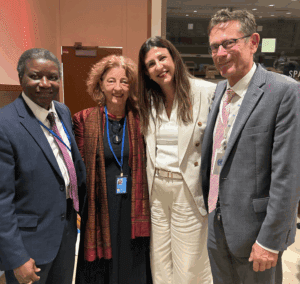
The Global Centre engages closely with the UN Office on Genocide Prevention and the Responsibility to Protect (R2P), maintaining a long-standing and continuous relationship with successive UN Special Advisers on R2P. For more than 15 years, the Global Centre has worked in close partnership with the Special Adviser across New York and Geneva, providing consistent support as Special Advisers have assumed their roles and throughout their tenure – beginning with Edward Luck, followed by Jennifer Welsh, Karen Smith, George Okoth-Obbo and currently Mô Bleeker. This continuity reflects a core institutional contribution to advancing atrocity prevention within the UN system.
Through the Group of Friends of R2P, for which the Global Centre serves as Secretariat, the Centre provides a dedicated platform for the Special Adviser to regularly brief UN member states on emerging risks, policy developments and key initiatives aimed at preventing mass atrocities. These engagements strengthen collaboration between the Office and member states and support informed, timely responses to atrocity risks.
The Global Centre also facilitates the Special Adviser’s engagement with the Global Network of R2P Focal Points. The Special Advisers on R2P have taken part in all R2P Focal Points meetings that the Global Centre has organized.
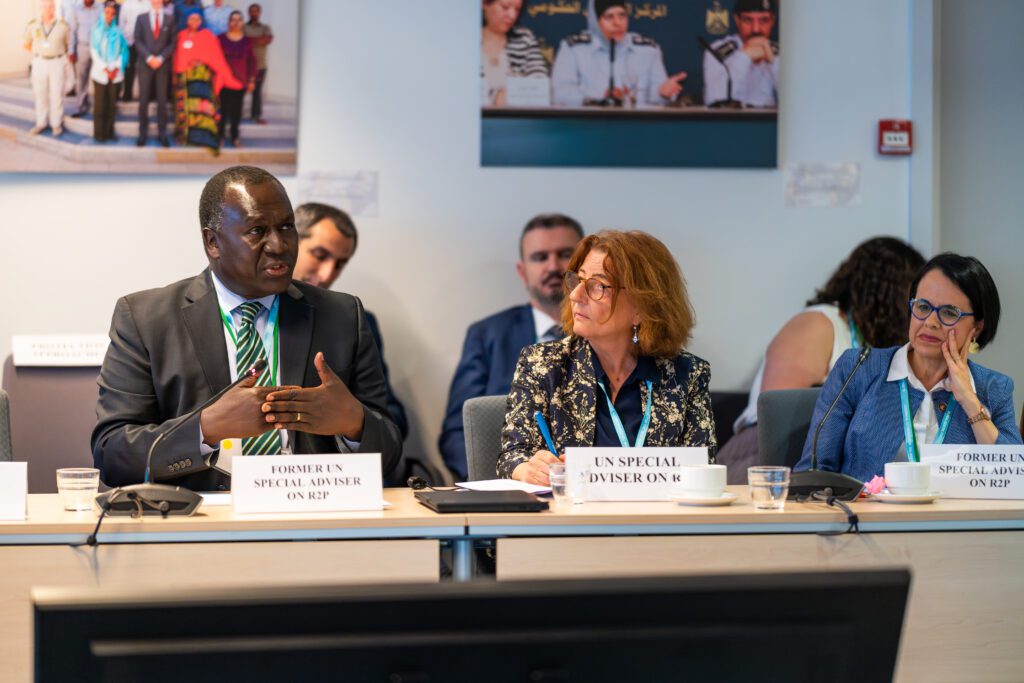
The Global Centre also regularly convenes roundtable meetings and consultations that bring together the Special Adviser, member states, civil society organizations and other stakeholders to explore specific thematic and country-related issues in greater depth. For example, in July 2024 the Global Centre and the Permanent Mission of Switzerland to the UN in New York co-organized a roundtable with the UN Special Adviser on R2P, during which UN Security Council members discussed their role in preventing atrocities. Similar engagements have taken place over many years, underscoring the depth and durability of this partnership. Alongside these formal convenings, the Global Centre also supports the Special Adviser’s engagement with civil society through informal and off-the-record briefings, often in collaboration with other NGOs, on specific country situations, enabling open exchanges and information sharing on early warning and risk analysis.
In addition, the Global Centre has provided substantive input into the UN Secretary-General’s annual report on R2P, including through detailed written submissions and responses to questionnaires. The Centre has supported regional consultations with member states in advance of the report’s publication, contributing to inclusive and informed reflection on the implementation of R2P.
Over the years, the Global Centre has supported and participated in meetings and conferences organized by the Office and taken part in high-level events, including the development of guidance notes and frameworks. In 2025 the Global Centre’s Executive Director and Geneva Director participated in two multi-day consultations convened by the Special Adviser on R2P in developing a guidance note of practice at the Geneva Academy.
 Engagement with the Office of the UN High Commissioner for Human Rights
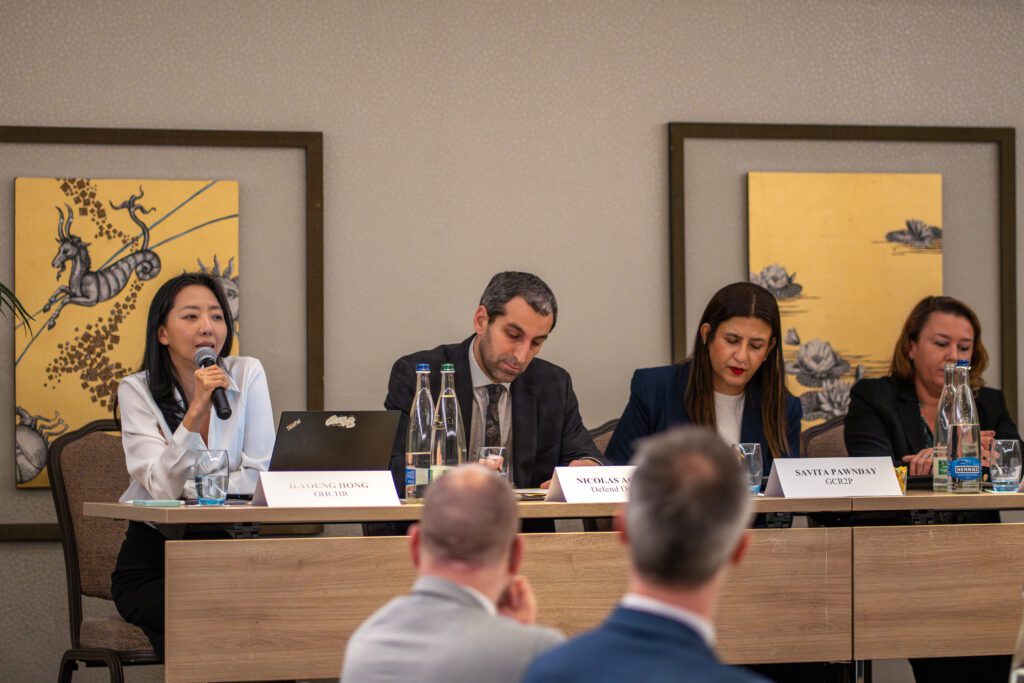
 The Global Centre works with the Office of the UN High Commissioner for Human Rights (OHCHR) on both country-specific and thematic initiatives related to R2P and atrocity prevention. This includes regular engagement with OHCHR country experts and desk officers, including those directly responsible for R2P. Senior OHCHR leadership frequently participates in our events and in meetings of the Group of Friends of R2P and R2P Focal Points.
Where relevant, Global Centre staff also meets with OHCHR leadership in the field to exchange perspectives on ongoing challenges and opportunities to strengthen atrocity prevention efforts – for example, through our engagement with OHCHR leadership in Venezuela and the OHCHR office in Seoul covering the situation in the Democratic People’s Republic of Korea.
Since 2022 the Global Centre, in partnership with the Kingdom of the Netherlands and the Principality of Liechtenstein, has convened an annual training workshop in Geneva for diplomats on Human Rights Council (HRC)-mandated investigative mechanisms and mass atrocity situations. These workshops have been designed and implemented in close coordination with the leadership of the recently established OHCHR Inquiries Branch (formerly the Investigations Support Unit), with which the Global Centre maintains close and regular collaboration.
Leadership from the Inquiries Branch has also participated in various Global Centre convenings, including the 11th Annual Meeting of the R2P Focal Points at the European External Action Service. They have also joined other events, briefings and workshops for cross-regional delegations in Geneva, such as a 2024 confidential roundtable on assessing the impact and effectiveness of HRC-mandated investigations for communities affected by atrocity crimes.
In addition, the Global Centre collaborates closely with country-specific and thematic Special Procedures, Treaty Bodies and their respective staff and Secretariat.
The Global Centre engages with the Executive Office of the UN Secretary-General (EOSG) to support the integration of atrocity prevention and R2P into the UN’s strategic priorities. The Global Centre also facilitates dialogue between the EOSG and member states, ensuring that insights from the Group of Friends of R2P and other stakeholders inform senior-level decision-making.
Through this engagement, the Global Centre identifies gaps, offers recommendations and encourages policy measures that help the EOSG stay informed of emerging challenges and opportunities for coordinated action to prevent mass atrocities. The Global Centre has also provided advice during recruitment processes by offering guidance to ensure that senior UN appointments reflect the expertise and commitment necessary for effective atrocity prevention.
In 2025 the Global Centre engaged with the EOSG on the UN80 reform initiative, contributing expertise and advocacy to inform discussions on strengthening the UN’s institutional capacity for atrocity prevention. This included providing policy recommendations, highlighting lessons learned from past efforts and proposing concrete structural reforms to enhance the UN’s ability to anticipate and respond to emerging threats. By participating in consultations, including quarterly meetings with the Under-Secretary-General for Policy, the Global Centre helps ensure that atrocity prevention remains a central consideration in discussions about the UN’s future and its effectiveness in protecting populations at risk.
The Global Centre has led targeted advocacy to ensure atrocity prevention priorities are embedded in the UN80 reform process. Our interventions, including the publication of a set of concrete recommendations, helped shape how member states and other stakeholders understand and engage with prevention and protection mandates as UN80 deliberations progressed. High profile media commentary, including a Devex article by Executive Director Savita Pawnday and our International Advisory Board member Natalie Samarasinghe, underscored that UN80 reforms must reaffirm the UN’s founding purpose – protecting civilians and preventing mass atrocities. Other media engagements, including a feature on Channel Africa, amplified the urgency of upholding human rights in structural reform amid shifting geopolitical dynamics.
To advance member state engagement, the Global Centre convened the Group of Friends of R2P in New York with the Chair of the UN80 Task Force and a member of the UN80 Secretariat from the Executive Office of the Secretary-General. This exchange deepened delegations’ understanding of how UN80 intersects with the UN’s human rights, protection and prevention mandates, particularly those of the Special Advisers on the Prevention of Genocide and R2P. In October 2025 the Global Centre’s Geneva Director briefed member states in a confidential roundtable organized by the Kingdom of the Netherlands and the International Commission of Jurists, ensuring that atrocity prevention and accountability considerations were factored into member state preparations for UN80.
To mobilize global civil society efforts, in September 2025 Global Centre staff briefed members of the International Coalition for R2P, which is comprised of over 75 organizations from across the world.
The Global Centre has sought to understand the gaps that lead to failure in effectively protecting populations from mass atrocity crimes during peace operations. Past failures to respond to early warnings in situations marked by mass atrocities – including, for example, South Sudan, Democratic Republic of the Congo, Central African Republic and elsewhere – have undermined peacekeepers’ ability to prevent or halt such crimes. These failures highlighted the need to develop the capacity of peacekeeping personnel to conduct threat assessments that consider the risk factors for atrocity crimes.
The Global Centre has worked toward addressing these gaps through several activities aimed at improving threat assessments and familiarizing policymakers and peacekeepers to the importance of identifying early warning signs for atrocity crimes. Through workshops, trainings and engagement with the Department of Peace Operations, the Global Centre has developed a new approach to assessing the threat to populations in a peacekeeping context.
The Global Centre has sought to improve DPO’s understanding of the value-add of R2P and the atrocity prevention lens by including DPO staff in meetings and workshops on improving civilian protection from mass atrocities, while also providing the Department with regular bilateral briefings.
One outcome of this enhanced engagement was the inclusion of a section on “Integrating indicators of potential mass atrocities” within the chapter on “Identifying and Prioritizing POC Threats and Risks” in the 2020 Protection of Civilians in United Nations Peacekeeping Handbook. This section explains that as a mission produces assessments of protection threats to populations, it should integrate and monitor indicators of mass atrocity risks.
The Global Centre engages with the UN Office for the Coordination of Humanitarian Affairs (OCHA) through monthly Protection of Civilians (POC) meetings, contributing our expertise and insights on atrocity prevention to NGO and UN agency participants. The Global Centre also receives information on a broad range of policy initiatives related to the protection of civilians, extending beyond OCHA, which helps inform our advocacy and policy work. These topics include protection following the departure of UN peacekeeping missions, civilian-centered approaches, POC in a changing world and the UN Agenda for Protection.
Global Centre staff also participate in meetings and events during the annual Protection of Civilians Week (led by OCHA), provide talking points ahead of the UN Security Council’s annual open debate on the Protection of Civilians and issue statements on World Humanitarian Day to ensure atrocity prevention and civilian protection remain central to global discussions and policy debates.
Ralph Bunche Institute for International Studies
The Graduate Center, CUNY
365 Fifth Avenue, Suite 5203
New York, NY 10016-4309, USA