25 July 2024
Event Summary
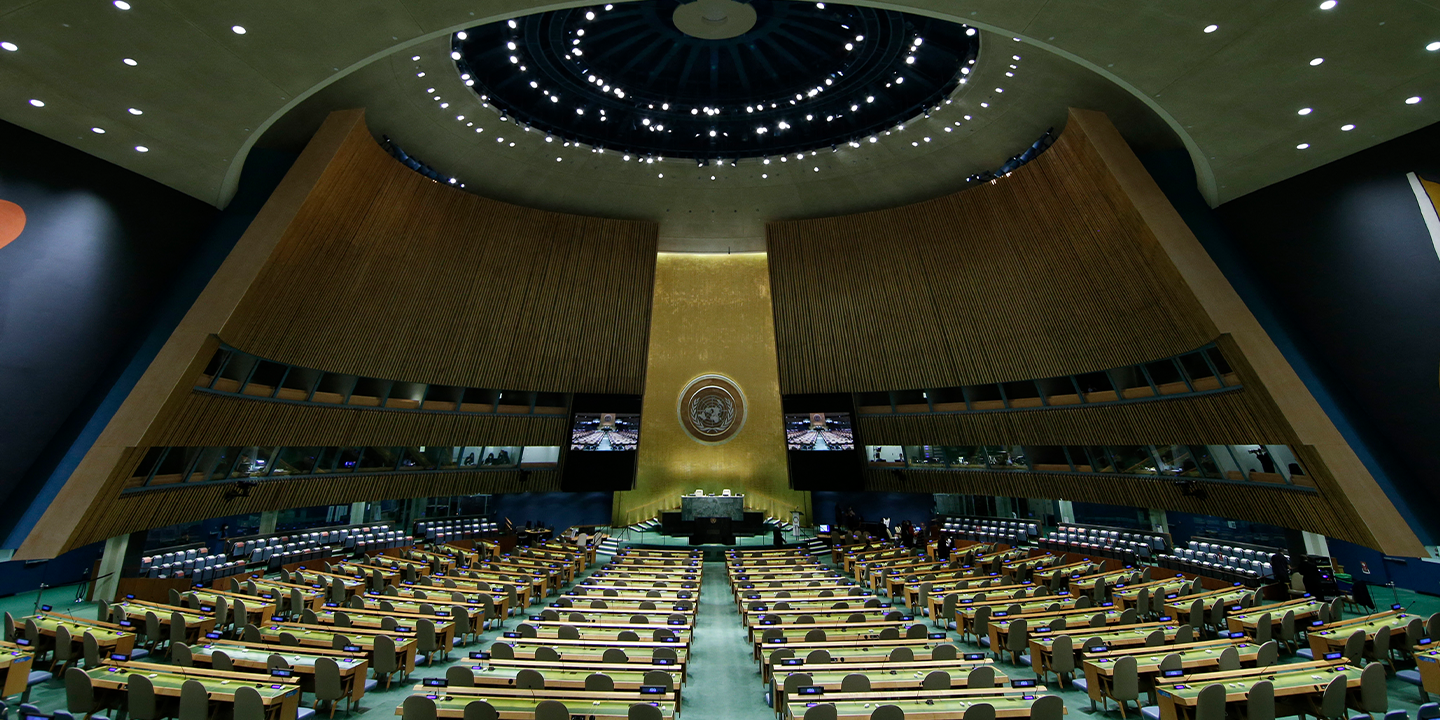
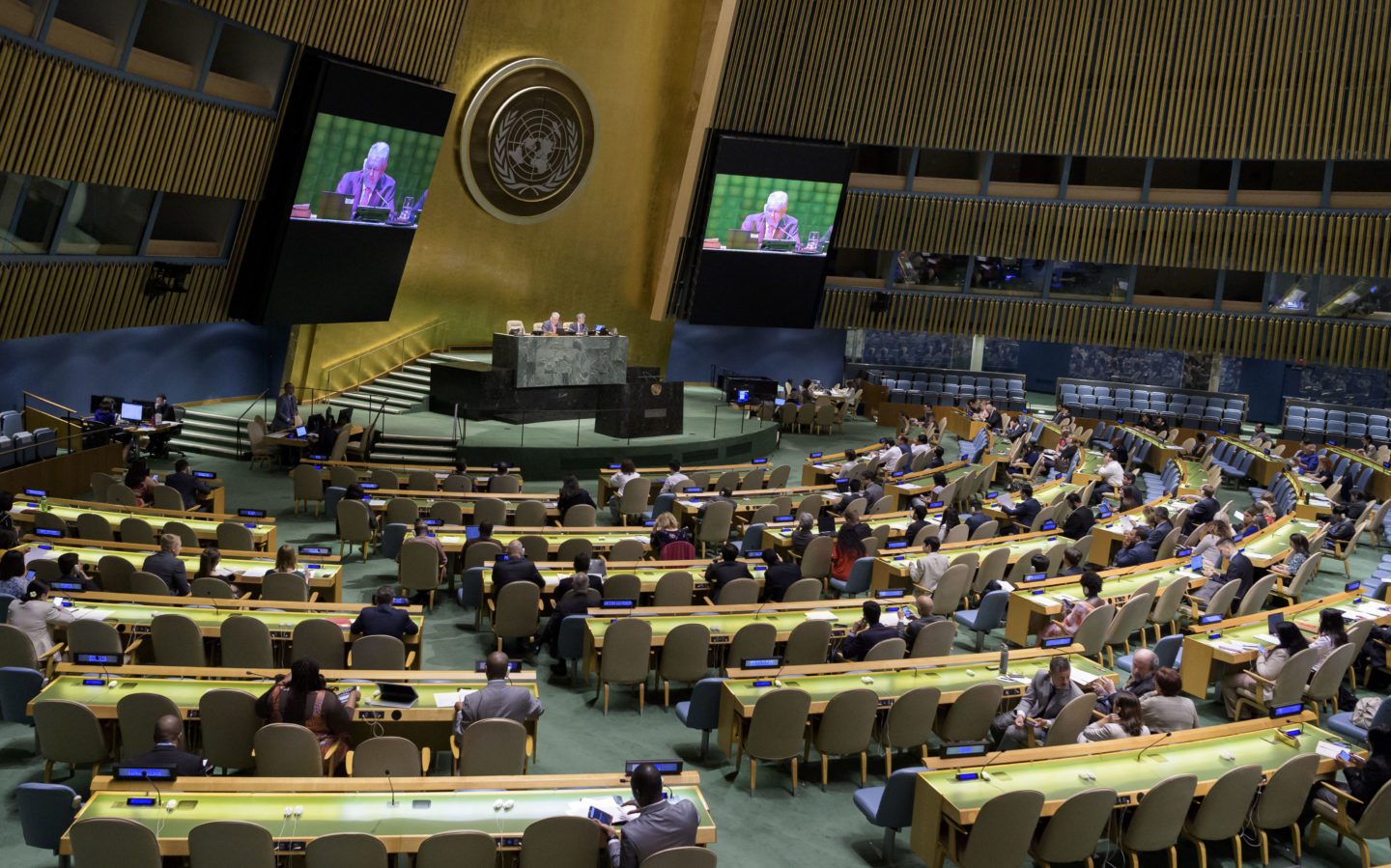
The UN General Assembly held a plenary meeting on the “Responsibility to Protect (R2P) and the prevention of genocide, war crimes, ethnic cleansing and crimes against humanity” on 6 July as part of the formal agenda of its 80th session. This year’s debate marked the 17th time the General Assembly met to discuss R2P and the 9th time the issue was considered during a formal plenary meeting. During the meeting, 50 member states and two (sub) regional organizations – the European Union (EU) and the Intergovernmental Authority on Development (IGAD) – spoke on behalf of 89 countries.
This year’s debate took place at a moment of profound uncertainty for the international community. Around the world, devastating conflicts and atrocity crimes continue to unfold amid growing geopolitical fragmentation, shrinking civic space and unprecedented levels of humanitarian need. At the same time, many of the institutions designed to prevent and respond to crises and protect populations from atrocity crimes are under immense strain.
The UN itself is undergoing a period of significant reflection and change. As the UN80 process gathers momentum and the selection process for the next Secretary-General gets underway, the UN is considering how best to adapt to an increasingly complex global landscape while strengthening its ability to prevent crises, protect populations from atrocity crimes and uphold the principles of the UN Charter.
The UN General Assembly has held eight informal interactive dialogues on R2P (2010-2017) and nine debates (2009, 2018-2019 and 2021-2026). No debate or informal dialogue was held in 2020 due to the COVID-19 pandemic. Since 2009, 141 states, six regional organizations or groupings and two Groups of Friends (Group of Friends of R2P and the Group of Friends in the Defense of the UN Charter) have spoken in a debate or dialogue on R2P on behalf of 179 states.
Ahead of the debate, the UN Secretary-General issued the 18th report on the R2P titled “Sustained implementation of the responsibility to protect at the national, regional and multilateral levels.” The report reflects on lessons learned in operationalizing R2P and emphasizes the need to strengthen implementation through sustained national, regional and multilateral policies and practices. Amid escalating armed conflicts, deepening geopolitical fragmentation and growing disregard for international law, the Secretary-General argues that atrocity prevention cannot remain reactive or episodic. Rather, prevention and protection efforts must be embedded into governance systems and public policy across periods of stability, emerging risk, active crisis and post-conflict recovery. The report outlines practical and policy-oriented approaches for integrating an atrocity prevention lens across institutions and frameworks to strengthen prevention, improve the protection of vulnerable populations and support non-recurrence.
The meeting opened with introductory remarks by Earle Courtenay Rattray, Chef de Cabinet of the Executive Office of the UN Secretary-General. During his remarks Mr. Rattray introduced this year’s report on R2P and highlighted that “The responsibility to protect goes to the heart of our mission at the United Nations. It provides a practical pathway to prevention and peace, rooted in our shared humanity and the dignity of every person.” By acknowledging that “too often, early warning signs are ignored. And responses are often too little, too late,” he called on the international community to “ensure that atrocity prevention and protecting populations becomes a permanent and universal practice everywhere.”
The introductory remarks were followed by interventions from Luxembourg, on behalf of 55 members of the Group of Friends of R2P; the EU, on behalf of its member states and Andorra, Armenia, Bosnia and Herzegovina, Georgia, Montenegro, North Macedonia, Republic of Moldova, San Marino and Ukraine; Estonia, on behalf of Denmark, Finland, Iceland, Latvia, Lithuania, Norway and Sweden; Mexico, on behalf of France; Australia, on behalf of New Zealand, 46 additional member states and one sub-regional organization, IGAD. Twenty-five members of the Group of Friends of R2P also made statements in their national capacity.
This year, Cabo Verde, Madagascar, Suriname and IGAD spoke for the first time in an R2P debate or dialogue. Nine states that have participated in every previous General Assembly discussion on R2P made statements: Australia, Brazil, Costa Rica, Cuba, Iran, the Republic of Korea, Switzerland, the United Kingdom (UK) and the United States.
Many states referred to the deteriorating global conflict landscape, noting that over 120 armed conflicts were recorded worldwide in 2025, some lasting more than 20 years. From December 2024 to November 2025, these conflicts resulted in more than 48,000 deaths, with women and children continuing to bear a disproportionate share of the human cost. Many also expressed concern that civilian fatalities in armed conflicts have continued to rise since 2024, alongside growing humanitarian needs and widespread displacement. The EU, on behalf of its members, warned that these numbers “are not abstractions: they are a daily indictment of our collective failure to act. They make the responsibility to protect not a principle for the history books, but an urgent imperative for today.”
Against this backdrop, many states reaffirmed the continued relevance of R2P as an essential framework for addressing risks of genocide, war crimes, crimes against humanity and ethnic cleansing. Member states argued that the increasing prevalence of protracted conflicts and the mounting human cost highlight the urgent need to strengthen efforts to prevent atrocity crimes before they escalate. The overwhelming majority of speakers therefore reiterated their commitment to paragraphs 138 and 139 of the UN World Summit Outcome Document and emphasized that prevention remains the cornerstone of R2P. The Republic of Korea stressed that “we must ensure that the enduring normative value of R2P continues to guide our collective efforts to prevent atrocity crimes.”
Many speakers also reflected on the state of R2P implementation. The statement by the Group of Friends of R2P highlighted the valuable progress achieved by the UN, member states and other stakeholders, including civil society, noting that “over time, atrocity prevention has become more firmly embedded in national and multilateral frameworks, reflecting a growing recognition that the protection of populations is a shared responsibility that requires sustained attention and institutional commitment.” At the same time, the Group acknowledged that “progress remains fragile, uneven and insufficient,” emphasizing that “continued political will is essential to translate commitment into consistent action.” Many member states likewise highlighted the importance of early warning, timely preventive action, accountability and sustained international engagement, while stressing that the principle requires meaningful implementation rather than political endorsement alone. Costa Rica stressed that “the prevention of atrocities must not be viewed as an exceptional response to crises, but rather as a permanent function of democratic governance, the rule of law and international cooperation.”
Many speakers also warned that the continued erosion of respect for international humanitarian and human rights law threatens the broader normative framework underpinning atrocity prevention. Slovenia cautioned that “when violations of international principles are being normalized, the world’s security and stability are at stake. If one norm is broken, the rest begins to crumble.”
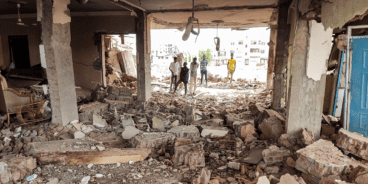
The debate also drew attention to perceived double standards in the implementation of R2P, with 20 speakers, on behalf of 68 states, referring in particular to the situation in Gaza and the Occupied Palestinian Territory. They stressed that the credibility of the principle depends on its consistent, impartial and non-selective application wherever and whenever populations face atrocity risks. Several states argued that uneven international responses risk undermining trust in the international system, calling for the protection of civilians to remain central to all efforts to prevent and respond to atrocity crimes. Suriname stressed that for R2P to retain its moral and legal authority, “it must be applied consistently, objectively and without selectivity. The international community must ensure that responses to atrocity crimes are guided by international law and the gravity of the situation, rather than by geopolitical considerations.”
The format of this year’s plenary also shaped the substance of the debate. Given the limited speaking time, delegations largely concentrated on the Secretary-General’s report and its recommendations, leaving comparatively less opportunity to address a wider range of cross-cutting issues related to R2P. While several important thematic issues – including accountability, the role of UN institutions and emerging technologies – were raised, others received less sustained attention than in previous years, when speakers generally had greater scope to reflect on broader developments in the implementation of R2P and its interlinkages with other UN protection agendas. Notably, very few member states referenced country-specific situations in their interventions this year, marking a departure from previous debates. The situations mentioned during this year’s plenary session were the Middle East and Gaza, Sudan and Ukraine.
Annual report of the UN Secretary-General on the Responsibility to Protect
Forty-two speakers (on behalf of 81 member states, as well as the EU and IGAD) discussed the Secretary-General’s report on R2P. A central theme emerging from the interventions (24 speakers on behalf of 63 member states) was the need to integrate atrocity prevention across all levels of governance.
Speakers elaborated that this integrated approach requires atrocity prevention to be pursued across all stages of the conflict cycle – from periods of stability to crisis and post-conflict recovery – rather than being limited to periods of active crisis. Germany explained that building prevention into every phase can ensure “political attention, institutional preparedness and the willingness to act before risks escalate.” Other delegations also underscored that adopting a comprehensive, long-term approach strengthens resilience, addresses structural risk factors and enables earlier, more effective action to prevent the escalation of atrocity crimes.
The emphasis on integration was reflected in calls to embed early warning, prevention and protection efforts at all levels. Argentina, for example, emphasized that “if early warning, prevention and protection are fully integrated into the objectives of public policies at the national, regional and international levels, effective and, above all, sustainable prevention and protection can be achieved.”
Several delegations likewise stressed that preventing atrocity crimes requires sustained cooperation and dialogue among governments, the UN, regional and subregional organizations, civil society and affected communities. Speakers emphasized that inclusive partnerships strengthen early warning, facilitate timely and coordinated responses and reinforce national ownership of prevention efforts. Several delegations further underscored that meaningful engagement with local communities and civil society is essential for identifying risks, building resilience and ensuring that prevention strategies are responsive to the needs and experiences of those most vulnerable to atrocity crimes. In this context, the UK reiterated that “no country can meet the challenges set out in the Secretary General’s report alone” and highlighted the importance of strengthening collective action with the UN and partners, including through innovative initiatives such as the Coalition for Atrocity Prevention and Justice in Sudan.
Several states also reflected on the broader the challenges facing multilateralism and international cooperation. Indonesia noted that “the principles of international cooperation are currently under strain” and emphasized that “safeguarding the R2P will restore trust in the multilateral system.”
While international cooperation remains indispensable to strengthening atrocity prevention, several speakers also reiterated that the primary responsibility lies with individual states. Many member states underlined that national ownership, political will and the development of effective domestic prevention capacities are essential to fulfilling this primary responsibility. In this context, several delegations highlighted the important role of domestic institutional capacities, including national human rights institutions, in translating R2P commitments into practice. Seven member states (on behalf of 55) underscored that national R2P Focal Points can help mainstream atrocity prevention across government institutions, strengthen coordination among relevant national actors and facilitate cooperation with regional and multilateral counterparts. By expressing support for the report’s recommendations in this regard, Senegal welcomed the integration of “an atrocity prevention lens into national policies, particularly through the designation of national focal points, the strengthening of institutions, the fight against discrimination and the promotion of dialogue with civil society.”
Justice and accountability
Justice and accountability for atrocity crimes have consistently been among the central themes of the General Assembly’s annual plenary meetings on R2P, reflecting the recognition that accountability is integral to both prevention and protection. This year’s debate was no exception, with numerous member states (34 speakers on behalf of 79 states and the EU) reaffirming that ensuring accountability for genocide, war crimes, ethnic cleansing and crimes against humanity is essential for delivering justice for victims and deterring future atrocities. Acknowledging that “accountability lies at the heart of addressing the legacy of atrocity crimes,” Azerbaijan emphasized that it is “indispensable for establishing the truth, preserving the historical record, preventing denial and revisionism, restoring the dignity of victims and survivors, and laying the foundations for genuine reconciliation.”
Delegations emphasized the importance of strengthening national judicial systems while also supporting international and hybrid accountability mechanisms where national authorities are unable or unwilling to prosecute atrocity crimes. Several speakers highlighted the important role of international and hybrid courts and tribunals in combating impunity, delivering justice for victims and upholding international law, with 16 speakers (on behalf of 45 member states and the EU) expressing support for the International Criminal Court and four speakers (on behalf of 12 member states) expressing support for the International Court of Justice.
Twelve speakers, on behalf of 72 member states and the EU, also highlighted the importance of the ongoing negotiations on a Crimes against Humanity Treaty, emphasizing its potential to close a significant gap in the international legal framework for the prevention and punishment of atrocity crimes.
The role of the UN Security Council and other UN organs
The debate also highlighted a shared concern regarding the international community’s repeated failure to prevent or halt ongoing atrocities. Eighteen speakers (on behalf of 73 member states and the EU) addressed the role of the UN Security Council (UNSC) in responding to situations where atrocity crimes are being committed. Most criticized the Council’s inability to take timely and decisive action, asserting that political divisions, including the use or threat of the veto, have too often resulted in paralysis and undermined both the Council’s credibility and the international community’s collective responsibility to protect. Liechtenstein noted, “too often Council action is blocked because of political divisions and the threat or use of the veto, leaving the Council unable to protect anyone or anything, least of all its own credibility.” Several speakers consequently called for stronger multilateral action to ensure that accountability and the protection of populations are not impeded by political deadlock.
Various initiatives aimed at guiding the voting behavior of UNSC members were mentioned by 12 speakers (on behalf of 42 states and the EU), including the ACT Code of Conduct and the French-Mexican initiative on the use of veto in cases of mass atrocities.
Many member states also highlighted the important role of the UN General Assembly (seven speakers on behalf of 70 states and the EU) and the UN Human Rights Council (11 speakers on behalf of 60 states) in advancing accountability and atrocity prevention when the UNSC is unable to act. States emphasized that both bodies help sustain international attention on situations of concern, establish investigative and accountability mechanisms, document violations, support victims and reinforce international norms against genocide, war crimes, ethnic cleansing and crimes against humanity. While recognizing that these bodies cannot replace the UNSC’s primary responsibility for the maintenance of international peace and security, speakers stressed that they play an essential complementary role in promoting accountability, mobilizing political will and helping to ensure that ongoing atrocity situations do not fall into international neglect.
Ten member states also referred to the role of the UN’s peacebuilding architecture in the prevention of atrocity crimes, including the Peacebuilding Commission, and underscored the importance of integrating atrocity prevention considerations into peacebuilding efforts.
In addition, 17 speakers (on behalf of 72 states and the EU) expressed support for the work of the UN Office on Genocide Prevention and R2P (OSAPG) and the key roles of the Special Adviser on the Prevention of Genocide and the Special Adviser on the Responsibility to Protect in advancing efforts to prevent mass atrocities. A few states echoed remarks from previous years, encouraging the OSAPG to speak out when atrocity crimes are being committed or are at risk of occurring and to consistently share early warning assessments across the UN system and with the wider UN membership.
New and emerging technologies
Rapid technological transformation is fundamentally reshaping the landscape of human rights protection and atrocity prevention. Emerging digital technologies have the potential to accelerate analysis and decision-making, enabling the international community to respond to the urgent needs of populations in crisis with unprecedented speed and effectiveness. These technologies are also expanding the capacity of perpetrators to commit atrocities with even greater efficiency and scale.
During this year’s debate, an increasing number of member states (11 speakers on behalf of 18 member states) referred to the risks posed by new and emerging technologies, including the use of artificial intelligence (AI), as well as the spread of misinformation and disinformation. The Republic of Korea warned that “these technologies are reshaping how atrocity crimes are incited, planned and committed.” In this context, the Republic of Korea encouraged the OSAPG “to develop concrete guidance on adapting early warning mechanisms to technology-enabled atrocity risks and to connect this work with the Global Digital Compact.”
Sixteen speakers and the EU (on behalf of 50 member states) further highlighted the dangers posed by hate speech, incitement to violence and discriminatory rhetoric, noting that these can serve as early warning indicators and contribute to the commission of atrocity crimes if left unchecked.
Four speakers (on behalf of 12 member states) also highlighted the risks associated with the growing use of drones, autonomous weapons systems and/or military applications of AI in armed conflicts. Switzerland noted that “these developments raise significant challenges with regard to respect for international law, maintaining appropriate human control, protecting civilians and ensuring accountability” and warned that these new technologies “must in no way be used to justify permissive interpretations of existing legal obligations.”
This year’s General Assembly plenary meeting featured diverse perspectives on addressing challenges in implementing R2P and strengthening collective action for the prevention of mass atrocities. While acknowledging that ongoing atrocities remain a stark reminder of the gap between the promise and reality of R2P, member states engaged in constructive discussions on practical steps to better uphold their individual and collective responsibilities.
As the UN80 process gathers momentum and the selection process for the next Secretary-General is underway, the coming period presents an important opportunity for member states and the UN to reflect on the future direction of the prevention agenda and ensure that atrocity prevention remains a central priority in efforts to strengthen the multilateral system. Croatia stressed that “prevention, protection of civilians, peacebuilding and sustaining peace must remain at the centre of our collective agenda” and expressed the hope that “this understanding will remain central to the vision and priorities of the next Secretary-General.”
The continued implementation of R2P will depend on translating shared commitments into concrete action, reinforcing the tools and institutions available for prevention and ensuring that the protection of populations from atrocity crimes remains a core pillar of the UN’s future agenda.
Ralph Bunche Institute for International Studies
The Graduate Center, CUNY
365 Fifth Avenue, Suite 5203
New York, NY 10016-4309, USA