26 March 2026
Open Letter
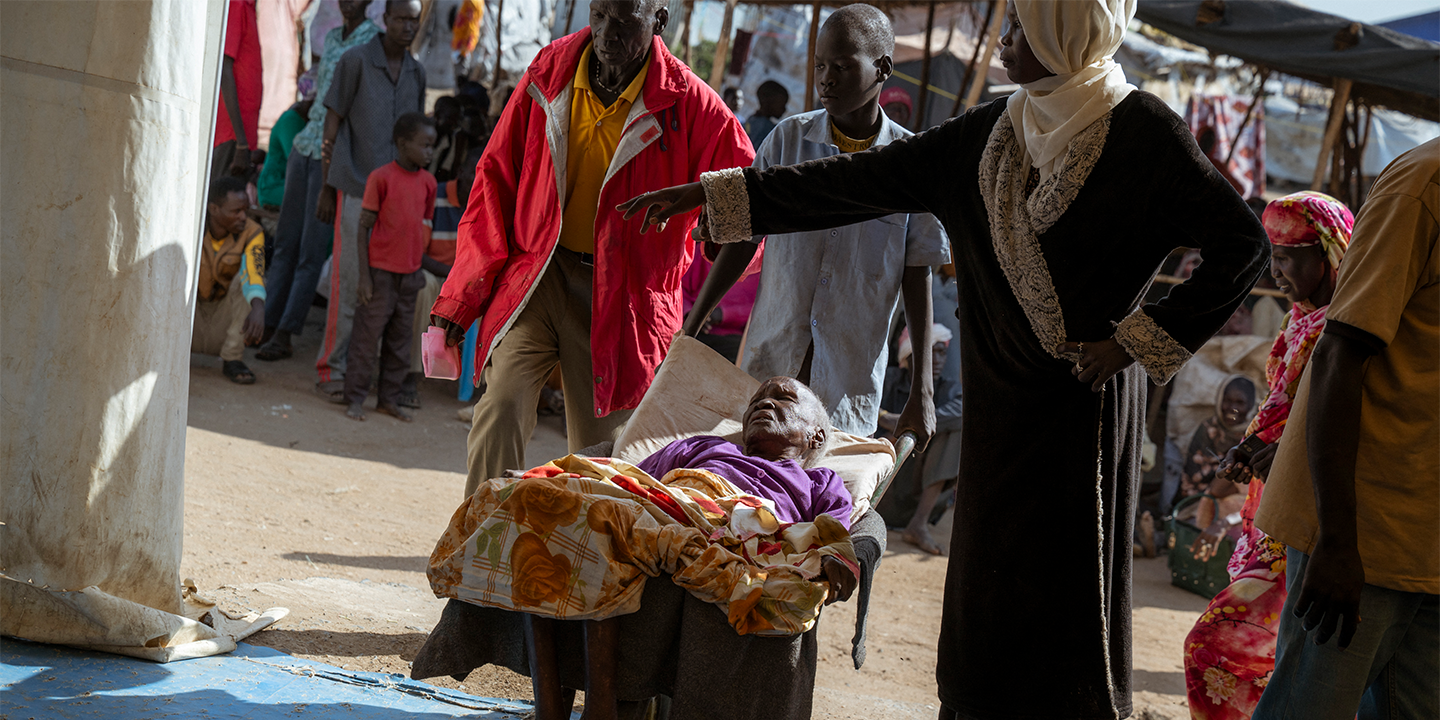
Following the Rapid Support Forces’ (RSF) capture of the besieged city of El Fasher in Darfur, intense fighting in Sudan has shifted eastward, with civilians in the Kordofan region facing sharply heightened atrocity risks. At least 114 people – including 63 children – were killed on 4 December when drones operated by the RSF struck a kindergarten and hospital in Kalogi, South Kordofan. According to the World Health Organization, this death toll includes casualties from the initial strike on the kindergarten, the evacuation of patients to the nearby hospital and subsequent attacks on the hospital itself. In a statement on 5 December, the UN Children’s Fund Representative for Sudan, Sheldon Yett, emphasized that “killing children in their school is a horrific violation of children’s rights” and that “children should never pay the price of conflict.”
After the RSF captured Bara city in North Kordofan on 25 October, hostilities have drastically escalated, with both the RSF and the Sudanese Armed Forces (SAF) carrying out repeated attacks that have disproportionately affected civilian populations. On 3 November an RSF drone strike hit a funeral gathering in El Obeid, North Kordofan, killing an estimated 45 people, most of them women. On 29 November an SAF aerial bombardment struck the town of Kauda in South Kordofan, reportedly killing at least 48 civilians.
The Office of the UN High Commissioner for Human Rights has documented at least 269 civilian deaths from aerial strikes, artillery shelling and summary executions in the Kordofan region since 25 October. On 4 December the UN High Commissioner for Human Rights, Volker Türk, said, “It is truly shocking to see history repeating itself in Kordofan so soon after the horrific events in El Fasher. The international community stood united then, unequivocally condemning the barbarous violations and destruction. We must not allow Kordofan to become another El Fasher.” The surge in violence has also driven mass displacement, forcing more than 45,000 people to flee their homes in search of safety outside Kordofan. Communities in Dilling and Kadugli in South Kordofan remain trapped, with many unable to access humanitarian assistance or safe routes out.
Savita Pawnday, Executive Director of the Global Centre for the Responsibility to Protect, stressed, “Sudan is facing one of the world’s gravest atrocity crises, and civilians are suffering unimaginable harm while the international community fails to respond. The world cannot continue to look away.” The international community, including the UN Security Council (UNSC), must urgently demand an immediate end to attacks on civilians and civilian infrastructure. They must also increase diplomatic pressure on parties to the conflict and their external supporters to demand compliance with international law and to discourage the provision of weapons, drones and logistical support that enable these violations. The UNSC must expand targeted sanctions, travel bans and asset freezes against individuals and entities responsible for widespread attacks on civilians and hold those responsible to account.
Heavily armed gangs continue to inflict widespread suffering on communities in Haiti’s central Artibonite department amid a series of attacks in recent weeks. On 29 November gang members, reportedly from the Gran Grif gang, launched a full-scale assault on the rural town of Pont-Sondé, killing at least 12 civilians, injuring 20 others and destroying or burning dozens of homes. The true toll remains unclear as many families are still missing. Witnesses reported gang members sweeping through neighborhoods, firing into homes and executing residents attempting to flee.
Local authorities estimate that at least 98 percent of residents of Pont-Sondé have fled. Displaced families now shelter in makeshift or overcrowded sites in Desdunes and Grande Saline, lacking clean water, sanitation, food and psychosocial support. Gunmen reportedly returned to Pont-Sondé on 1 December, ransacking homes and terrorizing families that remained. In nearby L’Estère, the Kokorat San Ras gang also attacked, extending fear across lower Artibonite.
Gran Grif is the largest and one of the most predatory gangs operating in Artibonite. Prior to the latest violence in Pont-Sondé, Gran Grif carried out a massacre in October 2024 that killed 115 civilians and injured over 350 – one of the largest assaults on civilians in decades. Its leader, Luckson Elan, was recently sanctioned by the UN Security Council and United States government.
Residents across the region have repeatedly reported delayed or absent police response, even as limited deployments from the UN-mandated Gang Suppression Force (GSF) continue. Days before the latest assaults, Elan posted threats online; residents said these warning signs went unheeded. Gang members reportedly remain entrenched in the mountainous Poterie area near Pont-Sondé, where they aim to establish a base and extortion checkpoint.
This latest offensive is part of a growing pattern of attacks on rural communities in the once peaceful Artibonite department. Gran Grif and allied gangs have looted farms in Haiti’s breadbasket region and displaced thousands. Gangs are increasingly challenging the limited response capacity of the Haitian National Police (HNP) and the GSF as they expand territorial control. The HNP estimates that nearly 50 percent of Artibonite is now under gang control. Killings have risen sharply in the Artibonite and Centre departments this year, with 1,303 victims reported from January to August, compared with 419 during the same period in 2024.
Christine Caldera, Haiti expert at the Global Centre for the Responsibility to Protect, said, “To prevent further atrocities in Haiti, the international community must urgently disrupt the flow of weapons enabling these attacks, strengthen early warning and rapid response mechanisms and ensure that civilians in high-risk communities receive immediate protection.” The international community should also scale up funding for the UN’s humanitarian appeal for Haiti and support aid agencies providing shelter, assistance and psychosocial care to those fleeing targeted violence.
On 2 December the UN Refugee Agency (UNHCR) warned of a sharp resurgence of violence across northern Mozambique. The so-called Islamic State in Mozambique (ISM), also known locally as “Al-Shabaab,” has shifted tactics in 2025, launching coordinated, simultaneous attacks that spread beyond their stronghold in Cabo Delgado into Nampula – the neighboring province to the south – marking the most sustained activity in Nampula to date. According to the Armed Conflict Location & Event Data Project, ISM operations reached their highest level on record in November, with 16 events in the first three weeks and the highest monthly fatality rate since insurgent activity was first recorded in Nampula in 2022.
Civilians are bearing the brunt of the renewed and intensifying attacks. Xavier Créach, Deputy Director for UNHCR and Head of the Protection Service in the Regional Bureau for West and Central Africa, described how “civilians were killed, some even beheaded… people had to flee at night in the most chaotic manner.” Reports point to systematic abuses, including summary executions, abductions and targeted attacks on infrastructure. The UN Children’s Fund has also received reports of widespread grave violations against children, including abduction and recruitment and use.
The resurgence and increase in insurgent activity, alongside the group’s rapid expansion, underscore how ISM has adapted its tactics from hit-and-run, more limited methods to sustained widespread violence and civilian targeting. ISM’s repeated incursions into Nampula are possibly motivated by the need for additional resources and recruits, as well as strengthened supply lines. Likewise, significant counterinsurgency operations by the Mozambican and Rwandan forces have increased pressure on ISM positions on the coast of Cabo Delgado.
These evolving tactics have directly contributed to a worsening humanitarian situation. Days after UNHCR’s warning, the UN Office for the Coordination of Humanitarian Affairs reported that the prolonged and intensifying attacks have triggered one of the largest displacement surges in the country this year. According to the UN, 107,000 people – two thirds of them children – have fled their homes in recent weeks, bringing the number of internally displaced to 330,000 in just four months. Nearly 90 percent of those newly displaced have already fled at least once this year. Overcrowded displacement sites face significant protection concerns and there have already been reports of gender-based violence and rising numbers of children who are unaccompanied or separated from their families.
The scale and pace of displacement require significantly increased humanitarian funding to meet critical needs, including food, shelter, water and medical support. Early warning systems must be supported to anticipate and respond to escalating attacks on civilians and inform protection strategies amid ISM’s southward expansion. Mozambique’s security forces and regional partners must ensure the protection of civilians and internally displaced persons in Cabo Delgado and Nampula, strengthening their coordination to close protection gaps in strict adherence to international law.
Ralph Bunche Institute for International Studies
The Graduate Center, CUNY
365 Fifth Avenue, Suite 5203
New York, NY 10016-4309, USA