26 March 2026
Commentary

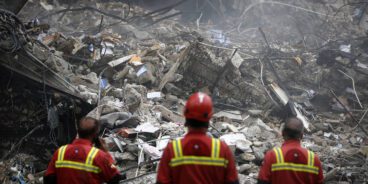
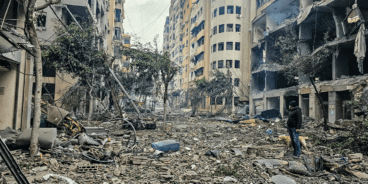
On 2 March, just two days after the United States and Israel initiated a joint military campaign against Iran, Israel launched an extensive attack against Lebanon. The escalation followed missile strikes by Hezbollah towards Israel in retaliation for the killing of Iran’s supreme leader, Ayatollah Ali Khamenei. Israeli forces have since carried out raids in southern Lebanon, with tens of thousands of reservists on standby, and launched airstrikes across the country, including on residential buildings. At least 570 people have been killed, including over 80 children. While visiting the border with Lebanon on 5 March, Israeli Finance Minister Bezalel Smotrich announced that Dahiyah, a district south of Beirut, would soon “look like Khan Younis,” referencing the heavy-handed devastation inflicted on Gaza’s southern city.
Over 700,000 people in Lebanon have already been displaced due to ongoing hostilities, nearly 30 percent of whom are children, according to the UN. Since the start of the assault, the Israeli government has issued a series of mass evacuation orders for populations in Lebanon, including for residents of Beirut’s southern suburbs, the Bekka region and areas south of the Litani River. The Office of the UN High Commissioner of Human Rights stressed that these orders risk “amounting to prohibited forced displacement” under International Humanitarian Law (IHL) and emphasized that Israel’s offensive is bringing “more misery and suffering to an already weary population.” Israel has established a pattern of disregarding and abusing IHL, including through warped interpretations of the stringent protective regulations on evacuation orders.
According to Human Rights Watch (HRW), Israel unlawfully used white phosphorus munitions on residential areas of south Lebanon on 3 March. HRW has documented Israel’s repeated widespread use of white phosphorus – a deeply harmful incendiary substance – on civilian areas in Lebanon since October 2023, as well as in highly populated areas of Gaza since 2009.
Three peacekeepers of the UN Interim Force in Lebanon (UNIFIL) were injured on 6 March following Israeli airstrikes on their base. UNIFIL reaffirmed that attacks on peacekeepers may amount to war crimes.
Hezbollah has also continued to launch attacks on Israeli forces in southern Lebanon and fire rockets across several cities in Israel, killing at least one person and injuring over a dozen.
Israel and Hezbollah must adhere to their obligations under IHL. Israel should immediately withdraw its ground incursion and repeal mass displacement orders in Lebanon. All states, including UN Security Council members, must denounce violations of international law, facilitate mediation between the parties and press for a halt to Israel’s offensive. States providing Israel with weapons must immediately suspend military assistance and arms sales, including white phosphorous.
Suspected Islamic militants attacked the town of Ngoshe in Nigeria’s northeastern Borno State between 4 and 6 March, reportedly abducting more than 300 civilians, including women and children, and killing many others. Police spokesperson Nahu Daso Kenneth told news agencies that authorities could not yet confirm the number of victims and that no group has claimed responsibility for the attack. Local officials reported that militants seized control of the town for two days until being forced out by the military and that they also targeted a nearby military base and a camp for internally displaced persons.
The military responded to the attack with both airstrikes and ground troops, reportedly killing many assailants, as well as civilians, including local elders and religious leaders, according to news reports. In a statement following the attack, President Bola Tinubu said he “mourns the loss of innocent lives, including military personnel, and those caught in friendly fire during the aerial interdiction of fleeing terrorists.”
The attack in Ngoshe reflects a broader pattern of large-scale kidnappings and attacks on civilian areas, including displacement camps and schools. Mass abductions have become an increasingly common tactic used by militant groups to exert control, generate revenue through ransom and spread fear among communities. The military response was also consistent with a pattern of Nigeria’s security forces countering insurgent violence with measures marked by civilian protection concerns. Security forces have previously been implicated in abuses, including airstrikes that have killed civilians, often without credible investigations or accountability.
Borno State has long been the epicenter of Nigeria’s Islamist insurgency. Armed groups such as Boko Haram and its splinter faction, the so-called Islamic State West Africa Province, target civilians and military installations across northeastern Nigeria. Other groups, including the Islamic State-linked Lakurawa and various bandit groups, have also carried out kidnappings for ransom and attacks in northwestern and north-central Nigeria.
Persistent gaps in state presence, porous borders and weak regional coordination have created conditions that these groups exploit. The assault highlights the chronic insecurity in Borno State despite efforts to strengthen security. The United States has conducted intelligence-gathering flights over Borno since late 2025 and has provided training, logistical assistance and advisory support to the Nigerian military.
Federal and state authorities must urgently implement coordinated civilian protection strategies, including strengthening early warning and rapid response mechanisms, expanding community-based protection initiatives and ensuring prompt, impartial investigations into attacks on civilians. The government should also address underlying drivers of violence, including weak governance, impunity, poverty and limited protection in rural areas, to reduce the risk of further atrocities.
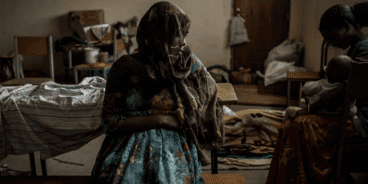
On 6 March Amnesty International released a report documenting evidence that members of the Oromo Liberation Army (OLA) armed group have subjected women and girls in Ethiopia’s Oromia region to abuses that may amount to war crimes. The abuses are linked to the ongoing conflict between government forces and the OLA, which began in 2019 and continues to inflict severe suffering on civilians.
Based on survivor testimonies, the report documents rape, gang rape, sexual slavery, summary killings and the destruction of civilian property by OLA fighters between 2020 and 2024. Some women were held captive for days or weeks. In one case, when a family resisted OLA fighters’ attempt to abduct their daughter, the fighters killed her father. The girl, who was abducted with her mother, said, “They used to rape us every day, twice a day… They used to tell me, ‘You will die. You will never return home.’” Many survivors were forcibly displaced and continue to suffer severe physical and psychological trauma while struggling to access medical care or justice.
These abuses are occurring amid severe restrictions on humanitarian access and independent monitoring in Oromia. Federal government restrictions have limited access for humanitarian agencies, human rights monitors and independent media, obscuring the full scale of violations against civilians.
Despite these restrictions, the report adds to growing evidence of abuses by the OLA, including extrajudicial executions, summary executions, enforced disappearances, sexual and gender-based violence and use of child soldiers. The Office of the UN High Commissioner for Human Rights has also reported violations by the Ethiopian federal forces such as attacks on civilians and civilian infrastructure, including drone strikes targeting individuals perceived to support the OLA.
These dynamics are unfolding amid growing regional tensions between Ethiopia and Eritrea, former adversaries turned allies in the 2020-2022 war. Relations have recently deteriorated as both countries have publicly exchanged statements around Ethiopia’s aspirations for port access.
The Global Centre for the Responsibility to Protect’s Horn of Africa expert, Sarah Hunter, warned, “The international community cannot afford to look away as patterns of violence against civilians continue in Ethiopia. The devastating abuses committed during the 2020-2022 conflict in Tigray should have been a warning, yet civilians in Tigray, Oromia, Amhara and beyond continue to face serious abuses amid ongoing fighting between federal forces and armed groups. With tensions rising across the Horn of Africa, a return to broader conflict would place millions of already vulnerable people at even greater risk. Preventing further atrocities requires urgent diplomatic engagement, increased monitoring and a clear commitment to protecting civilians.”
Ralph Bunche Institute for International Studies
The Graduate Center, CUNY
365 Fifth Avenue, Suite 5203
New York, NY 10016-4309, USA