23 February 2026
Open Letter
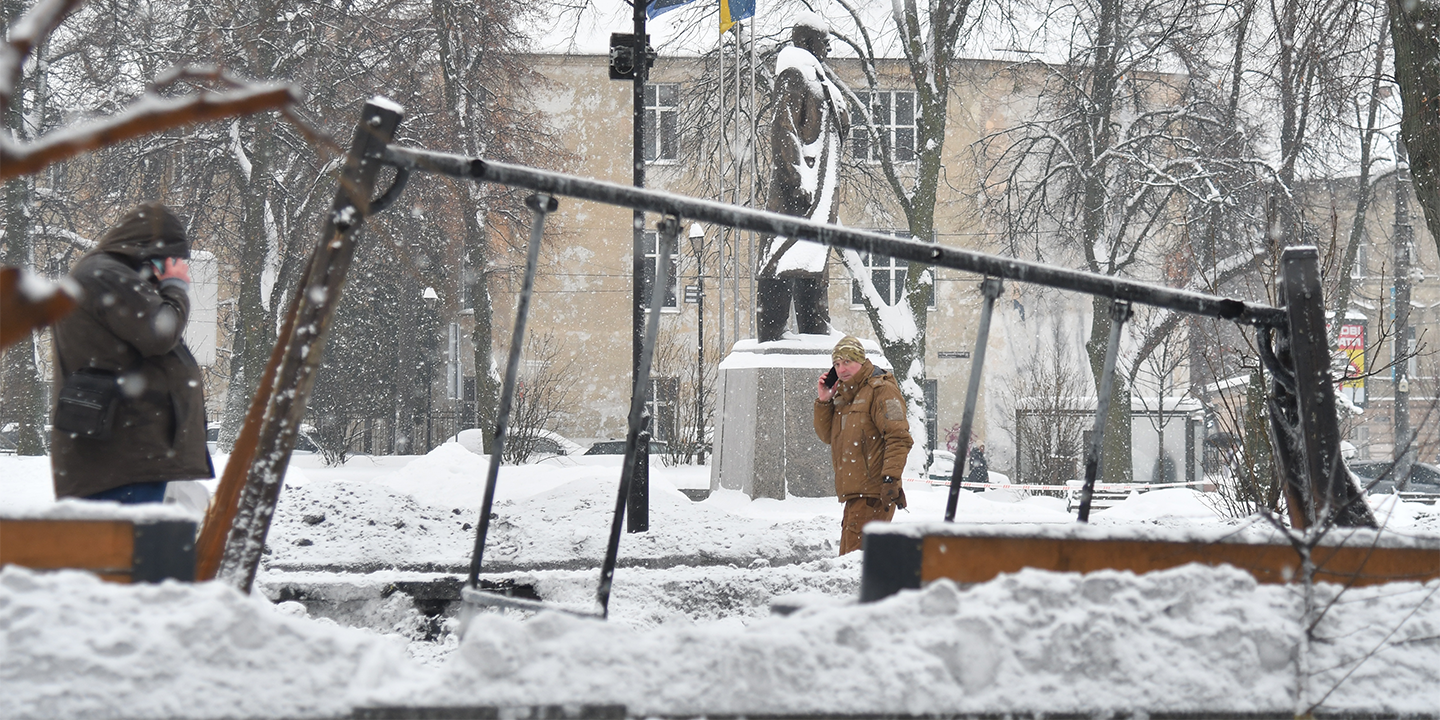
Since the start of 2026 Russian forces have intensified attacks on Ukrainian civilians and civilian infrastructure, deepening the humanitarian catastrophe and raising serious concerns about escalating atrocities. On the night of 19 to 20 January, more than 300 Russian drones struck the Sumy, Kharkiv, Dnipro, Zaporizhzhia, Khmelnytskyi and Odesa regions, killing at least two civilians and injuring dozens. Earlier, between 8 and 9 January, Russia reportedly launched 242 drones and 36 missiles.
These attacks form part of a broader campaign of mass aerial assaults to damage power grids, substations and electricity generation facilities essential for civilian survival. Evidence indicates a sustained pattern of large-scale drone and missile strikes deliberately targeting critical energy infrastructure during winter. The timing and scale of these attacks – particularly against electricity and heating systems during sub-zero conditions – indicate a deliberate strategy to increase civilian suffering. Ukrainian President Volodymyr Zelensky reported that Russia launched approximately 1,300 drones between 11 and 18 January alone, underscoring the systematic nature of the campaign. Targeted attacks on civilians and civilian infrastructure are prohibited under international law and likely amount to war crimes.
The UN High Commissioner for Human Rights, Volker Türk, noted that 80 percent of those affected by the latest strikes had only recently had electricity restored following the strikes on 9 January. Civilians continue to flee frontline areas under dangerous conditions, particularly from the Donetsk region, with many arriving in safer areas in need of shelter, medical care and winter assistance.
According to the UN Human Rights Monitoring Mission in Ukraine (HRMMU), at least 14,656 civilians have been killed since Russia’s full-scale invasion began in February 2022. Civilian casualties increased by 31 percent in 2025 compared to 2024. The Head of the HRMMU, Danielle Bell, stated that this deterioration in civilian protection is driven not only by intensified frontline hostilities, but also by the growing use of long-range weapons that expose civilians across Ukraine to heightened risk.
Sarah Hunter, Ukraine expert at the Global Centre for the Responsibility to Protect, said, “The international community must urgently act to halt the targeting of civilians and protect life-sustaining infrastructure in Ukraine. This requires the immediate strengthening of Ukraine’s air defense capabilities, including systems specifically designed to intercept drones and missiles targeting civilian areas and energy facilities, as well as closing loopholes that allow dual-use technologies and components to reach the Russian military through sanctions evasion. Without decisive, coordinated action, continued impunity will only embolden further attacks, deepen civilian suffering and entrench a pattern of atrocities that undermines the foundations of international humanitarian and human rights law.”
On 6 January clashes erupted in Aleppo between Syria’s transitional government forces and the Kurdish-led Syrian Democratic Forces (SDF). The fighting constituted one of the most significant escalations in the thirteen months since former President Bashar al-Assad’s fall and were the culmination of escalating clashes since December 2025 after negotiations stalled following a missed deadline to implement a March agreement providing for a nationwide ceasefire and the SDF’s integration into Syria’s army.
A United States-mediated ceasefire on 10 January ended the hostilities, which had displaced nearly 150,000 people and killed at least 23. That same day, Syrian authorities announced they assumed control of Ash-Sheikh Maqsoud, after already seizing Ashrafiyeh – two Kurdish neighborhoods where the clashes had predominantly occurred.
On 16 January Syrian interim President Ahmed al-Sharaa issued a landmark decree recognizing the cultural and linguistic rights of Syrian Kurds, restoring their citizenship and committing to “building an inclusive state that upholds the rights of all its citizens, free from exclusion or discrimination.” Two days later, the government announced a new ceasefire across all fronts with the SDF, providing for Syrian forces to assume control over several Kurdish-held provinces and reaffirming the integration of SDF forces.
Ongoing security risks continue to loom over efforts to rebuild Syria. In recent months, Syria’s National Commission for Transitional Justice reached the final stages of drafting a national law and its members have visited Rwanda and Germany to exchange expertise on addressing legacies of atrocities. The National Commission for the Missing is building laboratories and training personnel in preparation for mass grave exhumations, while a Syrian Committee has reunited approximately 150 children with their families after being forcibly separated from detained parents under Assad’s rule.
Briefing the UN Security Council on 18 December, Under-Secretary-General for Political and Peacebuilding Affairs Rosemary DiCarlo commended the progress achieved, while emphasizing that “true healing can only begin through a full reckoning with this history—by…ensuring accountability for the gravest atrocities…” Although efforts are underway to address abuses committed by the Assad government, significant challenges remain, including delivering truth and justice for post-Assad violence, such as the coastal violence in March and the Suwayda violence in April.
All parties must prevent renewed hostilities, respect the ceasefire, protect civilians, guarantee the safe return of displaced persons and ensure humanitarian access. Syrian authorities should commit to an inclusive transitional justice process, including by facilitating broad and de-centralized public consultations to inform the design of mechanisms related to reparations, truth-seeking, justice and institutional reform. Investigations into recent and ongoing abuses should be made public and perpetrators held to account regardless of affiliation. While providing financial assistance for Syria’s economic recovery and rebuilding, the international community must maintain its support for justice and accountability efforts, including by ensuring funding and technical support to Syrian civil society working on transitional justice.
On Monday, 19 January, the first session of the Preparatory Committee (PrepCom) for the UN Conference of Plenipotentiaries on the Prevention and Punishment of Crimes against Humanity commenced. This marked the start of a multi-year negotiation process aimed at establishing the first standalone international treaty to prevent and punish crimes against humanity. During this session, member states will review the existing Draft Articles and raise proposals for possible amendments. Critically, states will also decide whether civil society organizations without accreditation from the UN Economic and Social Council (ECOSOC) will be permitted to participate in the process.
The convening of the PrepCom follows years of sustained advocacy and discussions in the UN General Assembly’s Sixth Committee, beginning in 2008 when the Washington University School of Law launched the Crimes Against Humanity Initiative to explore the need for such a treaty. In 2013 the International Law Commission – a UN body tasked with developing and codifying international law – added the topic to its program of work and, in 2019, presented Draft Articles on the Prevention and Punishment of Crimes Against Humanity. Progress stalled until 2022, when the Sixth Committee – under the leadership of Mexico and The Gambia – moved from merely acknowledging the Draft Articles to engaging in substantive discussions, paving the way for formal treaty negotiations.
The shift from discussion to active negotiation marks a critical test of states’ willingness to uphold and reinforce international law amid growing atrocity risks in protracted and emerging crises around the world. Juliette Paauwe, the Global Centre for the Responsibility to Protect’s Director of Advocacy in New York, stressed, “At a time when respect for international law is increasingly undermined and accountability for atrocities routinely obstructed, the development of a treaty on crimes against humanity offers a crucial opportunity to address a longstanding legal gap in the atrocity prevention framework.” A dedicated treaty would strengthen international cooperation and close impunity gaps by establishing clear obligations to prevent these crimes and to investigate, prosecute or extradite perpetrators. Importantly, the negotiations also provide an opportunity to advance critical protections, including gender justice and justice for children.
Another topic member states must consider is establishing a dedicated treaty body mechanism to give effect to the future Convention’s obligations. Experience with similar treaties on grave human rights violations or international crimes, such as the Genocide Convention, shows that the absence of monitoring mechanisms to assess compliance, track implementation and address shortcomings can impede effective implementation and hamper the overall effectiveness, particularly in the prevention of such crimes. Equally critical is ensuring the full, meaningful and safe participation of diverse civil society throughout the treaty’s preparation and negotiation, in line with a call from the Global Centre, alongside over 160 organizations and 280 individuals. This includes guaranteeing equal participation rights for both ECOSOC-accredited and non-accredited organizations and individuals. All member states must engage constructively and in good faith to develop a robust and comprehensive treaty capable of commanding broad – ideally universal – support.
Ralph Bunche Institute for International Studies
The Graduate Center, CUNY
365 Fifth Avenue, Suite 5203
New York, NY 10016-4309, USA