4 February 2026
Atrocity Alert
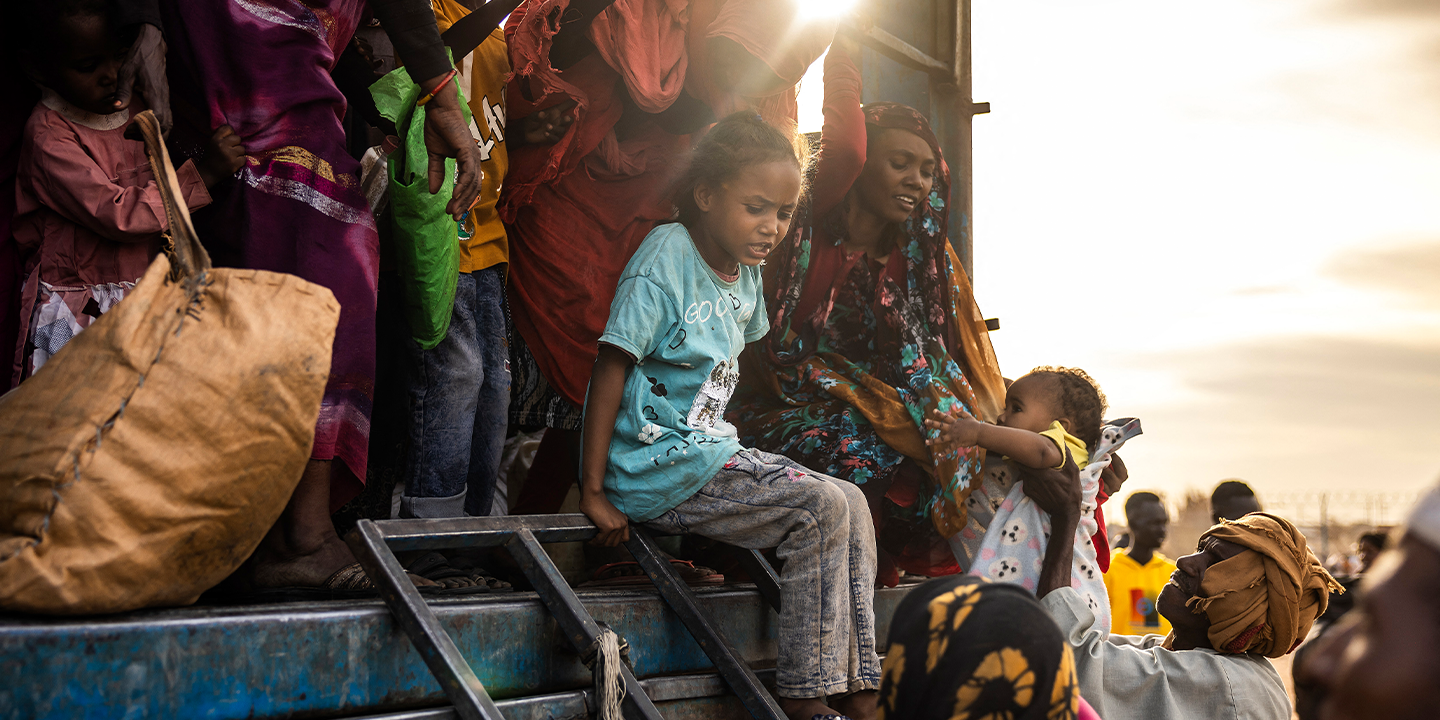
Since the fall of El Fasher, women and girls in Darfur have faced a sharp escalation of conflict-related sexual violence. The Rapid Support Forces (RSF) are carrying out pervasive rape, abductions and other forms of sexual abuse in a widespread and systematic manner. Survivors fleeing El Fasher report being deliberately targeted for rape, often in the presence of their children or family members, and in some instances subjected to mass rape in public. Overcrowded displacement camps and severe food insecurity further heighten civilian’s vulnerability to sexual violence. UN Women reports that sexual violence, forced displacement and the collapse of essential services in North Darfur “have transformed Sudan into the world’s most extreme crisis for women and girls,” stating that “the war in Sudan is a war on women.”
The UN Human Rights Council (HRC)-mandated Fact-Finding Mission’s latest report from September documented the widespread and deliberate use of sexual violence in Darfur to terrorize, humiliate and subjugate communities, enabled by pervasive impunity. Women and girls from non-Arab communities, particularly the Zaghawa and Fur, were disproportionately targeted, often subjected to racialized abuse, with perpetrators at times claiming rape was intended to “improve” the victims’ race. On 11 November the UN Special Representative on Sexual Violence in Conflict, Pramila Patten, warned that “sexual violence has long been a feature of the Sudan conflict, but the current scale and brutality of violations is absolutely shocking.”
During the HRC’s Special Session on the human rights situation in and around El Fasher on 14 November, the African Union Special Envoy for the Prevention of Genocide and Other Mass Atrocities, Adama Dieng, and the UN Special Adviser on the Prevention of Genocide, Chaloka Beyani, warned that non-Arab communities are being systematically targeted through mass killings, sexual violence including rape, obstruction of humanitarian aid and the destruction of civilian infrastructure. These acts indicate a deliberate intent to create conditions of life designed to bring about the physical destruction of these groups, in whole or in part. They cautioned that “the risk of genocide exists in Sudan. It is real and it is growing, every single day.”
All parties to the conflict must ensure access to hospitals and medical services, including urgent care for survivors of sexual violence, such as clinical management of rape within the critical 72-hour window for HIV prevention and emergency contraception. The international community must urgently scale up humanitarian assistance to meet the growing needs in Darfur, including food, shelter, medical care and protection services, particularly for women and girls at heightened risk. States Parties to the 1948 Genocide Convention are legally obligated to prevent and punish acts of genocide and must take immediate measures to halt ongoing atrocities in Sudan, protect populations at risk and hold perpetrators accountable.
Since 14 November Russian forces have launched widespread assaults across Ukraine, killing at least 10 civilians and injuring dozens more. Strikes hit multiple regions, including Chernihiv, Donetsk, Kherson, Kharkiv, Sumy and Zaporizhzhia, targeting residential neighborhoods, energy infrastructure and essential civilian services. On 14 November alone, at least six civilians were killed and 41 injured. These attacks have becoming increasingly deadly – 148 civilians were killed and almost 1,000 injured in October, according to the UN Human Rights Monitoring Mission in Ukraine (HRMMU). Damage to energy systems threatens heating, electricity and water access, putting older persons, children and people with disabilities at particular risk.
From January to October 2025 the HRMMU documented a 27 percent increase in civilian casualties compared to the same period in 2024, already surpassing last year’s verified total. In response to the latest attacks, UN Secretary-General António Guterres reiterated that strikes on civilians and civilian infrastructure “are unacceptable and must end immediately,” renewing his call “for an immediate and unconditional ceasefire, as a first step towards a just, comprehensive and sustainable peace that fully upholds Ukraine’s sovereignty, independence and territorial integrity.”
These attacks reflect a broader pattern of violations of international humanitarian and human rights law that amount to atrocity crimes. In its latest report to the UN General Assembly’s Third Committee, the Independent International Commission of Inquiry (CoI) on Ukraine found that Russian authorities have systematically coordinated actions to spread terror among civilians and forcibly displace them, including through short-range drone attacks, deportations and transfers. The CoI concluded that the attacks by Russian forces with short-range drones along the right bank of the Dnipro River, which caused killings, destruction and mass displacement, constitute the crimes against humanity of murder and of forcible transfer. In occupied areas of Zaporizhzhia, Russian authorities committed the war crimes of deportation and unlawful transfer, including by sending civilians to Georgia or relocating them to Ukrainian-government-controlled areas, while detaining some victims, torturing others and confiscating documents and belongings.
Despite multiple diplomatic efforts aimed at negotiating a peaceful settlement, the conflict continues to intensify. The international community must support Ukraine in upholding its responsibility to protect populations from atrocities. States should help strengthen Ukraine’s air defense capacities, maintain and expand humanitarian and technical support and continue backing international investigations and accountability efforts. States must also find effective ways to restrict Russia’s access to materials used to manufacture missiles and drones deployed against civilians.
On 17 November the UN Security Council (UNSC) held an open debate on conflict-related food insecurity, highlighting the deepening links between violence, hunger and the systemic breakdown of civilian life in conflict zones. UN Deputy Secretary-General Amina Mohammed stressed that “War and hunger are often two faces of the same crisis. The lived reality for hundreds of millions trapped in conflict zones bears this out with brutal clarity.” Nearly 70 percent of people facing acute food insecurity in 2025 live in fragile or conflict-affected countries.
A new UN Food and Agriculture Organization-World Food Programme report warns that armed conflict is driving acute food insecurity in 14 of the world’s 16 “hunger hotspots,” threatening to push millions more toward famine. Six contexts face the highest risk of famine or catastrophic hunger: Sudan, Occupied Palestinian Territory, South Sudan, Mali, Haiti and Yemen. The agencies warn that time is “quickly running out” to avert widespread starvation. Countries of “very high concern” include the Democratic Republic of the Congo, Myanmar, Nigeria, Somalia, Syria and Afghanistan. Across all these situations, populations also face the risk or reality of atrocity crimes.
Despite the protections afforded to civilians under international humanitarian and human rights law, as well as UNSC Resolutions 2417 and 2573 and 2730, violations continue with near impunity. Parties to conflict frequently use starvation as a method of warfare through deliberate attacks on agricultural systems, destruction of food-related infrastructure, blockades and obstruction of trade and aid flows. In Sudan, the world’s largest hunger crisis, food systems have been shattered while ongoing atrocity crimes and restricted humanitarian access are fueling famine across parts of North Darfur and Kordofan. In the blockaded and besieged Gaza Strip, Israel has used starvation of civilians as a weapon of war against Palestinians, deliberately imposing conditions of life calculated to bring about their physical destruction as part of its ongoing genocide.
The report stresses that famines are never inevitable – they are largely foreseeable, preventable and driven by human actions. In South Sudan, intensifying localized violence is a driver of hunger, pushing some counties toward famine, disrupting livelihoods and fueling mass displacement, particularly in the breadbasket regions. Across Haiti, the Central Sahel and Myanmar, millions remain similarly trapped in a vicious cycle of hunger and conflict.
As Deputy Secretary-General Mohammed warned, “The hunger-conflict nexus is a strategic and existential threat.” The UNSC must treat it as such by strengthening early warning and prevention under Resolution 2417, requesting regular briefings on contexts where conflict is a primary driver of hunger and demanding compliance with international law. All parties to conflicts must protect civilians, ensure unimpeded humanitarian access and guarantee the freedom of movement required for aid operations. Member states should invest in long-term development to break the cycle of hunger and conflict and support accountability efforts for the use of starvation and other violations.
Ralph Bunche Institute for International Studies
The Graduate Center, CUNY
365 Fifth Avenue, Suite 5203
New York, NY 10016-4309, USA