8 October 2024
Interview
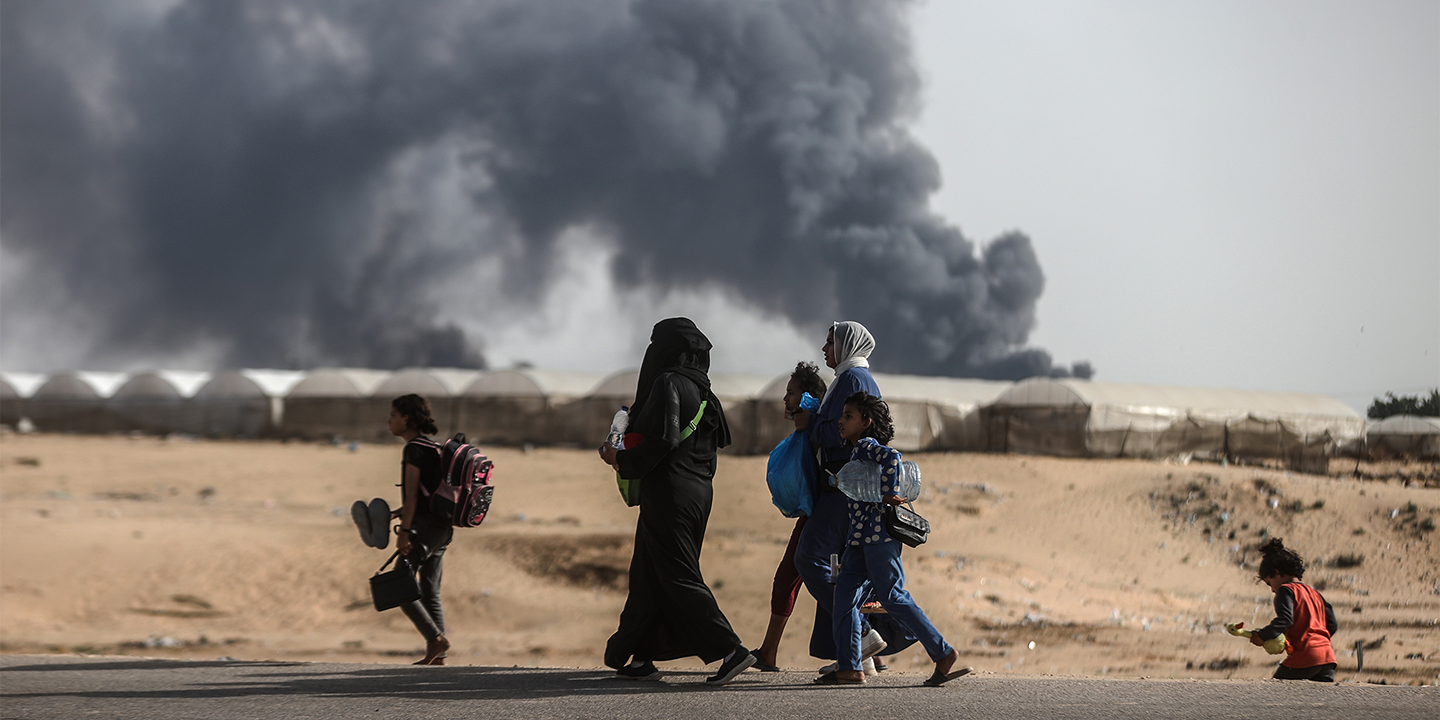
Understanding the gendered dynamics of atrocity crimes is essential for designing effective and inclusive prevention strategies to protect populations at risk. Gender equality, women’s empowerment and the protection of women’s rights – core pillars of the Women, Peace and Security (WPS) agenda – are also fundamental to atrocity prevention. Structural gender inequality, the targeting of individuals based on gender or sexual identity and the marginalization of women, girls and LGBTQI+ persons can serve as early warning signs and risk factors for mass atrocities.
A gender-responsive approach ensures that atrocity prevention efforts are inclusive, intersectional and reflect the protection needs of all communities. However, despite some progress, institutional frameworks often lack nuance in integrating gender perspectives. There is a persistent conflation between the WPS agenda, “women’s issues” and gender more broadly, which obscures the full range of gendered vulnerabilities – including those faced by men and LGBTQI+ individuals. Sexual violence is not limited to women, nor is all violence against women sexual in nature. Other gender identities may also experience sexual violence.
The Global Centre for the Responsibility to Protect advocates for integrating a gender lens across all stages of the conflict cycle – from risk assessment to response – and for ensuring the meaningful participation of women and marginalized groups in prevention and accountability processes. We call on states, regional organizations and multilateral institutions to address gender-based inequality and violence as part of their responsibility to protect.
Through high-level advocacy, public engagement and expert convenings, the Global Centre highlights underexamined risks and promotes an inclusive, intersectional approach to atrocity prevention. Key activities include:
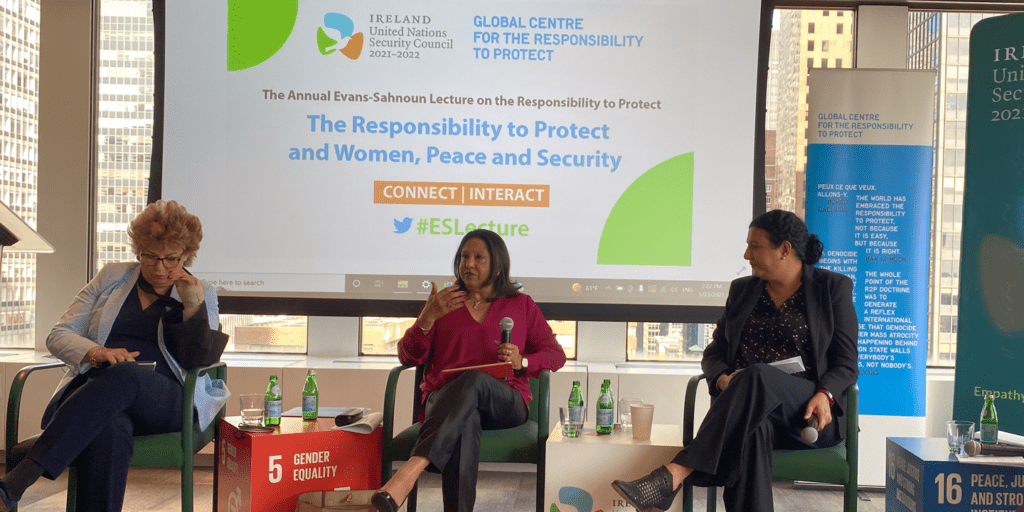
The Global Centre has consistently championed gender-competent, survivor-centered and intersectional approaches to justice and accountability, including:
In March 2024 the Global Centre hosted the event “Preventing Atrocities with a WPS Perspective: A Myanmar Case Study,” which explored how the WPS agenda can inform effective atrocity prevention in Myanmar. The event featured civil society advocates and focused on the critical role of women in both documenting abuses and shaping justice and accountability processes. This initiative reflects the Global Centre’s long-term commitment to centering survivor voices, particularly women, and integrating their experiences into policymaking and prevention strategies.
Response to Gender-Based Persecution in Afghanistan
In response to the Taliban’s systematic persecution of women and girls, in 2023 the Global Centre partnered with the Open Society Justice Initiative (OSJI) to encourage states party to the Convention on the Elimination of All Forms of Discrimination Against Women to initiate proceedings against Afghanistan before the International Court of Justice (ICJ). To support this effort, the Global Centre facilitated extensive bilateral meetings in New York and globally, and convened a closed roundtable with UN member states, Afghan women human rights defenders and legal experts.
During the 78th UN General Assembly, on 19 September 2023 the Global Centre, OSJI and the governments of Albania, Belgium, Cabo Verde, Costa Rica, Croatia, Denmark, France, Germany, Guatemala, Liechtenstein, Luxembourg, Malta and Spain, co-hosted a ministerial-level meeting on the systematic gender-based persecution of women and girls in Afghanistan. The event brought together 15 foreign and deputy ministers, other state representatives, UN Women and Afghan women human rights defenders, focusing on practical steps to support Afghan women and girls, including ICJ proceedings.
At the 68th session of the Commission on the Status of Women in New York in 2024, the Global Centre and the government of Luxembourg co-hosted a ministerial-level meeting to discuss practical steps for improving the situation of women and girls in Afghanistan. The meeting featured Afghan women human rights defenders and aimed to devise strategies for amplifying international efforts to support Afghan women’s rights.
In 2025, following sustained advocacy by Afghan civil society and international partners, the UN Human Rights Council established a new independent investigative mechanism on Afghanistan. The Global Centre has supported this process, underscoring the need for a mandate that collects and preserves evidence of international crimes, maps patterns of violations and prepares files to support fair and independent accountability efforts. Once operational, it will be the only international body examining abuses committed by the Taliban de facto authorities, as well as those linked to the former government, international forces, warlords and non-state armed groups. The Global Centre continues to engage with UN member states and Afghan women human rights defenders to ensure the mechanism is adequately resourced, gender-competent and victim and survivor-centered.
Through our Expert Voices on Atrocity Prevention podcast, the Global Centre features thematic episodes exploring the intersection of gender, sexual identity and atrocity prevention. Episodes highlight diverse perspectives and underscore the critical importance of applying a gender lens to R2P.
Ralph Bunche Institute for International Studies
The Graduate Center, CUNY
365 Fifth Avenue, Suite 5203
New York, NY 10016-4309, USA