23 February 2026
Open Letter
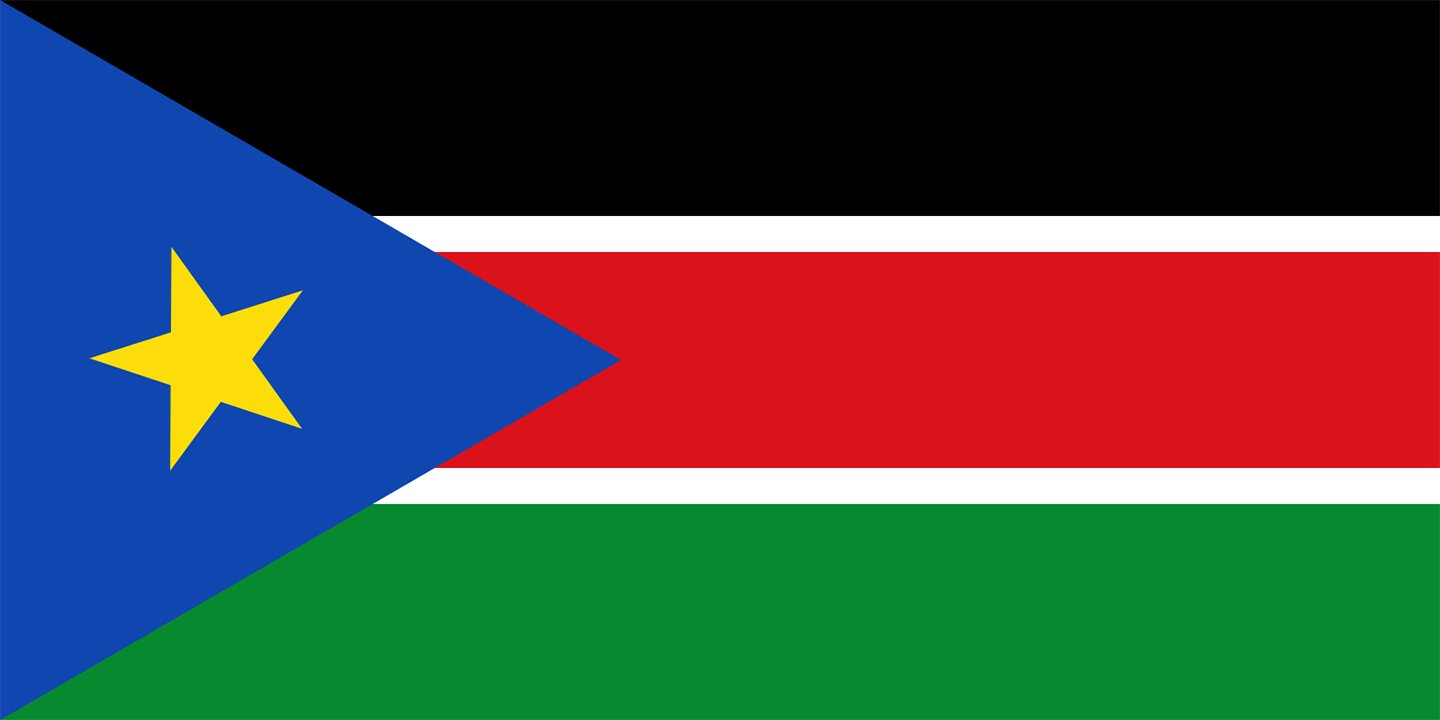
To Permanent Representatives of Member and Observer States of the United Nations (UN) Human Rights Council (Geneva, Switzerland)
Your Excellencies,
Ahead of the UN Human Rights Council’s (hereafter “HRC” or “Council”) 61st regular session (23 February–31 March 2026), we, the undersigned non-governmental organisations, write to urge your delegation to support the development and adoption of a strong resolution on the human rights situation in South Sudan.
The resolution should extend the mandate of the UN Commission on Human Rights in South Sudan (CHRSS). It should also make clear that the Council stands ready to respond to any further deterioration of the human rights situation in the country, including on the basis of expert analyses of risk factors for atrocity crimes.
In April 2025, the Council adopted resolution 58/1, which extended the CHRSS’s mandate with an unprecedented majority (24 votes in favour, 6 against). This outcome was in line with the expectations civil society outlined in a joint letter and reflected growing international concerns over South Sudan’s human rights situation. It also reflected a sense of urgency as to the gravity of the violations reported, including by the CHRSS, the UN Mission in South Sudan (UNMISS), the Office of the UN High Commissioner for Human Rights (OHCHR), and other independent actors. Resolution 58/1 was hailed as a vital step allowing the CHRSS to pursue its work as some actors warned that South Sudan faced a “risk of relapse into largescale civil war.”
One year on, South Sudan’s human rights situation has deteriorated further. All the concerns outlined in civil society’s 2025 letter have grown larger. South Sudan’s “multiple crises” continue to translate into atrocity crimes, violence and violations and abuses of international human rights law and international humanitarian law.”
Violent clashes, including between armed ethnic-based “self-defence groups” and parties to the non-international armed conflict that broke out in December 2013, fuelled by incendiary speech, remain pervasive in parts of Central, Eastern and Western Equatoria States, Greater Jonglei, Unity, Warrap, Upper Nile, Lakes State, Western Bahr el Ghazal, as well as in the administrative regions of Abyei and Pibor.
Furthermore, fighting has been ongoing between government forces (the South Sudan People’s Defence Forces, SSPDF), holdout groups that did not sign the 2018 Revitalised Agreement on the Resolution of the Conflict in the Republic of South Sudan (R-ARCSS), and defecting factions. Reporting to the UN General Assembly, in October 2025, the CHRSS indicated that from March to October 2025, fighting intensified, displacing over 370,000 civilians internally and driving many more to neighbouring countries. The Commission warned that South Sudan’s “political transition [was] falling apart” as the country faced a “renewed slide into full-scale conflict unless urgent international action is taken.” It added: “The ceasefire is not holding, political detentions have become a tool of repression, the peace agreement’s key provisions are being systematically violated, and the Government forces are using aerial bombardments in civilian areas. All indicators point to a slide back toward another deadly war.”
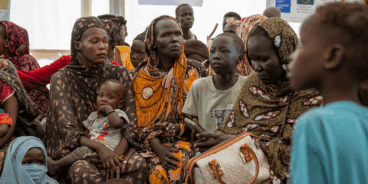
In its last quarterly publication, UNMISS also reported a “continued deterioration in the political and security situation.” UNMISS recorded an increase in abductions and sexual violence. From 29 December 2025 to 9 January 2026 alone, fighting, including airstrikes, has displaced over 100,000 people, mainly women, children and older persons, in Jonglei State. On 25 January 2026, UNMISS and the CHRSS expressed grave alarm at recent inflammatory rhetoric by senior military figures and reports of forced mobilisation in Jonglei, warning that such rhetoric is further escalating the risk of violence and atrocities.
The violence has been accompanied by grave abuses against civilians, including killings, abductions, and acts of sexual and gender-based violence (SGBV) committed by members of various defence and security forces, including the SSPDF. 10 Since late June 2025, security forces have “conducted sweeping arrests of boys, young men and women under the guise of a crackdown on criminals. […] Young women were sexually assaulted, some young men and boys were forcibly conscripted, and some have not been seen since.”
Reports point to a situation in which gross violations and abuses of human rights and international humanitarian law remain pervasive and are committed in a context of widespread impunity. Violations and abuses include extrajudicial executions and other unlawful killings, serious violations of international humanitarian law that may amount to crimes under international law, including war crimes, recruitment and use of child soldiers, politically instigated and supported violence between community-based militias and “self-defence groups,” forced displacement of civilians, egregious violations of women’s and girls’ rights, including SGBV and rape, gang rape, sexual slavery, abductions and forced marriages in the context of conflict-related sexual violence (CRSV), arbitrary arrests, enforced disappearances, and torture.
The humanitarian situation remains characterised by high levels of hunger and food insecurity, which are compounded by drops in international aid and severe cuts to funding for UN agencies and non-profit organisations. The cross-border impact of the war in Sudan continues to exacerbate tensions and drivers of conflict in South Sudan. As of 30 November 2025, there were 598,467 registered refugees in South Sudan, including 567,801 from Sudan. These figures do not include South Sudanese returnees from Sudan.
Impunity for past and ongoing violations remains widespread. It is near-complete at the command responsibility level and for higher echelons of the state’s administrative and military hierarchy.
Despite the bills establishing two of the three transitional justice mechanisms envisioned in Chapter V of the R-ARCSS, namely the Commission for Truth, Reconciliation and Healing (CTRH) and the Compensation and Reparation Authority (CRA), having been passed by the Transitional National Legislative Assembly in 2024, the bodies are yet to be operationalised. Since November 2025, South Sudan’s Ministry of Justice and Constitutional Affairs and the African Union, in partnership with the Government and the UN, started recruiting national and non-South Sudanese Commissioners for the CTRH. At the time of writing, this process was yet to conclude. Further, the establishment of the third mechanism, the Hybrid Court for South Sudan (HCSS), continues to be paralysed due to lack of political will. We reiterate that the Revitalized Transitional Government of National Unity (RTGoNU) and the African Union (AU) Commission should take urgent steps to establish, fund, and operationalise the HCSS as a matter of priority. The AU has the authority to establish the Court even without the South Sudanese Government’s involvement and should move to finalise, adopt and publicise the Court’s legal instruments.
Civic space remains severely curtailed. Organised forces, including the army, police, National Security Service (NSS), and military intelligence, routinely arrest and detain perceived critics. The NSS, in particular, an agency directly under the authority and supervision of the President and that serves as a tool of repression of independent and opposition voices, continues to enjoy unchecked arbitrary powers (some of them unconstitutional), including to arrest people with or without a warrant on the basis of vaguely defined national security offences. Its surveillance, search and intimidation activities have specifically targeted political opponents, as well as human rights defenders (HRDs), activists, journalists and media workers, and civil society organisations. The NSS’s influence is particularly worrying as it has the potential to further undermine human rights before, during, and after the elections scheduled to be held in 2026.
Against this backdrop of ongoing violations, repression, and impunity, risk factors of violations, including atrocity crimes, multiply.
After the transitional period was extended until February 2027, national elections were postponed and are now due for December 2026. Government officials have brushed off observers’ fears of a potential collapse of the R-ARCSS, asserting that elections will proceed as scheduled.
But as tensions are growing, including as a result of the arrest of members of the opposition, the house arrest, indictment, and trial of First Vice-President Dr. Riek Machar by a special court, South Sudan needs close international monitoring. If elections do happen in December 2026, they will happen in the context of widespread violations of the rights to freedom of expression and peaceful assembly and of the right to political participation, with major risks of further violations and violence.
~ ~ ~
The CHRSS remains the only mechanism tasked with collecting and preserving evidence of violations of international law with a view to ensuring accountability and addressing human rights issues in South Sudan from a holistic perspective. As civil society highlighted in its previous letters, the conditions that prompted the HRC to establish the CHRSS, in 2016, have not fundamentally changed and grave violations, violence and impunity remained pervasive in the country.
Over a decade after the onset of South Sudan’s armed conflict, which claimed more than 400,000 lives and displaced millions, justice remains elusive for victims and survivors. The continuation of CHRSS-led investigations, together with the guidance the Commission provides on transitional justice, is the best means to safeguard future accountability in the absence of contemporary criminal prosecutions and at least until the HCSS is fully operational and functional.
Until then, in line with its prevention mandate and its responsibility to address gross and systematic violations of human rights, the HRC must ensure the renewal of the CHRSS’s mandate to secure the collection and preservation of evidence of serious crimes committed since 2013, with a view to transferring such documentation to independent and competent judicial authorities in the future. In this regard, we stress that all elements of the CHRSS’s mandate should be preserved.
International scrutiny of South Sudan’s human rights situation remains vital. The Human Rights Council should continue to closely monitor the situation and allow the CHRSS to pursue its work in support of accountability and justice until the reasons that led it to establish the CHRSS have been addressed in a meaningful manner.
The Council should therefore extend the mandate of the CHRSS in full. In light of risk factors of further violations and atrocity crimes and of ongoing widespread impunity, the Council should also make clear that it stands ready to respond to any further deterioration of the human rights situation, including on the basis of expert analyses. At this critical time, it should enhance its level of attention to South Sudan by reinstating enhanced interactive dialogues previously held at its September sessions.
At its 61st session, the Council should adopt a resolution that:
We thank you for your attention to these pressing issues and stand ready to provide your delegation with further information as required.
Sincerely,
Ralph Bunche Institute for International Studies
The Graduate Center, CUNY
365 Fifth Avenue, Suite 5203
New York, NY 10016-4309, USA