8 April 2026
Atrocity Alert
Your Excellency,
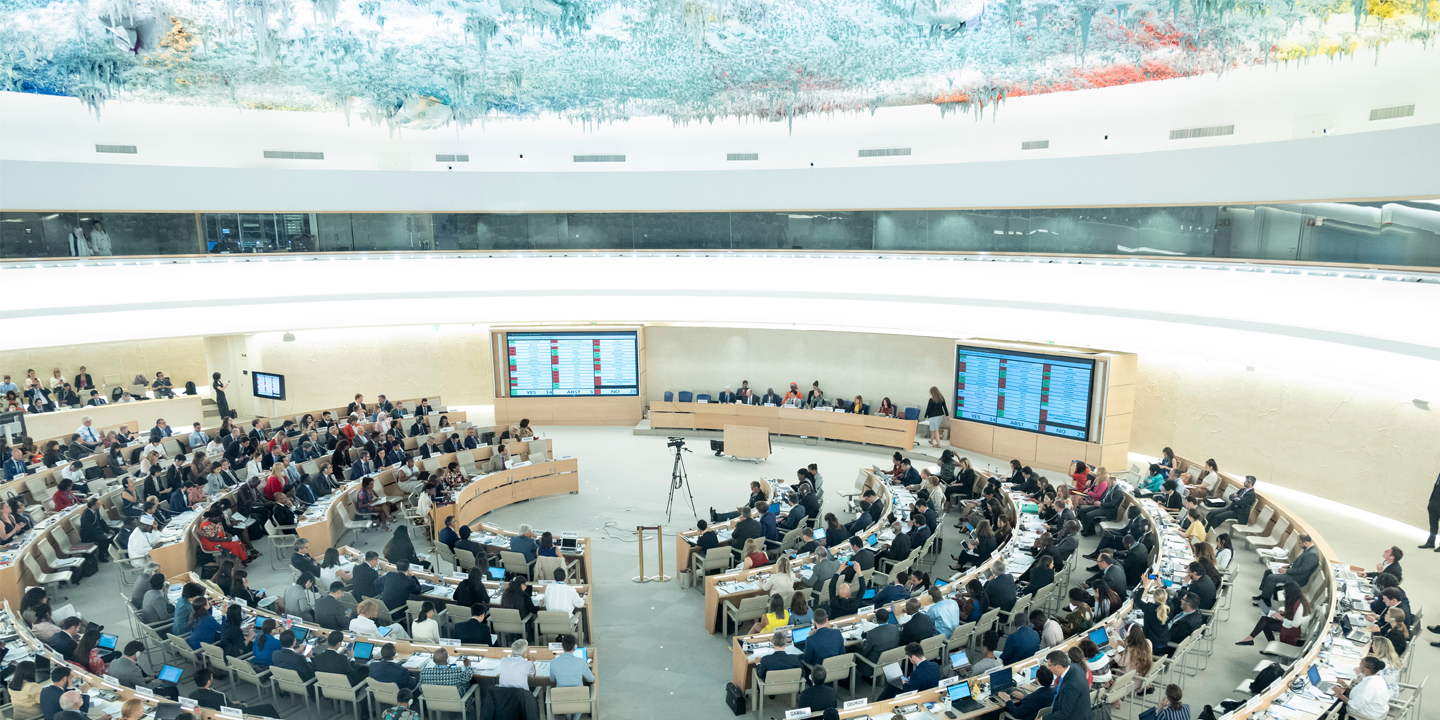
On behalf of the Global Centre for the Responsibility to Protect, I am writing to you regarding the 60th session of the UN Human Rights Council (HRC) in Geneva.
The HRC plays an essential role in the prevention of mass atrocity crimes by responding to situations where populations are at risk of, or are experiencing, genocide, war crimes, crimes against humanity or ethnic cleansing. During its 44th session in July 2020 the HRC adopted Resolution 44/14 on the Responsibility to Protect (R2P), recognizing the important contribution of the UN human rights system in addressing situations where there is a risk of atrocity crimes being committed. This is in line with the Council’s prevention mandate, enshrined in UN General Assembly Resolution 60/251, which stipulates that it shall “contribute, through dialogue and cooperation, towards the prevention of human rights violations and respond promptly to human rights emergencies.”
We strongly urge you, as a current member of the HRC, to uphold this shared commitment to prevent atrocity crimes. The Global Centre respectfully encourages you to consider the following recommendations as you engage in the 60th regular session:
Since the Taliban de facto authorities assumed control of Afghanistan in August 2021, they have imposed deeply repressive policies, denying women, girls and LGBTQIA+ persons their fundamental rights. These measures constitute extreme gender-based discrimination and blatantly violate the Convention on the Elimination of All Forms of Discrimination Against Women (CEDAW). In August 2024 the Taliban codified over 100 edicts through so-called “vice and virtue” laws, aiming to eradicate women and girls from public life by mandating full face coverings, prohibiting them from speaking or being heard in public and severely restricting their freedom of movement, expression, employment, political participation and access to education and healthcare. Others are targeted for expressions of sexuality or gender identity deemed inconsistent with Taliban policy. These policies are intended to subject women and girls to total domination and amount to the crime against humanity of gender persecution.
In June 2025 the UN Special Rapporteur on the situation of human rights in Afghanistan released a report detailing how the de facto authorities are dismantling and transforming the country’s judicial and legal architecture to create a justice system that not only enforces their repressive ideology but is also central to their system of gender-based discrimination and exclusion.
Former government officials, journalists, human rights defenders and minority communities continue to face widespread and systematic abuses, including extrajudicial killings, arbitrary detention, enforced disappearances and torture. Meanwhile, coordinated attacks on ethnic and religious groups by the Taliban and the so-called Islamic State in Iraq and the Levant-Khorasan likely amount to crimes against humanity. Amid immigration crackdowns in the United States, Pakistan and Iran, Afghan nationals, including refugees, migrants and those awaiting resettlement, face mounting risks of forced repatriation and shrinking options for protection under Taliban rule.
The Global Centre respectfully urges your delegation to utilize the upcoming Enhanced Interactive Dialogue on Afghanistan, currently scheduled for 8 September, to emphasize the urgent need for justice and accountability for likely atrocity crimes. We encourage member states to condemn ongoing CEDAW violations, reaffirm the responsibility of states to uphold its provisions and to support codifying gender apartheid as a crime against humanity.
Delegations should also stress the protection of women’s rights and that women human rights defenders and civil society must be meaningfully included in all political processes to help shape Afghanistan’s future. Any credible political settlement must be rooted in human rights, particularly the rights of women and girls.
Burundi has endured a protracted political crisis since late President Pierre Nkurunziza’s announcement that he would seek a third presidential term in 2015. In its first report in 2017, the UN Commission of Inquiry (CoI) on Burundi concluded that potential crimes against humanity had been committed since April 2015, including extrajudicial killings and summary executions, disappearances, sexual violence, arbitrary detention and torture. The CoI continued to release annual reports in subsequent years, reiterating concerns about serious violations that may constitute crimes against humanity. The UN High Commissioner for Human Rights, the Special Rapporteur on the situation of human rights in Burundi, as well as numerous civil society organizations, have further documented systematic human rights violations and abuses.
A decade since the crisis first escalated, no perpetrators have been held accountable, including within the ruling party Conseil national pour la défense de la démocratie-Forces de défense de la démocratie (CNDD-FDD) and its youth wing, the Imbonerakure. During the HRC’s 59th session in June 2025, Special Rapporteur Fortuné Gaetan Zongo warned that “impunity remains the norm [and is] a major obstacle to reconciliation, [and that] justice is being used against opponents, journalists and human rights defenders.”
Ongoing monitoring and reporting on Burundi’s protracted crisis are critical amid the ongoing electoral cycle, including presidential elections currently scheduled for 2027. The June 2025 legislative and communal elections were marred by widespread irregularities, with the ruling CNDD-FDD winning 96.5 percent of votes amid intimidation, harassment and threats by party officials and the Imbonerakure, while key opposition figures were barred from running. This follows similar patterns to previous voting cycles, during which repression dramatically intensified.
Following the May 2020 presidential election, the CoI released a detailed assessment using the UN Framework of Analysis for Atrocity Crimes. It warned that all risk factors for crimes against humanity remain present in Burundi, including the CNDD-FDD’s system of governance, the appointment of sanctioned individuals to senior government positions, the continued operations of the Imbonerakure and the refusal to release all detained human rights defenders. Five years on, these risk factors remain in place and in recent months there has been a marked increase in hate speech and inflammatory rhetoric, including at the highest political level. A joint NGO letter released on 20 August warned that some of the risk factors outlined in the UN Framework of Analysis, “including Risk Factor 8 (“triggering factors or events that may seriously exacerbate existing conditions, such as elections and pivotal activities related to elections”), point to more, not fewer, concerns than one year ago, before the electoral cycle opened and the ruling party closed avenues for peaceful transition through competitive, free and fair elections.”
International scrutiny remains vital to prevent the recurrence of crimes against humanity in Burundi. The Global Centre therefore respectfully urges you to adopt a resolution to renew the mandate of the Special Rapporteur and request the Special Rapporteur to present an oral update during the HRC’s 62nd session, as well as a comprehensive report to the HRC during its 63rd session and to the UN General Assembly during its 81st session.
Civilians in the Central African Republic (CAR) continue to be at risk of atrocities due to ongoing instability by myriad armed groups and abuses by government and allied forces. The Coalition of Patriots for Change (CPC), a loose alliance of predatory armed groups with a history of perpetrating atrocities, and its dissident factions have continued to perpetrate attacks. During counteroffensives, the Central African Armed Forces (FACA) and allied mercenaries have disproportionately targeted ethnic and religious minorities.
Inter-communal tensions have also heightened due to increased targeting along ethnic lines by armed groups, notably the Azande Ani Kpi Gbe (AAKG) in southeast CAR. A report by the Office of the UN High Commissioner for Human Rights (OHCHR) and peacekeeping mission (MINUSCA) documents likely war crimes, primarily targeting Muslim communities and Sudanese refugees in the southeast. The report utilizes the UN’s Framework of Analysis for Atrocity Crimes, warning that there are significant risks of recurrence, including the tolerance of hate speech on ethnic and religious grounds, a lack of state presence, unclear chain of command and a prevailing climate of impunity. Recent fighting in the southeast between the AAKG, FACA and mercenaries has also resulted in serious human rights violations and abuses.
During the HRC’s 58th session, Valentine Rugwabiza, Special Representative of the Secretary-General and Head of MINUSCA, stressed that CAR is at a “crossroads” and that extending state authority must be grounded in justice and respect for human rights. The local and presidential elections scheduled for December are critical to the consolidation of peace in CAR; however, authorities have cracked down on civic space. CAR has a history of election-related violence, including most recently during the elections in December 2020, when the CPC launched an offensive against the government. This period was marked by heightened grievances, the proliferation of hate speech and escalating violence targeting civilians.
The Independent Expert on the situation of human rights in CAR, who works closely with MINUSCA and the Special Criminal Court, is essential for supporting accountability and transitional justice mechanisms and providing critical capacity-building to strengthen institutions on human rights promotion and protection. The Global Centre respectfully encourages you to adopt a resolution to renew the mandate of the Independent Expert and support the inclusion of R2P language in the resolution by “recalling that the authorities of the Central African Republic have the primary responsibility to protect all populations from genocide, war crimes, ethnic cleansing and crimes against humanity.” We also encourage your delegation to request continued monitoring and reporting of human rights trends – using the Framework of Analysis – to alert the international community of appropriate prevention and protection strategies.
In its landmark 2014 report, the HRC-mandated CoI on human rights in the Democratic People’s Republic of Korea (DPRK) established responsibility at the highest level of government for ongoing crimes against humanity, as well as other continued systematic and widespread human rights violations, including extermination, murder, enslavement, torture, imprisonment, rape, forced abortions, sexual violence, persecution, forcible transfer, enforced disappearance and the inhumane act of knowingly causing prolonged starvation. The DPRK’s extensive forced labor system and ongoing human rights violations have enabled its support for Russia’s war in Ukraine. Notably, the DPRK has reportedly deployed 11,000 troops to bolster Russia’s military efforts.
On the 10th anniversary of the CoI report, the HRC adopted a resolution mandating the High Commissioner to submit a comprehensive update on the human rights situation in the DPRK since 2014 and to assess the implementation of the CoI’s recommendations. As the Council considers the forthcoming report, member states should use the Enhanced Interactive Dialogue with the High Commissioner to reaffirm their commitment to the protection of the North Korean people and the prevention of crimes against humanity. States should call for a holistic UN response that bridges human rights, humanitarian and security approaches. This must include measures to confront structural drivers of violations – such as the institutionalized use of forced labor and pervasive sexual and gender-based violence – while closing enforcement gaps and enhancing transparency in global supply chains, ensuring that exploitation is neither profitable nor tolerated.
States must also uphold the principle of non-refoulement, ensure access to asylum and provide comprehensive support for refugees and escapees. Approaches to accountability must be survivor-centered, recognizing that meaningful redress extends beyond legal prosecution. Victims and survivors should be actively included in shaping justice processes, policy decisions and any future political arrangements affecting the Korean Peninsula, so that their dignity, agency and well-being are placed at the core of international responses. Sustained attention to these priorities is essential to end ongoing atrocities, prevent future violations and affirm the rights of those who have endured decades of repression.
Since early 2025 populations in the eastern provinces of the Democratic Republic of the Congo (DRC) have faced a grave escalation in widespread abuses and likely atrocity crimes, as the March 23 Movement (M23) armed group, bolstered by the Rwandan Defense Forces, intensified its offensive in North and South Kivu. The group has seized the provincial capitals and consolidated control over key territories. Clashes between M23 and the Congolese armed forces (FARDC), supported by a coalition of militias known as the Wazalendo, have killed at least 7,000 people and displaced over one million people since January. Despite recent diplomatic efforts, including the signing of a peace agreement between the DRC and Rwanda and a declaration of principles signed by the DRC and M23 to end the fighting, insecurity remains high. Meanwhile, other armed groups continue to pose a grave threat to civilians in North Kivu and neighboring Ituri province. Sexual and gender-based violence, used as a weapon of war, has reached unprecedented levels.
At the root of the enduring instability lies rampant impunity for past abuses and a thriving conflict economy, largely driven by the illicit exploitation of mineral resources. As UN Deputy High Commissioner for Human Rights Nada Al-Nashif has emphasized, any lasting resolution must address these underlying causes, particularly the illegal extraction of natural wealth.
In response to the deteriorating crisis, the HRC held a special session in February at the request of the DRC government, unanimously adopting a resolution that established a Fact-Finding Mission (FFM) and CoI. These mechanisms are mandated to investigate and report on serious human rights abuses and violations of International Humanitarian Law (IHL) committed in North and South Kivu provinces since January 2022. They are crucial for advancing justice by identifying those responsible and supporting victims’ and survivors’ rights to truth, justice and reparations.
Given the scale and urgency of the crisis, the Global Centre respectfully urges your delegation to participate in the upcoming Enhanced Interactive Dialogue on the DRC. The Global Centre also encourages you to raise awareness about atrocity risks in eastern DRC, highlight the central role of illicit mineral exploitation in fueling violence and support the FFM through sustained political and financial commitments. We further encourage you to support the renewal of the mandate of the International Team of Experts on the DRC for one year, requesting that the Team provide technical assistance to national authorities to combat impunity and regularly report on potential atrocity crimes, alerting the HRC with timely and targeted recommendations for necessary action.
The human rights and protection situation in Haiti has become catastrophic amid rampant and expanding gang violence across Port-au-Prince and the Centre and Artibonite departments. Gangs affiliated with the Viv Ansanm coalition are perpetrating widespread abuses, including indiscriminate killings, torture, kidnappings, forced recruitment and the burning and looting of civilian infrastructure, in a climate of total impunity. These groups are also using systematic and widespread sexual violence against women and girls, including collective rape, sexual slavery and mutilation, as a means of exerting territorial control and to terrorize and punish communities. Vigilante and so-called self-defense groups – formed to protect communities, often with tacit police support – have also increasingly perpetrated abuses and indiscriminate violence. According to the UN, between 3 October 2024 and 30 June at least 4,864 people were killed, 1,597 injured and 775 kidnapped.
The Haitian National Police lack the capacity to combat gangs and protect communities. A newly formed task force has launched operations targeting gang strongholds, but the use of drone strikes involving explosive munitions has further endangered civilians. Despite the deployment of the UN-authorized Multidimensional Security Support (MSS) mission, security has deteriorated. The MSS continues to face financial and operational constraints, hindering its ability to challenge gang control. Meanwhile, the international community, particularly the UN Security Council, has failed to mobilize a decisive response, risking further isolation of Haiti and turmoil when robust international support is critically needed.
The Global Centre respectfully urges your delegation to utilize the upcoming Interactive Dialogue with the High Commissioner and his Designated Expert on Haiti to stress that overly securitized international approaches will not result in lasting stability and may exacerbate risk factors for violence. Moreover, we encourage your delegation to highlight the critical importance of human rights monitoring and reporting for informing the international community of appropriate prevention and protection strategies, particularly as violence spreads to areas with inadequate police presence. Lastly, we encourage your delegation to insist on the need to renew the mandate of the Designated Expert in full at the 62nd session in April.
Since the military coup in February 2021 and the imposition of prolonged states of emergency, populations in Myanmar (Burma) have endured escalating human rights and humanitarian crises. The conflict now affects 13 of the country’s 15 states and regions, with civilians threatened by junta attacks and clashes involving armed groups. The military has committed widespread abuses on the civilian population, including relentless airstrikes, scorched-earth operations and systematic assaults, as well as obstructed humanitarian aid, particularly in anti-military strongholds. The High Commissioner has reported atrocities, including attacks on aid workers and the burning alive, dismemberment, rape and beheading of civilians unable to escape. At least 7,035 people have been killed by junta forces, over 22,263 remain imprisoned and 19.9 million require humanitarian aid – one million more than in 2024. Anti-junta armed groups have also been implicated in abuses, including torture, extrajudicial killings, sexual violence, forced recruitment and other serious violations. Last year saw the highest civilian death toll since the coup.
Prior to the coup, in August 2017 the military launched so-called “clearance operations” in Rakhine State with the purported aim of confronting the Arakan Rohingya Salvation Army. During those operations, the majority of Myanmar’s Rohingya population were forced to flee, leaving over 900,000 Rohingya refugees in Bangladesh. A UN FFM determined these operations amounted to genocide. Following renewed conflict in late 2023, the military and ethnic Arakan Army (AA) have perpetrated abuses in Rakhine, including indiscriminate airstrikes, drone attacks, shelling, forced displacement, burning of homes, destruction of towns and extrajudicial killings of civilians attempting to flee. Over 400,000 people are internally displaced across Rakhine and Chin States while approximately 200,000 have fled to neighboring Bangladesh since late 2023.
The HRC established the Independent Investigative Mechanism for Myanmar (IIMM) in 2018 to collect, preserve and analyze evidence of genocide, war crimes and crimes against humanity committed in Myanmar since 2011. During the Enhanced Interactive Dialogue on the reports of the IIMM and High Commissioner on the human rights situation of the Rohingya and other minorities in Myanmar, we encourage your delegation to raise the ongoing violations and risks facing the Rohingya. Discussions on repatriation must prioritize the protection of the Rohingya, particularly given that both the junta and AA continue to pose serious threats to vulnerable civilians. We also urge your delegation to highlight the worsening humanitarian situation in Rakhine State and in refugee camps in Bangladesh, where funding shortfalls and aid cuts threaten to reduce food rations and deny victims and survivors access to basic services.
Since 7 October 2023, Israel has significantly escalated its policy of mass arrests and detentions under the pretext of security concerns – alongside the commission of atrocities in Gaza and the Occupied West Bank – detaining thousands of Palestinians across Occupied Palestinian Territory (OPT). By August 2024, nearly 10,000 Palestinians were being held in Israeli jails, roughly twice the number detained at the onset of Israel’s assault on Gaza. According to UN experts, approximately one-third of these individuals were held in administrative detention, a form of arbitrary detention in which individuals are held without charge or trial. Those who are charged and prosecuted face a near-perfect conviction rate in Israel’s military courts.
Israel’s long-standing practice of administrative detention has been wielded as a tool of repression against Palestinians since the beginning of its military occupation in 1967. This practice has entrenched patterns of detaining Palestinians based on “secret” evidence, subjecting them to indefinite detention through repeated renewals and routine violations of due process rights. Israel also remains the only country in the world to try children in military courts. As of March 2025, 119 of the 323 Palestinian children in custody were being held in administrative detention – the highest number recorded since 2017.
The UN Working Group on Arbitrary Detention (WGAD) has repeatedly asserted that Israel’s widespread and systematic arbitrary detention of Palestinians may amount to a crime against humanity. In August 2023 the UN Special Rapporteur on situation of human rights in the Palestinian territories occupied since 1967 described Israel’s arbitrary detention policy as a “key instrument of domination and oppression,” which has resulted in “an entire occupied population framed as a security threat, often presumed guilty, and punished with incarceration even when trying to exercise fundamental freedoms.”
The WGAD has adopted three opinions concerning the cases of seven individuals detained by Israeli forces since October 2023. In all cases, the WGAD concluded that their detention constituted arbitrary detention in violation of international law. The WGAD determined that the arrests and detentions were conducted on “discriminatory grounds, namely [their] national, ethnic and social origin as Palestinians.”
In September 2024 the CoI on the OPT, including East Jerusalem, and Israel, issued a report describing Israel’s mistreatment of Palestinian detainees as an “intentional policy,” involving acts that amount to war crimes or crimes against humanity. Detainees were deliberately humiliated – including through physical, psychological, sexual and reproductive violence – used as human shields and frequently denied adequate food and medical care.
On 16 September the HRC will hold an Interactive Dialogue on the report of the WGAD. The Global Centre respectfully urges your delegation to actively participate in this discussion and express concern regarding Israel’s systematic use of arbitrary detention against Palestinians. We encourage your delegation to support the renewal of the WGAD’s mandate, call for an end to Israel’s practice of arbitrary detention, including administrative detention, and urge Israel to fully and transparently cooperate with the WGAD, including by granting unfettered access to its mandate-holders.
Populations in Somalia remain at risk of atrocity crimes amid ongoing conflict and attacks perpetrated by armed extremist groups, particularly Al-Shabaab, and the forces combating them. According to the UN Secretary-General, at least 179 civilians were killed between 23 September 2024 to 23 March 2025, representing a 34 percent increase compared to the previous reporting period. At least 49 percent were killed in attacks perpetrated by Al-Shabaab. Populations also remain vulnerable as the government works to strengthen its ability to ensure protection following the drawdown of the African Union (AU) Transitional Mission and handover of security responsibilities to Somali forces.
The Independent Expert on the human rights situation in Somalia plays a vital role in supporting the government in addressing these ongoing challenges. The Global Centre therefore respectfully urges the renewal of the Independent Expert’s mandate and the inclusion of R2P language in the resolution, reaffirming that “the Federal Government of Somalia bears the primary responsibility to protect civilians from war crimes and crimes against humanity.”
Since April 2023 an armed confrontation between the Sudanese Armed Forces (SAF) and the paramilitary Rapid Support Forces (RSF) has resulted in tens of thousands of people killed across Sudan amid heavy fighting, aerial bombardments and shelling, including in densely populated areas. Reports have emerged of armed actors perpetrating widespread sexual and gender-based violence, including rape, as well as reports of forced evictions in the capital, Khartoum, and other cities. The RSF have utilized the conflict to accelerate a systematic campaign of ethnic cleansing and large-scale attacks targeting non-Arab communities in Darfur and other regions, perpetrating possible acts of genocide.
For over a year, the RSF has tightened its territorial control around El Fasher, North Darfur, blocking crucial supply routes and escalating attacks on surrounding areas. Indiscriminate airstrikes and targeted violence have killed civilians and destroyed entire communities. Since 12 April 2025 the RSF have taken over Zamzam camp, southwest of El Fasher, reportedly committing widespread abuses and forcibly displacing hundreds of thousands of residents. The RSF have also further expanded the geographic scope of its attacks on civilians in North Kordofan, where over 450 civilians have been killed near the city of Bara since 12 July. Several senior UN officials have raised alarm about the escalation, with the Office of the UN Special Adviser on the Prevention of Genocide reiterating that the risk factors for genocide and related crimes remain present.
During May 2023 the HRC established an international independent FFM for Sudan. With a mandate to investigate human rights and IHL violations and preserve evidence for future legal proceedings, among other tasks, the FFM has a crucial role to play in delivering justice for affected communities. As the conflict shows no sign of abating, with both parties entrenched in their positions and unwilling to de-escalate, sustained international scrutiny and pressure are crucial to hold perpetrators accountable and support sustainable peace and humanitarian relief for all populations.
The Global Centre respectfully urges your delegation to support a full two-year extension of the FFM to enable it to carry out its work. We also urge your delegation to request regular FFM updates, including oral briefings and reports at upcoming HRC sessions, followed by enhanced interactive dialogues with key stakeholders – including the High Commissioner, AU representatives, the Special Adviser on the Prevention of Genocide, civil society and victims and survivors – and for these reports to be presented to the General Assembly at its 81st and 82nd sessions. We also urge your delegation to recommend that the General Assembly submit the FFM’s reports to the Security Council for its consideration and appropriate action, including holding perpetrators accountable through expanded ICC jurisdiction across Sudan and the consideration of targeted sanctions. Lastly, it is important to emphasize that the HRC will remain actively seized of the matter, including by assessing the developing situation and identifying appropriate responses. This is in line with a joint NGO letter released on 15 August.
Since the Russian Federation launched its full-scale invasion of Ukraine in February 2022, Russian forces have used indiscriminate explosive weapons and committed widespread war crimes and crimes against humanity, including indiscriminate shelling, systematic torture and sexual and gender-based violence. The UN Human Rights Monitoring Mission in Ukraine (HRMMU) has documented the widespread use of heavy artillery, unguided missiles, airstrikes and prohibited cluster munitions in populated areas. Civilian casualties have risen sharply since March 2024, due in large part to Russia’s escalating deployment of high-impact air-dropped glide bombs. These long-range weapons have caused devastating harm to civilians, striking far beyond front lines with poor precision. Schools, homes, healthcare facilities, water and sanitation infrastructure and energy systems have all been severely affected. As of June 2025, the UN has verified over 13,580 civilian deaths, while noting that the true number is likely far higher. The invasion has triggered a dire humanitarian crisis, with more than 10 million people displaced, including over 6.5 million who have fled to neighboring countries.
During the discussion following the oral update from the Independent International CoI on Ukraine, we encourage member states to highlight the devastating toll the ongoing, intractable conflict has taken on civilians and call for measures to limit Russia’s ability to continue to perpetrate atrocities. All peace efforts must be centered around safety, justice and redress for Ukraine’s civilians.
In the year since Venezuela’s discredited presidential elections, President Nicolás Maduro has tightened his grip on power through a systematic and intensified crackdown on dissent. State agents have systematically targeted ordinary citizens, opposition members, journalists and human rights defenders, including through mass arbitrary detentions, enforced disappearances, extrajudicial executions and other serious human rights violations and abuses. This wave of repression has been accompanied by hate speech and inflammatory rhetoric from high-level officials. Military personnel face heightened risks, including enforced disappearances, as part of efforts to maintain internal obedience. The 25 May parliamentary and regional elections were also marked by intensified repression, particularly targeting opposition figures and human rights defenders. With much of the opposition boycotting the vote and voter turnout low, the ruling party secured control of most governorships and retained the National Assembly.
The HRC-mandated FFM on Venezuela warned of “the accelerated reactivation of the repressive machinery that was never dismantled and is now being used to undermine the public freedoms of citizens.” On 14 May the FFM expressed grave concern over practices of enforced disappearances and the widespread lack of effective judicial protection, warning that “these acts are being committed in Venezuela as part of the crime against humanity of political persecution (…) They are part of a series of actions carried out under a coordinated plan to silence, discourage, and suppress the opposition.”
On 26 June OHCHR published a report documenting post-electoral repression and raised concern over its limited country team access to Venezuela, which significantly affects its ability to carry out its monitoring, reporting and technical assistance mandate. Days later, UN High Commissioner for Human Rights Volker Türk was declared persona non grata, threatening OHCHR’s country presence and work with victim and survivor communities.
Since its establishment in 2019, the FFM has repeatedly found that some violations and abuses committed since at least 2014 were part of a widespread and systematic attack against the civilian population and are “part of a plan orchestrated at the highest levels of the government to repress dissent through crimes against humanity.”
The ongoing repression and political persecution have been enabled by the government’s deliberate dismantling of remaining institutional safeguards for civic space and the protection of civil and political rights. Since August 2024 the National Assembly has passed a series of restrictions, including legislation known as the “NGO Law,” jeopardizing the work, safety and security of organizations across the country, as well as other measures to criminalize political opposition. Attorney General Tarek William Saab regularly threatens to arrest human rights defenders engaging with UN mechanisms and authorities have increasingly used short-term enforced disappearances to instill fear and crush dissent. As of 4 August, Venezuelan human rights NGO Foro Penal documented 807 political prisoners, including 83 third-state nationals.
While Venezuela has experienced a protracted multidimensional crisis for over a decade, current tensions and patterns of repression are unprecedented and leave populations at imminent risk of crimes against humanity. The Global Centre therefore respectfully encourages you to participate in the Interactive Dialogue with the FFM, currently scheduled for 22 September, and call upon the Venezuelan government to immediately cease enforced disappearances, arbitrary detentions and other systematic violations and abuses of human rights. We also encourage you to demand the release of all individuals arbitrarily detained. Lastly, the Global Centre urges you to call on the Venezuelan government to immediately grant all OHCHR staff access to the country and fully cooperate with the FFM.
Ralph Bunche Institute for International Studies
The Graduate Center, CUNY
365 Fifth Avenue, Suite 5203
New York, NY 10016-4309, USA