25 February 2026
Atrocity Alert
The following statement is also available in Arabic here.
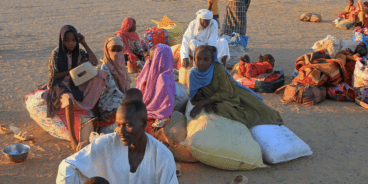
Time is running out for the estimated 260,000 civilians, including 130,000 children, trapped in El Fasher, Darfur’s final battleground between the Sudanese Armed Forces (SAF) and the Rapid Support Forces (RSF). The RSF has besieged the North Darfur capital for over 500 days, using starvation as a weapon of warfare by blocking food and lifesaving humanitarian assistance from entering. They have built over 38km of earthen walls (berms) at the edges of the city to “control population flow from all directions to and from El-Fasher” according to Yale’s Humanitarian Research Lab. The UN Office of the High Commissioner for Human Rights reports that there are no safe exit routes from El Fasher. The berms will allow the RSF and allied militias to continue to strangulate the civilian population by blocking the entry of food and medicine into the city and obstructing civilians from fleeing.
We, the undersigned civil society organisations and humanitarian actors, urgently call for safe humanitarian access, including voluntary evacuation routes for the civilians trapped in El Fasher. Evacuation routes need to be secured without delay to provide civilians in El Fasher safe, voluntary, and dignified passage.
Over 470,000 people have been displaced from El Fasher and surrounding areas since the start of the siege in May 2024. In the past four weeks, conflict between the belligerents and their allied militias has sharply escalated, along with atrocity crimes against civilians. Testimony from civilians who recently fled El Fasher recount that men and adolescent boys are being killed on the road and that leaving El Fasher is now more dangerous than staying despite the constant daily shelling.
Global paralysis in the response to the Sudan war is contributing to the loss of lives across the country. Words of condemnation will not save lives in El Fasher. However, decisive action by the international community can still prevent the continued massacre of civilians trapped in El Fasher.
It has been almost a year since the UN Secretary General published his recommendations on civilian protection in Sudan. This anniversary marks a year of failure by the international community to make any progress towards protecting civilians in Sudan. The greatest solution to address civilian protection threats in Sudan is a comprehensive nationwide ceasefire. Whilst negotiations continue, action must be taken to immediately address the protection needs of the population in El Fasher.
A humanitarian access plan must be developed and executed as a matter of urgency, in accordance with international humanitarian law, and with binding agreements from all parties to the conflict to respect and uphold the safety of civilians. Negotiations on safe passage and humanitarian access should be actively pursued by diplomatic missions, regional entities, and international stakeholders to ensure unimpeded civilian evacuation.
We urgently call for the following measures:
Safe and voluntary routes must be immediately secured for civilians to leave El Fasher, in full compliance with UN Security Council Resolution 2736. These routes must be agreed upon by all parties to the conflict, and accountability measures must be enforced for any violations of international humanitarian law, including attacks on civilians evacuating.
An evacuation coordinator should be identified from a lead agency with operational capacity and a ground presence. Coordination must be carried out by key UN agencies, the ICRC, humanitarian stakeholders, authorities, and community representatives, with roles clearly defined on logistics, communication, en route assistance, and safety. Community representatives should be regularly consulted to confirm that evacuations remain voluntary.
Humanitarian access routes must be established and monitored using satellite imagery and surveillance UAVs, with daily reports provided to relevant UN bodies, agencies, and key stakeholders. Civilians must also be free to voluntarily leave areas of active conflict using these humanitarian access routes. Senior humanitarian officials must also travel to Tawila and areas surrounding El Fasher to negotiate safe passage with the armed militias stationed on the road from El Fasher to Tawila.
Humanitarian access to El Fasher must be secured to provide life-saving assistance, including medical care, to these vulnerable populations. The humanitarian response across North Darfur must also be scaled up to meet the needs of internally displaced persons (IDPs) with direct and unrestricted support provided to local groups. 35 hospitals have been attacked since the RSF began their siege on El Fasher. A significant portion of El Fasher’s population are not able to safely evacuate the city because they are starving, weak, sick, elderly, disabled, or injured. Humanitarian aid must include water, electricity, fuel, food, and medical supplies. Aid access is also urgent to counter confirmed famine and the worst cholera outbreak Sudan has seen in years, having already caused at least 350 deaths in Darfur.
The immediate provision of safe and unhindered passage for people seeking to evacuate from El Fasher is critical to preventing further atrocities. All civilians, who are trying to escape El Fasher must be allowed to do so safely, voluntarily, and without impediments. The parties engaged in the conflict are obliged under international humanitarian law to protect civilians and civilian infrastructure, ensure safe passage, and facilitate unimpeded humanitarian access. The international community has watched the siege of El Fasher and failed to take the actions needed to protect civilians. At this moment, when the atrocity risk is at its highest, there must be a concerted effort to take action and save lives.
Signatories:

Ralph Bunche Institute for International Studies
The Graduate Center, CUNY
365 Fifth Avenue, Suite 5203
New York, NY 10016-4309, USA