18 March 2026
Atrocity Alert
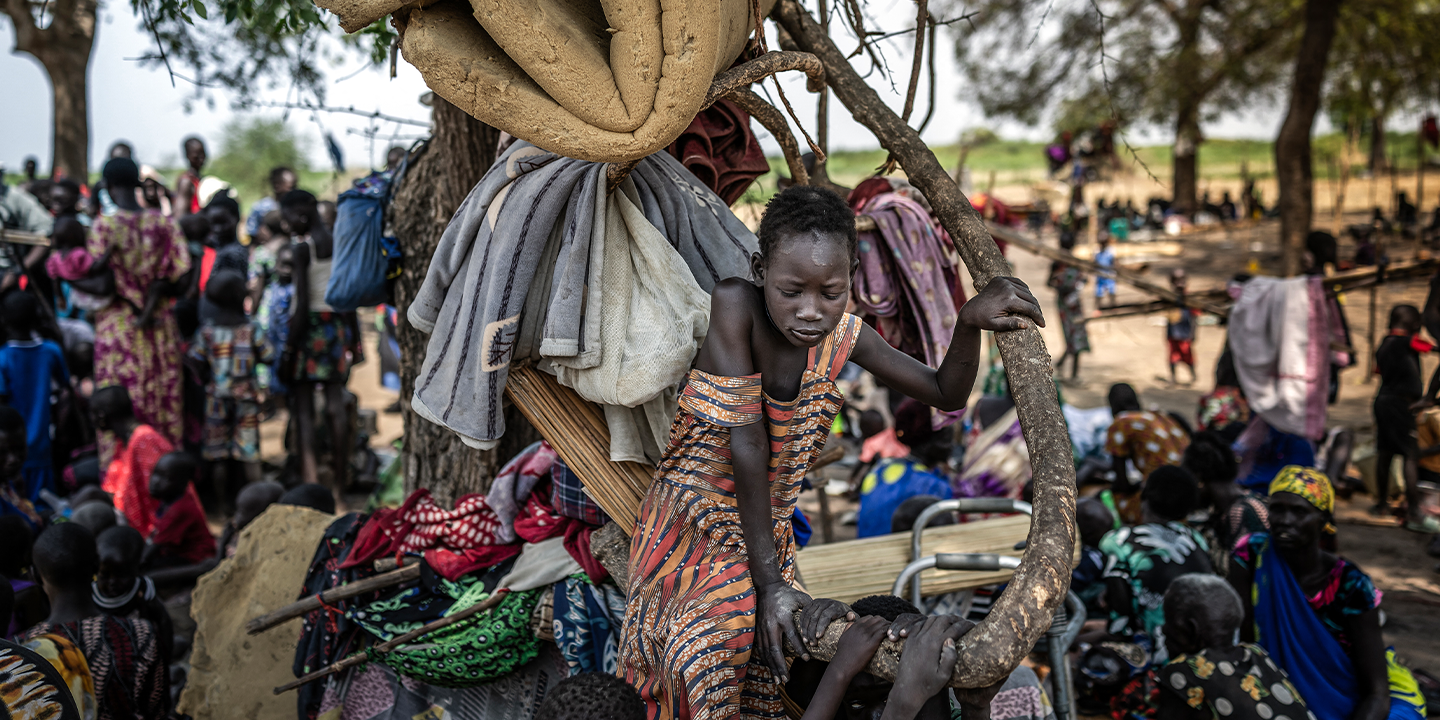
During the early morning on Sunday, 1 March, armed youth entered Abiemnom County in South Sudan’s Ruweng Administrative Area while residents were asleep, killing approximately 170 people and injuring 50 others. According to Ruweng’s Information Minister, James Monyluak Mijok, at least 90 of those killed were children, women and elderly people. Seventy-nine members of regional forces, including police personnel, were also reportedly among those killed. Many victims were buried in a mass grave. During the attack, homes and markets were also set ablaze.
Although the circumstances remain unclear, local authorities allege the attackers originated from Mayom County in neighboring Unity State and were linked to the Sudan People’s Liberation Army in Opposition (SPLA-IO). The SPLA-IO has denied these allegations. In response to the deteriorating security situation, the UN Mission in South Sudan has provided temporary shelter to more than 1,000 civilians and is delivering emergency medical assistance to those injured in the attacks.
South Sudan faces a heightened risk of renewed large-scale violence as political tensions intensify and ethnically targeted attacks spread, particularly in Jonglei, Unity, Upper Nile and Central Equatoria states. On 27 February the UN Human Rights Council (HRC)-mandated Commission on Human Rights in South Sudan (CHRSS) warned that political and military leaders are systematically undermining the 2018 peace agreement, placing civilians at severe risk of renewed conflict, mass atrocity crimes and serious violations of international human rights and humanitarian law. Barney Afako, CHRSS member, warned, “When leaders treat negotiated peace commitments as expendable, they create conditions in which violence flourishes. South Sudan is at a dangerous crossroads.”
The CHRSS’s latest report concluded that government forces are now most responsible for attacks against civilians, often following patterns linked to ethnicity and perceived political affiliation. These forces, under the ruling party’s command, have carried out widespread and systematic attacks, including unlawful killings, indiscriminate and disproportionate aerial bombardments of homes and medical facilities, conflict‑related sexual violence and forced recruitment of young men and boys – actions that may constitute war crimes and crimes against humanity, according to the CHRSS.
The international community must intensify diplomatic efforts to guarantee the restoration and full and unconditional implementation of the 2018 peace agreement. President Salva Kiir and the ruling party must immediately order their troops to halt all attacks on civilians, drop politically motivated charges against opposition leaders and refrain undermining the power‑sharing arrangement. All opposition forces and armed groups must immediately cease attacks on civilians, respect international human rights and humanitarian law and refrain from actions that threaten peace and stability. During the HRC’s ongoing 61st session, it is critical that the mandate of the CHRSS is extended in full to allow the Commission to continue its vital work monitoring and documenting human rights violations and abuses and identifying those responsible.
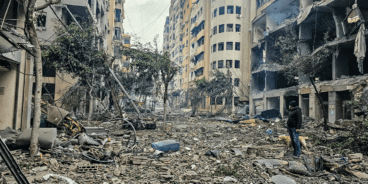
On 28 February Israel reimposed a total siege on Gaza hours after launching a joint military attack with the United States (US) against Iran. The timing underscores the precarity of the ceasefire in Gaza, which could be upended by the ongoing, broader regional escalation. All border crossings into Gaza were closed – including Rafah – before Israel announced on 2 March that it would partially re-open the Kerem Shalom crossing the following day. Israel justified the total siege by claiming that aid delivered during the ceasefire was “expected to suffice for an extended period.” However, UN reporting since the start of the October ceasefire indicated that only a fraction of the agreed daily aid had been allowed to enter and humanitarian actors warned that their supplies were extremely limited.
Food prices in Gaza rose immediately, prompting many to rush to stock up on essentials. The abrupt reinstatement of the blockade demonstrated how swiftly humanitarian access could be suspended at Israel’s discretion.
Just a day before the Israeli-US strikes against Iran, Israel’s Supreme Court issued a temporary injunction allowing dozens of international humanitarian organizations to continue operating in Gaza after Israeli authorities had revoked their licenses and imposed a 1 March deadline to cease operations.
Meanwhile, on 26 February the UN Special Rapporteur on the right to adequate housing issued a report with findings on several crises, concluding that there was “overwhelming evidence” that Israel’s systematic and widespread destruction of housing in Gaza – in violation of the right to adequate housing – “may amount to war crimes, crimes against humanity” and could reach the threshold of genocide. At least 92 percent of Gaza’s housing is estimated to have been damaged or destroyed since October 2023. The report stressed that, despite the ceasefire, Israel continued to obstruct the entry of shelter materials and to destroy housing, including through the flattening of entire neighborhoods.
UN High Commissioner for Human Rights Volker Türk stressed that the current ceasefire must not be mistaken for “peace or safety,” noting that Palestinians in Gaza continue to be killed in Israeli attacks and die from preventable hunger, disease and untreated injuries. Philippe Lazzarini, Commissioner General for the UN Relief and Works Agency for Palestine Refugees in the Near East, similarly called for a “genuine” ceasefire, describing the current agreement as “a ceasefire in name only.”
Despite the partial, restricted re-opening of aid access, Israel’s unencumbered ability to place Gaza’s entire population under total siege at a moment’s notice reinforces its long-standing practice of collective punishment, its failure to adhere to humanitarian obligations as an Occupying Power and the inherent fragility of the ceasefire. Israel must ensure unhindered humanitarian access and fully reopen all border crossings, including Rafah. States with influence must pressure Israel to ensure the full implementation of the ceasefire and unequivocally condemn continued violations of the agreement.
Escalating tensions between Pakistan and various groups operating from within Afghanistan are placing civilians at grave risk amid a cycle of cross-border attacks and retaliatory measures. Following deadly attacks inside Pakistan, including a 6 February suicide bombing at a Shiite Mosque claimed by the so-called Islamic State in Iraq and the Levant-Khorasan that killed approximately 31 people, Pakistan launched airstrikes on 21 February against what it described as militant hideouts in Afghanistan. The Taliban de facto authorities asserted that the strikes hit civilian areas, with reported casualties and damage to religious sites, including a madrassa and a mosque.
Beginning on 26 February cross-border exchanges intensified, with Pakistan’s Defense Minister describing the situation as an “open war.” From the start of the escalation to 2 March the UN Assistance Mission in Afghanistan (UNAMA) recorded at least 146 civilian casualties in Afghanistan, including 42 killed and 104 injured, among them women and children. Casualties resulted from indirect fire impacting residential areas in Paktya, Paktika, Nangarhar, Kunar and Khost provinces, as well as from airstrikes in Paktika and Nangarhar.
According to UNAMA, humanitarian and medical facilities – including the emergency hospital at the Torkham border post and an International Organization for Migration transit center – have been damaged. Ongoing hostilities and movement restrictions have constrained humanitarian access, limiting the delivery of life-saving assistance in the most affected areas. Afghan returnees from Pakistan are particularly vulnerable. The World Food Programme has suspended activities in affected areas, disrupting food distributions for approximately 160,000 people.
International Committee of the Red Cross President Mirjana Spoljaric stated, “The people of this region have already endured decades of conflict, displacement and loss. They have seen and felt the impact of war on their loved ones and in their communities. Civilians, the wounded and others not – or no longer – taking part in the fighting must be protected.”
This latest escalation reflects protracted, intensifying tensions, mainly fueled by cross-border militancy. Pakistan has repeatedly accused the Taliban de facto authorities of allowing armed groups to operate from Afghan territory and launch attacks inside Pakistan. Heavy clashes in October 2025 led to a fragile ceasefire that later collapsed. During the October–December escalation, UNAMA attributed 70 civilian deaths and 478 injuries to Pakistan military operations, underscoring the recurring civilian toll of the unresolved border tensions.
All parties involved in the hostilities must adhere to their obligations under International Humanitarian Law, take all necessary measures to protect civilians and minimize any suffering and casualties. Authorities should prioritize dialogue and commit to de-escalation. The international community should support efforts to document violations, including by ensuring that the Independent Investigative Mechanism for Afghanistan is fully funded and operational.
Ralph Bunche Institute for International Studies
The Graduate Center, CUNY
365 Fifth Avenue, Suite 5203
New York, NY 10016-4309, USA