14 January 2026
Atrocity Alert
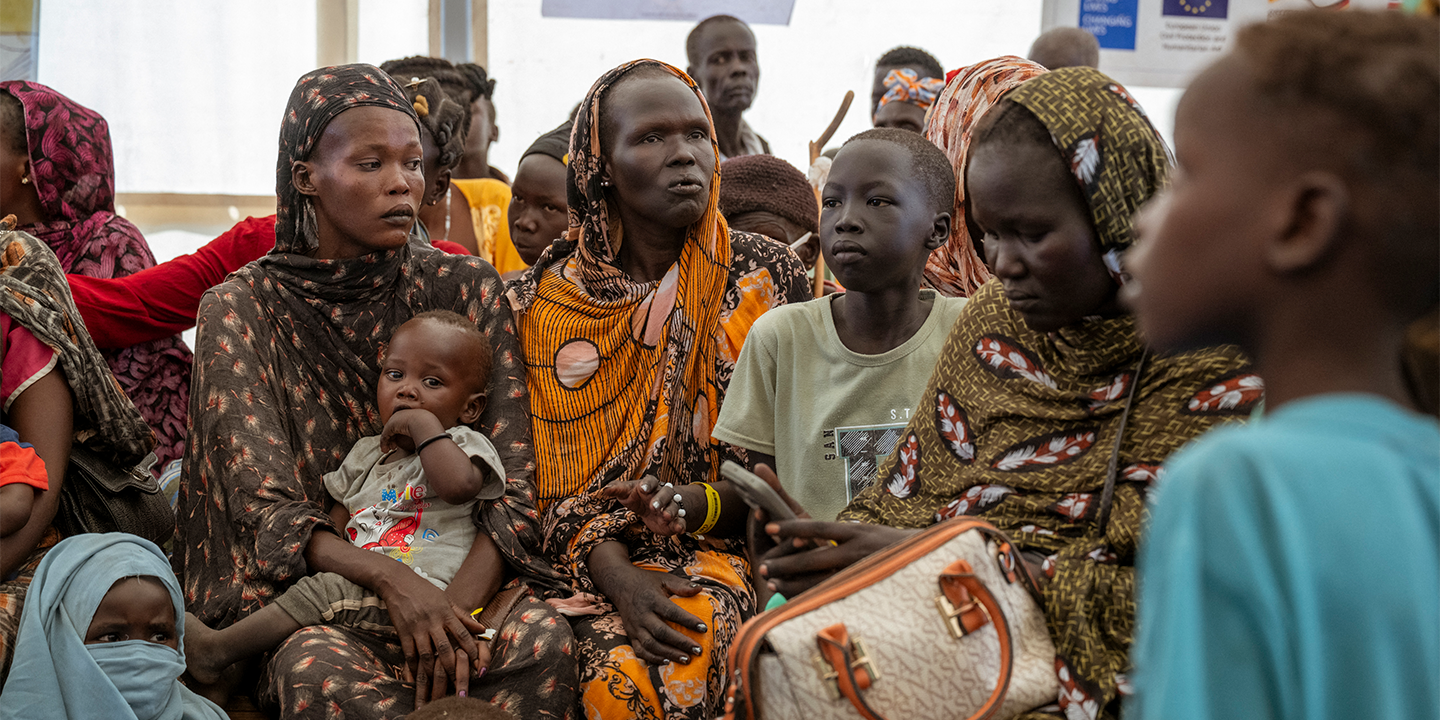
South Sudan is at serious risk of returning to widespread armed conflict amid escalating political tensions, intensifying localized violence and the mobilization of forces along ethnic lines. Fighting between the South Sudan People’s Defence Forces (SSPDF), aligned with President Salva Kiir, and the Sudan People’s Liberation Army-In Opposition (SPLA-IO), has intensified since December 2025 in Jonglei State. Near-daily attacks on civilians and repeated SSPDF aerial bombardments, including in Nyirol, Uror, Ayod and Duk counties, have caused civilian casualties and forced large-scale displacement. Opposition forces have escalated efforts to challenge President Kiir by mobilizing fighters and seizing key towns. On 16 January, following heavy fighting, the SPLA‑IO took control of Pajut, more than 300 km north of Juba, and announced intentions to advance further towards the capital. SPLA-IO forces have also secured victories in Waat and Yuai, strengthening their presence in northern Jonglei.
The risk of atrocities is further heightened by inflammatory rhetoric from senior military officials. General Johnson Olony, commander of the Agwelek militia aligned with the SSPDF, has instructed forces deployed in Jonglei State to “spare no one,” including civilians. On 26 January Barney Afako of the UN Commission on Human Rights in South Sudan warned, “When senior figures issue reckless or violent rhetoric, or fail to counter it decisively, they lower the threshold for abuses and send a signal that restraint no longer applies. The mobilization of forces in this context, coupled with ethnicized messaging, risks triggering a spiral of retaliatory violence that could rapidly escalate beyond control.”
The current escalation traces back to February 2025 when violence erupted in Nasir, killing over 20 civilians and displacing thousands. Retaliatory actions by government forces caused further civilian casualties and infrastructure damage. Subsequent political repression, including the arrest of SPLA-IO leaders and the house arrest of Riek Machar, effectively rendered the 2018 power-sharing framework inoperative and signaled a collapse of the political settlement.
Since gaining independence in 2011, South Sudan has experienced repeated cycles of violence and atrocities. A 2013-2015 conflict left an estimated 400,000 dead, with the SPLA under President Kiir and the SPLA-IO under Machar responsible for widespread atrocities. Although both parties were compelled into the power-sharing arrangement in 2018, violence and localized clashes have persisted.
With South Sudan approaching its first-ever elections, currently scheduled for December 2026, political competition is increasingly being pursued through military means rather than democratic processes. The situation in Jonglei, combined with historical grievances and unresolved political disputes, poses a grave risk to civilians across the country.
All armed actors must immediately cease inflammatory rhetoric and de-escalate and halt hostilities against civilians, including airstrikes, ground offensives and military operations. All parties should recommit to the 2018 peace agreement as the foundation for stability. The international community must intensify diplomatic pressure to ensure a return to the agreement and its full and unconditional implementation.
On 14 January United States (US) officials announced the launch of the second phase of the ceasefire agreement in Gaza, focused on demilitarization, technocratic governance and reconstruction. A US-approved Palestinian technocratic committee has been appointed to oversee civil administration in Gaza under the supervision of an international Executive Board, both operating under the so-called “Board of Peace” (BoP), led by President Donald Trump.
Swift efforts to advance Gaza into phase two of the ceasefire dismiss the reality on the ground. While Hamas has released all hostages – living and deceased – Israel has continued attacks in defiance of the phase one stipulations, killing at least 477 Palestinians and destroying some 2,500 buildings since the ceasefire began in October. Israel has failed to adhere to withdrawal agreements, maintained obstruction of humanitarian aid and refused to open the critical Rafah border crossing.
On 22 January President Trump formally established the BoP and held a charter-signing ceremony. The BoP’s charter has raised serious legal and political concerns. Notably, it makes no mention of Gaza, instead suggesting a global mandate to “secure enduring peace in areas affected or threatened by conflict.” The charter grants President Trump, as Chair, exclusive power to veto decisions supported by a majority, appoint members and designate his successor.
Although President Trump’s 20-point plan was given effect under UNSC Resolution 2803, the BoP charter omits any reference to the UNSC. Mary Robinson, former President of Ireland and member of The Elders, described the BoP as “the board of the power of one person,” warning that “this is something that is trying to replace the United Nations, and, in particular, the Security Council.”
Over 50 countries have reportedly been invited to join the BoP. Israel and some Arab states have already confirmed participation, while several others have declined. Some European countries have expressed concern about the BoP, including Germany and Italy, which have both raised constitutional concerns, France, which has cited incompatibility with the UN Charter; and Spain, which has criticized the absence of Palestinian involvement.
Meanwhile, Jared Kushner, President Trump’s son-in-law and informal advisor, has unveiled a reconstruction “masterplan” for a “New Gaza,” framed as a vision of prosperous development. In practice, the plan would split the enclave into zones – sequestering the coast for commercial tourism – erase Palestinian heritage and culture through real estate profiteering and promote swift, depoliticized reconstruction atop the mass destruction caused by Israel’s atrocities. Affected Palestinians have had no meaningful engagement in these plans.
Any political solution that sidelines Palestinians as rights-holders and central decision-makers will be unjust and unviable. States must implement Resolution 2803 in accordance with international law and refuse to join the BoP so long as it undermines Palestinian statehood and the UN Charter. All states must also, pursuant to the International Court of Justice’s 2024 July Advisory Opinion, refrain from assisting Israel’s unlawful presence in Occupied Palestinian Territory.
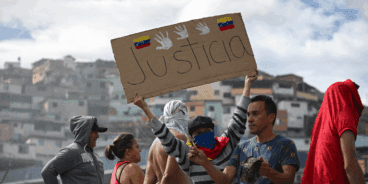
Following the United States’ (US) unlawful military assault on Venezuela and capture of Nicolás Maduro on 3 January, Venezuela has entered a period of profound uncertainty. At the same time, this moment also presents a fragile and critically important opportunity to press interim authorities to end crimes against humanity and commit to a credible path toward democratic change.
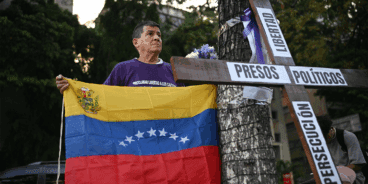
For more than a decade, arbitrary detention – often accompanied by enforced disappearances – has been a defining feature of state-led political persecution in Venezuela. As a result, the release of all individuals arbitrarily deprived of liberty, including but not limited to political prisoners, has become a long-standing core demand of Venezuelans. As of 30 December 2025, the Venezuelan NGO Justicia, Encuentro y Perdón estimated the number of political prisoners to exceed 1,000, warning that the true figure is likely significantly higher. Authorities signaled possible movement in early January, with National Assembly President Jorge Rodríguez announcing the release of what he described as “an important group” of Venezuelan and foreign detainees on 8 January and interim President Delcy Rodríguez claiming that 406 individuals had been released days later. However, Venezuelan human rights organization Foro Penal verified the release of only 266 political prisoners between 8 and 25 January. Many of those released from state-run facilities remain subject to precautionary measures, ongoing criminal investigations and restrictions on public communication, reinforcing concerns about a continued “revolving door” of arbitrary detention. Limited transparency surrounding releases has also caused acute distress for affected families, retraumatizing affected communities and heightening protection concerns.
Patterns of repression are inseparable from Venezuela’s acute humanitarian emergency. Years of socio-economic collapse have left millions unable to meet basic needs. According to the Venezuelan civil society platform HumVenezuela, an estimated 16 million people are experiencing extreme poverty, with approximately 11 million facing food insecurity. Absent meaningful commitments by Venezuelan authorities to end repression and advance people-centered economic reforms, these conditions risk becoming further entrenched, potentially fueling increased displacement and migration.
Taken together, these dynamics underscore the risks posed by engagement strategies that prioritize short-term political accommodation over prevention, accountability and the rule of law. The continued reluctance of Venezuelan authorities and US decision-makers to commit to genuine democratization processes highlights the need for cross-regional governments to establish enforceable benchmarks on human rights protection, atrocity prevention, accountability, humanitarian access and the restoration of the rule of law. Governments engaging with Venezuelan authorities, including through diplomatic missions in Caracas, should apply sustained and coordinated pressure for concrete short-, medium- and long-term concessions. These should include the unconditional release of all individuals arbitrarily detained; full disclosure of information regarding those in state custody whose whereabouts remain unknown; the full reopening of civic space; the implementation of meaningful steps to dismantle repressive state institutions and good-faith engagement with UN humanitarian and human rights mechanisms.
Elisabeth Pramendorfer, Venezuela expert at the Global Centre for the Responsibility to Protect, emphasized, “Throughout the crisis and under immense personal risk, Venezuelan civil society organizations have born the primary responsibility for documenting violations and providing relief, frequently serving as the sole source of support for victims’ families. The international community should expand political and financial support for civil society organizations, including sustainable funding and the meaningful inclusion of civil society to ensure that proposed solutions are legitimate and durable.”
Ralph Bunche Institute for International Studies
The Graduate Center, CUNY
365 Fifth Avenue, Suite 5203
New York, NY 10016-4309, USA