About Us
The Global Centre for the Responsibility to Protect saves lives by mobilizing the international community to act in situations where populations are at risk of mass atrocity crimes.
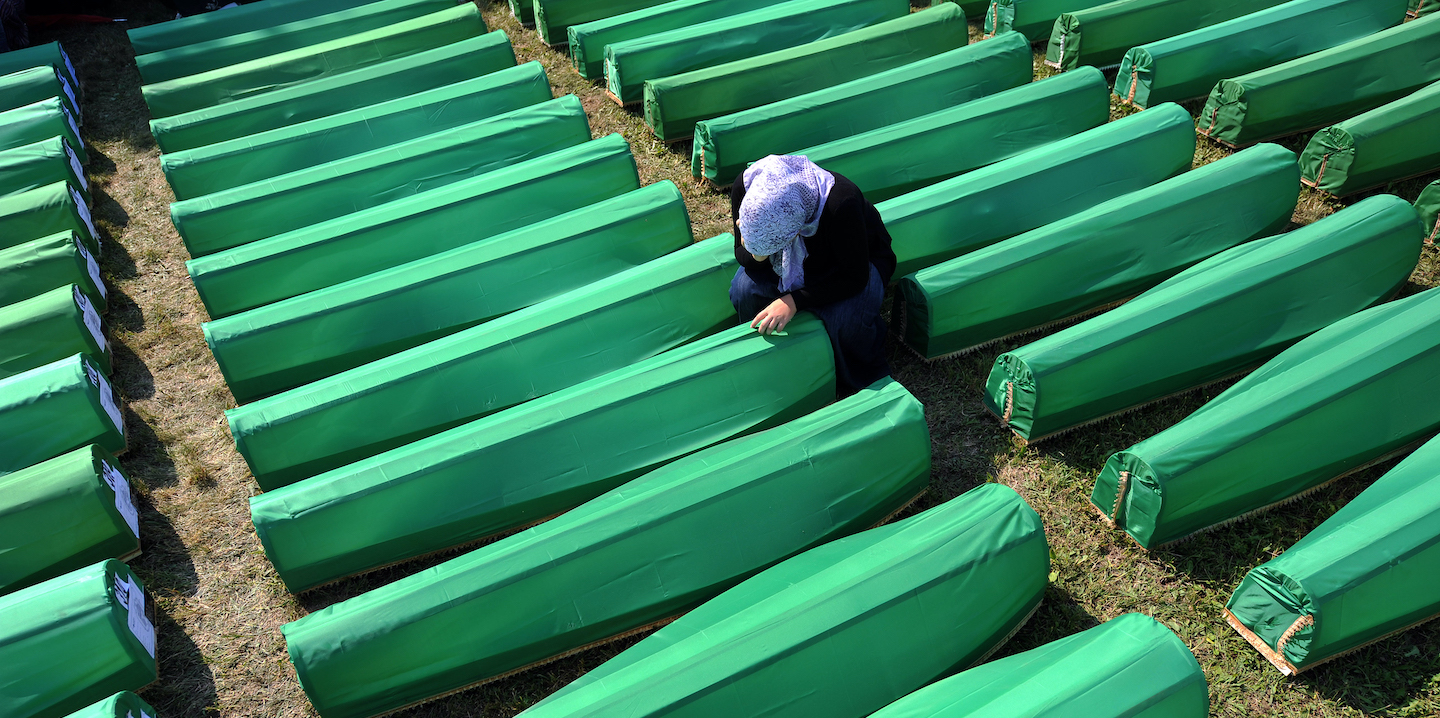
We exist to uphold the norm of the Responsibility to Protect – known as R2P – adopted by the UN in 2005. This principle seeks to ensure that the international community never again fails to halt the mass atrocity crimes of genocide, war crimes, ethnic cleansing and crimes against humanity.
Our Mission: Making R2P A Global Reality
To make the promise of R2P a reality, the Global Centre for the Responsibility to Protect (GCR2P) was established in 2008 by supportive governments, leading figures from the human rights field (including former UN Secretary-General Kofi Annan, former Australian Foreign Minister Gareth Evans and former President of Ireland and UN High Commissioner for Human Rights Mary Robinson), as well as five of the world’s leading international non-governmental organizations (Human Rights Watch, International Crisis Group, Oxfam International, Refugees International and the World Federalist Movement).
The Global Centre engages in advocacy on specific crises, conducts research to further understanding of R2P, recommends strategies to help states build capacity for atrocity prevention and works closely with affected communities, NGOs, governments and regional bodies seeking to operationalize the Responsibility to Protect. The Global Centre has offices in New York and Geneva.
To advance the international commitment to R2P, the Global Centre for the Responsibility to Protect focuses on four main areas:
-
1MOBLIZING ACTION
Mobilizing members of the international community to take action to protect populations at increased risk of atrocity crimes. The Global Centre does this by influencing decision-makers in governments, regional organizations and multilateral bodies, including the UN Security Council, Human Rights Council and General Assembly, as well as the UN Secretariat, to act to prevent and respond to mass atrocity crimes.
-
2FRAMING THE NARRATIVE
Utilizing an atrocity prevention lens to reframe narratives around country situations to account for atrocity risks and encourage stakeholders to expand their understanding of threats to populations and international peace and security beyond conflict prevention and resolution, democracy promotion or counterterrorism. This includes providing in-depth research and analysis to decision makers as the leading international authority on applying the R2P lens to crisis situations.
-
3STRENGTHENING THE COMMITMENT TO R2P
Building dedicated institutions and capacities at the national, regional and international level to effectively respond to the threat of mass atrocity crimes. The Global Centre does this by cultivating and nurturing government and civil society networks, and through training and capacity building, assists states and civil society in building a “community of commitment” against mass atrocities.
-
4BREAKING SILOS
Acknowledging the multidimensional nature of atrocity situations, the Global Centre routinely highlights the linkages between mass atrocity prevention and other issue areas, including human rights protection, digital technologies, gender, justice and accountability and climate change through events, research and advocacy to influence a holistic and appropriate multidimensional international response.
Staff