Atrocity Alert No. 475: Afghanistan, Israel and the Occupied Palestinian Territory and El Salvador
Atrocity Alert is a weekly publication by the Global Centre for the Responsibility to Protect highlighting situations where populations are at risk of, or are enduring, mass atrocity crimes.
CROSS-BORDER FIGHTING WITH PAKISTAN EXACERBATES HEALTH CRISIS IN AFGHANISTAN
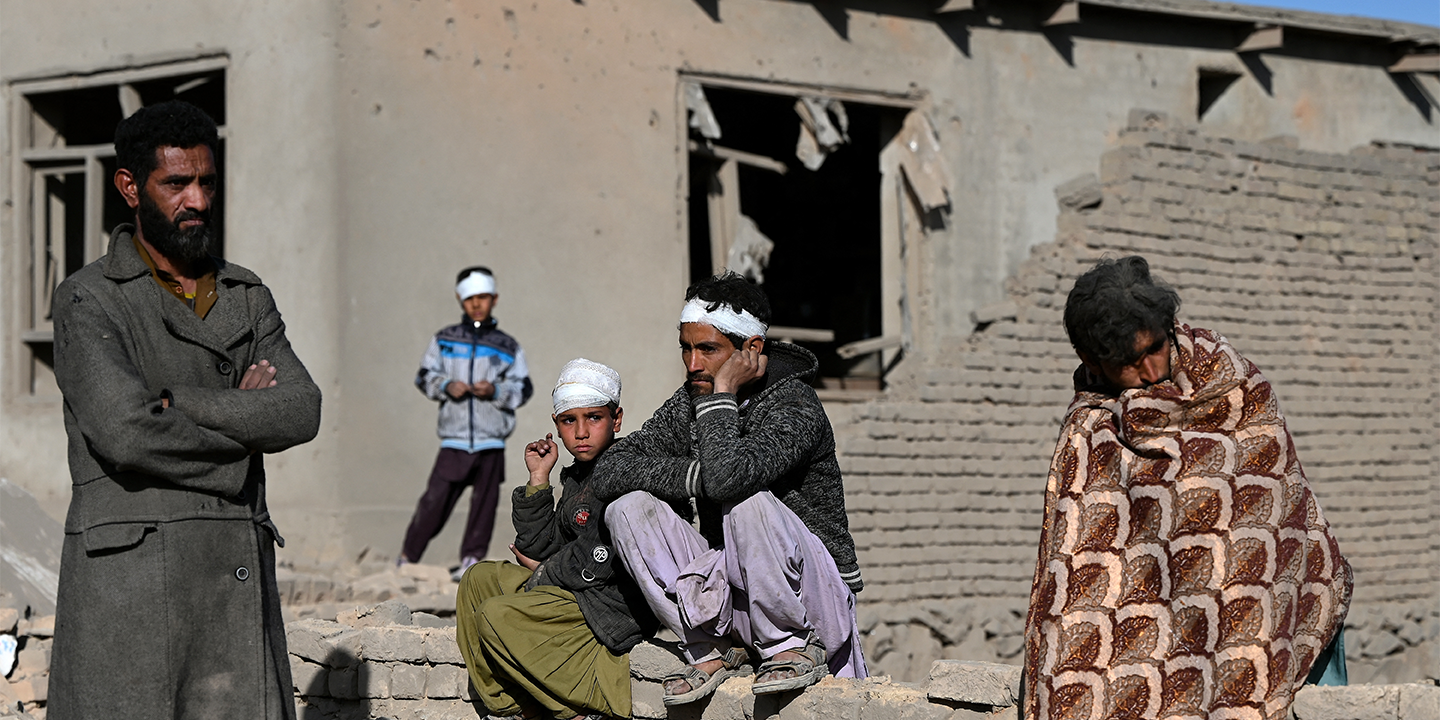
On 16 March a Pakistani airstrike hit a drug rehabilitation facility in Kabul, Afghanistan’s capital, resulting in mass civilian casualties and representing a steep escalation in the conflict between the two countries. Witnesses described widespread destruction and hundreds of families searching for missing relatives. The Taliban de facto authorities reported more than 400 civilians killed and over 200 injured, which would make this the single deadliest incident in the conflict to date. The UN Assistance Mission in Afghanistan (UNAMA) has confirmed at least 143 fatalities, adding that the toll could rise. UN observers also documented the “complete destruction” of part of the facility that housed approximately 180 adolescents, with “no survivors reported.”
Since the conflict escalated in February, cross-border attacks and airstrikes have hit military infrastructure, as well as civilian homes, refugee camps and health facilities. As of 17 March, the Office of the UN High Commissioner for Human Rights reported 289 Afghan civilian casualties, including 104 children and 59 women. Pakistani officials also reported civilian casualties in Bajaur district and North Waziristan earlier in March. Following the 16 March strike, a Taliban spokesperson warned of retaliation, raising concerns of further escalation and civilian harm.
The intensifying conflict is placing additional strain on Afghanistan’s already fragile health care system and worsening risks for vulnerable populations. Attacks on health facilities have long-term consequences, limiting access to care and deterring civilians from seeking treatment. According to the World Health Organization (WHO), 25 health facilities have closed or suspended operations, including 10 damaged by airstrikes. WHO Director-General Tedros Adhanom Ghebreyesus urged all parties to “de-escalate and prioritize peace and health.”
Afghanistan’s health crisis is compounded by decades of conflict, chronic underinvestment and the Taliban’s restrictions on women and girls’ access to care. In his latest report to the UN Human Rights Council, the Special Rapporteur on the situation of human rights in Afghanistan, Richard Bennett, found that the Taliban have imposed gender-oppressive policies that systematically impede access to health services for women and girls. This includes restrictions on freedom of movement, right to work, access to medical education and gender segregation in health facilities.
Health care must be protected from attacks and obstruction. All parties to the conflict must take all feasible precautions to protect civilians and civilian objects and uphold their obligations under International Humanitarian Law, including UN Security Council Resolution 2286 on the protection of medical and humanitarian personnel. The Taliban authorities should ensure safe, timely and non-discriminatory access to health care and refrain from measures that hinder essential services. The international community should support independent and sustained monitoring of violations, ensure UNAMA can operate without restriction and press for a prompt, impartial and public investigation into the 16 March strike to ensure accountability.
ISRAELI STATE-SANCTIONED SETTLER VIOLENCE ESCALATES IN THE WEST BANK
Over the weekend of 21-22 March, illegal Israeli settlers carried out a series of attacks across the Occupied West Bank in what has been described as a coordinated assault. Amid celebrations marking the end of the holy month of Ramadan, dozens of settlers stormed multiple Palestinian villages, setting fire to homes and cars and injuring at least 10 Palestinians. The rampage came shortly after the funeral of an Israeli settler who was killed in a collision with a Palestinian vehicle. In response to a surge in deadly attacks in March, over a dozen diplomatic missions in Jerusalem and Ramallah – including Spain, Norway and Ireland – issued a joint statement stressing that “this violence by settler militias, aimed at taking over land and creating a coercive environment, forcing Palestinians to leave their homes, must end.”
Days earlier, on 19 March over a dozen UN experts had already warned of escalating state and settler violence, denouncing their mutually reinforcing role in advancing Israel’s “annexation and ethnic cleansing policy” in the West Bank. Recent efforts to advance annexation have coincided with increased displacement of Palestinians due to settler violence and access restrictions. According to the UN Office for the Coordination of Humanitarian Affairs, over 1,500 Palestinians have been driven from their homes since January as a result, while displacement in 2026 has already reached 95 percent of the total recorded for 2025.
A pervasive lack of accountability has enabled these abuses. The Office of the UN High Commissioner for Human Rights has similarly found that between October 2024 and 2025 “settler violence continued in a coordinated, strategic and largely unchallenged manner, with Israeli authorities playing the central role in directing, participating in or enabling this conduct.” According to the Israeli rights group Yesh Din, of the complaints filed between 2005-2024 on offenses committed by Israeli civilians, including settlers, only three percent of cases resulted in convictions.
This impunity has been exacerbated by Israel’s longstanding practice of arming settlers, which has intensified in recent years. UN experts have warned that the provision of arms and vehicles corroborates how Israeli authorities “rely on illegal settlers to ‘do the groundwork’ of the ethnic cleansing.” Within roughly six months following 7 October 2023, Israel’s Minister of National Security, Itamar Ben-Gvir, issued 100,000 gun licenses, far exceeding the previous annual average of 8,000-10,000. On 9 March he further expanded eligibility for firearms licenses to include residents of all Jewish neighborhoods in Jerusalem – not only those living adjacent to the West Bank – potentially extending access to an additional 300,000 people.
States must ensure that targeted sanctions against settler individuals and entities are accompanied by measures addressing the broader system enabling such violence. This includes imposing two-way arms embargoes on Israel, banning trade with illegal settlements and refraining from recognizing Israel’s unlawful occupation or providing assistance that would sustain it, in line with the 2024 July Advisory Opinion of the International Court of Justice.
STATE POLICIES IN EL SALVADOR UNDER SCRUTINY FOR POTENTIAL CRIMES AGAINST HUMANITY
On 11 March a group of independent experts warned in a new report that widespread human rights violations committed under El Salvador’s ongoing state of emergency may amount to crimes against humanity. The group – the International Group of Experts for the Investigation of Human Rights Violations under the State of Exception in El Salvador (GIPES) – was established in 2024 and is composed of internationally recognized jurists.
GIPES documented an organized pattern of arbitrary detention, including of children and adolescents. Since the state of emergency was introduced in March 2022, an estimated 89,000 individuals have been arbitrarily detained, frequently without substantiated evidence of gang affiliation and in violation of due process guarantees. Arrests are often based on socioeconomic profiling, disproportionately targeting young men from low-income communities. Human rights organizations have also recorded the deaths of at least 403 individuals in state custody between March 2022 and August 2025.
Beyond arbitrary detention, state agents also carried out torture, enforced disappearances, sexual violence, extrajudicial killings and other inhumane acts. According to GIPES, these violations may constitute crimes against humanity due to the widespread and systematic nature, their targeting of civilians and their implementation as part of a state policy. These findings build on years of documentation by human rights organizations, including Cristosal, which warned in 2023 of possible crimes against humanity.
Although President Nayib Bukele introduced the state of emergency in 2022 ostensibly to curb gang-related violence and restore public security, the Group found that enabling conditions were already in place by 2021. These included the deliberate dismantling of democratic institutions and oversight, restrictions on civic space and the weakening of judicial and legislative checks – amounting to a “deliberate strategy aimed at ensuring the unrestricted exercise of State power by the head of the Executive Branch.” Taken together, these dynamics have created a permissive environment for the commission of atrocity crimes.
Despite mounting evidence, the international community has remained largely silent in the face of possible crimes against humanity, effectively granting President Bukele carte blanche to pursue repressive policies with little external scrutiny or accountability. This silence extends to regional governments confronting similar challenges of gang violence, many of which are increasingly promoting and replicating the “Bukele model,” thereby legitimizing the concentration of power and the erosion of the rule of law as tools of public security.
These latest findings underscore the urgent need for the international community to engage with the government of El Salvador by leveraging diplomatic channels and issuing clear and decisive public condemnation of ongoing state-led repression. UN member states, including regional actors, should support independent investigations, potentially through a dedicated Human Rights Council mechanism, impose targeted sanctions against senior officials and strengthen support for Salvadoran civil society and victims’ groups.