4 February 2026
Atrocity Alert
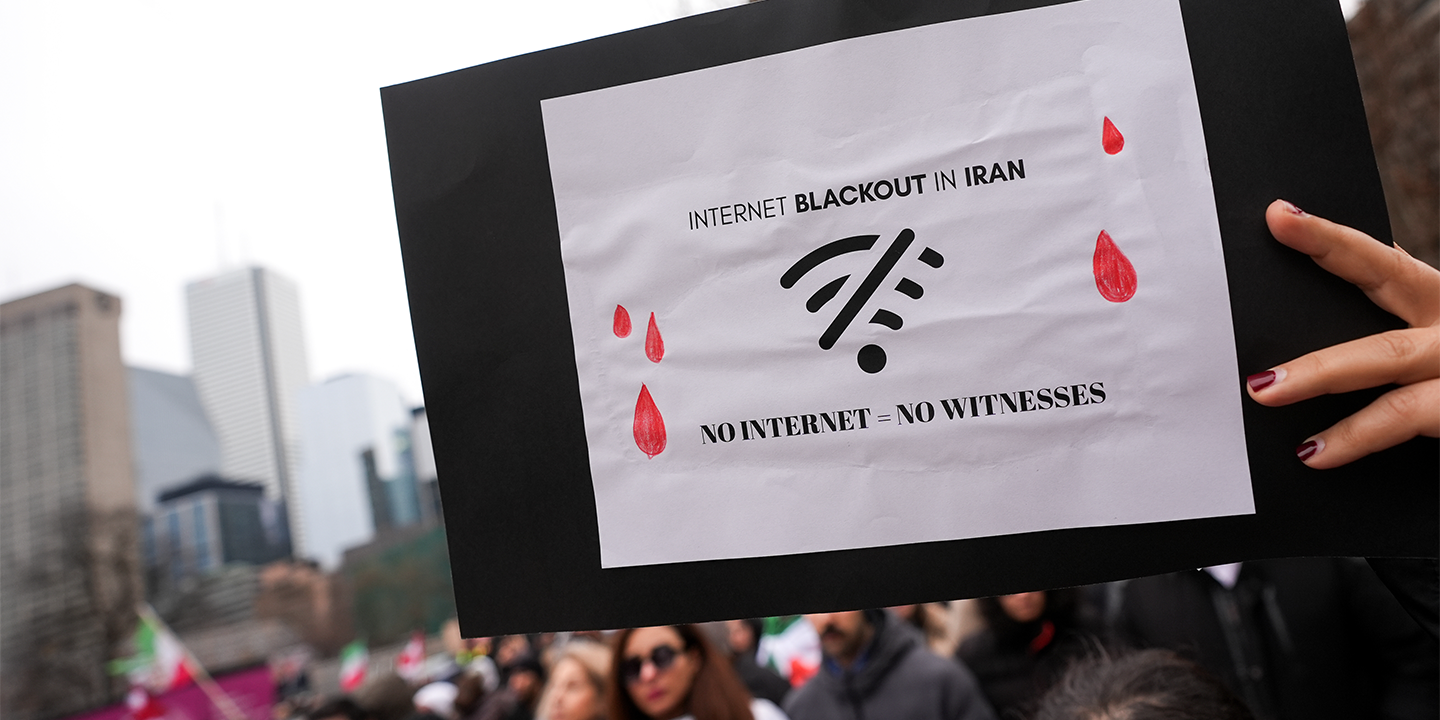
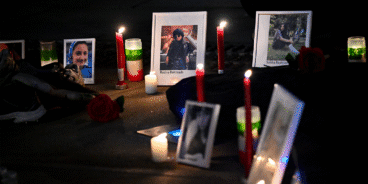
On 28 December demonstrations erupted in Iran in response to a deepening economic crisis following the collapse of the national currency and soaring inflation. In the following days the demonstrations evolved into a broader nationwide political protest opposing the government and its repressive policies. Iranian authorities have responded with a violent nationwide crackdown, during which security forces – including police units and the Islamic Revolutionary Guard Corps – are carrying out unlawful use of force and mass arbitrary arrests.
The UN Independent International Fact-Finding Mission (FFM) on the Islamic Republic of Iran has reviewed footage showing security forces opening fire on protesters, as well as unlawful use of force in ethnic minority provinces – including Lorestan and Ilam – which have often endured some of the most brutal crackdowns. Protesters have shared testimonies describing vans driving into crowds, streets full of blood and bodies scattered in public spaces. Hundreds of protesters have been killed and thousands detained, including at least 113 children. Since 8 January Iranian authorities have imposed a near-total internet shutdown and communications blackout seeking to isolate protesters and suppress mobilization. Iran’s attorney general has labeled protesters an “enemy of God,” an offense punishable by the death penalty.
This latest crackdown is not an isolated event but part of a decades-long pattern of lethal force used against protesters challenging repression and deteriorating living conditions. During the 2022-2023 “Women, Life, Freedom” nationwide protests, security forces similarly wielded unnecessary and disproportionate force. In March 2023 the UN Special Rapporteur on the situation of human rights in the Islamic Republic of Iran, Javaid Rehman, concluded that the state’s violent, widespread clampdown on protesters may amount to crimes against humanity.
UN High Commissioner for Human Rights Volker Türk has called for those responsible for human rights violations – including the right to peaceful protest – to be “held to account,” emphasizing the need to address “underlying grievances” as “essential to preventing further escalation.” The United Kingdom, Canada and France have called on authorities to uphold their “responsibility to protect their own population.” Spain has condemned Iran’s response to protests, urging it to return to dialogue and negotiation, while Japan has called for an “immediate cessation of violence.”
Meanwhile, just over a week after the United States’ (US) unlawful military intervention in Venezuela, US President Donald Trump announced that he is considering military intervention in Iran and declared that countries trading with Iran would face a 25 percent tariff on trade with the US. Qatar is seeking to play a mediation role between Iran and the US to prevent “catastrophic results in the region.”
Iranian authorities must immediately halt all violence against protesters, release those detained for exercising their human rights and ensure compliance with international human rights standards. Access to the internet and communications must be fully restored and the FFM should be granted unhindered access to conduct investigations into serious human rights violations. Member states should convene urgent sessions of the UN Human Rights Council and Security Council and coordinate principled responses, including accountability measures, that align with the aspirations of the Iranian people.
On 7 January the Office of the UN High Commissioner for Human Rights (OHCHR) released a report concluding that Israel’s policies of discrimination and racial segregation in the Occupied West Bank resemble apartheid. This marks the first determination by OHCHR of apartheid in the Occupied Palestinian Territory (OPT). UN High Commissioner for Human Rights Volker Türk stated, “There is a systematic asphyxiation of the rights of Palestinians…every aspect of life is controlled and curtailed by Israel’s discriminatory laws, policies and practices.”
The decades-long system of severe racial discrimination against Palestinians in the Occupied West Bank has profoundly undermined their freedom of movement and access to basic services and livelihoods. The OHCHR report echoes findings by leading Palestinian, Israeli and international human rights organizations and experts that Israel is perpetrating the crime against humanity of apartheid. The Global Centre for the Responsibility to Protect has similarly identified Israel’s apartheid policies as contributing to atrocity risks in the OPT through multiple Atrocity Alerts, podcast episodes and other publications.
OHCHR further concluded that Israel’s apartheid policies have intensified since at least December 2022 and have accelerated further following 7 October 2023. The report cites increased state and settler violence, forcible transfer, repression of civic space, settlement activity and home demolitions – all within a “prevailing environment of impunity.”
As apartheid deepens in the Occupied West Bank, Israel has continued to unabashedly violate the fragile ceasefire in Gaza, killing at least 440 Palestinians and destroying some 2,500 buildings since the agreement took effect on 10 October. On 1 January Israel revoked the operating licenses for 37 critical international NGOs – including Save the Children, the Norwegian Refugee Council and Oxfam affiliates – giving them 60 days to wind down operations in the OPT, in defiance of its legal obligation to ensure humanitarian access.
The UN Secretary-General’s Special Adviser on the Responsibility to Protect, Mô Bleeker, has recently warned that “all risk factors for atrocity crimes listed in the UN Framework of Analysis for Atrocity crimes are present and acute,” emphasizing “member states, and the international community, have the responsibility to halt ongoing and prevent further atrocity crimes.”
Israel must immediately cease settlement expansions, reverse the annexation of Palestinian territory and ensure accountability for settler violence. In line with the July 2024 Advisory Opinion of the International Court of Justice, all member states must refrain from providing assistance that sustains Israel’s unlawful occupation of the OPT, which must be rapidly brought to an end. The International Criminal Court should include the crime of apartheid in its investigations into Israel’s commission of crimes against humanity. Member states must act decisively in line with their continued responsibility to protect Palestinians, including by enforcing a comprehensive arms embargo on Israel and supporting all available accountability mechanisms to deliver protection and prevention measures for Palestinians in the OPT.
From 12 to 29 January the International Court of Justice (ICJ) opened public hearings in the landmark case brought by The Gambia against Myanmar for violating its obligations under the Genocide Convention in relation to the treatment of the Rohingya. Starting in October 2016 and again in August 2017, Myanmar’s military carried out so-called “clearance operations” against the Rohingya, during which thousands were killed and hundreds of thousands forced to flee to Bangladesh. While Myanmar’s military authorities deny the commission of genocide and frame their actions as counterterrorism operations, The Gambia argues the scale, targeting and intent of the violence meet the legal threshold for genocide.
This is the first genocide case heard in full by the ICJ in more than a decade. The hearings are the next stage in the case filed by The Gambia in 2019 and are expected to include oral arguments, expert submissions and closed-door witness testimony. After the initial case filing, in January 2020 the ICJ ordered Myanmar to comply with provisional measures to prevent genocidal acts, ensure that military and police forces do not commit such acts, preserve all evidence of genocidal acts and report on compliance.
At the opening session, The Gambia’s Justice Minister, Dawda Jallow, emphasized the human stakes of the proceedings, stating, “It is not about esoteric issues of international law. It is about real people, real stories and a real group of human beings. The Rohingya of Myanmar. They have been targeted for destruction… Myanmar has denied them their dream, in fact it turned their lives into a nightmare subjecting them to the most horrific violence and destruction one could imagine.”
Despite the Court’s provisional measures, conditions in Myanmar have significantly deteriorated since the military seized power in a coup in February 2021. Rohingya civilians in Rakhine State continue to face severe abuses by both junta forces and the Arakan Army armed group, which now controls much of Rakhine, while the military has committed abuses amounting to war crimes and crimes against humanity.
At the same time, the junta has moved forward with widely condemned elections, with initial voting starting on 28 December. Voting has been restricted to “secure” areas, major opposition parties have been dissolved or barred and many political leaders remain imprisoned. Low reported voter turnout and the dominance of the military-backed Union Solidarity and Development Party reinforce concerns that the process is intended to entrench military rule rather than restore democracy.
Savita Pawnday, Executive Director of the Global Centre for the Responsibility to Protect, said, “The ICJ case is a critical test of the international community’s commitment to accountability for mass atrocities. For the Rohingya, it offers rare recognition under international law and reminds the world that justice delayed must not become justice denied, and that legal proceedings remain a powerful tool for protection and prevention for populations everywhere.”
Ralph Bunche Institute for International Studies
The Graduate Center, CUNY
365 Fifth Avenue, Suite 5203
New York, NY 10016-4309, USA