18 March 2026
Atrocity Alert
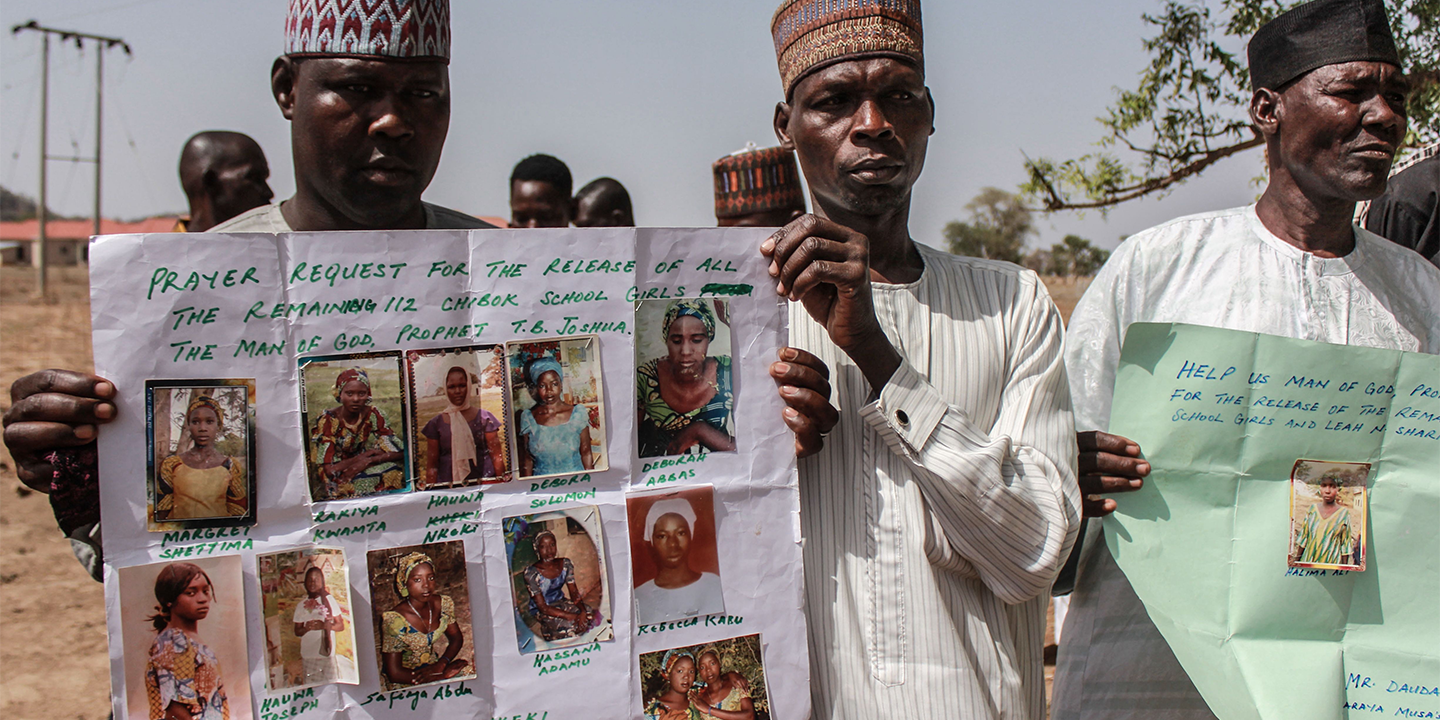
According to the Office of the UN High Commissioner for Human Rights, at least 402 people, mostly schoolchildren, have been kidnapped across four states in Nigeria’s north-central region since 17 November. In one of the worst mass abduction of students in Nigeria’s history, on 21 November armed men attacked St. Mary’s School in Papiri, Niger State, abducting 303 students and 12 teachers, surpassing the kidnapping of the Chibok girls by Boko Haram in 2014. While 50 students have escaped, more than 250 remain in captivity. Authorities have deployed security forces to find the students, while the government has announced the closure of all schools until further notice.
Other recent attacks across the region underscore the scale and persistence of the violence. On 24 November gunmen abducted 10 women and children from a village in Kwara State, neighboring another village where 35 people were kidnapped the previous week. From 16-17 November, 25 girls from a secondary school in Kebbi State were kidnapped and the deputy headmaster killed. The UN Children’s Fund warned that “this tragic incident is yet another stark reminder of the urgent need to protect children, schools and the personnel they rely upon to learn safely.”
Together, these incidents point to a worsening pattern of violence targeting schools across northern Nigeria. In addition to sporadic attacks by armed extremist groups like Boko Haram, in recent years, schools have increasingly come under attack by armed groups and gangs – commonly referred to as “bandits.” These groups frequently target students and staff and abduct them to demand ransom or exert pressure on local authorities. Such attacks not only put lives at immediate risk but also disrupt education and create long-term insecurity for communities. As a result of insecurity, student enrollments in parts of Nigeria have decreased drastically, impacting the lives and future of millions of children. Survivors of these abductions suffer trauma and stigma without adequate support.
In September 2025 the UN Committee on the Elimination of Discrimination against Women concluded that Nigeria has repeatedly failed to prevent targeted attacks on schools and communities, protect schoolgirls from abduction and ensure their right to education – amounting to systematic and grave violations. At least 1,400 students have been kidnapped from schools since the Chibok abduction, and over a decade later 91 Chibok schoolgirls are still held captive or missing.
These repeated attacks underscore the urgent need to strengthen and fully implement the Safe Schools Declaration throughout Nigeria. Security and intelligence agencies must urgently locate and safely rescue the abducted girls. Those responsible for the recent attacks must be held accountable in accordance with national and international standards. National and state authorities must strengthen community-based protection systems, improve early warning and rapid response mechanisms and increase investment in school safety.
On 17 November the UN Security Council adopted Resolution 2803 on Gaza, endorsing United States (US) President Donald Trump’s “Comprehensive Plan to End the Gaza Conflict,” welcoming the establishment of a Board of Peace (BoP) and authorizing a temporary International Stabilization Force (ISF) through at least 2027. The resolution was introduced and negotiated in under two weeks and passed with a vote of 13 in favor and two abstentions by Russia and China. US Ambassador Michael Waltz emphasized after the vote that US officials had made it clear that “a vote against this resolution was a vote to return to war.”
The US claimed the resolution was essential to enforcing the ceasefire in Gaza and to supporting regional peace. However, significant concerns have been raised regarding its legality. Francesca Albanese, UN Special Rapporteur on the situation of human rights in the Palestinian territories occupied since 1967, warned that, “rather than charting a pathway towards ending [Israel’s] occupation and ensuring Palestinian protection, the resolution risks entrenching external control over Gaza’s governance, borders, security, and reconstruction. The resolution betrays the people it claims to protect.”
Under Resolution 2803, the BoP – chaired by President Trump – would serve as a “transitional administration” overseeing the plan’s implementation, including aid distribution and reconstruction. Transfer of authority to the Palestinian Authority (PA) is dependent on the PA “faithfully” and “satisfactorily” completing a reform program set by external actors. Palestinians in Gaza would not be entitled to elect their representatives and future consideration of a “pathway” to Palestinian self-determination and statehood is conditional.
The ISF, operating under the BoP, would take over security and demilitarizing Gaza, with Israeli forces withdrawing to a “security perimeter” once the ISF stabilizes the enclave. This contradicts the July 2024 Advisory Opinion of the International Court of Justice calling for a rapid end to Israel’s unlawful presence in the Occupied Palestinian Territory (OPT) and the ongoing illegal blockade and control of roughly 53 percent of Gaza. Since the latest ceasefire began, Israel has violated it over 400 times, destroying more than 1,500 buildings and killing hundreds of Palestinians.
Meanwhile, states are already retreating from and further circumventing their legal obligations. This includes Germany, which has lifted its partial arms embargo on Israel, the European Union, which has paused efforts to impose measures that would partially suspend trade relations, and the United Kingdom, which hosted a summit on Gaza’s recovery and reconstruction while still arming Israel with essential F-35 fighter jet parts, among others.
For decades, Palestinians have been coerced into multilateral efforts that prioritize temporary, negative peace over justice, equality and freedom, further entrenching Israel’s oppression of and atrocities against the Palestinian people. Resolution 2803 must not be utilized to repeat this pattern. Palestinian sovereignty, agency and inclusion must be central to its operationalization. States must interpret and execute the resolution in accordance with international law, continue pursuing justice and accountability – including sanctions and arms embargoes – and refrain from providing any assistance that sustain Israel’s unlawful presence in the OPT.
On 26 November the UN Independent Investigative Mechanism for Myanmar (IIMM) warned that there are a growing number of reports of grave international crimes committed in Myanmar (Burma) ahead of the elections planned for 28 December and 11 January. This includes actions in the context of the electoral process that may amount to persecution and spreading terror among a civilian population as crimes against humanity. The IIMM is also investigating reports of increased airstrikes on civilian areas to regain territory currently under the control of armed groups, which would allow the junta to expand the areas where elections could be held. General Min Aung Hlaing has acknowledged that the elections cannot be held in all townships, as most territory remains contested or held by resistance groups. The junta has excluded 121 constituencies due to “security concerns,” effectively disenfranchising significant minority populations.
UN Secretary-General António Guterres has called for “a credible path back to civilian rule,” stating, “I don’t think anybody believes that those elections will be free and fair.” While numerous governments have expressed concerns and the Association of Southeast Asian Nations has declined to send election observers, others view the elections as a credible and significant step forward. China and Russia, primary suppliers of aircraft and arms, continue to support the election. On 24 November the United States announced the termination of Temporary Protected Status for Myanmar on the grounds that conditions had “improved enough” for returns, citing “notable progress in governance and stability, including…plans for free and fair elections.”
In the nearly five years since the February 2021 coup, the junta has systematically dismantled rule of law, suppressing freedoms of speech, the press and assembly. It has criminalized criticism of the elections and banned dozens of political parties, while detaining an estimated 30,000 political prisoners. According to Human Rights Watch, authorities have pressured displaced people and detainees to vote and expanded checkpoints and digital surveillance.
Since the coup, at least 7,484 people have been killed in violence concentrated in Sagaing, Magway, Chin, Kayah and Rakhine, where the junta has perpetrated likely war crimes and crimes against humanity and continues to launch indiscriminate airstrikes, drones and paramotors against civilians and ethnic resistance organizations (EROs). The military has increasingly targeted communities under ERO influence, using collective punishment tactics, obstructing aid and striking areas sheltering displaced people.
Following years of escalating repression, the junta’s insistence on holding elections without inclusive political dialogue or respect for fundamental rights reflects a broader attempt to legitimize military rule. The international community must increase pressure on the military authorities, support local aid and protection efforts and reject the electoral process. Without sustained diplomatic, humanitarian and accountability measures, civilians will continue to bear the costs of the junta’s attempt to cling to power under the guise of a national vote.
Ralph Bunche Institute for International Studies
The Graduate Center, CUNY
365 Fifth Avenue, Suite 5203
New York, NY 10016-4309, USA