4 February 2026
Atrocity Alert
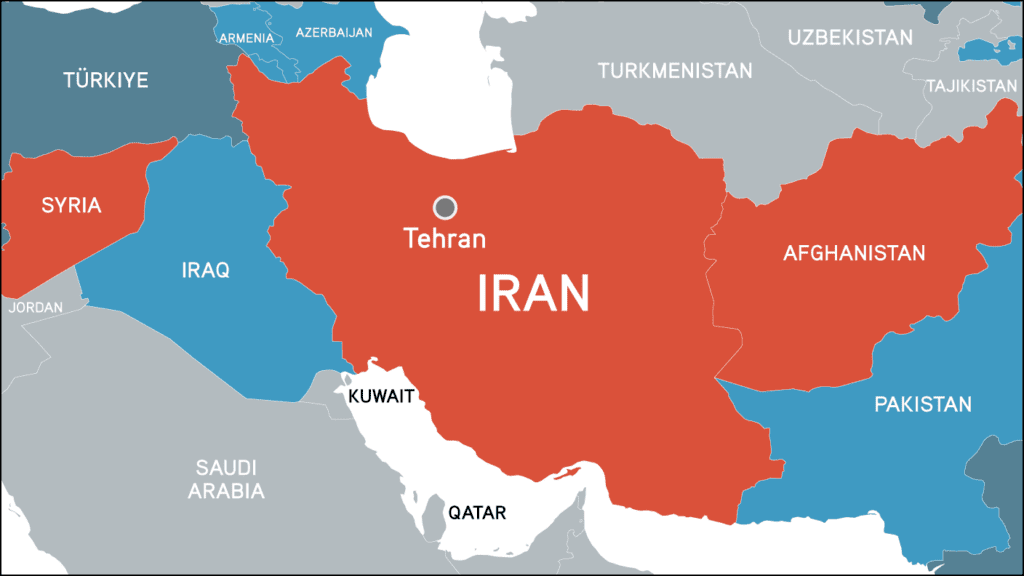
Iranian authorities have committed possible crimes against humanity through mass killings and arbitrary arrests of peaceful protesters. Civilians are also at risk of likely war crimes amid a broader regional escalation following the start of United States and Israeli airstrikes on Iran on 28 February.
On 28 February the United States (US) and Israel launched a joint offensive against Iran, affecting over 20 of Iran’s 31 provinces. The aerial attacks triggered Iran to launch widespread retaliatory attacks across the region, targeting US military bases in Bahrain, Kuwait, Qatar and Saudi Arabia, as well as targeted or indiscriminate strikes on civilian infrastructure across the region. In the first week of the offensive, the death toll in Iran surpassed 1,000 people. Over 160 people were killed when an elementary girls’ school in southern Iran was struck by a reported US missile, prompting UN experts to call for an investigation into possible war crimes. According to the UN Refugee Agency, up to 3.2 million people are temporarily displaced inside Iran by ongoing hostilities.
Prior to this offensive, in December 2025, demonstrations erupted across Iran in response to a deepening economic crisis following the collapse of the national currency and soaring inflation. The demonstrations evolved into a nationwide movement opposing the government and its repressive policies. Iranian authorities responded with a violent crackdown, during which security forces – including police units and the Islamic Revolutionary Guard Corps (IRGC) – committed unlawful use of force and mass arbitrary arrests.
The UN Independent International Fact-Finding Mission on the Islamic Republic of Iran (FFMI) reviewed footage showing security forces opening fire on protesters, as well as evidence of unlawful use of force in ethnic minority provinces, which have historically endured some of the most brutal crackdowns. Thousands of protesters were killed and detained, though some estimates suggest the true figure may reach tens of thousands. On 8 January Iranian authorities imposed a near-total internet shutdown and communications blackout. Officials also used dangerous rhetoric against protesters, labeling them “terrorists” and describing “rioters” an “enemy of God,” an offense punishable by death. Global condemnation following reports of imminent executions compelled Iran’s foreign minister to state that executions would not take place, while the judiciary has vowed to accelerate trials.
The crackdown is part of a decades-long pattern of lethal force used against protesters challenging repression and deteriorating living conditions. During the 2022-2023 “Women, Life, Freedom” nationwide protests, security forces similarly wielded unnecessary and disproportionate force, killing at least 500 people. In March 2023 the UN Special Rapporteur on the situation of human rights in the Islamic Republic of Iran concluded that the state’s widespread clampdown on protesters may amount to crimes against humanity, including murder, imprisonment, enforced disappearances, torture, rape and sexual violence and persecution. The following year, the FFMI concluded that Iranian authorities perpetrated the crime against humanity of gender persecution.
Iran is also among the countries with the highest number of executions annually and has a documented history of unlawful arbitrary executions. In 2025 at least 1,500 Iranians were reportedly executed – nearly half for drug-related offenses – marking the highest number of executions in a decade. The UN High Commissioner for Human Rights has stressed that “the scale and pace of executions suggest a systematic use of capital punishment as a tool of State intimidation, with disproportionate impact on ethnic minorities and migrants.”
Economic hardship, interconnected with human rights violations, has been a key driver of popular discontent. For nearly five decades, Iran has been subject to a complex and evolving sanctions regime – largely led by the US – that has devastated living standards for Iranians. This situation was further exacerbated by the reimposition of significant US economic sanctions in 2018. Human rights experts and organizations have warned that unilateral coercive measures undermine Iranians’ basic human rights and that sanctions threaten the economy and push millions of Iranians into poverty.
Tensions heightened following the government’s crackdown on protesters, to which the US government responded in early January with threats of unilateral military action. Several key regional allies reportedly urged restraint, warning of broader destabilization, while the United Kingdom, Canada, France and the European Union, among others, called on the Iranian authorities to uphold their “responsibility to protect their own population.” On 15 January the UN Security Council (UNSC) convened an emergency meeting on Iran.
The US-Israeli offensive and Iran’s retaliatory strikes drew condemnation from several UN experts – including the UN Special Rapporteur on the human rights situation in the Islamic Republic of Iran – who stressed that international law must not be selectively applied and warned against the targeting of civilians and civilian infrastructure. On 11 March the UNSC adopted a resolution co-sponsored by 135 countries that condemned Iran’s attacks on countries in the Middle East but stopped short of denouncing US-Israeli strikes. A few European states, including Finland, Norway and Spain, have openly called for respect for international law and condemn breaches committed by all parties. Following reported US-Israeli strikes on oil facilities in Iran, senior UN officials expressed concern over the harmful environmental consequences, including acid rain, and questioned compliance with International Humanitarian Law.
On 11 March the FFMI, mandated by the UN Human Rights Council (HRC) to investigate the recent crackdown on protests, reported “unprecedented levels” of state repression not seen since the 1979 revolution. The FFMI asserted that previously established patterns of violations by Iranian authorities, including those that may amount to crimes against humanity, “not only remain present but also continue to evolve and deepen.”
After US-Israeli strikes reportedly killed Iran’s supreme leader, Ayatollah Ali Khamenei, and several other senior officials, his son, Mojtaba Khamenei, was appointed as his successor. Despite the leadership upheaval, authorities have continued efforts to deter public dissent. Iranians have reportedly received state text messages warning them against protesting, while UN experts report that internet connectivity has dropped to about one percent of normal levels, severely restricting communication and access to information.
US-Israeli airstrikes and Iran’s subsequent retaliatory attacks risk raising prospects for a wider regional conflict and intensifying the ongoing military campaign. Most UN member states have condemned Iran’s counterattacks but have largely refrained from denouncing US-Israeli operations, reflecting a selective application of international law. The failure to condemn or address unlawful and unilateral coercive actions enables ongoing abuses in Iran and throughout the region.
Iranians face growing danger from ongoing airstrikes and attempts by the authorities to tighten control over the population.
While the death of Ali Khamenei marks the end of his rule, Iran’s system of power remains intact. Persistent repressive measures by authorities and the appointment of Khamenei’s son, who has been closely linked to the IRGC, as Iran’s new supreme leader underscores that punitive structures extend beyond a single individual.
Longstanding impunity has shielded Iranian authorities from accountability, emboldening repeated cycles of widespread state violence against those challenging repression and economic hardship. Iran’s economic crisis is deeply tied to entrenched abuses.
Iran’s structural suppression of dissent risks blanket criminalization of opposition. Thousands remain detained, raising concerns about due process rights and torture.
States must condemn all violations of international law and the UN Charter amid regional escalations. States should avoid unlawful participation in military actions, push for de-escalation and renewed negotiations and center the aspirations of the Iranian people.
Iranian authorities must refrain from intimidation tactics to repress protests, release protesters detained for exercising their human rights and ensure compliance with international human rights standards. Access to the internet and communications must be fully restored.
The international community must address Iran’s longstanding impunity for serious human rights violations and atrocities in a coordinated, principled manner that advances justice and accountability. This includes pursuing criminal accountability for Iranian officials allegedly responsible for crimes against humanity, including through universal jurisdiction. HRC members should ensure the FFMI is equipped with adequate resources to continue investigations. The UNSC should ensure Iran remains on its agenda and support a referral to the International Criminal Court.
Ralph Bunche Institute for International Studies
The Graduate Center, CUNY
365 Fifth Avenue, Suite 5203
New York, NY 10016-4309, USA